

On October 16, meteorologists at the National Hurricane Center in Miami, Florida, identified a nascent tropical wave forming off the coast of West Africa. Over the subsequent five days, the system tracked steadily across the Atlantic Ocean, gaining momentum as it entered the uncharacteristically warm waters of the Caribbean Sea. By the time the system was upgraded to Tropical Storm Melissa, it was clear that the region was facing a significant meteorological event. On October 28, Melissa made landfall on the island of Jamaica as a Category 5 hurricane, the most powerful storm ever recorded in Jamaican history and the third most intense in the documented history of Atlantic hurricanes.
The sheer physical force of Hurricane Melissa was catastrophic. Sustained winds peaked at nearly 300 kilometers per hour, accompanied by storm surges reaching four meters and a deluge of half a meter of rain within a 24-hour period. The storm flattened vast swaths of western Jamaica, decimating infrastructure, telecommunications, and agricultural sectors. Initial economic assessments placed the damage between US$8 billion and $15 billion, a staggering sum for a developing nation. However, even as emergency crews were struggling to clear debris and residents were assessing the loss of their homes, the institutional machinery of the tourism industry began to turn. Edmund Bartlett, Jamaica’s Minister of Tourism, immediately engaged with international media outlets to project an image of resilience, urging travelers to maintain their holiday plans and visit the island as soon as possible.
This aggressive drive to restore hotel operations by mid-December—the traditional start of the Caribbean’s "high season"—highlighted a profound and troubling contradiction. The Caribbean region, more than any other in the world, is tethered to an industry that is both its primary economic engine and a contributor to its long-term environmental vulnerability.
The Economic Monoculture of the Caribbean
The Caribbean is currently the most tourism-dependent region on the planet. For the 33 political entities that comprise the region—including sovereign states, overseas territories, and dependencies—tourism accounts for an average of 11% of the gross domestic product (GDP). However, these averages mask extreme cases of economic "monoculture." In Antigua, for example, the World Travel and Tourism Council reports that the sector generates a staggering 88% of the country’s GDP and provides 91% of all employment.
This level of dependency was not accidental but the result of a deliberate post-colonial economic shift. Half a century ago, as imperial powers began to withdraw preferential trade agreements for agricultural staples such as bananas, sugar, and rum, Caribbean nations sought new avenues for growth. With the backing of the World Bank and other international financial institutions, these islands pivoted toward the burgeoning postwar middle class in North America and Europe, which had developed a significant appetite for tropical vacations. Governments established dedicated tourism ministries and offered aggressive tax incentives to attract foreign developers. The strategy was successful in terms of volume: in 1970, the region hosted approximately four million international guests. By the 2020s, that figure had increased nearly tenfold.
The Leakage Problem and Foreign Extraction
Despite the high volume of visitors, the economic benefits for local populations are often diluted by a phenomenon known as "economic leakage." The United Nations World Tourism Organization (UNWTO) estimates that approximately 80% of the revenue generated by Caribbean tourism never stays in the local economy. Instead, it flows back to the foreign-owned entities that control the supply chain: international airlines, global cruise lines, and multinational hotel chains.
This extractive model has drawn sharp criticism from scholars and authors. In her seminal 1988 book, A Small Place, Antiguan author Jamaica Kincaid argued that the modern tourism industry mirrors the colonial plantation economies of the 17th and 18th centuries. Where the region once exported sugar at the expense of enslaved labor for the benefit of foreign crowns, it now "exports" its beaches and climate for the benefit of foreign shareholders. While the profits are repatriated to corporate headquarters in Miami, London, or Paris, the local governments are left to manage 100% of the environmental costs, including waste management, sewage treatment, and the degradation of natural resources.
Climate Change: An Existential Threat to the Product
The very assets that the Caribbean sells—pristine beaches, vibrant coral reefs, and predictable tropical weather—are under direct threat from climate change. The warming of the world’s oceans is not merely a scientific abstraction but a practical disaster for the tourism industry. Over the last 50 years, rising sea temperatures have contributed to the loss of nearly half of the Caribbean’s hard coral cover. This loss impacts marine biodiversity and destroys the primary attraction for the lucrative snorkeling and diving sub-sectors.
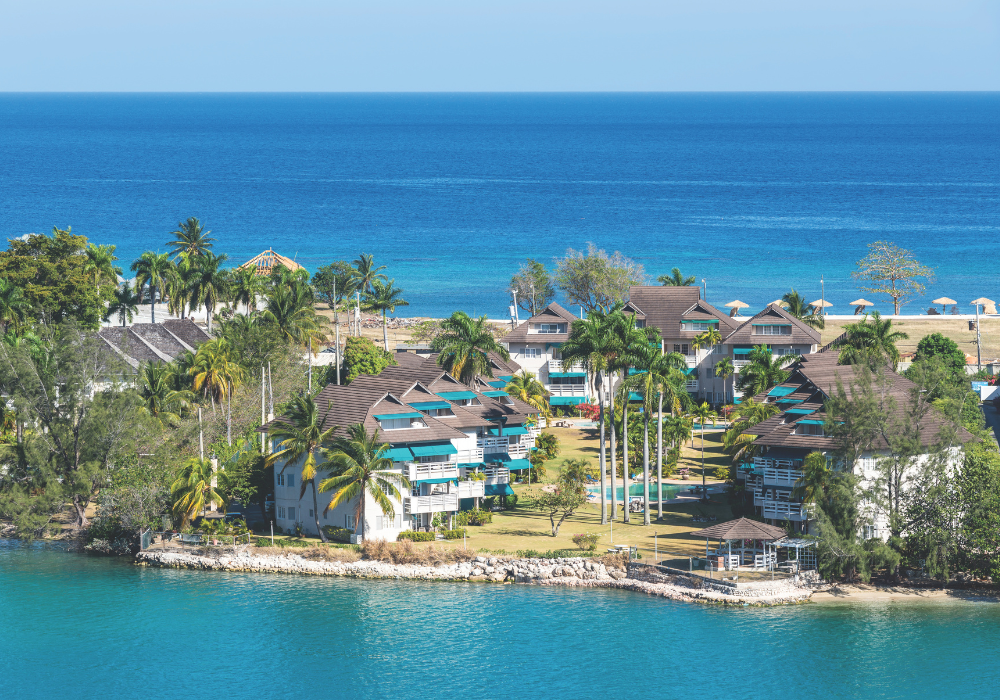
Furthermore, rising sea levels pose a physical threat to infrastructure. Current projections suggest that by the end of this century, sea-level rise could reduce the Caribbean’s sandy beaches by 50% and force the permanent closure of one-third of existing hotels, many of which are built on the water’s edge to satisfy tourist demand. Hurricane Melissa serves as a harbinger of a future where extreme weather events are both more frequent and more intense, leaving little time for islands to recover between shocks.
The Conflict Between Residents and Resorts
The disparity between the needs of the local population and the requirements of the tourism industry often creates social friction. Therez Walker, a lecturer on sustainable tourism at NHL Stenden University who grew up in Antigua, notes that the environmental degradation she witnessed in her youth has reached a breaking point. Mangrove swamps, which act as vital natural barriers against storm surges and provide nurseries for fish, are frequently cleared to create "pristine" white-sand beaches for resorts.
The allocation of resources also highlights these inequities. In many Caribbean communities, water scarcity is a chronic issue. Residents may only have access to running water two days a week, yet they frequently observe water trucks delivering supplies to all-inclusive resorts to ensure that guest pools remain full and lush gardens stay green. "Our policymakers go to UN climate conventions and talk about our vulnerability," Walker says. "And then they come home and approve another huge development on an ecologically sensitive coastline."
Beienetch "Bennie" Watson, a specialist in tourism policy at the University of the West Indies in Mona, Jamaica, characterizes this as a "colonial logic." She argues that tourism planning has traditionally been a top-down process, driven by external investors rather than the needs or visions of the local people.
A Shift Toward Resilience and Local Solidarity
The COVID-19 pandemic, which saw Caribbean tourism revenue drop by half almost overnight, acted as a catalyst for change. The sudden absence of international travelers forced islands to reconsider their economic models. Some nations began to promote "digital nomad" visas and longer-term stays, while others pivoted toward eco-tourism, adventure travel, and rural experiences that bring visitors into direct contact with local communities rather than keeping them behind resort walls.
A 2025 World Bank report on the future of Caribbean tourism emphasized that the region must move beyond the "sea, sun, and sand" model. The report argued that the short-term economic gains of high-volume cruise and all-inclusive tourism are increasingly outweighed by the high costs of energy consumption, water usage, and carbon emissions. The report advocates for a model of "high-value, low-impact" tourism that prioritizes environmental preservation and local ownership.
In the aftermath of Hurricane Melissa, there are signs that this shift is taking root at a grassroots level. While Minister Bartlett conducted a high-profile marketing blitz in New York City three months after the storm—announcing that 70% of Jamaica’s hotels were operational—the real recovery was happening in the streets. Watson notes that local organizations and church groups have been instrumental in rebuilding homes and supporting displaced families. This surge in internal solidarity has reinforced the idea that the island’s residents, not just its visitors, must be at the center of any future development strategy.
Conclusion: Demanding a New Model
The recovery of Jamaica’s tourism sector following Hurricane Melissa is a testament to the region’s logistical resilience, but it also underscores the fragility of an economy built on a single, vulnerable industry. For tourism to remain a viable mainstay of Caribbean economies, experts agree it must undergo a fundamental transformation. It must become an industry that protects the ecosystems it relies upon, ensures that a greater share of revenue remains within local communities, and respects the resource needs of the people who call these islands home.
As Therez Walker suggests, the future of the Caribbean depends on moving away from a passive acceptance of extractive tourism. "We need to demand more of tourism," she asserts. The challenge for the next generation of Caribbean leaders will be to balance the immediate need for foreign exchange with the long-term necessity of environmental and social survival. In the era of the "Category 5" storm, sustainability is no longer an optional luxury; it is a prerequisite for existence.
