

Every sanction that ordinary citizens have ever possessed – the ability to withhold labor, taxes, sons, or votes – presupposes someone who needs what you can withhold. As AI infrastructure encroaches on Americans, they are learning the lesson of many resource-rich states: where there is no need, there is no democracy. This fundamental shift in power dynamics, driven by the insatiable demands of artificial intelligence, is manifesting in tangible ways, from escalating utility costs to the quiet reshaping of local governance.
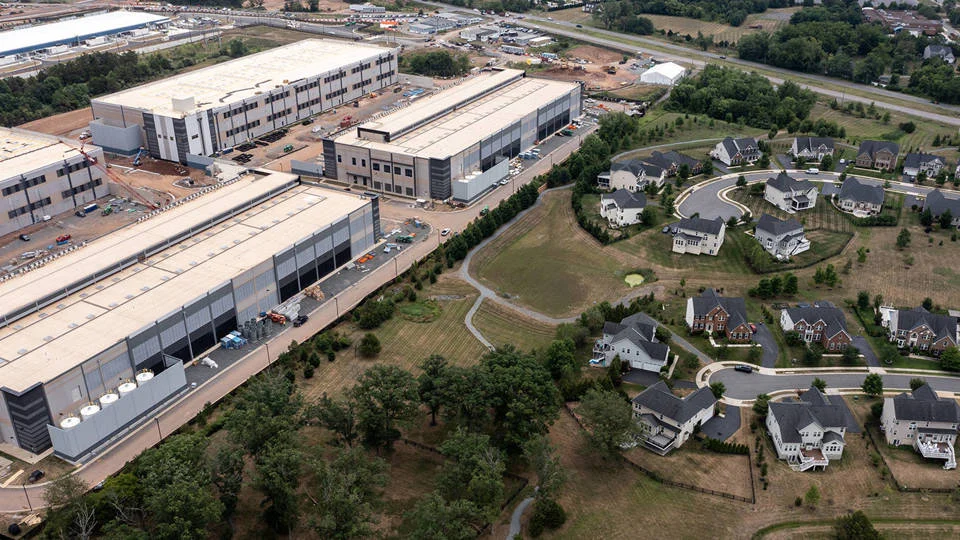
In a county in northern Virginia, a family’s electricity bill has doubled. A few miles away, a windowless building the size of a shopping mall hums through the night – yet another AI data center, consuming more power than the town it was built beside. The dispute over these escalating costs and the environmental impact of these facilities will likely be conducted in the technical language of rate structures, zoning variances, and transmission corridors. However, at its core, the conflict is driven by a non-technical political question: Are the people who live in the county still needed by the people who constructed the building? This question lies at the heart of a growing concern across the United States: the potential for AI infrastructure development to disenfranchise local communities by diminishing their collective bargaining power.
The rapid proliferation of AI data centers, fueled by the insatiable demand for computational power, is transforming landscapes and economies. These facilities, often vast in scale and energy-intensive, require significant infrastructure – electricity, water, and connectivity – placing immense strain on local resources. While proponents highlight job creation and economic investment, the distributed nature of AI infrastructure development often means that the benefits are not evenly distributed, and the burdens fall disproportionately on the communities that host them.
The Growing Demands of AI Infrastructure
The technological advancements powering artificial intelligence, from sophisticated machine learning algorithms to the complex neural networks that underpin them, require colossal amounts of processing power. This power is housed in data centers, specialized facilities designed to store, process, and manage vast quantities of digital information. The demand for these centers has exploded in recent years, driven by the exponential growth of data and the increasing adoption of AI across industries.
According to a 2023 report by the International Energy Agency (IEA), the energy consumption of data centers globally is projected to rise significantly. While precise figures for AI-specific energy usage are still emerging, it is understood that AI workloads are generally more computationally intensive than traditional computing tasks. This means that the expansion of AI capabilities will likely translate into a corresponding increase in the energy demands of data centers. This trend is already visible in regions experiencing a surge in data center construction.
For instance, in Northern Virginia, a region often referred to as "Data Center Alley," the concentration of these facilities has been a subject of ongoing debate. While the area has benefited from significant investment and job creation, the environmental and infrastructural pressures have become increasingly apparent. Residents are grappling with the tangible consequences, such as the aforementioned surge in electricity bills. These increases are often attributed to the immense power demands of data centers, which can lead to higher wholesale electricity prices as grid operators scramble to meet peak demand.
The Power Dynamics: Who Needs Whom?
The core of the issue, as articulated in the initial statement, lies in the concept of "need." Historically, citizens have held a degree of leverage over governing bodies and powerful entities through their ability to withhold essential resources or support. The ability to withhold labor (through strikes), taxes (through civil disobedience), military service (through conscientious objection or refusal to conscript), or political power (through voting) has been a cornerstone of democratic engagement. This leverage is predicated on the notion that these entities need the participation and compliance of the citizenry to function and thrive.
However, the rise of automated systems and the concentration of essential infrastructure in the hands of a few powerful entities can subtly, or not so subtly, erode this leverage. When a community’s essential services, like electricity, become inextricably linked to the demands of a powerful, often absentee, industrial player – in this case, an AI data center operator – the traditional power dynamic shifts. The community’s ability to influence decisions about their energy supply, zoning, or environmental impact can be diminished if the entity in question is perceived as indispensable to the local economy or if their needs can be met through means that bypass local democratic processes.
In the Virginia example, the question arises: does the data center operator need the local residents in the same way that a local business might need its customer base, or a government needs its taxpayers? If the data center’s operations are global, its workforce is highly specialized and potentially transient, and its energy needs can be met through large-scale power purchase agreements, the direct reliance on the local community might appear minimal. This perceived lack of interdependence can weaken the community’s bargaining position and their ability to advocate for their interests.
A Developing Timeline of AI Infrastructure Growth
The expansion of data centers and the increasing integration of AI into various sectors have been a gradual, yet accelerating, phenomenon.
- Early 2010s: The nascent stages of cloud computing and big data analytics begin to drive the construction of larger, more sophisticated data centers.
- Mid-2010s: The explosion of mobile data, social media, and the Internet of Things (IoT) further intensifies the demand for data storage and processing, leading to a significant increase in data center development globally.
- Late 2010s: Advancements in machine learning and the growing accessibility of AI tools begin to fuel the demand for specialized hardware and the computational power required for AI training and inference. This marks a shift towards more energy-intensive workloads within data centers.
- Early 2020s: The COVID-19 pandemic accelerates digital transformation across industries, leading to an even greater reliance on cloud services and AI. The demand for AI-specific computing power becomes a primary driver for new data center construction and upgrades. Regions like Northern Virginia, the Pacific Northwest, and parts of Texas see a boom in development.
- 2024-2026 (Projected and Current Trends): This period is characterized by an unprecedented surge in AI-driven data center investment. Companies are investing billions in building new facilities and expanding existing ones to meet the projected exponential growth in AI-related data processing. This is where the immediate impacts, such as rising energy costs and localized infrastructure strain, are becoming most acute.
The current situation in northern Virginia can be seen as a microcosm of this broader trend. The rapid build-out of AI infrastructure, while offering economic opportunities, is now presenting local communities with complex challenges that require careful consideration of long-term sustainability and democratic participation.
Supporting Data and Emerging Concerns
The scale of energy consumption by data centers is a significant concern. While precise figures for AI-specific usage are still being aggregated, general trends are clear. A report by the U.S. Public Interest Research Group (PIRG) in 2022 highlighted that the internet, including data centers, accounted for a significant portion of global carbon emissions. As AI workloads become more prevalent, this footprint is likely to increase.
The impact on local electricity grids is also a growing issue. Data centers are often the largest single consumers of electricity in their host communities. When new, large-scale data centers are built, they can strain the existing grid infrastructure, leading to increased costs for all consumers as utilities invest in upgrades or higher wholesale energy prices are incurred to meet demand. The doubling of electricity bills for a family in northern Virginia is a direct illustration of this phenomenon.
Furthermore, the environmental impact extends beyond energy consumption. Data centers require significant amounts of water for cooling, which can strain local water resources, particularly in water-scarce regions. The thermal pollution from exhaust vents can also impact local ecosystems.
Official Responses and Community Reactions
As these issues gain prominence, various stakeholders are beginning to respond. Local governments are grappling with how to balance economic development with community well-being and environmental sustainability. This often involves:
- Zoning and Permitting: Revising zoning ordinances to control the location and scale of data center development.
- Environmental Impact Assessments: Requiring more rigorous environmental reviews for new projects.
- Community Engagement: Establishing forums for dialogue between developers, local officials, and residents.
Utility companies are also facing pressure to adapt. They are exploring options for renewable energy procurement, grid modernization, and demand-side management programs to accommodate the growing energy needs of data centers while minimizing the impact on other customers.
However, the effectiveness of these responses often depends on the existing power structures and the degree to which local communities feel empowered to participate in decision-making processes. In situations where communities perceive their concerns as being overridden by the economic imperatives of large corporations, frustration and a sense of disenfranchisement can grow.
Reactions from affected communities can range from organized protests and advocacy campaigns to legal challenges and attempts to influence local elections. Residents are increasingly demanding greater transparency from developers and local officials regarding the environmental and economic impacts of these projects.
Broader Implications: The Future of Local Democracy
The phenomenon described in northern Virginia raises profound questions about the future of local democracy in an era of rapid technological advancement and concentrated economic power. If the ability of citizens to influence decisions that directly affect their lives is diminished because their "need" for the developers of essential infrastructure is perceived as negligible, then the very foundation of democratic engagement is at risk.
The lesson of resource-rich states, where economic power can sometimes translate into political influence that overshadows the will of the general populace, offers a cautionary tale. As AI infrastructure becomes increasingly embedded in the fabric of our communities, it is crucial to ensure that the development process is guided by principles of equity, sustainability, and genuine democratic participation.
This requires a proactive approach:
- Empowering Local Communities: Providing communities with the resources and information needed to understand the implications of AI infrastructure development and to advocate for their interests.
- Rebalancing Power Dynamics: Exploring regulatory frameworks that ensure AI developers have a vested interest in the well-being of the communities they operate within, beyond mere economic transaction. This could involve community benefit agreements, local hiring mandates, or environmental mitigation funds.
- Promoting Transparency and Accountability: Ensuring that decision-making processes are open, accessible, and accountable to the public.
Ultimately, the question of whether AI infrastructure development will lead to an erosion of citizen leverage or foster a new model of shared prosperity hinges on our collective ability to recognize and address the underlying power dynamics. The ability to withhold, a fundamental tool of civic engagement, must be preserved and adapted for the challenges of the 21st century, ensuring that progress in artificial intelligence does not come at the expense of democratic principles and the autonomy of local communities. The hum of the data center, while a symbol of technological advancement, must not become a silent testament to the silencing of citizen voices.
