

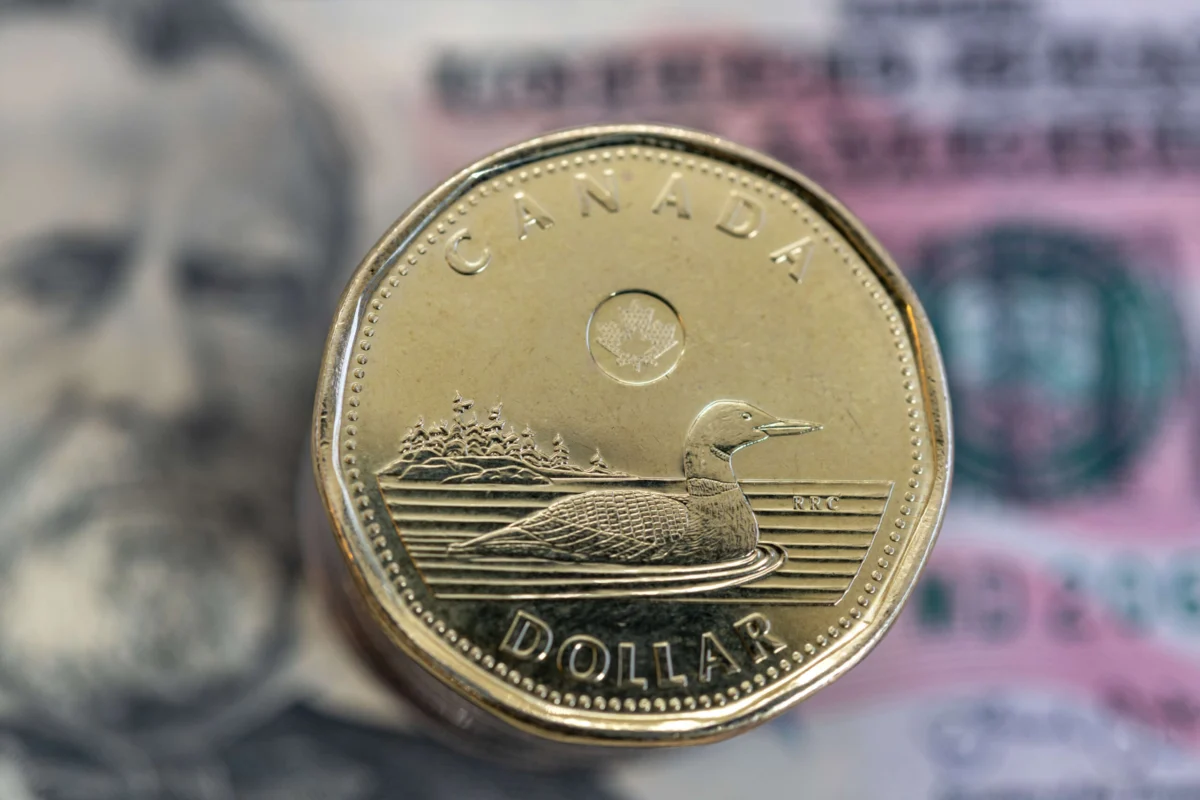
The Canadian dollar experienced a sharp decline on Monday morning, plummeting in value as trade negotiations between Ottawa and Washington abruptly dissolved. This breakdown leaves both nations bracing for significantly higher prices on a broad spectrum of imported goods, casting a dark shadow over Canada’s economic growth trajectory. The United States, on Saturday, initiated the escalation by imposing 50% tariffs on approximately $20 billion worth of imports originating from Canada, its second-largest trading partner after Mexico. The affected goods encompass a wide array of products, including dairy, wine, lumber, furniture, cement, and ceramics, impacting numerous sectors of the Canadian economy.
In a swift and decisive response, Canadian Prime Minister Mark Carney declared that Ottawa would retaliate "dollar for dollar" with its own tariffs, slated to commence on September 8th. These counter-tariffs will target key Canadian sectors such as steel, dairy, agricultural equipment, paper, and electronics. Details of the retaliatory measures are expected to be released in the coming days, signaling a hardening of positions on both sides. By 8 a.m. ET, the Canadian dollar had depreciated by 0.58% against the U.S. dollar, a trend mirrored against the euro, pound, and yen, underscoring the immediate financial market reaction to the escalating trade dispute.
"We Got Attacked": Accusations Fly as Negotiations Fail
The final week of trade talks was characterized by a frantic effort to secure a bilateral agreement. However, by the weekend, the rhetoric had significantly soured, with each nation leveling accusations against the other for the impasse and for engaging in unfair trade practices. U.S. Trade Representative Jamieson Greer, speaking to CNBC on Monday, asserted that a deal had been within reach. He contended that in the "last hours" of negotiation, Canada "wanted more" than Washington was prepared to offer.

Greer elaborated on the U.S. position, stating, "We offered them the best access to the United States of any country in the world. Obviously, there’s always going to be tariffs, and there’s going to be that protection for American workers and companies." He further detailed the concessions Washington had put on the table, including "cutting tariffs in half on steel, on aluminum, and extensively reducing them on autos, and even on things like softwood lumber, accommodating some element of that. Things that are sensitive for the Canadians. They simply… wanted more." Greer expressed bewilderment at Canada’s stance, remarking, "I don’t know if it was political for them. It certainly doesn’t make economic sense." He attempted to assuage market concerns by noting that the tariffs affect a "very small amount of trade," amounting to approximately 0.6% of total U.S. goods imports.
Conversely, Prime Minister Carney articulated a starkly different perspective. He stated on Saturday that the U.S. had "asked too much and offered too little." Carney emphasized, "We were not prepared to compromise Canada’s sovereignty or undermine our key industries." When pressed by reporters about whether this situation constituted a trade war, Carney’s response was unequivocal: "Because we got attacked. You’re at war when you get attacked. We got attacked." He indicated that contentious issues, particularly regarding autos, steel, and aluminum, along with Canadian protections for the French language and the country’s ability to forge independent trade deals, were significant sticking points in the negotiations.
Deeply Intertwined Economies Face Disruption
The trade relationship between the U.S. and Canada is characterized by profound interdependence. The two nations exchange tens of billions of dollars in agricultural products annually, and their automotive industries are intricately linked. A significant portion of the U.S. trade deficit with Canada, which stood at $48.3 billion, is attributed to substantial imports of Canadian natural gas, electricity, and crude oil. Echoing the experiences of the European Union during its own protracted trade negotiations with the Trump administration, Canada maintains that its trade balance with the U.S. shifts into surplus when services are accounted for.
U.S. President Donald Trump, in a post on Truth Social on Sunday, voiced his frustration, asserting, "Canada wants the benefits of being a State, without being one!!!" He also accused Canada of imposing "massive amounts of Tariffs" on American farmers for "many years," declaring, "No more!!!" This rhetoric underscores the deep-seated grievances and differing perspectives that have fueled the current trade conflict.

Economic Fallout: Canada Faces Greater Vulnerability
Economists on Monday widely agreed that Canada’s smaller, trade-oriented economy is inherently more vulnerable to this trade escalation than that of the United States. While Prime Minister Carney has indicated that fiscal measures may be implemented to support affected businesses, he acknowledged that the new duties would "raise costs and reduce choice for Canadians."
James Knightley, chief international economist at ING, characterized the U.S. tariffs as "not a hammer blow" due to their application to only 5% of Canada’s goods exports to the U.S. However, he cautioned that "for many individual companies it will be devastating." Knightley also highlighted the significant negative impact on "many small and medium-size companies, particularly in border states" of the U.S.
Bradley Saunders, North America economist at Capital Economics, echoed these concerns, suggesting that the most exposed Canadian industries "could be crippled" by the substantial levies. A critical development in this round of tariffs is the absence of an exemption for goods that comply with production rules stipulated by the United States-Mexico-Canada Agreement (USMCA). This agreement, a cornerstone of North American trade, is currently undergoing renegotiation. This marks a departure from previous tariff rounds implemented since April 2025, when President Trump declared a "liberation day" from existing trade arrangements.
Saunders further analyzed the potential macroeconomic consequences, noting that while the targeted goods represent approximately 0.6% of Canada’s gross domestic product (GDP), "a collapse in exports would still be enough to push already-weak GDP growth back towards zero." He warned of a cascading effect, particularly if weakened U.S. demand for finished products like furniture and electrical equipment negatively impacts upstream primary industries that are already contending with the strain of Section 232 tariffs. The situation could deteriorate further, Saunders posited, if President Trump escalates retaliatory measures against Canada’s countermeasures. He estimated that extending the 50% tariff rate to a fifth of Canada’s U.S. goods exports, a significant increase from the current 5%, could reduce Canadian GDP by approximately 2%, potentially pushing the country into recession.

Christian Lawrence, chief cross-asset strategist and head of Americas and energy markets research at Rabobank, suggested that the current U.S. tariff package would have a minimal impact on the U.S. economy. However, he identified a significant risk should Ottawa adopt a more aggressive retaliatory stance on other goods. Lawrence pointed out Canada’s inherent challenge: "Diversifying away from the world’s largest consumer sitting on your doorstep is impossible to do in a truly meaningful way."
Public Opinion and Political Undercurrents
Despite the potential economic repercussions, Prime Minister Carney’s firm stance has garnered considerable support within Canada. Recent public opinion polls indicate that a majority of Canadians favor a resolute approach in negotiations with the U.S. Nevertheless, a growing segment of the population expresses apprehension regarding job security. According to Canadian economist Trevor Tombe, the ongoing 50% U.S. tariffs could lead to approximately 90,000 job losses.
Prime Minister Carney’s election in March 2025 was largely propelled by a pledge to confront the White House. This commitment emerged amidst reports of Canadians actively removing U.S. alcohol from store shelves, a symbolic gesture highlighting the increasingly strained relations between the two North American neighbors. Pierre Poilievre, leader of the opposition Conservatives, articulated his party’s position on social media on Saturday, stating that Canada "cannot accept one-sided tariffs that will deindustrialize our country." This sentiment reflects a broader concern within Canada about the long-term viability of its industrial base in the face of escalating trade protectionism. The unfolding trade dispute between Canada and the United States marks a critical juncture, with significant economic and political implications for both nations and the broader global trading system.
