

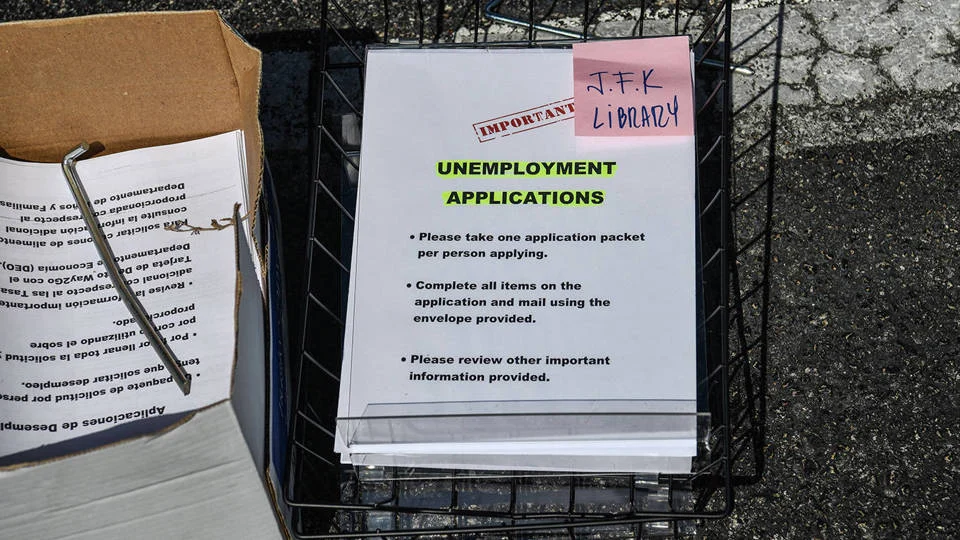
The United States labor market is exhibiting a perplexing duality, with aggregate economic indicators failing to capture a growing divergence in income and employment opportunities. While national statistics may paint a picture of general stability or even growth, a closer examination reveals a starkly uneven landscape, with certain sectors and demographics experiencing robust expansion while others confront escalating challenges, a trend potentially amplified by the accelerating integration of Artificial Intelligence. The latest figures from the Bureau of Labor Statistics (BLS) exemplify this paradox: in July 2026, the U.S. economy reportedly shed 23,000 jobs, yet the unemployment rate concurrently declined to 4.1%. This apparent contradiction warrants a deeper dive into the underlying dynamics shaping the American workforce.
Unpacking the July Jobs Report: A Tale of Two Economies
The July 2026 jobs report, released by the Bureau of Labor Statistics, has ignited debate among economists and policymakers. The headline figure of a 23,000 job loss might initially suggest a downturn, but the simultaneous drop in the unemployment rate to 4.1% from 4.2% in June indicates a more nuanced reality. This scenario typically arises when the number of people actively seeking employment decreases more significantly than the number of jobs lost, leading to a lower participation rate.
In July 2026, the labor force participation rate stood at 62.2%, a slight decrease from 62.3% in June. This means that while some individuals were leaving the workforce – perhaps due to retirement, returning to education, or discouragement – those who remained in the labor pool found it marginally easier to secure employment, thereby lowering the official unemployment rate. This phenomenon, while mathematically sound, underscores a critical issue: the aggregate data is not reflecting the lived experiences of all Americans.
The AI Factor: A Catalyst for Disparity
The burgeoning influence of Artificial Intelligence (AI) is increasingly being cited as a significant driver of this economic bifurcation. AI’s capacity to automate complex tasks, enhance productivity, and create entirely new industries is undeniable. However, its uneven deployment and impact are leading to a concentration of benefits in certain sectors and among specific skill sets, while simultaneously displacing workers in others.
Regions and industries heavily reliant on tasks that are susceptible to automation are beginning to experience what can only be described as recession-like conditions. This includes sectors such as customer service, data entry, and certain manufacturing processes. Workers in these areas may find their skills becoming obsolete, leading to job losses, wage stagnation, and a decline in living standards. For these individuals and communities, the national economic narrative of growth and low unemployment rings hollow.
Conversely, sectors at the forefront of AI development and adoption, such as advanced technology, specialized software engineering, and data science, are experiencing unprecedented boom times. Companies in these fields are not only creating high-paying jobs but are also witnessing substantial revenue growth and increased investment. This creates a self-reinforcing cycle of prosperity for those with the requisite skills and access to these emerging opportunities.
Historical Context: Echoes of Past Disruptions
The current economic landscape, marked by rapid technological advancement and widening inequality, is not without historical precedent. The Industrial Revolution, for instance, saw a massive shift in employment from agrarian economies to factory-based production. While this ultimately led to overall economic progress, it was accompanied by significant social upheaval, displacement of traditional livelihoods, and periods of intense hardship for many workers.
Similarly, the digital revolution of the late 20th century transformed the way businesses operated and created new economic opportunities. However, it also contributed to the decline of certain manufacturing jobs and the rise of the "gig economy," which has its own set of challenges related to job security and benefits.
The advent of AI represents a new wave of technological disruption, arguably more profound and rapid than its predecessors. The speed at which AI is evolving and integrating into various aspects of the economy means that the period of adjustment could be shorter and more intense, potentially exacerbating existing societal divides.
Supporting Data and Trends
Beyond the BLS July jobs report, several other economic indicators offer further evidence of this growing disparity:
- Wage Growth Divergence: While average hourly earnings have seen modest increases nationally, data from specialized economic analysis firms indicate that the highest earners, often in tech-related fields, are experiencing significantly faster wage growth compared to those in lower-skilled or service-oriented jobs. For example, a report from the National Bureau of Economic Research in early 2026 highlighted that the top 10% of earners saw their real wages grow by an average of 5% in the preceding year, while the bottom 50% experienced growth of less than 1%.
- Productivity Paradox: Despite advancements in technology, including AI, aggregate productivity growth has remained sluggish in many traditional sectors. This suggests that the benefits of AI are not being broadly shared across the economy and are instead concentrated in specific areas, leading to a disconnect between technological potential and overall economic output.
- Regional Economic Performance: Data from regional economic development agencies reveal a stark contrast in growth rates. Major tech hubs and innovation centers are experiencing sustained economic booms, attracting investment and talent. In contrast, older industrial towns and rural areas, often heavily reliant on sectors vulnerable to automation, are struggling with declining populations, reduced tax bases, and persistent unemployment.
- Investment Patterns: Venture capital funding and corporate investment are overwhelmingly flowing into AI-driven startups and established companies at the cutting edge of technological innovation. This influx of capital further fuels the growth of these sectors, while underinvesting in areas that require retraining or support for transitioning workforces.
Expert Analysis and Implications
Kaushik Basu, a distinguished economist and professor, has frequently cautioned against the dangers of relying solely on aggregate economic indicators. In a recent commentary, he emphasized, "The headline figures can be misleading. They can mask a deeply unequal reality where a select few are thriving while a significant portion of the population is being left behind. The rise of AI has the potential to act as an accelerant for this disparity, creating economic pockets of boom and bust within the same nation."
The implications of this widening economic chasm are far-reaching:
- Social Unrest and Political Polarization: Persistent economic hardship and a sense of being overlooked can fuel social unrest and contribute to political polarization. Disenfranchised communities may feel that the economic system is not working for them, leading to increased populism and demands for radical policy changes.
- Reduced Consumer Demand: If a significant portion of the population experiences stagnant or declining incomes, overall consumer demand can suffer, potentially hindering broader economic growth. This creates a feedback loop where economic weakness in certain segments can impact the entire economy.
- Skills Gap and Labor Market Mismatch: The rapid evolution of AI necessitates a continuous adaptation of skills. A failure to invest in education and retraining programs will exacerbate the skills gap, making it harder for displaced workers to re-enter the labor market and hindering the ability of businesses to find qualified talent.
- Erosion of the Middle Class: The traditional pathways to a stable middle-class life are being challenged. Without proactive measures, the economic divide could widen to the point where a strong, broad-based middle class is no longer sustainable.
Official Responses and Policy Considerations
In response to these emerging trends, policymakers are facing increasing pressure to address the growing economic divide. While specific official statements on the July jobs report’s implications for AI-driven disparity were limited at the time of publication, discussions around the following policy areas are intensifying:
- Investment in Education and Retraining: Governments and educational institutions are being urged to expand access to affordable and relevant education and vocational training programs. This includes a focus on skills that are complementary to AI, such as critical thinking, creativity, emotional intelligence, and advanced technical skills.
- Social Safety Nets: Strengthening social safety nets, including unemployment benefits, job placement services, and potentially exploring forms of universal basic income, is being considered to provide a buffer for workers displaced by automation.
- Regional Economic Development Strategies: Targeted investments in infrastructure, innovation, and workforce development in economically distressed regions are crucial to foster inclusive growth and create new opportunities beyond traditional industries.
- Regulation and Ethical AI Development: Policymakers are grappling with the need to establish regulatory frameworks that encourage responsible AI development and deployment, ensuring that the benefits are shared more broadly and that potential negative impacts are mitigated. This includes exploring antitrust measures to prevent excessive concentration of power in AI-dominant companies.
- Tax Policy Adjustments: Discussions are underway regarding potential adjustments to tax policies to ensure that the economic gains from AI are distributed more equitably, potentially through progressive taxation or incentives for companies that invest in their workforce.
Looking Ahead: Navigating the Uneven Future
The July 2026 jobs report serves as a stark reminder that economic progress is not monolithic. The United States stands at a critical juncture, where the transformative power of AI presents both immense opportunities and significant challenges. Ignoring the widening chasm between economic winners and losers risks a future of increased social instability and reduced overall prosperity. Proactive, inclusive policies that prioritize workforce adaptation, equitable distribution of gains, and support for those most vulnerable will be essential to navigate this complex and rapidly evolving economic landscape. The narrative of economic health must evolve beyond aggregate statistics to encompass the lived realities of all Americans, ensuring that technological advancement translates into shared prosperity rather than deepening division.
