

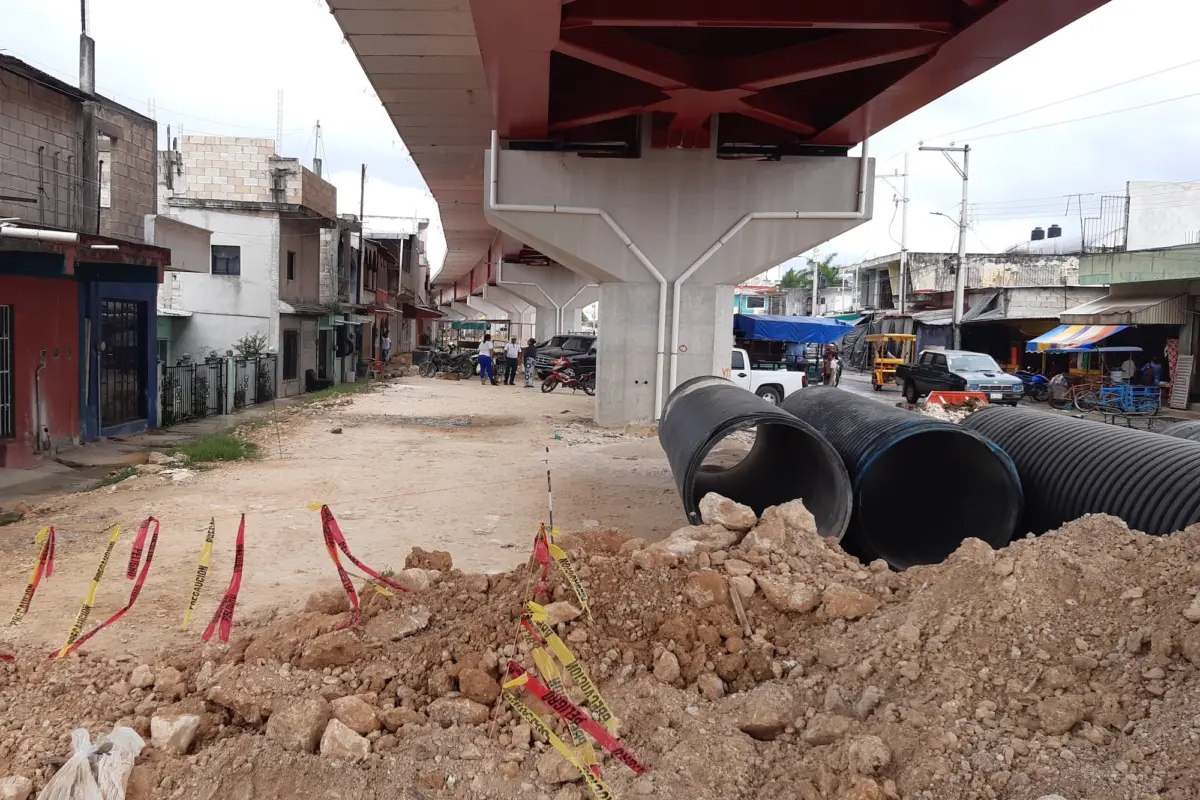
The Maya Train, a sprawling 1,000-mile rail circuit cutting through the dense jungles and ancient landscapes of the Yucatán Peninsula, was inaugurated with the promise of transforming one of Mexico’s most impoverished regions into a thriving hub of sustainable tourism and modern connectivity. Envisioned by former President Andrés Manuel López Obrador as a "monumental work" without equal in the world, the project sought to bridge the gap between the affluent resort corridors of Cancún and the isolated, culturally rich Maya communities of the interior. However, nearly three years after its full-scale operation began in late 2024, a mounting body of evidence from economists, environmentalists, and local residents suggests that the project has not only failed to deliver on its economic promises but has also exacted a devastating toll on the region’s delicate ecosystem and social fabric.
A Vision of Progress and the Reality of Debt
When the Maya Train was first announced in late 2018, shortly after López Obrador took office, it was marketed as a panacea for the economic disparities of southeast Mexico. The plan was to connect five states—Chiapas, Tabasco, Campeche, Yucatán, and Quintana Roo—via a high-speed rail line that would encourage the millions of tourists who visit the Caribbean coast to venture inland to archaeological sites like Palenque and Calakmul.

Initial cost estimates for the project were pegged at approximately US$8.5 billion. However, as construction progressed under the heavy-handed management of the Mexican military (SEDENA), the budget ballooned. By the time the final tracks were laid in 2024, analysis by the Mexican Institute for Competitiveness (IMCO) and other financial watchdogs revealed the total expenditure had surged to nearly US$30 billion. This nearly 300 percent increase in cost has left many questioning the project’s long-term fiscal viability, especially as operational data shows the line is running at a significant deficit.
Chronology of a Megaproject
The timeline of the Maya Train is a study in rapid-fire development often at odds with legal and environmental safeguards:
- July 2018: Newly elected President López Obrador announces the project as a cornerstone of his administration.
- December 2019: A controversial "popular consultation" is held. While the government claimed overwhelming support, the United Nations Human Rights Office criticized the process for failing to meet international standards for indigenous consent.
- 2020-2022: Construction begins across seven sections. Environmental groups file numerous injunctions to halt work, citing the lack of comprehensive environmental impact assessments. The government responds by declaring the train a matter of "national security" to bypass legal hurdles.
- December 2024: The train is officially inaugurated.
- 2025-2026: Ridership data begins to emerge, showing an average of just over 3,000 daily users—a fraction of the 74,000 daily passengers initially projected to ensure the project’s break-even point.
The Economic Paradox: From Boom to Recession
One of the most striking failures of the Maya Train has been its inability to sustain regional growth. While the construction phase brought a temporary surge in activity—Quintana Roo saw a 13 percent economic spike in 2023—the aftermath has been characterized by a sharp downturn. By the first half of 2025, the state’s economy had contracted by over 9 percent, according to data from the National Institute of Statistics and Geography (INEGI).

Economists point to the "extractive" nature of the construction boom as the primary cause. Much of the labor force was brought in from central and northern Mexico. Javier Becerril, an economics professor at the Autonomous University of Yucatán, noted that the wages paid to these workers did not circulate locally. Instead, the "economic spillover" was redirected to the workers’ home states, leaving Yucatán and Quintana Roo with higher inflation but no lasting wealth.
Furthermore, the influx of high-earning construction workers and military personnel caused the price of basic goods and housing to double or even triple in small villages. For the local Maya population, many of whom survive on the minimum wage (currently around MX$249 per day), the train has made life more expensive without providing the promised jobs. Currently, the railway employs only about 1,200 permanent staff, leaving the thousands of former construction workers unemployed or forced to migrate.
Environmental Devastation and the "Great Maya Aquifer"
The environmental impact of the Maya Train is perhaps its most permanent and controversial legacy. To clear the path for the nearly 1,000 miles of track, the government admitted to felling over 7 million trees. However, environmentalists like Guillermo Christy, an industrial engineer who has documented the damage, argue the true number is likely much higher when accounting for the secondary infrastructure built around the tracks.

The Yucatán Peninsula sits atop a unique karst limestone foundation, housing the world’s most extensive underground river system and thousands of cenotes (natural sinkholes). These caves are not only the region’s primary source of fresh water but also hold invaluable archaeological secrets, including ancient human remains and Pleistocene-era megafauna fossils.
To expedite construction, the military drove thousands of massive steel and concrete pylons directly through the roofs of these caves. This has led to:
- Water Contamination: The corrosion of steel pylons and the leakage of construction chemicals into the pristine aquifer.
- Structural Instability: The perforation of cave ceilings has increased the risk of sinkholes, threatening both the train’s safety and the surrounding jungle.
- Loss of Heritage: At least 130 caves have been documented as filled in or severely damaged, potentially destroying undiscovered archaeological sites.
"A forest can be replanted, but a cave system millions of years in the making is lost forever once it is punctured," Christy stated.

Social Unrest and the Rise of Insecurity
For the indigenous communities the train was supposed to serve, the reality has been one of broken promises and increased danger. Leaders like Pedro Uc have been vocal about the government’s failure to provide the basic infrastructure—electricity, hospitals, and schools—that was promised in exchange for community support.
More alarmingly, the connectivity provided by the train and its associated access roads has facilitated the expansion of organized crime into previously isolated areas. In Yucatán, a state traditionally known as one of the safest in Mexico, crime rates surged by 50 percent in 2026. Locals report an increase in abductions, extortion, and violence, which they link to the arrival of outside groups following the rail corridor.
"The train didn’t bring tourists to our villages; it brought insecurity and fear," Uc said, describing the transformation of his community as "a scene from a movie" that no one asked to be part of.

Logistical Failures: A "White Elephant" in the Jungle?
Urbanists point to a fundamental lack of planning as the reason for the train’s low ridership. In several major hubs, including Mérida and Campeche, the stations were built miles away from the city centers due to land disputes and the high cost of urban relocation. This has rendered the train inconvenient for daily commuters and tourists alike.
For a traveler in Cancún, reaching the Maya Train station often requires an expensive taxi ride, making the total cost and time of the journey higher than simply taking a bus or renting a car. Ticket prices also present a barrier; a fare from Mérida to Cancún costs approximately MX$489, which is nearly two days’ worth of minimum wage. This ensures that the very people the project was intended to benefit—the local Maya workers—cannot afford to use it.
Analysis of Implications and Lessons Learned
The Maya Train stands as a cautionary tale of "top-down" governance. By prioritizing political speed and nationalistic symbolism over expert engineering and local consultation, the project has become what critics call a "white elephant"—a massive asset that costs more to maintain than it generates in value.

The implications for Mexico are twofold. First, the project has set a precedent for the militarization of civil infrastructure, with the army now controlling not just the construction but the long-term profits (and losses) of the line. Second, it has highlighted the fragility of Mexico’s environmental laws when faced with "national security" designations.
For future megaprojects, experts suggest several critical takeaways:
- The Necessity of Bottom-Up Planning: Meaningful consultation with local communities must happen before the first shovel hits the ground, not as an afterthought.
- Expert Autonomy: Engineers and environmental scientists must have the power to halt or reroute projects based on geological and ecological realities without fear of political reprisal.
- Sustainable Integration: Connectivity is useless if the final "mile" of the journey—from the station to the town center—is not addressed through affordable local transit.
As the Maya Train continues to rattle through the jungle with its carriages mostly empty, the people of the Yucatán are left to navigate a landscape that has been irrevocably altered. The "monumental work" is indeed a reality, but for many, it serves as a monument to the high cost of progress without a plan.
