

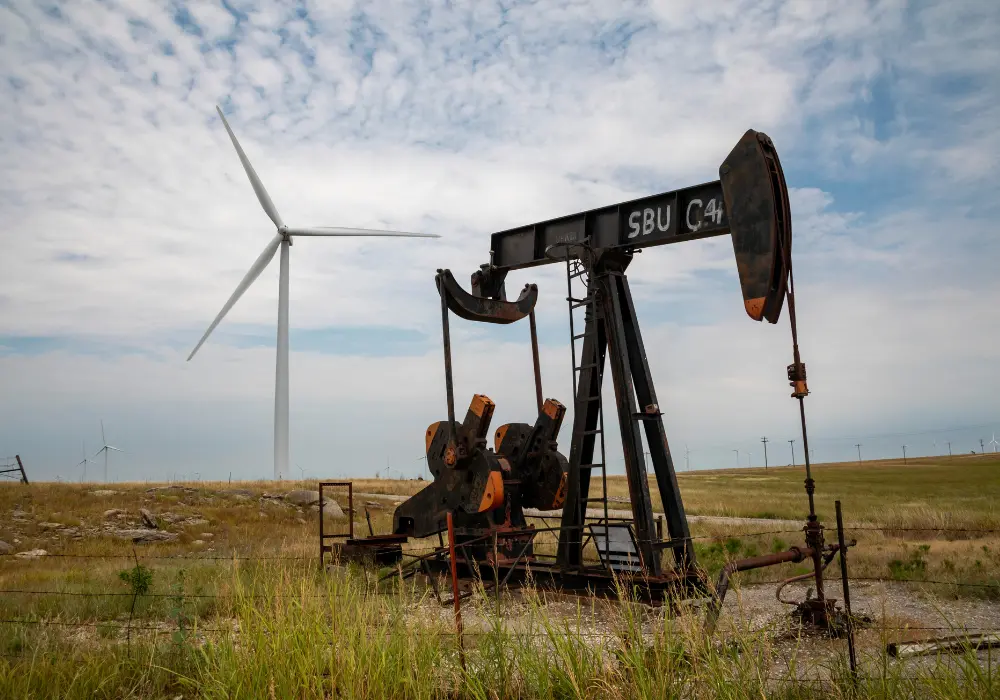
The administration of Prime Minister Mark Carney is currently navigating a treacherous political and economic landscape as it attempts to reconcile Canada’s identity as a global energy powerhouse with its ambitious commitments to a net-zero future. Since taking office, Carney—the former Governor of both the Bank of Canada and the Bank of England—has faced a groundswell of criticism from environmental advocates who once viewed him as a champion of climate-aligned finance. The source of this indignation lies in a perceived policy paradox: a government that continues to promote pipeline infrastructure for Alberta’s oil exports while simultaneously introducing a sophisticated sustainable finance taxonomy designed to steer capital toward green initiatives. This duality has sparked a national debate over whether the Carney government is genuinely pioneering a new economic model or simply providing a sophisticated veneer for the continued expansion of the fossil fuel industry.
To mitigate the risk of being remembered primarily as an "oil man" who facilitated the extension of carbon-intensive infrastructure, the Prime Minister has centered his economic platform on three pillars: the rapid expansion of renewable energy, the comprehensive electrification of the industrial base, and the implementation of a homegrown sustainable finance taxonomy. While the first two pillars rely on traditional infrastructure investment and technological deployment, the third—the taxonomy—is a complex regulatory and financial tool intended to redefine how the market perceives "sustainability." However, early analysis from financial experts and international observers suggests that this initiative may face significant hurdles in achieving its lofty goal of closing Canada’s massive climate investment gap.
Understanding the Taxonomy: A Framework for Climate Finance
At its core, a sustainable finance taxonomy is a classification system designed to provide clarity to investors, regulators, and corporations regarding which economic activities can be legitimately labeled as "green" or "sustainable." By establishing rigorous, science-based criteria, a taxonomy aims to eliminate the ambiguity that often leads to "greenwashing"—the practice of making unsubstantiated or misleading claims about the environmental benefits of a product, service, or investment strategy.
In the Canadian context, the proposed taxonomy is modeled after an "Energy Star" system for the financial sector. Just as consumers look for standardized labels to determine the efficiency of home appliances, institutional investors require a standardized framework to assess the climate alignment of their portfolios. The Canadian model, however, distinguishes itself from international precedents by introducing a tiered labeling system that acknowledges the unique structure of the nation’s resource-dependent economy.
The first label is the "Green" designation, reserved for activities that are inherently low-carbon or zero-emission. This includes renewable energy production (wind, solar, and hydro), the manufacturing of electric vehicles, and the development of zero-carbon building materials. These activities are viewed as the bedrock of a net-zero economy by 2050.
The second tier is the "Transition" label. This category is designed for high-emission sectors that do not yet have a commercially viable zero-carbon path but are essential to the modern economy, such as the production of steel, cement, and chemicals. The transition label identifies projects that significantly reduce the carbon intensity of these processes, moving them toward a trajectory consistent with global climate targets.
The third and most contentious tier is the "Abatement Measures" label. This category specifically targets the upstream oil and gas sector, refining, and distribution. It is intended to classify activities that reduce direct emissions—such as methane leak detection or carbon capture and storage (CCS)—within the fossil fuel industry as it undergoes a managed phase-out. Critics argue that including any form of oil and gas production in a "sustainable" framework is a fundamental contradiction, while proponents suggest it is a pragmatic necessity for a country where the energy sector remains a primary driver of GDP.
The Global Context and Canadas Delayed Entry
Canada is entering the taxonomy arena significantly later than many of its global peers. According to data from the Organisation for Economic Co-operation and Development (OECD), by 2025, there were more than 50 national and regional taxonomies in operation or under development. These range from the comprehensive framework established by the European Union to emerging systems in nations such as Zambia, Sri Lanka, and the Dominican Republic.
The European Union’s taxonomy, which came into force in 2020, has largely served as the global benchmark. However, the EU’s experience also serves as a cautionary tale. The process of defining "green" activities in Europe became highly politicized, leading to protracted battles over the inclusion of natural gas and nuclear energy. Canada’s decision to include "abatement measures" for the oil patch reflects a similar attempt to balance environmental integrity with political and economic realities, a move that has drawn skepticism from the international sustainable finance community.
The delay in Canada’s implementation has left domestic institutional investors, such as the Public Sector Pension Investment Board (PSP Investments), to develop their own bespoke classification systems. While these internal frameworks allow firms to manage their specific risks, they lack the universal comparability and regulatory backing of a national standard. The absence of a unified "common language" has, until now, forced many Canadian firms to "reinvent the wheel" for every new ESG (Environmental, Social, and Governance) report or green bond issuance.
The $115 Billion Gap: Can a Taxonomy Drive Capital?
The primary economic justification for the taxonomy is the urgent need to bridge Canada’s investment shortfall. Federal estimates suggest that to reach net-zero emissions by 2050, Canada requires an annual investment of approximately $115 billion into climate-positive projects. Current funding levels fall significantly short of this target. The Carney government argues that by providing a clear, official framework, the taxonomy will de-risk green investments and attract the necessary private capital to fill this gap.
However, the causal link between the existence of a taxonomy and an actual increase in net-new investment remains unproven. In its Review on Aligning Finance with Climate Goals 2026, the OECD noted that it is difficult to demonstrate whether taxonomies actually catalyze new capital or simply lead to the relabeling of existing investments. For example, a pension fund that was already planning to invest in a wind farm may simply apply the "green" label to that investment post-facto, without increasing its overall capital allocation to the sector.
Furthermore, the voluntary nature of the proposed Canadian taxonomy presents a significant challenge. Unlike some aspects of the EU framework, which mandate certain disclosures for large financial institutions, the Canadian system relies on market adoption. Without mandatory requirements, there is a risk that the taxonomy will be used selectively by firms to highlight their most favorable activities while ignoring those that do not meet the criteria.
Challenges to Implementation and Market Adoption
The effectiveness of a taxonomy is also limited by the quality of data and the strategic priorities of financial institutions. Analysis by PwC on the mandatory disclosures of European banks and asset managers suggests that even when data quality is high, taxonomy alignment rarely dictates high-level corporate strategy. A firm may report that 35% of its revenue is taxonomy-aligned, but this figure often functions as a compliance metric rather than a driver for shifting capital away from non-aligned sectors.
Géraldine D’Argembeau, a partner at PwC Belgium specializing in sustainability risk, has noted that without a "genuine market demand" and "strong political commitment," these frameworks risk becoming "regulatory checkboxes." In Canada, this concern is amplified by the political friction surrounding the "abatement" label for oil and gas. If the taxonomy is perceived by international investors as a tool for "greenwashing" the oil sands, it could undermine the credibility of the entire system, potentially leading to a "green discount" where Canadian sustainable bonds are viewed with more skepticism than those from other jurisdictions.
Chronology of Canadas Sustainable Finance Evolution
To understand the current state of the taxonomy, it is essential to look at the timeline of Canada’s climate finance policy:
- 2019: The Expert Panel on Sustainable Finance, chaired by Tiff Macklem, releases its final report, recommending the creation of a Canadian transition taxonomy.
- 2021: The Sustainable Finance Action Council (SFAC) is established to provide the government with expert advice on critical market infrastructure.
- 2023: Initial draft frameworks for the taxonomy are circulated among industry stakeholders, focusing on the distinction between "green" and "transition."
- 2024: Following the transition of leadership to the Carney government, the "abatement" category is introduced to address the specific needs of the upstream oil and gas sector.
- 2025: Feedback on the draft taxonomy reveals a deep divide between the financial sector, which seeks clarity, and environmental NGOs, which reject the inclusion of fossil fuel abatement.
- 2026: The OECD releases its review, highlighting the global difficulty in proving that taxonomies drive additional sustainable investment, just as Canada prepares to finalize its legislation.
Official Responses and Stakeholder Perspectives
The reaction to the proposed taxonomy has been predictably polarized. The Canadian Association of Petroleum Producers (CAPP) has cautiously welcomed the "abatement" label, arguing that the industry requires access to sustainable finance to fund the multi-billion-dollar carbon capture projects necessary to meet federal emissions reduction targets. Without such a label, industry advocates warn of "capital flight," where investors divest from Canadian energy companies due to ESG pressures, potentially destabilizing the national economy.
Conversely, environmental organizations such as Environmental Defence and the Pembina Institute have expressed alarm. They argue that the "abatement" category provides a loophole that allows oil companies to claim sustainability credentials while continuing to expand production. These groups point to the government’s continued support for pipelines as evidence that the taxonomy is a tactical political tool rather than a sincere environmental strategy.
Financial institutions remain in the middle. While organizations like the University Pension Plan Ontario have praised the taxonomy for providing a much-needed "Energy Star" system for investments, there is lingering concern about the complexity of the three-label system. Analysts worry that having too many categories—green, transition, and abatement—may confuse international investors who are used to more binary systems.
Analysis: Implications for the Carney Legacy
The success of the Canadian sustainable finance taxonomy will ultimately be judged by its ability to influence the "real economy." If the framework leads to a measurable shift in capital—resulting in new renewable energy grids, retrofitted industrial plants, and a genuine decline in the carbon intensity of the energy sector—it will be hailed as a masterstroke of "Carney-esque" technocratic governance. It would demonstrate that a resource-rich nation can successfully pivot its financial architecture toward a net-zero future without triggering an immediate economic collapse.
However, the risks are substantial. If the taxonomy fails to attract new capital and instead becomes a tool for relabeling business-as-usual activities, the Carney government will face a crisis of credibility. The Prime Minister’s gamble relies on the belief that the financial sector can be the primary engine of the climate transition. But as the OECD and PwC have suggested, financial labels are no substitute for direct industrial policy and clear, mandatory regulations.
As the legislation moves through Parliament, the eyes of the global financial community remain fixed on Ottawa. Canada is attempting a high-wire act: trying to remain an "oil man’s" economy in the short term while building a "green man’s" financial system for the long term. Whether this taxonomy is a bridge to a sustainable future or a "pipe dream" intended to pacify conflicting interests remains the defining question of the Carney era. For now, the "green with envy" sustainable finance community can only wait to see if the voluntary framework will possess the teeth necessary to close the $115-billion gap and steer the nation away from its carbon-heavy past.
