

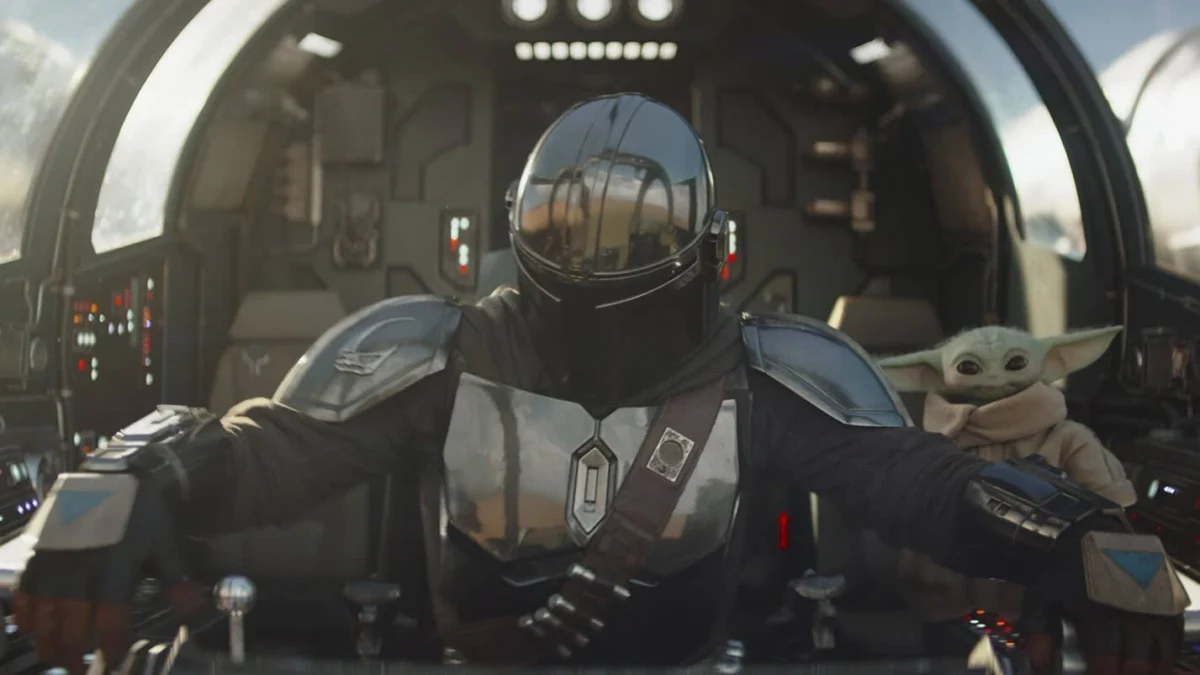
The theatrical release of Walt Disney’s "The Mandalorian and Grogu" on Friday marked a pivotal moment for the Star Wars franchise, ending a seven-year hiatus from the silver screen that began following the conclusion of the sequel trilogy. Sunday box office estimates indicate that the film, a cinematic extension of the flagship Disney+ series "The Mandalorian," outperformed initial industry forecasts by earning approximately $82 million in domestic ticket sales over its first three days. While official figures are expected to be confirmed by Monday afternoon, the early data suggests a resilient appetite for the franchise, even as it transitions from a streaming-first model back to a traditional theatrical format.
Despite exceeding the $80 million threshold predicted by many box office analysts, the debut of "The Mandalorian and Grogu" sits slightly below the $84 million opening of 2018’s "Solo: A Star Wars Story." According to data from Comscore, this makes the film the lowest-opening Star Wars project of the Disney era in terms of raw weekend numbers. However, context is vital; whereas "Solo" was widely considered a financial disappointment due to its massive production budget and lukewarm reception, "The Mandalorian and Grogu" enters a different market landscape, bolstered by years of brand-building on digital platforms and a more targeted production strategy.
The Path to the Big Screen: A Chronology of the Mando-Verse
The journey of "The Mandalorian and Grogu" to theaters is a testament to the evolving strategy of Lucasfilm under the leadership of Kathleen Kennedy and the creative direction of Jon Favreau and Dave Filoni. The franchise’s pivot to television began in November 2019 with the launch of Disney+, where "The Mandalorian" served as the platform’s cornerstone original content. Over three seasons, the series revitalized the Star Wars brand, introducing the "Child" (popularly known as Baby Yoda and later revealed as Grogu) and the titular bounty hunter, Din Djarin.
The decision to elevate these characters to a feature film was announced following a period of internal restructuring at Disney. Following the release of "Star Wars: The Rise of Skywalker" in 2019, the company paused theatrical releases to avoid "franchise fatigue" and to focus on building out the Disney+ ecosystem with series such as "The Book of Boba Fett," "Ahsoka," and "Andor." The 2023 Hollywood labor strikes further complicated the production timeline, shifting several planned projects. "The Mandalorian and Grogu" eventually emerged as the lead project to spearhead the franchise’s theatrical return, capitalizing on the immense popularity of its lead characters.
Domestic and International Performance Metrics
While the $82 million three-day domestic total is the headline figure, industry experts are closely watching the performance over the four-day Memorial Day holiday weekend. Projections suggest the film could exceed $100 million domestically by the end of the holiday period. This trajectory is essential for Disney, as Memorial Day weekend is traditionally a high-stakes window for summer blockbusters.
On the international stage, "The Mandalorian and Grogu" secured approximately $63 million in ticket sales across various global territories. This brings its global opening weekend total to roughly $145 million. While Star Wars has historically seen its strongest performance in North America, Western Europe, and Japan, the global reception of the Disney+ series appears to have provided a solid foundation for this theatrical venture. The international numbers reflect a steady interest, though they also highlight the ongoing challenge of expanding the franchise’s footprint in markets like China, where domestic sci-fi epics have increasingly dominated the box office.
The Significance of Premium Large Format Screenings
A notable trend in the film’s opening weekend was the heavy reliance on Premium Large Format (PLF) screenings. According to data from EntTelligence, 41% of all tickets sold were for upgraded experiences, including IMAX, Dolby Cinema, and other large-format offerings. This indicates that the modern cinema-going audience views Star Wars as an "event" experience worth a higher price point.
The financial impact of these premium choices is significant. EntTelligence reported that while standard tickets for the film averaged $16.01, premium tickets commanded an average of $19.43. This $3.42 delta per ticket contributed substantially to the film’s ability to surpass its $80 million projection. For theater owners, the high PLF turnout is a positive signal that audiences are willing to pay for technological superiority—better sound, larger screens, and higher resolution—when viewing high-concept science fiction.
Beyond the Box Office: The Disney Multimedia Flywheel
For The Walt Disney Company, the success of "The Mandalorian and Grogu" is not measured solely by ticket sales. The film serves as a central hub for a vast revenue "flywheel" that includes merchandise, streaming viewership, and theme park attendance.
Retail and Merchandise
Star Wars remains a retail powerhouse, generating more than $1 billion in annual retail sales even in years without a theatrical release. The character of Grogu, in particular, has been a merchandising phenomenon since 2019. The release of a new film provides a fresh catalyst for toy sales, apparel, and collectibles. Industry analysts expect a significant surge in consumer spending throughout the second and third quarters as a result of the film’s theatrical presence.
Streaming Synergy
The film’s release has already triggered a "halo effect" on Disney+. "The Mandalorian" series is currently the most-watched original show on the platform, with over 1.3 billion hours watched globally. Internal data suggests that viewership for the existing three seasons of the show, as well as related titles like "Ahsoka" and "Star Wars: The Clone Wars," saw a double-digit percentage increase in the weeks leading up to the film’s premiere. This synergy helps justify the high costs of theatrical marketing, as it simultaneously drives subscriber engagement and retention for the streaming service.
Theme Parks and Interactive Media
Disney has also integrated the film’s narrative into its physical locations. At Disneyland and Walt Disney World, the "Millennium Falcon: Smuggler’s Run" attraction has been updated with a new mission featuring Grogu in the cockpit, providing a direct tie-in for park guests. Additionally, the BDX droids, which have a presence in the new film, have been deployed as free-roaming characters within the "Star Wars: Galaxy’s Edge" themed areas.
The reach extends into the digital gaming space as well. Through a strategic partnership with Epic Games, in which Disney recently invested $1.5 billion, "Fortnite" has introduced new Star Wars-themed environments and purchasable cosmetics. These integrations ensure that the brand remains culturally relevant across multiple demographics and platforms simultaneously.
Strategic Implications for Lucasfilm’s Future
The performance of "The Mandalorian and Grogu" will likely dictate the pace and scale of future Star Wars theatrical projects. Lucasfilm currently has several films in various stages of development, including a project focused on Rey Skywalker’s New Jedi Order, a "Dawn of the Jedi" prequel from director James Mangold, and a culminating "Mando-verse" film directed by Dave Filoni.
The $82 million opening suggests that while the franchise may not be reaching the heights of "The Force Awakens" ($248 million opening), it maintains a stable and dedicated audience. This stability is crucial for Disney CEO Bob Iger’s stated goal of focusing on "quality over quantity." By moving away from a rapid-fire release schedule and focusing on established, beloved characters, Disney appears to be seeking a sustainable middle ground between the massive blockbusters of the past and the niche appeal of streaming content.
Critical and Audience Reception
While financial data provides a quantitative look at the film’s success, the qualitative reception has also been a factor in its steady performance. Early exit polls and audience scores suggest that fans of the original series found the transition to film satisfying, praising the larger-scale action sequences and the continued chemistry between the lead characters. The film’s ability to maintain "legs" at the box office—referring to its performance in the weeks following the opening—will depend heavily on positive word-of-mouth and repeat viewings from the core fanbase.
Industry observers note that the success of this film could encourage Disney to look at other streaming properties for potential theatrical "graduation." As the cost of producing high-end prestige television remains high, the ability to offset those costs with a theatrical window is an attractive financial model for major studios.
Conclusion: A New Era for the Galaxy
The release of "The Mandalorian and Grogu" marks more than just a successful weekend for Disney; it represents a successful test of the franchise’s ability to bridge the gap between television and film. By leveraging the deep emotional connection audiences have with Din Djarin and Grogu, Lucasfilm has navigated a complex return to theaters in a post-pandemic, streaming-heavy world.
As official numbers are finalized on Monday, the focus will shift to the film’s long-term durability. With a clear path through the Memorial Day weekend and a lack of direct sci-fi competition in the immediate weeks following, "The Mandalorian and Grogu" is well-positioned to remain a dominant force at the box office. For Disney, the results affirm that the Force remains strong with its theatrical business, provided it is backed by the cross-platform power of its modern-day icons.
