

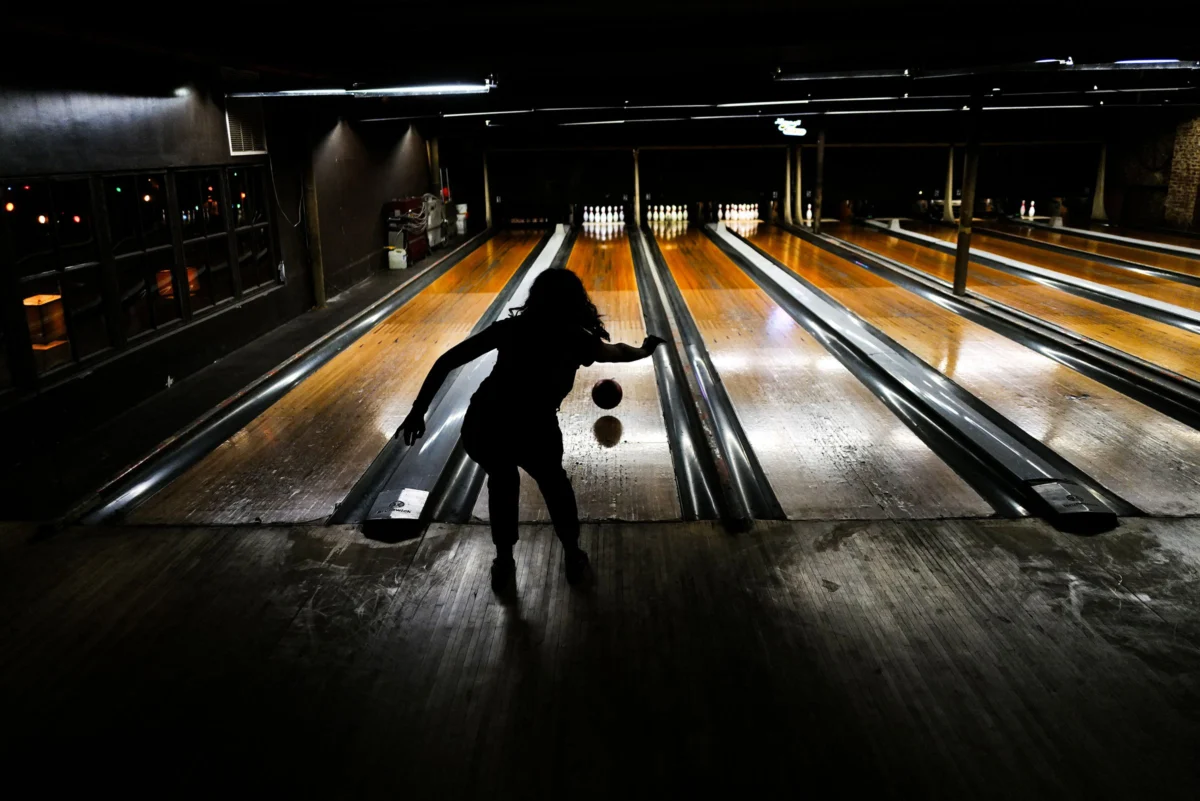
When EJ Tackett steps onto the approach during the upcoming Professional Bowlers Association (PBA) World Championships, his focus extends far beyond the mechanics of his release or the rotation of his wrist. Tackett, a dominant force who has secured the last three world titles, is widely considered the premier bowler on the planet. While his physical consistency is legendary, his true competitive edge lies in his mastery of a variable invisible to the naked eye: the complex, shifting topography of lane oil. In the modern era of professional bowling, success is no longer dictated solely by power or accuracy; it is a game of high-stakes chemistry and fluid dynamics played out over sixty feet of synthetic surface.
To the casual observer at a local bowling center, the lane appears to be a simple, static wooden or synthetic runway. Most amateurs only notice the oil when a ball behaves erratically or when a person accidentally steps past the foul line. However, at the professional level, lane oil is a foundational tactical element. It is applied in specific, microscopic patterns that dictate exactly how much friction a ball will encounter at different points along its path. By reducing friction in specific zones, the oil allows a ball to slide through the front part of the lane before "grabbing" the dry surface in the back third to hook into the pins with devastating force.
The Evolution of Lane Maintenance: From Protection to Strategy
The role of lane oil has undergone a radical transformation over the last half-century. In the 1970s and earlier, when lanes were constructed from natural hardwoods like maple and pine, oil served a primarily utilitarian purpose. It was a sacrificial lubricant designed to protect the wood from the heat and friction generated by heavy bowling balls. Without a consistent layer of oil, the friction would literally burn the wood, leading to permanent structural damage.
During this era, the application of oil was notoriously inconsistent. Mechanics often applied oil manually or with primitive machines that offered little precision. This led to "blind" playing conditions where professional bowlers had to spend several frames simply guessing where the oil was heavy and where it was thin. The transition to synthetic lane materials in the 1980s solved the durability issue but heightened the demand for standardized conditions.
The modern era of lane maintenance began with John Davis, a mechanic in Arizona who recognized that inconsistency was the greatest enemy of professional integrity. In the early 1980s, Davis developed specialized cleaning tools to ensure a pristine surface before oiling. By the 1990s, his company, Kegel, had pioneered "Sanction" technology. This system, which remains the industry standard alongside Brunswick’s Max lane machines, operates with the precision of a high-end inkjet printer. A computerized head travels across the lane, depositing oil board-by-board in precise microliter increments. This technological leap turned the lane from a random obstacle into a programmable field of play.
The Mathematics of Friction: Ratios and the "Autocorrect" Effect
The primary difference between a recreational bowling experience and a PBA event lies in the oil ratio. Most public bowling centers utilize a "house pattern" designed to make the game easier for the general public. These patterns typically feature a high oil ratio, often between 8:1 and 10:1. This means there is ten times more oil in the center of the lane than on the edges.
This creates a phenomenon known as "autocorrect." If an amateur bowler misses their target and throws the ball toward the edge of the lane, the ball hits a dry patch, friction increases, and the ball hooks back toward the center. Conversely, if they throw too close to the middle, the heavy oil allows the ball to slide further, preventing it from over-hooking. This "funnel" effect guides the ball toward the "pocket"—the critical space between the 1 and 3 pins for right-handers—even when the shot is imperfect.
In professional competition, this safety net is removed. The PBA utilizes "sport patterns" with ratios as low as 3:1 or even 1:1, known as "flat" patterns. On a 1:1 pattern, there is no margin for error. A ball thrown one board wide will stay wide, and a ball thrown one board inside will cross the head pin. Tackett notes that these conditions require an extraordinary level of precision regarding ball speed, revolution rate, and launch angle. When the oil is distributed evenly across all 39 boards of the lane, the bowler must create their own "shape" through pure physical skill and equipment choice.
The 2026 PBA World Series and the Library of Patterns
For the 2026 season, the PBA has curated a library of 20 distinct oil patterns from Kegel. These patterns vary in length, volume, and shape. Some patterns, like the "Don Johnson 40," are named after legends of the sport and run exactly 40 feet down the 60-foot lane. Others may be as short as 32 feet or as long as 52 feet.
The length of the pattern dictates the "break point"—the spot where the ball begins its move toward the pins. On a short pattern, the ball hooks early, requiring the bowler to play near the gutter. On a long pattern, the ball must slide nearly the entire length of the lane, requiring a more direct, "down-and-in" approach. By rotating these patterns weekly, PBA Commissioner Tom Clark ensures that players cannot rely on a single style of play.
"It forces players to think, adapt, and create, which is how we test greatness," Clark stated. "It’s what makes the sport more exciting, interesting, and entertaining every single week." This variety effectively turns each bowling tournament into a different "course," much like the bunkers and water hazards of a championship golf layout.
The Dynamic Lane: Why the Surface Changes Every Frame
Unlike a golf course, where the bunkers do not move after a drive, a bowling lane is a living environment. This is the most challenging aspect of the professional game. Modern bowling balls are made of porous reactive resin designed to absorb oil to create more friction. Consequently, every time a ball travels down the lane, it removes a tiny amount of oil (known as "burn") and pushes other oil further down the lane (known as "carry-down").
As a match progresses, the "track" where most players are throwing their balls becomes dry. If a bowler continues to use the same target, their ball will begin to hook too early and miss the pocket. To compensate, players must "migrate" their starting position, often moving their feet and their target toward the center of the lane where the oil remains thicker.
Tackett attributes his recent string of world championships to his ability to recognize these transitions faster than his peers. "I’ve been able to make a move or make a ball change just one or two shots faster than most everyone else," Tackett explained. In a 40-game marathon like the World Championships, making a proactive move instead of a reactive one can result in a cumulative advantage of hundreds of pins.
Technology and the Future of Lane Play
While technology is used to apply the oil, the PBA strictly limits the technology players can use to read it. An advanced system called Specto uses LIDAR technology to track a ball’s trajectory, velocity, and entry angle with pinpoint accuracy. While Specto data is a boon for television broadcasts, allowing viewers to see "ghost" paths of previous strikes, it is banned for player use during active competition.
Instead, professionals must rely on "reading the leaves." They watch how the ball exits the end of the oil pattern and how it hits the pins. If the ball "pins" (hits the pins weakly and leaves a 10-pin), it is often a sign that the oil has shifted or that the ball is losing too much energy in a dry patch.
This reliance on intuition is being passed down to the next generation. Tackett, whose family has owned a bowling center since he was a child, did not begin studying oil patterns until his mid-teens. Today, due to the availability of digital graphs and coaching clinics, competitive youth bowlers as young as eight are learning to interpret oil ratios and volume.
Broader Implications for the Sport
The increasing complexity of lane conditions has transformed bowling from a test of repetitive muscle memory into a high-level problem-solving exercise. This shift has helped the PBA secure broader television deals and increased sponsorship, as the "invisible" layer of oil provides a narrative of strategy that rivals the complexities of pitch selection in baseball or reading greens in golf.
As EJ Tackett prepares for the 2026 World Series, he is not just competing against the other bowlers on the transition; he is competing against the fluid dynamics of the lane itself. His success suggests that the future of the sport belongs to those who can master the intersection of physical excellence and scientific analysis. In a game decided by millimeters, the winner is often the one who best understands the disappearing, shifting, and invisible geometry beneath their feet.
