

In October 2025, the Canadian mineral exploration firm PTX Metals successfully closed a private placement totaling $2.25 million, utilizing a sophisticated financial mechanism known as "charity flow-through" shares. This transaction, while framed by proponents as an innovative method to bridge the gap between philanthropic giving and resource development, has ignited a fierce debate regarding the ethics of using tax-subsidized capital to fund exploration on contested Indigenous lands. The financing highlights a growing trend in the junior mining sector: the reliance on donor-driven capital to advance projects that might otherwise struggle to attract traditional venture investment due to high social and political risks.
The Mechanics of Charity Flow-Through Financing
To understand the implications of the PTX Metals deal, one must first navigate the complex architecture of Canadian tax law. Charity flow-through financing is a three-party transaction designed to maximize tax efficiency for high-net-worth donors while providing exploration companies with necessary capital at a premium.
The process begins with a mineral exploration company issuing "flow-through" shares. Under Canadian tax code, these companies can renounce certain exploration expenses to their investors. Because the company itself often has no income to offset, it "flows through" these tax deductions to the shareholders. In a "charity" structure, a philanthropist purchases these shares at a premium—reflecting the value of the tax relief—and immediately donates them "in-kind" to a registered charity.
The charity, seeking liquidity rather than equity, immediately sells the shares to a pre-arranged "end buyer," typically an institutional investor or a company insider, at a discounted market price. The results are multi-faceted: the exploration company receives its capital; the charity receives a significant cash donation; the end buyer acquires shares at a discount; and the donor receives a combination of the flow-through tax deduction and a charitable donation tax credit. In the case of PTX Metals, donors were able to claim relief from both the Charitable Donation Tax Credit and the federal government’s Critical Mineral Exploration Tax Credit (CMETC), a 30% non-refundable credit introduced to bolster the supply chain for minerals like nickel, copper, and lithium.
Financial analysis of the PTX placement suggests that for the $2.25 million raised, donors saved an estimated $2.22 million in taxes. By converting what would have been highly taxed income into capital gains and applying the specific credits for critical minerals, the net cost of the multimillion-dollar donation to the philanthropists was reduced to approximately $30,000.
Conflict in the Ring of Fire: A Chronology of Resistance
The capital raised by PTX Metals is earmarked for exploratory drilling at its flagship W2 property, located in the "Ring of Fire" region of Northern Ontario. This region is considered one of the most promising mineral deposits in Canada, yet it remains a flashpoint for Indigenous sovereignty and environmental protection.
The chronology of the current dispute began in late 2024, when the Ontario provincial government granted PTX Metals exploration permits for the W2 site. However, this administrative approval was met with immediate pushback from nearby First Nations. In early 2025, leadership from the Neskantaga and Nibinamik First Nations issued formal communications to the provincial government, asserting that PTX Metals did not have the authority or the consent required to operate on their ancestral homelands.
The situation escalated significantly following the October 2025 financing. Despite the lack of community consent, PTX prepared to move forward with its winter drilling program. In December 2025, the Chief and members of the Neskantaga First Nation council took the extraordinary step of traveling by snowmobile to the remote drilling site to hand-deliver a cease-and-desist letter to company representatives.
The letter was explicit: the First Nation considers any unauthorized exploration a violation of Treaty Rights and Anishinaabe law. The Neskantaga leadership has joined a growing coalition of First Nations calling for a total moratorium on industrial permitting and development within the Ring of Fire until a framework for true Indigenous jurisdiction and environmental oversight is established.
Historical Precedents: From Platinex to PTX Metals
The current friction between PTX Metals and First Nations is not an isolated incident but rather the latest chapter in a decades-long history of legal and physical confrontations. PTX Metals was formerly known as Platinex, a company that became synonymous with the "KI-6" case in 2008, one of the most significant mining-related conflicts in Ontario’s history.
In the early 2000s, Platinex sought to explore for platinum on the territory of the Kitchenuhmaykoosib Inninuwug (KI) First Nation. Despite the community’s declaration of a moratorium on mining, the company attempted to move a drilling crew onto the land in 2006. The subsequent legal battle resulted in an Ontario judge finding six KI leaders in civil contempt of court for blocking the company’s access. The "KI-6" were sentenced to six months in jail, serving 68 days before the sentence was overturned on appeal.
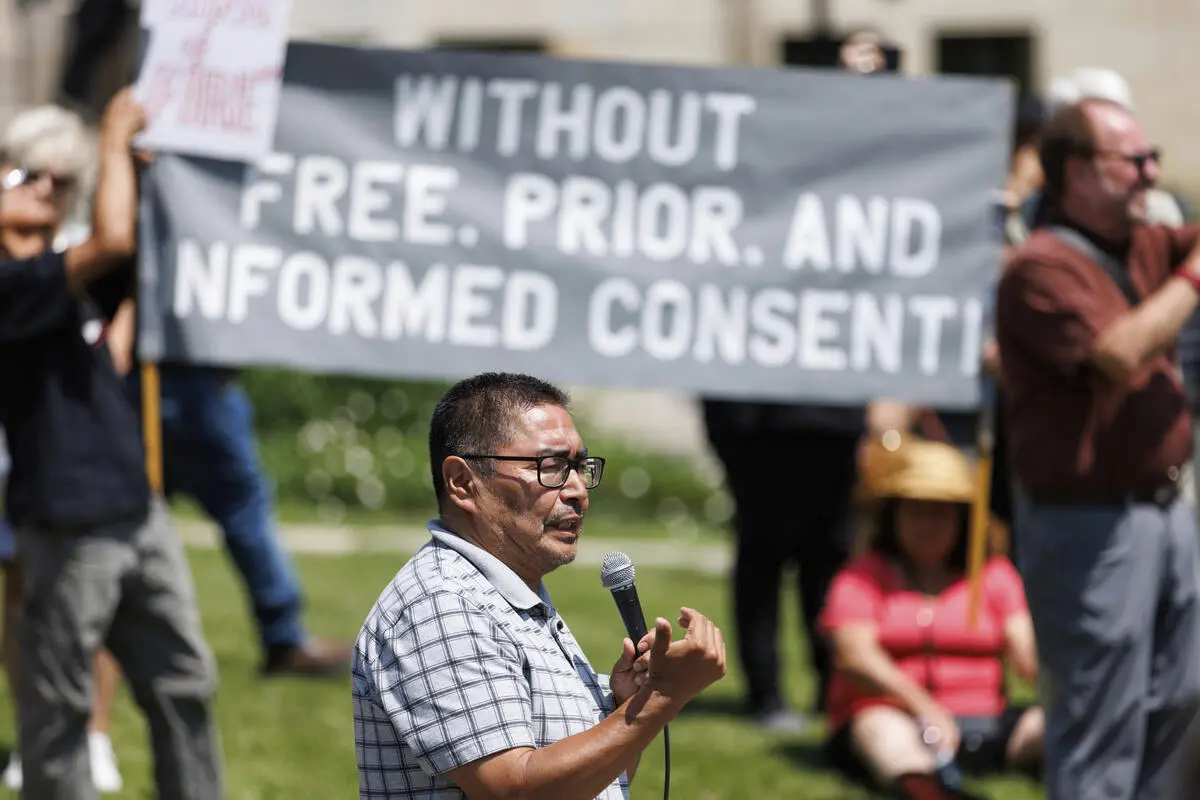
The fallout from the KI dispute was a landmark for Canadian mining law. It eventually led to Ontario paying Platinex $5 million to surrender its claims and withdrawing over 23,000 square kilometers of KI homeland from further staking. Critics of the company point to this history as evidence of a corporate culture that prioritizes legal "steamrolling" over the establishment of Free, Prior, and Informed Consent (FPIC). While the company rebranded to PTX Metals in 2024 to pivot toward the "green energy" narrative of critical minerals, Indigenous leaders argue the underlying disregard for their jurisdiction remains unchanged.
The Economic Risk of Non-Consent
Beyond the ethical and human rights concerns, the use of charity flow-through financing in contested areas presents a unique financial risk to investors and the Canadian public. Flow-through shares are contingent upon the company actually spending the raised funds on "qualifying exploration expenses" within a specific timeframe—in PTX’s case, by December 31, 2026.
If a company is prevented from conducting its exploration activities due to blockades, legal injunctions, or lack of access, it may fail to meet its spending requirements. In such scenarios, the tax relief renounced to the donors can be clawed back by the Canada Revenue Agency (CRA). Exploration companies typically indemnify their shareholders against such losses, but the ability of a junior miner to fulfill that indemnity is often questionable.
Historical filings show that PTX (as Platinex) previously carried a liability of over $633,000 for shareholder indemnification following its inability to drill on KI territory. The company’s financial stability was only preserved after a lengthy series of appeals to the CRA. Analysts suggest that by raising capital for projects that lack Indigenous consent, companies are essentially asking donors and the government to subsidize a "high-stakes gamble" where the downside is born by the public purse and the reputation of the charitable sector.
Broader Impact and the Myth of "Reconciliation Financing"
The architecture of charity flow-through is often defended by its proponents as a tool for "economic reconciliation." The argument posits that by facilitating exploration, these financings bring jobs, infrastructure, and investment to remote Indigenous communities. Firms like PearTree Canada, which specialize in these transactions, have frequently argued that flow-through capital is essential for the engagement of Indigenous businesses in the mining supply chain.
However, many Indigenous advocates and researchers, including Anna Stanley of the University of Guelph, argue that this framing obscures a "deeply colonial dynamic." They contend that the mechanism allows companies to bypass the market’s natural risk-assessment of projects. In a standard investment environment, a project facing a cease-and-desist letter from a First Nation would be considered "un-investable." By tapping into the "gold mine" of donor capital—where the primary motivation is tax relief rather than project viability—companies can advance projects despite local opposition.
The PTX Metals case serves as a microcosm of a broader national tension in Canada. As the federal government pushes its $3.8 billion Critical Minerals Strategy to compete in the global green economy, it is increasingly relying on fiscal tools that incentivize rapid exploration. When these incentives are decoupled from the requirement for Indigenous consent, they risk subsidizing conflict rather than development.
As of early 2026, the situation in the Ring of Fire remains at a standstill. The Neskantaga First Nation maintains its vow to defend its homelands through "direct land defense," while PTX Metals holds millions in capital that it may be legally unable to spend. The case has prompted calls for the charitable sector and federal regulators to implement stricter "consent-based" criteria for flow-through eligibility, ensuring that philanthropy is not used as a shield for activities that undermine Indigenous rights.
