

The venture capital ecosystem is currently navigating a period of unprecedented transformation, driven by a paradigm shift in how capital is deployed and managed. At the heart of this shift are the limited partners (LPs)—the institutional investors, pension funds, and family offices that provide the "money behind the money." For decades, the LP playbook was defined by a strict adherence to diversification. By spreading capital across multiple venture firms, generalist and specialist managers, and varied industry sectors, LPs sought to capture the high-growth potential of startups while mitigating the inherent risks of the asset class. However, the meteoric rise of generative artificial intelligence has effectively rewritten these rules, leading to a level of portfolio concentration that was once considered a violation of venture capital orthodoxy.
Today, LPs find themselves in uncharted territory. The rapid valuation surges of industry leaders like OpenAI and Anthropic have created a unique scenario where nearly every major venture firm is vying for a stake in the same handful of companies. This has resulted in LPs often holding overlapping positions in the same AI giants across multiple funds in their portfolios. While this concentration theoretically increases risk, the potential for outsized returns—the "bonanza" of the AI era—has largely silenced traditional concerns about over-exposure.
The Power Law and the Shift Toward AI Concentration
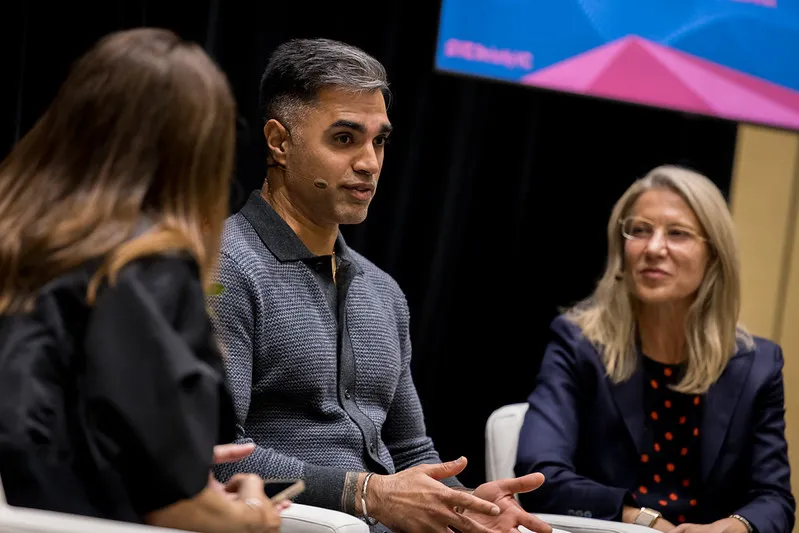
In the traditional venture capital model, the "power law" dictates that a small fraction of investments will generate the vast majority of returns. Historically, LPs expected their managers to find the "next big thing" in isolation. However, the current cycle is different. Amit Bhatti, a principal at TrueBridge, suggests that concentration in high-performing companies is not a "bug" but a "feature" of the modern venture landscape. As funds mature over a ten-year cycle, the natural progression is for capital to consolidate into winners. In previous cycles, these winners were names like SpaceX, Stripe, and Databricks. In the current generation, OpenAI and Anthropic have claimed that mantle with unprecedented speed.
Beezer Clarkson, of LGT Capital Partners, notes that while the late-stage market is heavily concentrated, the early-stage ecosystem still offers a degree of diversity. Small-check investments in seed-stage startups allow LPs to maintain a broad exposure to innovation, even as the "big-check" positions aggregate toward a few dominant AI platforms. This concentration reflects a belief that AI is not merely a sector, but a foundational shift in technology comparable to the advent of the internet or the mobile revolution.
The Acceleration of Fundraising Cycles: A "Yellow Light" Warning
One of the most significant changes in the venture landscape is the compression of fundraising timelines. Traditionally, venture firms would raise a new fund every two to three years, allowing time for the previous fund’s capital to be deployed and for the underlying startups to show progress. In the current environment, that cycle has been slashed to 18 months, and in some cases, a single year.
This acceleration is driven by the sheer scale of capital required to compete in the AI race. As seed rounds double in size and late-stage rounds for AI companies reach into the billions, venture capitalists (VCs) are exhausting their dry powder at a record pace. Both Clarkson and Bhatti describe this trend as a "yellow light" situation. For LPs, this creates a logistical and financial strain. Institutional investors operate on long-term allocation schedules; when a manager returns for a new fund much earlier than expected, it can disrupt the LP’s own cash flow management.
Furthermore, the quality of these "one-year vintages" is a point of concern. Historical data suggests that funds deployed too quickly during periods of peak valuation—such as the 2021 "COVID vintage"—often struggle to deliver top-tier returns. However, Bhatti points out a critical distinction between the current AI boom and the crypto-driven frenzy of 2021: revenue. While 2021 was characterized by "zero-revenue moonshots," many current AI leaders are scaling from zero to $100 million in revenue with historic speed, providing a fundamental valuation floor that was absent in previous bubbles.
The Evolution of Liquidity: The Rise of the Secondary Market
A perennial challenge in venture capital is the "liquidity gap"—the long duration between an initial investment and an exit via an Initial Public Offering (IPO) or acquisition. With companies staying private longer, the secondary market has emerged as the "third leg" of liquidity, alongside M&A and IPOs.
In the past, selling a stake in a startup on the secondary market was often viewed as a sign of distress or a lack of conviction. Today, that stigma has largely vanished. VCs and LPs alike are increasingly using secondary sales as a portfolio management tool. If a manager can sell 20% of a position in a high-valuation company like SpaceX or OpenAI and return the entire cost of the fund to their LPs, it is increasingly viewed as a prudent move rather than a retreat.
This shift toward a more sophisticated secondary market is essential for the health of the ecosystem. It allows LPs to meet their own operating commitments—such as funding university endowments or hospital operations—without waiting 15 years for a traditional exit. It also provides a release valve for employees and founders, though investors remain cautious about "founder liquidity" occurring too early in a company’s journey, which can sap the motivation required to navigate the difficult middle years of scaling.
The Impact of San Francisco’s Enduring Dominance
Despite the rise of remote work and the emergence of tech hubs in New York, Austin, and Miami, the Bay Area remains the epicenter of the AI revolution. The "density effect"—the concentration of talent, capital, and competing ideas in a small geographic area—continues to exert a powerful pull.
However, the soaring cost of living and real estate in San Francisco presents a potential hurdle for the next generation of founders. There is a persistent concern that the city could "price out" the very innovators it needs to sustain its dominance. Yet, history suggests that the ecosystem is resilient. As Clarkson observes, the talent often moves between the city and the suburbs, but rarely leaves the region entirely. The "OpenAI Mafia" and "Anthropic Mafia"—the cohorts of employees who will eventually leave to start their own firms—are expected to remain in the Bay Area, further cementing its status as the global hub for AI.
The Future of Emerging Managers
While a handful of "mega-funds" capture the majority of committed capital, the window remains open for emerging managers—those raising their first, second, or third funds. These managers often succeed by offering a specialized thesis or unique access to talent that the larger, more institutionalized firms might miss.
Interestingly, the profile of an "emerging manager" is evolving. LPs are now backing "operator-investors"—founders who are still running their own companies while investing on the side. There is also a growing interest in very young GPs who have deep connections to the "AI-native" generation coming out of universities like Stanford, MIT, and Harvard. These managers provide LPs with a "wedge" into the earliest stages of innovation, where the next OpenAI might currently be a dorm-room project.
Strategic Implications and Market Outlook
The current state of venture capital is a study in contradictions: it is a period of intense excitement and record-breaking valuations, yet it is shadowed by the lessons of past market cycles. For LPs, the primary challenge is balancing the desire to participate in the AI "bonanza" with the need to remain disciplined about pacing and diversification.
The analysis of the 2021 vintages serves as a cautionary tale. Those funds, raised at the height of the pandemic-era tech bubble, are still early in their lifecycles, but many are expected to underperform due to the extreme valuations at which they invested. The 2024-2026 period will be a critical testing ground for whether the current AI investments can avoid a similar fate.
Ultimately, the success of this era will depend on whether the massive capital inflows into AI can be converted into sustainable, cash-flowing businesses. For now, LPs are betting that the transformative power of artificial intelligence justifies the departure from the traditional playbook. They are leaning into concentration, accepting faster fundraising cycles, and embracing the secondary market, all in the hope that the "money behind the money" will be on the right side of history when the next great technological epoch is fully realized.
