

The selection of the Hyundai IONIQ 3 as one of the seven finalists for the prestigious 2027 European Car of the Year (ECOTY) award marks a significant milestone for the South Korean automaker as it seeks to solidify its dominance in the European electric vehicle (EV) market. Announced by an independent jury of 65 automotive journalists representing 22 countries across the continent, the nomination highlights the IONIQ 3’s role in bridging the gap between premium electric technology and mass-market affordability. The final winner is scheduled to be revealed on January 8, 2027, during the opening ceremonies of the Brussels Motor Show, an event that has become the traditional stage for crowning Europe’s most outstanding automotive achievement.
The IONIQ 3, a fully electric compact hatchback, represents a strategic pivot for Hyundai. While its predecessors, the IONIQ 5 and IONIQ 6, targeted the mid-to-high-end crossover and sedan segments, the IONIQ 3 is specifically engineered to address the high-volume C-segment in Europe. Designed at Hyundai’s European Technical Center and manufactured at the Hyundai Assan Otomotiv Sanayi (HAOS) plant in İzmit, Türkiye, the vehicle is a product of regional specialization. By localizing production and design, Hyundai has managed to offer a Long Range variant capable of achieving up to 497 kilometers on a single charge according to the Worldwide Harmonized Light Vehicles Test Procedure (WLTP), all while maintaining a starting price point below the €30,000 threshold.
The Road to the 2027 European Car of the Year Finals
The European Car of the Year award, established in 1964 by a collective of automotive magazines, remains the most coveted accolade in the European automotive industry. The selection process is rigorous, involving months of testing, technical evaluations, and road trials. For the 2027 edition, the jury evaluated a long list of new models released over the previous twelve months. To be eligible, a vehicle must be a new model available in at least five European markets at the time of voting.
The criteria for selection are multifaceted, encompassing design, comfort, safety, economy, handling, performance, functionality, environmental requirements, driver satisfaction, and price. Technical innovation and value for money are particularly weighted in the current economic climate. The IONIQ 3’s progression to the final seven indicates that it has successfully met these diverse requirements, particularly in its ability to offer a "class-leading" range-to-price ratio.
The timeline for the 2027 award began in early 2026 with the initial qualification of candidates. Following a series of group tests—most notably the "Tannistest" in Denmark, where jurors conduct intensive back-to-back comparisons—the list was narrowed down to the seven finalists. Between now and the January announcement, jurors will conduct final individual assessments and a collective final test at a dedicated circuit to determine the ultimate winner.
Engineering and Design: The "Art of Steel" Philosophy
At the heart of the IONIQ 3’s appeal is Hyundai’s "Art of Steel" design language. This aesthetic approach moves away from the "pixel" heavy design of the larger IONIQ models toward a more fluid, aerodynamic silhouette tailored for urban and suburban European environments. The vehicle’s exterior is characterized by sharp lines and a low-slung profile that serves a functional purpose: reducing the coefficient of drag (Cd). High aerodynamic efficiency is crucial for compact EVs, as it allows for a smaller, lighter battery pack to achieve a range that would otherwise require a much heavier and more expensive energy storage system.
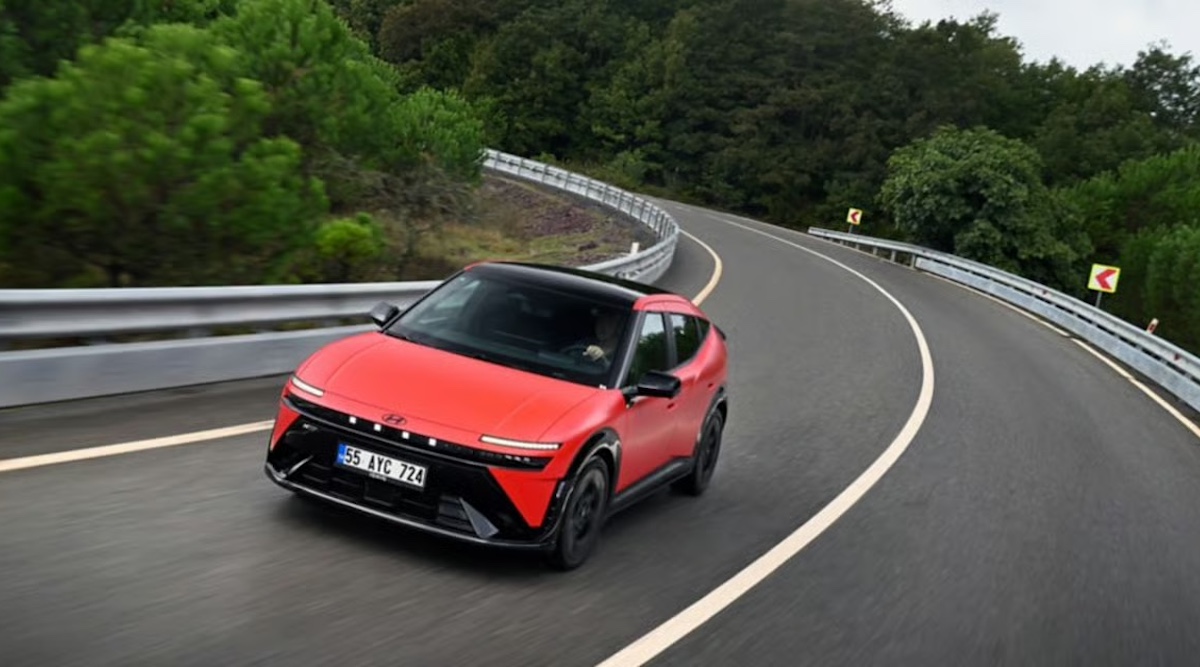
Despite its compact exterior dimensions, the IONIQ 3 utilizes an optimized version of Hyundai’s dedicated electric architecture. By pushing the wheels to the corners and extending the wheelbase, engineers have created an interior volume that rivals vehicles in the segment above. This "living space" concept includes a flat floor, sustainable interior materials, and a modular dashboard designed to maximize legroom and storage.
Technologically, the IONIQ 3 introduces an intuitive infotainment system specifically designed for the European driver. The system integrates real-time EV routing, which accounts for charging station availability and weather conditions to provide accurate range projections. Furthermore, the vehicle supports over-the-air (OTA) updates, ensuring that the software governing the powertrain and safety features remains current throughout the vehicle’s lifecycle.
Strategic Manufacturing in Türkiye
The decision to produce the IONIQ 3 at the İzmit plant in Türkiye is a calculated move to optimize the supply chain for the European market. The HAOS plant is Hyundai’s longest-operating manufacturing facility outside of South Korea and has undergone significant upgrades to accommodate the production of electric vehicles. By manufacturing in Türkiye, Hyundai benefits from the country’s Customs Union agreement with the European Union, allowing for reduced tariffs and logistics costs compared to importing vehicles from East Asia.
This localized production strategy is essential for maintaining the sub-€30,000 price point. In an era where European manufacturers are facing stiff competition from low-cost imports and rising energy costs, Hyundai’s ability to produce a high-spec EV within the region provides a competitive edge. The İzmit facility also plays a role in Hyundai’s sustainability goals, utilizing renewable energy sources for a portion of its assembly operations.
Official Responses and Market Reception
The nomination has been met with optimism by Hyundai’s leadership. Christopher McKinnon, Vice President and Head of Product for Hyundai Motor Europe, emphasized that the IONIQ 3 was born out of a specific mandate to serve the European consumer. "Being named a finalist for European Car of the Year is important recognition for IONIQ 3 and for the work that has gone into its development," McKinnon stated. He noted that the order books have already exceeded internal projections, suggesting a strong market appetite for affordable, high-range electric hatchbacks.
Industry analysts suggest that the IONIQ 3’s success in the market is a response to the "EV fatigue" felt by some consumers who found earlier electric models either too expensive or lacking in practical range. By offering nearly 500 km of range in a vehicle priced for the middle class, Hyundai is positioning itself as a leader in the "second wave" of electrification—where the focus shifts from early adopters to the general public.
Comparative Analysis: The Competitive Landscape
The 2027 ECOTY finals are expected to be among the most competitive in recent years, as several major manufacturers have launched small-to-medium EVs aimed at the same demographic as the IONIQ 3. Competitors likely include the latest iterations of the Volkswagen ID.3, the Renault Megane E-Tech, and emerging entries from Stellantis brands.

What sets the IONIQ 3 apart in this field is its balance of specifications. While some competitors focus on ultra-low starting prices with limited range, or high-tech features at a premium price, the IONIQ 3 occupies a "sweet spot." Its 497 km WLTP range is particularly notable; in the compact segment, many vehicles struggle to cross the 400 km mark without significant price increases. This range capability makes the IONIQ 3 a viable primary vehicle for households, rather than just a secondary city car.
Broader Implications for the European Automotive Market
The IONIQ 3’s candidacy for Car of the Year reflects broader trends in the European automotive landscape. First, it underscores the shift toward the "democratization" of electric mobility. For the transition to EVs to succeed in meeting EU climate targets, the market must move beyond luxury SUVs and into the affordable hatchback and compact segments.
Second, the nomination highlights the importance of the European market as a tastemaker for global automotive trends. A vehicle that succeeds under the scrutiny of the ECOTY jury often sees a "halo effect" that boosts sales globally. For Hyundai, a win in January 2027 would be its third major ECOTY success in recent years, following the strong performances of the IONIQ 5 and IONIQ 6, further establishing the "IONIQ" sub-brand as a gold standard in electrification.
Finally, the focus on the Brussels Motor Show as the venue for the announcement points to the enduring relevance of physical automotive exhibitions in Europe. While some global shows have declined, Brussels has repositioned itself as a hub for consumer-focused automotive news, making it the ideal backdrop for crowning a vehicle designed for everyday European life.
Conclusion and Outlook
As the January 8, 2027, deadline approaches, the automotive world will be watching closely to see if the IONIQ 3 can secure the top spot. Regardless of the final outcome, its status as a finalist confirms that Hyundai has successfully decoded the requirements of the modern European driver: a blend of striking design, practical range, and fiscal accessibility.
The IONIQ 3 does not merely represent a new model in a lineup; it represents a maturation of the electric vehicle industry. It proves that the "Art of Steel" can be applied to create a vehicle that is both an emotional choice for the enthusiast and a rational choice for the budget-conscious family. As the jury enters the final phase of testing, the IONIQ 3 stands as a formidable contender, embodying the technological progress and strategic foresight required to lead the next generation of European motoring.
