

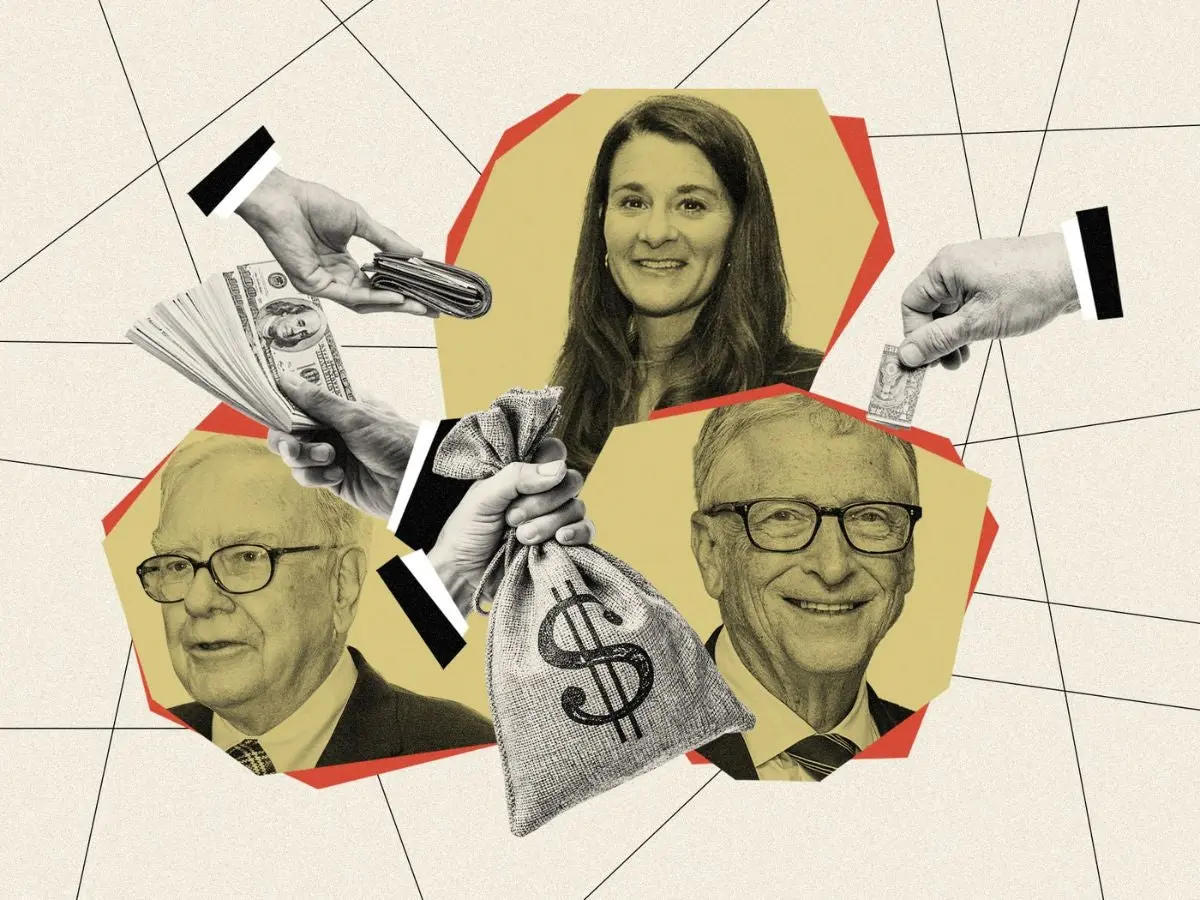
For many of the world’s most successful and affluent individuals, belonging to exclusive circles is a significant aspect of their lives. The landscape of such organizations is rich, offering opportunities for networking, shared interests, and strategic alliances. Among these, The Giving Pledge stands out as a unique commitment, uniting some of the planet’s wealthiest individuals under a shared promise to dedicate at least half of their fortunes to philanthropic endeavors. Launched in 2010 by Bill Gates, Melinda French Gates, and Warren Buffett, the initiative aimed to foster a global norm around giving and stimulate conversations about the role of philanthropy in society. However, over a decade later, The Giving Pledge finds itself at a critical juncture, grappling with slower growth and internal criticisms, even from within its esteemed "three-comma club."

The Genesis of a Philanthropic Movement
The concept of The Giving Pledge was born from a series of profound discussions between three titans of industry and philanthropy: Bill Gates, the co-founder of Microsoft; Melinda French Gates, a global advocate for women and girls; and Warren Buffett, the esteemed investor and CEO of Berkshire Hathaway. Their conversations centered on the immense power and responsibility that comes with vast wealth and what society could reasonably expect from those who possessed it in abundance. The core tenet of the Pledge, as articulated by Olivia Leland, the initiative’s founding director, is a simple yet powerful commitment: to give away at least half of one’s wealth during their lifetime or through their will. Beyond this individual pledge, the founders envisioned a broader purpose: to establish "a global norm around giving and encourage conversations around the role of philanthropy in society."
The official launch of The Giving Pledge in June 2010 was met with considerable fanfare. Within two months, its inaugural cohort of 40 signatories was unveiled, a formidable assembly of American wealth and influence. This initial group included luminaries such as George Lucas, the visionary behind the Star Wars franchise; Michael Bloomberg, then-Mayor of New York City; Larry Ellison, the co-founder of Oracle; David Rockefeller, a scion of one of America’s most prominent banking families; Paul Allen, the co-founder of Microsoft; Barron Hilton, heir to the Hilton hotel empire; and Ted Turner, the founder of CNN. The immediate impact was significant, with Fortune magazine declaring that The Giving Pledge "could change the face of philanthropy." Within six months of its launch, the Pledge had expanded to 57 signatories, representing approximately one in seven American billionaires at the time.

The Giving Pledge Community: A Network of Impact
Upon signing The Giving Pledge and submitting a personal letter articulating their motivations, signatories are welcomed into a private community. This community, accessible via a dedicated website and app, serves as a hub for interaction, discussion, and collaboration. Members can engage in conversations, share insights, and participate in a global program of events and conferences designed to foster learning and networking.
Jill Rademacher, currently at the helm of The Giving Pledge as its head, and formerly a senior figure at the World Economic Forum, emphasizes the organization’s role as a "dot connector, facilitator, and convenor." She explains that the network provides a platform for some of the world’s wealthiest individuals to exchange ideas, navigate the complexities of their philanthropic journeys, and identify opportunities for collaborative impact. Examples of such collaborations include sessions focused on Ray Dalio’s ocean conservation initiatives and discussions on "patriotic philanthropy" led by financier David Rubenstein. According to Rademacher, a remarkable 25% of pledgers have engaged in collaborative philanthropic projects, a testament to the community’s effectiveness in translating individual commitments into collective action.

Emerging Criticisms and Internal Scrutiny
Despite its successes, The Giving Pledge has not been immune to criticism. In March of the current year, Peter Thiel, a prominent tech investor and entrepreneur, described the Pledge in an interview with The New York Times as an "Epstein-adjacent, fake boomer club," articulating a wave of discontent that has been brewing within certain circles. Thiel has been vocal in his opposition, actively encouraging wealthy individuals not to sign and, in some instances, to withdraw their commitments. He has reportedly advised Elon Musk, a signatory, that his wealth might ultimately be directed towards "left-wing non-profits that will be chosen by Bill Gates."
This critique gained further traction with the publication of a report by the Charity Reform Initiative at the Institute for Policy Studies (IPS) titled "The Giving Pledge at 15." The report’s authors concluded that the initiative is "unfulfilled, unfulfillable and not our ticket to a fairer, better future." The IPS study contended that while the Pledge provided "great press and a rosy reputational glow," the net worth of many signatories had generally increased since they joined. The report estimated that only one living couple among the original US signatories, Laura and John Arnold, had technically fulfilled their pledge. Furthermore, among 22 deceased US signatories analyzed, only eight had demonstrably fulfilled the commitment to allocate at least half of their wealth to charity.

The Giving Pledge has vociferously contested the methodology and findings of the IPS report. The organization stated that the report relied on incomplete data and excluded "significant forms of charitable giving," such as contributions to foundations and other intermediaries, thereby presenting a distorted view of signatories’ philanthropic activities.
Shifts in Commitment and the Rise of Next-Generation Philanthropy
The impact of these criticisms and the IPS report on signatory retention is difficult to quantify precisely. However, one notable departure from the Pledge’s list of signatories is Brian Armstrong, the crypto billionaire and founder of Coinbase. Armstrong, who joined in 2018, had his name removed from the list in 2024. While he has not offered specific reasons for his withdrawal, he has publicly voiced skepticism about the efficacy of many charitable organizations, stating in September 2026 that "a lot of charities and philanthropies are actually net negative on the world."

John Caudwell, the first British billionaire to sign The Giving Pledge, dismisses Thiel’s criticisms as a potential excuse for inaction. "I don’t know [Thiel] and I don’t know if this is a fair comment but I know a lot of people use this excuse for not pledging," Caudwell remarked to Spear’s. He argues that individuals who are hesitant to publicly commit can still enact their philanthropic intentions by adjusting their wills, emphasizing that the true measure of commitment lies in action, not just pronouncements.
Beyond individual commitments, The Giving Pledge is increasingly focusing on the next generation of inheritors, recognizing that the long-term impact of its mission rests with those who will inherit these vast fortunes. Katherine Lorenz, granddaughter of early signatory George Mitchell, has been instrumental in this shift. She spearheaded the formation of Giving Pledge Next Gen, a network of over 300 individuals whose parents or grandparents are signatories. This group focuses on how to carry out family philanthropic endeavors responsibly and effectively, emphasizing the inherited commitment and the desire to uphold a legacy of giving. Vimbai Masiyiwa, whose father Strive is a signatory, echoes this sentiment, stating that The Giving Pledge has encouraged her to think more deeply about the responsibilities that accompany wealth and has helped her become more intentional in her philanthropic approach.

The Future of The Giving Pledge: Evolution and Adaptation
The Giving Pledge currently boasts 262 signatories across more than 30 countries, a significant expansion from its initial US-centric focus. However, the pace of new recruitments has demonstrably slowed. While 113 individuals joined in the Pledge’s first five years, this number decreased to 72 in the subsequent five years and further to 43 in the following five-year period, with only four new signatories in 2024. A modest rebound occurred in 2025 with 11 new members, the largest cohort since 2021. This trend stands in stark contrast to the burgeoning global billionaire population, with Forbes identifying a record 3,428 billionaires worldwide in 2026.
In response to this evolving landscape, The Giving Pledge is adapting its strategy. Rademacher emphasizes that the core commitment of donating at least 50% of one’s wealth will remain central. However, the focus is shifting towards enhancing the organization’s offerings to meet the diverse needs of its members and attracting new voices and perspectives. The objective is not to reinvent the Pledge but to build upon its established foundation and ensure its continued relevance and impact.

The organization also faces the ongoing challenge of public perception and the need for clear communication regarding its operational model. Rademacher has been proactive in addressing misconceptions, clarifying that "the funds do not come to the Gates Foundation" and that the organization "is not directing people’s philanthropy." Regarding accountability, she explains that while the Pledge receives updates on signatories’ giving activities, its primary role is to "create the space for peers to encourage one another."
Emirati businessman Badr Jafar, the UAE’s special envoy for business and philanthropy, supports this view, describing The Giving Pledge as "a community and a public promise, not an oversight body." He advocates for a form of accountability that acknowledges intention, activity, and impact without oversimplifying the complexities of social change.

As The Giving Pledge navigates these challenges, the enduring power of its mission remains evident. The commitment to significant philanthropic giving, initiated by Gates, French Gates, and Buffett, continues to inspire a powerful movement. The organization’s ability to adapt, address criticisms, and foster meaningful engagement within its community will be crucial in shaping the future of philanthropy for generations to come. The ultimate success of The Giving Pledge will be measured not only by the number of its signatories but by the tangible, positive impact their collective generosity creates on a global scale.
