

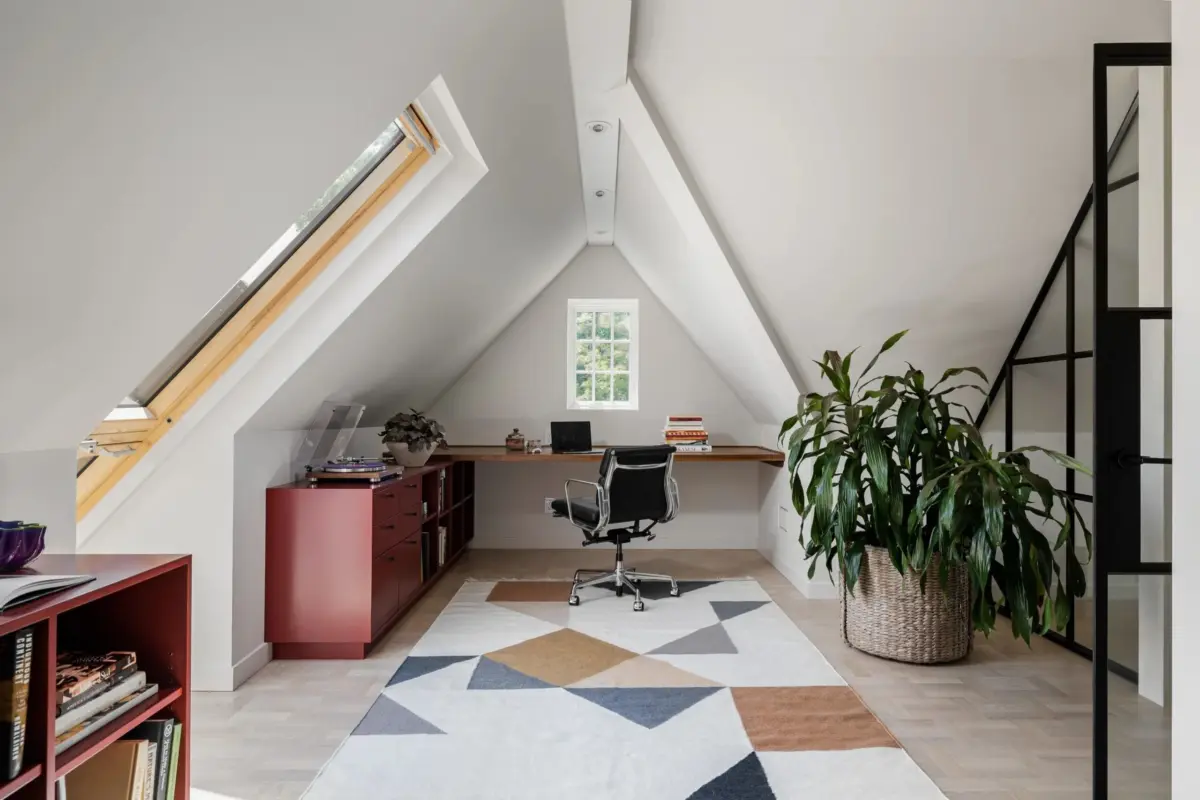
The modern filing cabinet, once the ubiquitous symbol of 20th-century clerical drudgery, is undergoing a significant aesthetic and functional transformation. Long relegated to the shadows of industrial offices or hidden away in basements, these storage units are being reimagined by designers to serve as central, stylish elements of the contemporary home office. This evolution reflects a broader shift in interior design, driven by the rise of remote work and a growing demand for furniture that balances professional utility with domestic elegance.

In the 1920s Tudor revival home recently updated by Bethany Adams, a featured designer in the AD PRO Directory, the integration of office storage into residential architecture is on full display. The office, situated in an attic with steep gables and a large balcony skylight, utilizes cabinetry that complements the room’s unique roofline rather than clashing with it. This project exemplifies the "glow-up" of the filing cabinet: it is no longer an afterthought but a curated piece of furniture designed to blend seamlessly into sophisticated living environments.
The Historical Evolution of Office Storage
To understand the current transformation of the filing cabinet, one must look at its origins. The vertical filing cabinet as we know it was popularized at the end of the 19th century. In 1898, Edwin G. Seibels is credited with inventing the vertical filing system, which revolutionized the way businesses handled paperwork. Prior to this, documents were often folded and placed in small pigeonholes or flat drawers, which was inefficient for the growing scale of industrial commerce.

Throughout the 20th century, the filing cabinet became a fixture of the corporate world. For decades, the design was strictly utilitarian. Standardized grey or beige steel boxes were manufactured for durability and uniformity, emphasizing a "sameness" that reflected the corporate culture of the time. In these environments, the filing cabinet was a tool for mass organization, often arranged in long, monotonous rows.
However, as the global economy transitioned toward digital storage in the late 1990s and early 2000s, the primary role of the filing cabinet shifted. While the need to store massive volumes of paper decreased, the requirement for secure, accessible storage for sensitive physical documents—such as passports, tax returns, and legal contracts—remained. This shift set the stage for the current era, where the filing cabinet must serve multiple roles within a much smaller footprint.

The Home Office Revolution and Supporting Data
The catalyst for the recent design overhaul of the filing cabinet was the global shift toward remote work. According to data from the U.S. Census Bureau and various labor statistics, the percentage of people working from home tripled between 2019 and 2021. Even as some companies have implemented return-to-office mandates, hybrid work remains the standard for millions of professionals.
This demographic shift created a new market demand: furniture that performs like office equipment but looks like home decor. Market research indicates that the home office furniture market, valued at approximately $45 billion globally in 2020, is projected to grow significantly through 2030. Consumers are no longer satisfied with "contract grade" furniture that looks out of place in a living room or bedroom. They are seeking "resimercial" design—a blend of residential and commercial aesthetics that emphasizes comfort, durability, and style.

A New Standard of Design: Top Market Selections
The current market offers a diverse range of filing solutions that cater to various aesthetic preferences and space constraints. These pieces represent a departure from the industrial models of the past, utilizing high-quality materials such as solid mahogany, oak veneers, and powder-coated steel in vibrant color palettes.
Modular and Design-Forward Solutions
The USM Haller system, a modular steel furniture line that dates back to 1961, remains a gold standard for multipurpose storage. Originally designed by architect Fritz Haller for a factory in Switzerland, the system is now part of the permanent collection at the Museum of Modern Art (MoMA). The USM Haller File Credenza features drop-down doors and drawers that hold letter-size hanging files, all of which can be locked with the turn of a coin. This piece demonstrates how a lockable filing cabinet can transition from a strictly professional tool to a dining room sideboard or a living room focal point.

Similarly, the Herman Miller OE1 Trolley, designed by the London-based studio Industrial Facility, borrows its silhouette from the traditional bar cart. This mobile unit features a slim steel frame on casters and a tilting compartment designed for folders or stationery. Its ability to be wheeled from a desk to a sofa highlights the fluid nature of modern work-from-home setups.
Space-Saving and Aesthetic Minimalism
For those working in smaller urban environments, space-saving designs like the Branch Small Filing Cabinet have become essential. At only 20 inches tall and one foot wide, it is designed to slide under standard desks or into narrow gaps beside bookshelves. Branch, a brand noted for its ergonomic office chairs, has applied a soft design language to storage, offering colorways like sage green that provide a soft accent to residential interiors.

The Article Fantol File Cabinet and the West Elm Tandem Filing Cabinet represent the "mixed-material" trend. By setting wood-veneer cases into steel frames, these units mimic the appearance of a small dresser. The use of natural oak and walnut finishes allows these pieces to sit alongside midcentury-modern furniture without disrupting the visual flow of a room.
Artistic and Experimental Forms
The most radical departures from the 20th-century archetype are found in pieces like the Konstantin Grcic for Magis 360 Degree Container and the MoMA 5-Drawer Pivot Cabinet. These models replace traditional sliding drawers with trays that pivot around a central aluminum spine. When partially opened, the drawers form a spiral shape, transforming a storage unit into a sculptural element. These designs are particularly popular in "cloffice" (closet-office) setups or bedrooms, where traditional office furniture might feel too clinical.

Chronology of the Filing Cabinet’s Design Shift
- 1898: Edwin G. Seibels patents the vertical filing system, establishing the industrial standard for document storage.
- 1950s-1970s: The "Steel Era." Filing cabinets are produced in mass quantities for corporate skyscrapers, primarily in grey and olive green.
- 1961: Fritz Haller develops the USM modular system, introducing the concept of high-design, modular office storage.
- 1990s: The digital revolution begins to reduce the volume of physical paperwork, leading to a decline in the demand for massive vertical file banks.
- 2010s: Boutique furniture brands begin experimenting with "resimercial" design as freelancers and "digital nomads" rise in number.
- 2020-Present: The pandemic-induced work-from-home boom solidifies the filing cabinet’s status as a residential furniture staple, leading to a surge in colorful, wooden, and multipurpose designs.
Analysis of Implications: The Future of Domestic Space
The "glow-up" of the filing cabinet is more than a trend in furniture; it is a reflection of the permanent blurring of lines between professional and private life. Interior designers suggest that the aestheticization of office equipment helps reduce "work-related stress" by removing the visual cues of a high-pressure office environment from the home. When a filing cabinet looks like a nightstand or a piece of art, the psychological boundary between "being at work" and "being at home" is easier to manage.
Furthermore, the emphasis on quality—evidenced by the "contract-grade" ratings of brands like West Elm—suggests that consumers are moving away from disposable, flat-pack furniture in favor of investment pieces. A contract-grade rating indicates that a piece of furniture has been tested to meet rigorous standards for use in high-traffic commercial environments, such as hotels or offices. Applying this standard to home furniture ensures longevity, a key factor for the modern consumer who values sustainability.

Conclusion: Official Responses and Market Outlook
Industry experts and organizational consultants have largely welcomed this shift. Statements from design directors at major furniture retailers indicate a continued commitment to expanding "home-office-adjacent" categories. They note that while the "paperless office" has been predicted for decades, the reality is a "paper-light" office, where critical documents still require a physical home.
The broader impact of this design evolution is the democratization of professional-grade organization. High-design storage is no longer reserved for executive suites in Manhattan or London; it is accessible to anyone with a home office. As the filing cabinet continues to evolve, it will likely incorporate more integrated technology, such as biometric locks or built-in charging stations, further cementing its place as a vital, stylish component of the modern household. The "grey box" of the 20th century has officially been retired, replaced by a new generation of furniture that proves organization does not have to come at the expense of beauty.
