

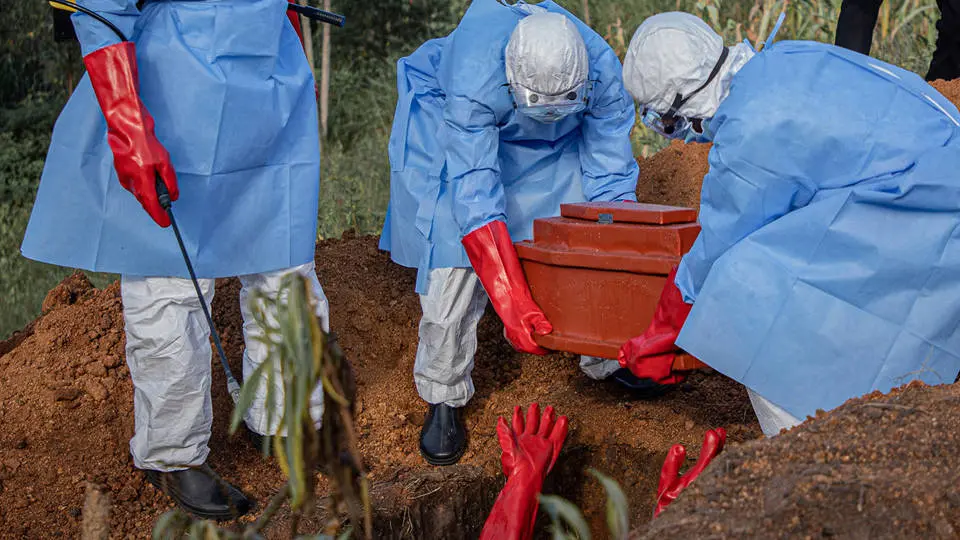
NAIROBI – The Democratic Republic of the Congo (DRC) is grappling with an Ebola outbreak of unprecedented scale and speed, a crisis that serves as a stark, undeniable reminder that the threat of infectious diseases operates independently of geopolitical expediency or budgetary constraints. As of October 27, 2026, the World Health Organization (WHO) and the Africa Centres for Disease Control and Prevention (Africa CDC) have reported a staggering 10,193 confirmed and probable cases, resulting in 4,960 deaths. This escalating situation, declared a Public Health Emergency of International Concern (PHEIC) and a continental security threat in mid-May, necessitates immediate and substantial global financial commitment to bolster the Africa-led regional response. Failure to act decisively now risks a catastrophic toll in human lives and profound economic devastation in the future.
A Crisis Exploding in the Heart of Africa: The DRC’s Deadliest Outbreak
The current Ebola epidemic in the DRC is not merely another public health challenge; it represents a catastrophic threat that is rapidly accelerating. The virus, known for its virulence and swift transmission, has found fertile ground, overwhelming local capacities and stretching international resources thin. The sheer numbers – over 10,000 cases and nearly 5,000 fatalities – paint a grim picture of a disease that is proving exceptionally difficult to contain. This outbreak’s intensity and rapid dissemination are particularly alarming, distinguishing it from previous episodes in the region.
The Democratic Republic of the Congo, a vast nation with significant logistical challenges, including underdeveloped infrastructure and remote, densely populated areas, presents inherent difficulties in containing infectious disease outbreaks. Years of political instability and conflict in certain regions have further complicated public health efforts, hindering access for healthcare workers and disrupting essential services. This latest surge of Ebola is exploiting these vulnerabilities, making containment an arduous and increasingly urgent task.
A Grim Chronology of Escalation
The timeline of this particular Ebola outbreak underscores its relentless advance and the growing urgency for a coordinated, well-funded response. While the exact origin point of this current surge is still under investigation, initial reports of unusual illness patterns began to emerge in early 2026.
- Early 2026: Sporadic cases of a severe hemorrhagic fever are reported in eastern DRC, initially attributed to other endemic diseases.
- March 2026: The number of suspected cases begins to rise significantly in the North Kivu province, raising concerns among local health authorities.
- April 2026: Laboratory testing confirms the presence of the Zaire ebolavirus, the same strain responsible for the devastating 2014-2016 West Africa outbreak, prompting heightened alert.
- May 15, 2026: The World Health Organization (WHO) and the Africa Centres for Disease Control and Prevention (Africa CDC) jointly declare a Public Health Emergency of International Concern (PHEIC) and a continental security threat, signaling the gravity of the situation and the need for international collaboration. This declaration triggers enhanced global surveillance and mobilization of resources.
- May – October 2026: The outbreak spreads geographically, impacting multiple health zones within the DRC and posing a risk of cross-border transmission to neighboring countries. Case numbers and deaths climb exponentially, overwhelming existing containment strategies.
- October 27, 2026: Official figures reach 10,193 cases and 4,960 deaths, highlighting the uncontrolled spread and the escalating human toll.
This chronology illustrates how quickly the situation deteriorated from localized concern to a regional and international emergency. The lag time between initial reports and the declaration of a PHEIC, while understandable due to the need for confirmation, unfortunately allowed the virus crucial time to spread.
The Human Cost: Devastating Statistics and Personal Tragedies
The statistics of 10,193 cases and 4,960 deaths are more than just numbers; they represent thousands of individual lives tragically cut short and families irrevocably broken. The case fatality rate for the Zaire ebolavirus can range from 25% to 90%, and the current outbreak’s trajectory suggests a high mortality rate. Beyond the direct fatalities, survivors often face long-term health complications, including vision problems, joint pain, and neurological issues, further straining healthcare systems and impacting their ability to rebuild their lives and communities.
The psychological toll on affected communities is immense. Fear of contagion, the loss of loved ones, and the disruption of daily life create an environment of profound distress. Healthcare workers, who are on the front lines of this battle, face immense personal risk and emotional strain, making their dedication and resilience all the more critical.
Supporting Data: Understanding the Nature of the Threat
Ebola virus disease (EVD) is a severe, often fatal illness in humans. The virus is transmitted to people from wild animals and then spreads between people through direct contact with the blood, secretions, organs, or other bodily fluids of infected people, and with surfaces and materials (e.g., bedding, clothing) contaminated with these fluids.
Key characteristics of the Zaire ebolavirus strain contributing to this outbreak’s severity include:
- High Transmissibility: The virus can spread rapidly through close contact, especially in settings where hygiene practices are compromised or where individuals are caring for sick relatives without adequate protective measures.
- Incubation Period: The incubation period, from infection to the onset of symptoms, ranges from 2 to 21 days. This means individuals can be infected and travel or interact with others before becoming symptomatic, complicating containment efforts.
- Early Symptoms: Initial symptoms are often non-specific, including fever, fatigue, muscle pain, headache, and sore throat. This can delay diagnosis and treatment, allowing the virus to spread further.
- Advanced Symptoms: As the disease progresses, it can lead to vomiting, diarrhea, rash, impaired kidney and liver function, and in some cases, both internal and external bleeding.
The geographical spread of this outbreak within the DRC, particularly in the eastern provinces like North Kivu, South Kivu, and Ituri, is significant. These regions have historically faced complex humanitarian challenges due to ongoing armed conflict and displacement, which create ideal conditions for disease transmission. Dense populations, limited access to clean water and sanitation, and a strained healthcare infrastructure exacerbate the problem.
The Africa-Led Regional Response: A Model of Pan-African Solidarity
The declaration of a PHEIC by the WHO and Africa CDC was not merely a statement of alarm; it signaled the critical importance of an Africa-led regional response. This approach leverages the expertise and understanding of African health institutions, recognizing that a localized and contextually appropriate strategy is vital for effective containment.
The Africa CDC, in particular, has been instrumental in coordinating the continent’s efforts. This includes:
- Surveillance and Early Warning Systems: Strengthening national and regional surveillance mechanisms to detect and report suspected cases rapidly.
- Laboratory Capacity Building: Providing technical support and resources to enhance diagnostic capabilities across affected and at-risk countries.
- Deployment of Expertise: Mobilizing African epidemiologists, clinicians, and public health professionals to support outbreak response teams in the DRC and neighboring countries.
- Logistics and Supply Chain Management: Assisting in the procurement and distribution of essential medical supplies, personal protective equipment (PPE), and therapeutics.
- Cross-Border Collaboration: Facilitating coordination and information sharing with neighboring countries to prevent international spread.
This Africa-led model is crucial because it empowers local actors, builds sustainable capacity, and ensures that response strategies are tailored to the specific cultural, social, and logistical realities of the affected regions. However, this ambitious and vital response is heavily reliant on adequate and sustained funding.
Official Responses and Calls for Action
The international community has been urged to provide significant financial and logistical support to the Africa-led response. Statements from international bodies and health organizations underscore the critical need for immediate action.
"The exponential trajectory of the latest Ebola outbreak is an urgent reminder that infectious diseases do not wait for ideal geopolitical alignments or balanced budgets," stated Tom Achoki, Nebiyu Dereje, and Jean Kaseya, columnists focusing on human development. "Global leaders must fund the Africa-led regional response today, or risk paying an immeasurably higher price in human lives and economic devastation tomorrow."
This sentiment has been echoed by numerous health ministers and public health officials from across Africa and globally. The WHO has consistently appealed for increased financial contributions to support its ongoing response operations, which include contact tracing, case management, community engagement, and vaccination campaigns. The development of effective vaccines has been a game-changer in combating Ebola, and their rapid and equitable deployment remains a cornerstone of the containment strategy. However, the logistical complexities of reaching remote populations and ensuring vaccine efficacy in diverse environments require substantial investment.
Broader Impact and Implications: Beyond the Immediate Crisis
The implications of this escalating Ebola outbreak extend far beyond the immediate health crisis. The economic consequences are profound and far-reaching:
- Disruption of Trade and Commerce: Fear of contagion and implemented travel restrictions can cripple local economies, disrupting supply chains, agricultural production, and vital trade routes.
- Strain on Healthcare Systems: The diversion of resources and personnel to combat Ebola inevitably compromises the provision of essential healthcare services for other diseases, leading to preventable morbidity and mortality from conditions like malaria, HIV/AIDS, and tuberculosis.
- Increased Humanitarian Needs: The outbreak exacerbates existing humanitarian challenges, leading to increased displacement, food insecurity, and a greater need for emergency assistance.
- Regional Instability: If left unchecked, the cross-border spread of the virus could destabilize neighboring countries, particularly those with already fragile political and economic situations. This could lead to increased regional insecurity and necessitate larger-scale international interventions.
- Global Health Security: The emergence of a large, uncontrolled Ebola outbreak serves as a potent reminder of the interconnectedness of global health security. A failure to contain such threats effectively in one region can have repercussions worldwide, underscoring the importance of robust international cooperation and investment in pandemic preparedness.
The current crisis in the DRC is a test case for global solidarity and the effectiveness of coordinated public health responses. The lessons learned from past outbreaks, particularly the 2014-2016 West Africa epidemic, highlight the critical need for proactive, well-funded, and sustained efforts. The call for global leaders to step up and financially support the Africa-led regional response is not just a plea for humanitarian aid; it is an investment in global health security and a commitment to preventing a far greater catastrophe. The time for decisive action is now, before the exponential trajectory of this outbreak leads to an immeasurable price in human lives and economic ruin.
