

In the contemporary Canadian financial landscape, a quiet revolution is taking place, shifting the focus of investment from global markets back to the local neighborhoods where capital is generated. Community bonds, once an informal method of mutual aid among marginalized workers, have evolved into a sophisticated $170 million asset class that addresses some of the country’s most pressing socioeconomic challenges. By allowing citizens to invest directly in local projects—ranging from affordable housing developments to renewable energy transitions—these securities are redefining the relationship between communities and their capital. This evolution, spanning over a century of Canadian history, reflects a persistent drive toward economic self-reliance and the democratization of finance.
The Genesis of Community Wealth Building
The roots of community investment in Canada are deeply embedded in the survival strategies of the early 20th century. Long before the formalization of securities regulations, grassroots wealth-building served as a lifeline for those excluded from traditional banking systems. In Nova Scotia, during the early 1900s, impoverished miners and fishermen faced systemic barriers to credit and fair pricing. By banding together in cooperatives, these workers managed to secure improved housing conditions and better market rates for their products. This movement demonstrated that pooled resources could provide a level of security that individual efforts could not achieve.
Following the Second World War, this tradition of collective finance was bolstered by immigrant communities. Dutch immigrants arriving in Canada often found themselves unable to access capital through established financial institutions due to a lack of credit history or collateral. In response, they established their own credit unions, creating a self-sustaining ecosystem of lending and borrowing that allowed their communities to thrive. These early iterations of community finance were largely informal and born of necessity, yet they laid the conceptual groundwork for the modern community bond.
The Saskatchewan Innovation: A Response to Recession
The transition from informal pooling to government-sanctioned financial instruments occurred in the 1980s, a decade marked by a punishing recession that hit Western Canada particularly hard. In Saskatchewan, the agricultural sector was devastated by a "perfect storm" of low global commodity prices, soaring interest rates, and consecutive years of severe drought. As traditional investment fled the province, local leaders sought new ways to stimulate rural enterprise.
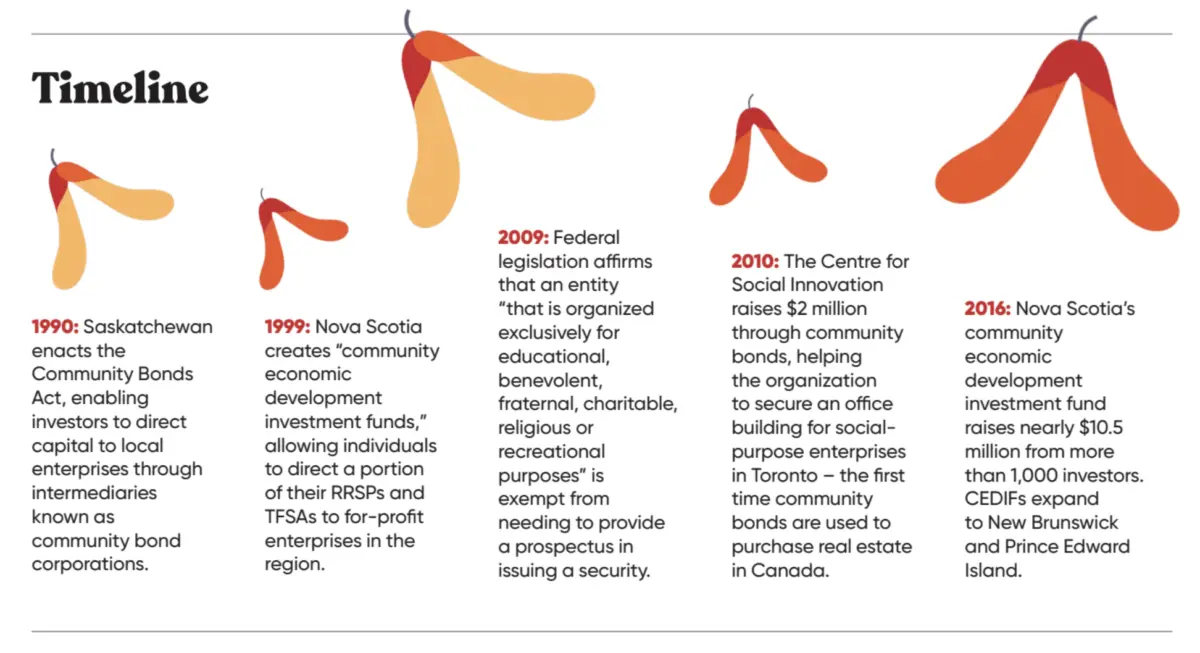
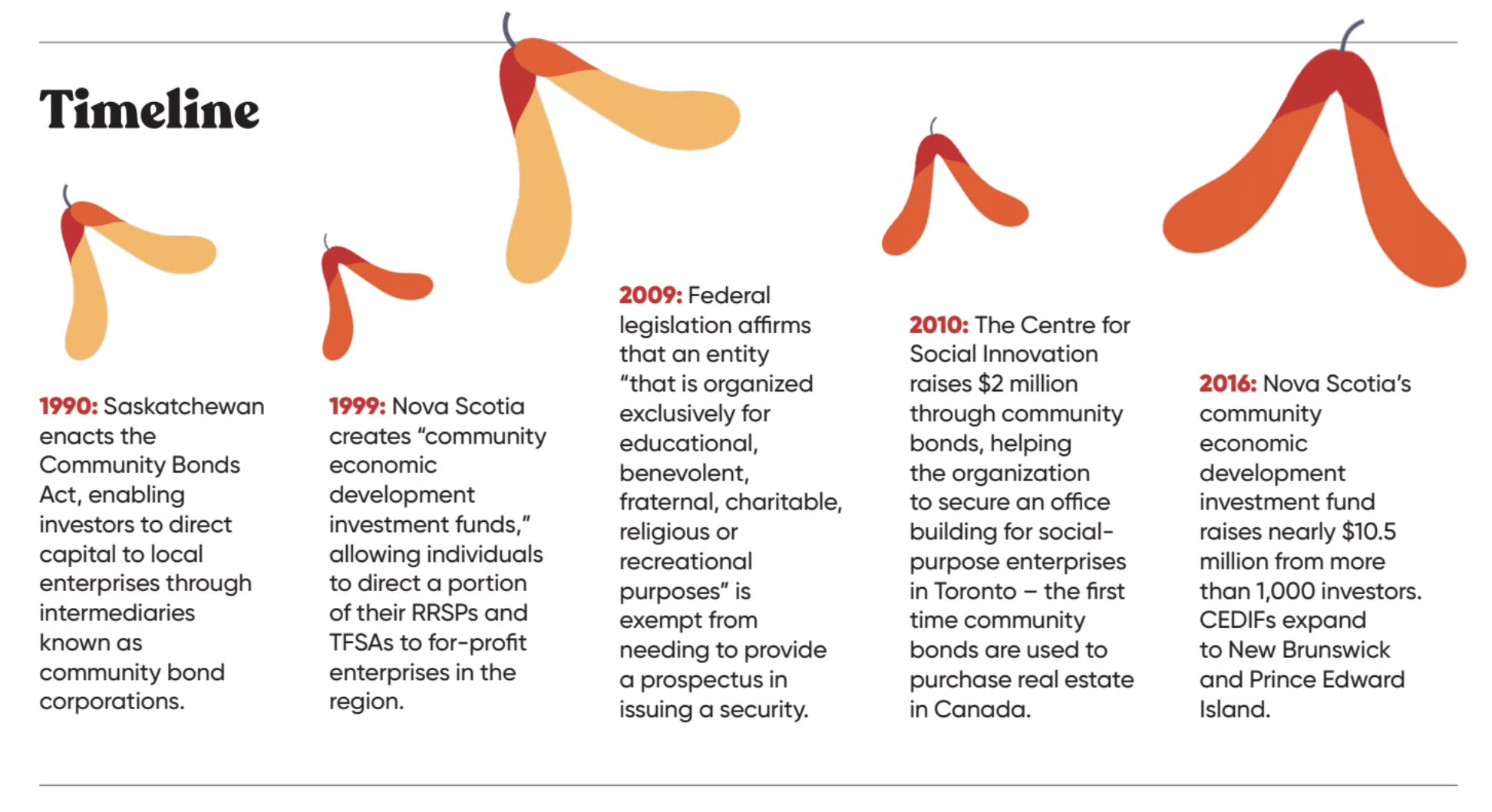
The result was the Community Bonds Act of 1990. This landmark legislation created a unique entity known as a community bond corporation. Unlike modern bonds, which often involve direct lending to a non-profit, these corporations were locally owned issuers that raised capital from individual citizens to make equity investments in local businesses. To mitigate risk for the average citizen, the provincial government provided a guarantee on the principal investment.

The impact was immediate and measurable. By 1993, more than 5,000 residents had participated in the program, raising nearly $13 million. These funds were funneled into vital local industries, including a metal fabrication facility and a farm equipment manufacturer. This era proved that local investors were willing to risk their capital to save their towns’ economies, provided there was a structured and secure mechanism to do so.
Nova Scotia and the Challenge of "Leaking" Capital
While Saskatchewan was pioneering bond corporations, Nova Scotia was grappling with a different economic drainage problem. By the late 1990s, provincial policymakers observed a startling trend: while Nova Scotians were diligent savers, their money was not staying at home. Statistics revealed that only 2% of the equity investments made by Nova Scotians through Registered Retirement Savings Plans (RRSPs) were directed toward local businesses.
This meant that hundreds of millions of dollars were flowing out of the Atlantic region every year, destined for national or international markets, while local entrepreneurs struggled to find start-up capital. To stem this tide, the province launched Community Economic Development Investment Funds (CEDIFs) in 1999.
CEDIFs offered a compelling proposition: citizens could invest in local enterprises or cooperatives in exchange for a significant provincial income tax credit. Although the program faced a slow initial adoption period, it eventually gained momentum, raising millions of dollars annually and supporting the launch or expansion of more than 100 businesses. The Nova Scotia model highlighted the importance of tax incentives in directing "patient capital" toward community-based goals.
The Modern Regulatory Shift: Empowering Non-Profits
The most significant shift in the community bond sector has occurred in the last two decades, driven by changes in Canadian securities regulations. Historically, issuing any form of security required a "prospectus"—a dense, legally complex, and expensive document that outlined every facet of an organization’s finances. For a small non-profit or a local charity, the cost of producing a prospectus was often higher than the amount of capital they sought to raise.
Recognizing this barrier, regulators across all Canadian provinces and territories introduced a "prospectus exemption" for non-profits and charities. This allowed these organizations to deal directly with investors through a simplified process, provided the capital was used for public benefit.

This regulatory evolution has transformed the community bond from a niche rural tool into a versatile instrument for urban social change. Organizations like Tapestry Community Capital have emerged to help non-profits navigate this landscape, facilitating bonds that fund co-working spaces, community hubs, and environmental initiatives. According to data from the Coalition for Community Capital, this streamlined approach has enabled Canadians to invest a cumulative $170 million into community-led projects.
Analyzing the Concept of "Patient Capital"
At the heart of the community bond’s success is the concept of "patient capital." Unlike traditional venture capital or stock market investments, which often demand high returns and quick exits, community bond investors are typically looking for a moderate, fixed rate of return combined with a high social impact.
Tessa Hebb, a distinguished research fellow at Carleton University’s Centre for Community Innovation, notes that these investors are often willing to accept lower financial yields because they see the "social dividend" in their own backyards. For example, an investor might accept a 3% or 4% return on a bond that funds an affordable housing complex in their city, knowing that the project reduces homelessness and stabilizes the local economy.
Since the late 2000s, this model has proven particularly effective in the renewable energy sector. Community-owned wind farms and solar arrays have been financed through bonds, allowing residents to profit from the energy transition while ensuring that the infrastructure remains under local control.
Future Outlook: Overcoming Remaining Barriers
Despite the growth of the sector, experts argue that the full potential of community bonds remains untapped due to several remaining policy hurdles. One of the primary challenges is the lack of a third-party rating agency for community-scale investments. In the traditional bond market, agencies like Moody’s or S&P provide risk assessments that help investors make informed decisions. Without an equivalent for community bonds, potential investors must conduct their own due diligence, which can be a deterrent for the less financially literate.
Furthermore, there is a significant "workaround" required for community bonds to be held within Tax-Free Savings Accounts (TFSAs) or RRSPs. Currently, the administrative burden of including these bonds in registered accounts prevents many Canadians from using their primary savings vehicles to support local projects.
Advocates, including Suzanne Faiza, policy manager at Tapestry Community Capital, suggest that the federal government should implement a $20,000 cap for unsecured debt within TFSAs and RRSPs specifically for community bonds. This would allow a broader demographic of Canadians to participate without compromising the overall integrity of the tax-sheltered accounts.
Policy Recommendations and Implications
The Coalition for Community Capital has outlined several key recommendations to mobilize the next $100 million in community investment:
- Tax Amendments: Creating a federal tax credit for community bonds, similar to the Nova Scotia CEDIF model, to incentivize participation among middle-income earners.
- Loss Deductibility: Allowing investors to deduct capital losses incurred from community bonds against their regular income, reducing the perceived risk of local investment.
- Institutional Support: Encouraging credit unions and pension funds to act as "anchor investors" in community bond campaigns to provide institutional credibility.
If these changes are implemented, the implications for Canadian society could be profound. Community bonds offer a non-inflationary way to fund infrastructure and social services at a time when government budgets are increasingly strained. By shifting the focus from "charity" (which is a one-way transfer of wealth) to "investment" (which is a circular flow of wealth), communities can build long-term resilience.
Conclusion: Building Resilience in an Uncertain Era
The trajectory of community bonds in Canada—from the 1930s cooperatives of Nova Scotia to the 1990s legislation in Saskatchewan and the modern digital platforms of today—reveals a consistent theme: Canadians have an inherent desire to support one another in challenging times.
As the country faces a dual crisis of housing affordability and climate change, community bonds provide a mechanism for citizens to take direct action. They represent more than just a financial security; they are a tool for building community agency. By formalizing the "informal impulse" to help one’s neighbor, Canada is creating a financial system that is not only more inclusive but also more resilient to the global economic forces that often feel beyond local control. The maturation of this sector suggests that the future of Canadian finance may not lie solely on Bay Street, but in the collective power of citizens investing in their own streets.
