

The landscape of American democracy underwent a seismic shift last week as the U.S. Supreme Court issued a landmark ruling in Louisiana v. Callais, effectively weakening a foundational pillar of the 1965 Voting Rights Act (VRA). The decision, delivered by the Court’s six-member conservative majority, has ignited a firestorm of mid-census redistricting efforts across the United States, as political parties scramble to redraw congressional maps ahead of the 2026 midterm elections. While the ruling specifically addressed maps in Louisiana, its implications have reached far beyond the bayou, emboldening state legislatures to engage in aggressive gerrymandering and prompting a wave of legal challenges and civil unrest.
The Dismantling of Section 2 and the Return of the Gerrymander
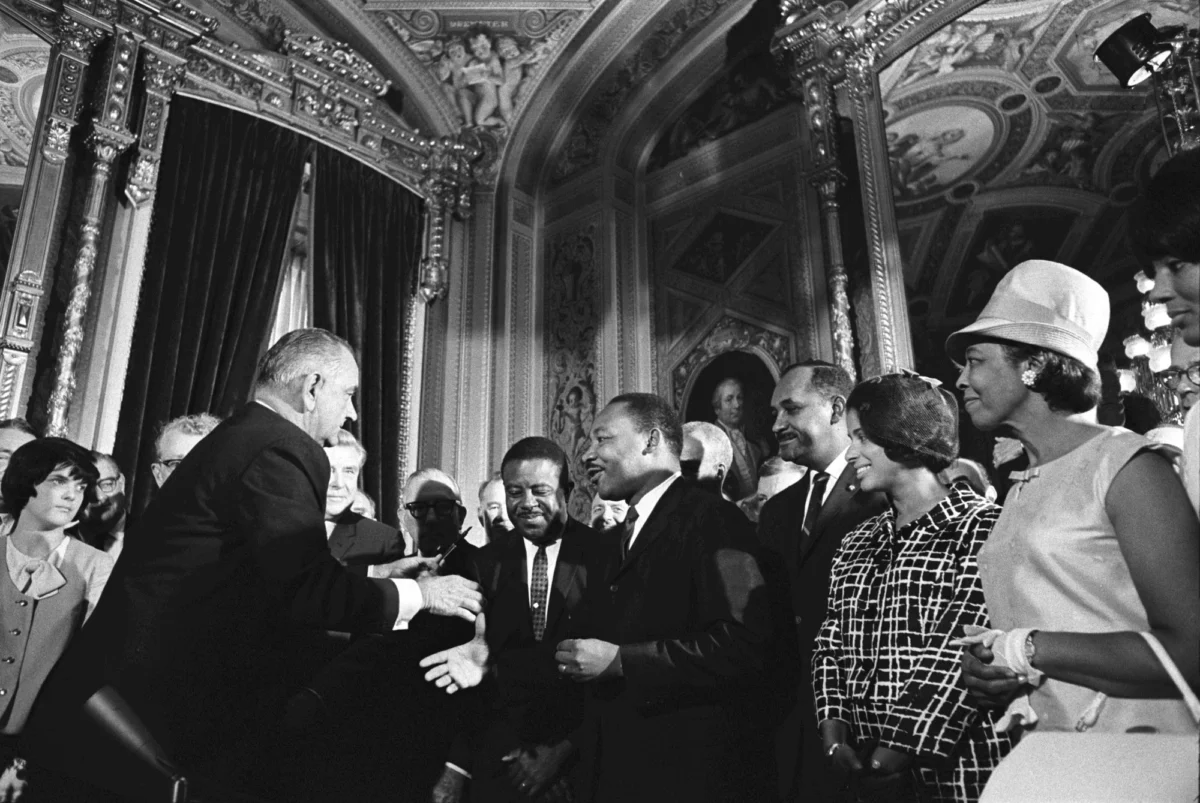
To understand the gravity of the current crisis, one must look back to the origins of the Voting Rights Act. Signed into law by President Lyndon B. Johnson in 1965, the VRA was designed to dismantle the systemic disenfranchisement of Black voters, particularly in the South. Section 2 of the Act was long considered its "crown jewel," prohibiting any voting standard or practice that results in a denial or abridgment of the right of any citizen to vote on account of race. For decades, this provision served as a bulwark against racial gerrymandering, requiring states with a history of discrimination to create "majority-minority" districts to ensure that communities of color had a fair opportunity to elect candidates of their choice.

However, the April 29, 2026, decision in Louisiana v. Callais has effectively neutralized this protection. By invalidating a previously court-ordered map in Louisiana that included a second majority-Black district, the Supreme Court signaled that states are no longer strictly bound to prioritize racial equity in district lines if they can argue that partisan interests or "traditional redistricting principles" take precedence. This pivot has essentially opened the floodgates for what critics call "surgical gerrymandering"—the use of sophisticated data to pack or crack minority voting blocs to favor the party in power.
Gerrymandering itself is not a new phenomenon; it has been a fixture of the American political machine since the early 19th century. However, the practice has evolved from a blunt political tool into a high-tech weapon. Using modern algorithms and granular Census data, mapmakers can now predict voter behavior with startling accuracy, allowing them to draw lines that maximize their party’s advantage while rendering the opposition’s votes statistically insignificant.
A New Frontier: The Rise of Mid-Census Redistricting
Historically, redistricting occurs once every ten years following the completion of the U.S. Census. This decennial cycle was intended to ensure that congressional districts remained roughly equal in population. However, the 2026 cycle has seen a radical departure from this norm. Encouraged by rhetoric from the executive branch and the recent Supreme Court trajectory, several states have moved to redraw their maps mid-decade—a move that was once considered a breach of political norms.

The push for mid-census redistricting gained significant momentum in late 2025 when President Donald Trump began publicly urging Republican-led legislatures to "update" their maps to secure a more permanent House majority. Texas was the first to answer the call, adopting a new map in August 2025 that proactively sought to net the GOP five additional seats. Following the Texas lead, Florida, Missouri, North Carolina, Ohio, and Utah have all initiated or completed similar processes.
The response from Democratic-led states has been equally swift. In California, voters and lawmakers moved to implement a redistricting measure designed to expand the Democratic House delegation by five seats, a move that the Supreme Court allowed to stand in February 2026. Virginia followed suit, approving a map that could potentially result in a 10-1 Democratic advantage in the state’s congressional delegation. New York and New Jersey have also signaled that they will not remain idle, with legislative leaders in both states exploring ways to "rebalance" their districts to counter Republican gains in the South and Midwest.
State-Level Chaos: From Louisiana to Alabama
The immediate fallout of the Louisiana v. Callais ruling was felt most acutely in the Deep South. Within hours of the decision, Louisiana Governor Jeff Landry issued an emergency order halting the state’s primary elections. The Governor argued that the state needed to move immediately to draw a map more favorable to the Republican party, discarding the majority-minority district that had been the subject of the legal dispute. This move has thrown the 2026 election cycle in Louisiana into a state of total uncertainty, as candidates and voters alike are left wondering what their districts will look like by November.

In Alabama, the situation is similarly volatile. Despite having been ordered by federal courts in previous years to maintain two majority-Black districts, Alabama lawmakers met recently to consider eliminating one or both. Such a move would likely require the annulment of primary election results, as voting was already scheduled to begin in mid-May. Governor Kay Ivey, who had previously been hesitant to call a special session for redistricting, found herself under immense pressure from national party leaders to capitalize on the Supreme Court’s new stance.
Mississippi and Florida are also fast-tracking new maps. Florida Governor Ron DeSantis, a vocal proponent of aggressive redistricting, successfully lobbied his state legislature to move forward with a map that has already been labeled a "clear violation" of the state’s own Fair District amendment by voting rights advocates. The legal battle in Florida is expected to be one of the most closely watched in the country, as it tests the limits of state constitutional protections against the new federal vacuum.
The Resistance: Legal Challenges and Public Outcry
The rapid erosion of voting protections has not gone unchallenged. A coalition of civil rights organizations, including the ACLU and Democracy Docket, has filed a series of emergency lawsuits aimed at halting the implementation of these new maps. In Louisiana, an emergency federal challenge was filed against Secretary of State Nancy Landry to stop the suspension of the election cycle. Plaintiffs argue that the Supreme Court’s refusal to grant a rehearing on the Callais case was a procedural error that ignores the fundamental rights of voters.
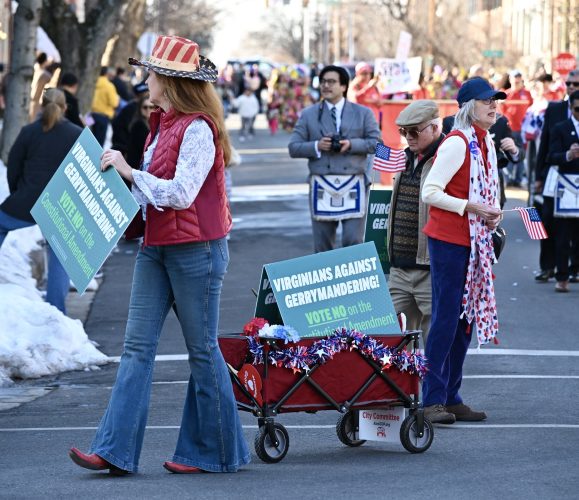
Beyond the courtroom, the "redistricting wars" have moved into the streets. In Nashville, Tennessee, hundreds of protesters marched on the state Capitol this week as the legislature convened a special session to eliminate the state’s only majority-Black district. Protesters carried signs reading "Fair Maps, Fair Future" and "Don’t Silence Our Voices," demanding that the legislature respect the existing demographic makeup of the state.
In Birmingham, Alabama, a similar scene unfolded as voters gathered at the State House. The protests have drawn national figures to the front lines. New Jersey Senator Cory Booker recently appeared in Birmingham alongside former Senator Doug Jones and Representative Terri Sewell. Booker framed the redistricting fight not just as a partisan struggle, but as a moral imperative to preserve the legacy of the civil rights movement. "What we are seeing is a coordinated attempt to turn back the clock on the progress that people like John Lewis bled for," Booker told a crowd of supporters.
Economic Anxiety and the Political Stakes of 2026
The urgency behind the Republican redistricting push may be explained by the shifting political winds. Despite the administration’s efforts to focus on cultural issues, economic pressures are weighing heavily on the American electorate. While the 2024 election was largely decided on the "price of a dozen eggs," grocery prices have continued to climb throughout 2025 and 2026.

Compounding these domestic issues is the geopolitical instability following President Trump’s decision to launch military strikes against Iran in February 2026. The ensuing conflict has caused global oil prices to skyrocket, leading to record-high gas prices at American pumps. Consequently, the administration’s disapproval rating has surged to 62 percent in the latest ABC News polling, the highest of the current term.
This widespread dissatisfaction appears to be translating into a significant advantage for Democrats on the generic congressional ballot. According to a new NPR/PBS/Marist survey, Democrats hold a 10-point lead over Republicans when voters are asked which party they would support if the election were held today. Similar results from Emerson College and Nate Silver’s polling averages suggest that, under current maps, the Republican House majority is in grave danger of collapsing.
Analysis: The Future of Representative Democracy
The 2026 midterms are shaping up to be a stress test for the American democratic system. The Supreme Court’s intervention has created a "wild west" environment where district lines are no longer stable, and the rules of engagement are being rewritten in real-time. By weakening Section 2 of the Voting Rights Act, the Court has shifted the power of self-determination away from voters and into the hands of partisan mapmakers.

The implications of this shift are profound. If state legislatures are permitted to redraw maps whenever the political winds change, the concept of a "permanent" district disappears. This could lead to a cycle of perpetual redistricting, where every election is preceded by a scramble to gerrymander the most advantageous map possible. Such a system would likely increase political polarization, as representatives would be more concerned with satisfying the ideological fringes of their parties in "safe" districts rather than appealing to a broad constituency.
Furthermore, the targeting of majority-minority districts threatens to reduce the diversity of Congress. For decades, these districts have been the primary vehicle for ensuring that Black, Latino, and Asian American communities have a voice in Washington. Without the protections of Section 2, these voices may be diluted, leading to a legislative body that does not accurately reflect the demographics of the nation.
As the November 4 general election approaches, the battle over fair maps will remain at the forefront of the national conversation. While the Supreme Court has opened the floodgates for redistricting, the final word will rest with the voters. Whether the surge in civic engagement and legal pushback can overcome the strategic advantages gained through gerrymandering remains the defining question of the 2026 election cycle. For now, the United States remains a nation divided not just by ideology, but by the very lines that define its democracy.
