

The geopolitical instability triggered by the Russia-Ukraine conflict and the escalating tensions in the Middle East has laid bare the extreme vulnerability of global energy systems that rely on external markets and fossil fuel dependency. For many nations, this era of price shocks and supply chain disruptions has served as a wake-up call to bolster domestic energy sovereignty. However, in Tunisia, the response to a widening energy deficit has sparked a national debate over the role of foreign investment, the privatization of public utilities, and the true meaning of a "just transition." As the Tunisian government moves to approve massive renewable energy concessions to foreign multinationals, critics argue that the country is trading one form of dependency for another, potentially deepening its economic woes while transferring public wealth into private, external hands.
The Context of Tunisia’s Growing Energy Deficit
Tunisia’s energy landscape is currently defined by a structural deficit that has reached a critical juncture. As of 2024, the national energy deficit stands at approximately $3.8 billion, a figure that accounts for nearly 51 percent of the country’s total trade deficit. This gap between production and consumption is not a new phenomenon; it has grown steadily every year since 2000. The primary drivers are twofold: a surge in domestic consumption fueled by urbanization and population growth, and a persistent failure to invest in domestic production capacity and sovereign infrastructure.
Historically, Tunisia has relied heavily on natural gas, with roughly 60 percent of its supply imported from neighboring Algeria. While this partnership has provided a degree of stability, the rising costs of imports and the volatility of global markets have made this reliance increasingly untenable. In response, the Tunisian authorities have set an ambitious goal to reach 35 percent of electricity production from renewable sources by 2030. To achieve this, the government has turned toward the privatization of the energy sector, a move that culminated in the recent approval of five major renewable energy concessions.
The Five Solar Concessions: A Detailed Breakdown
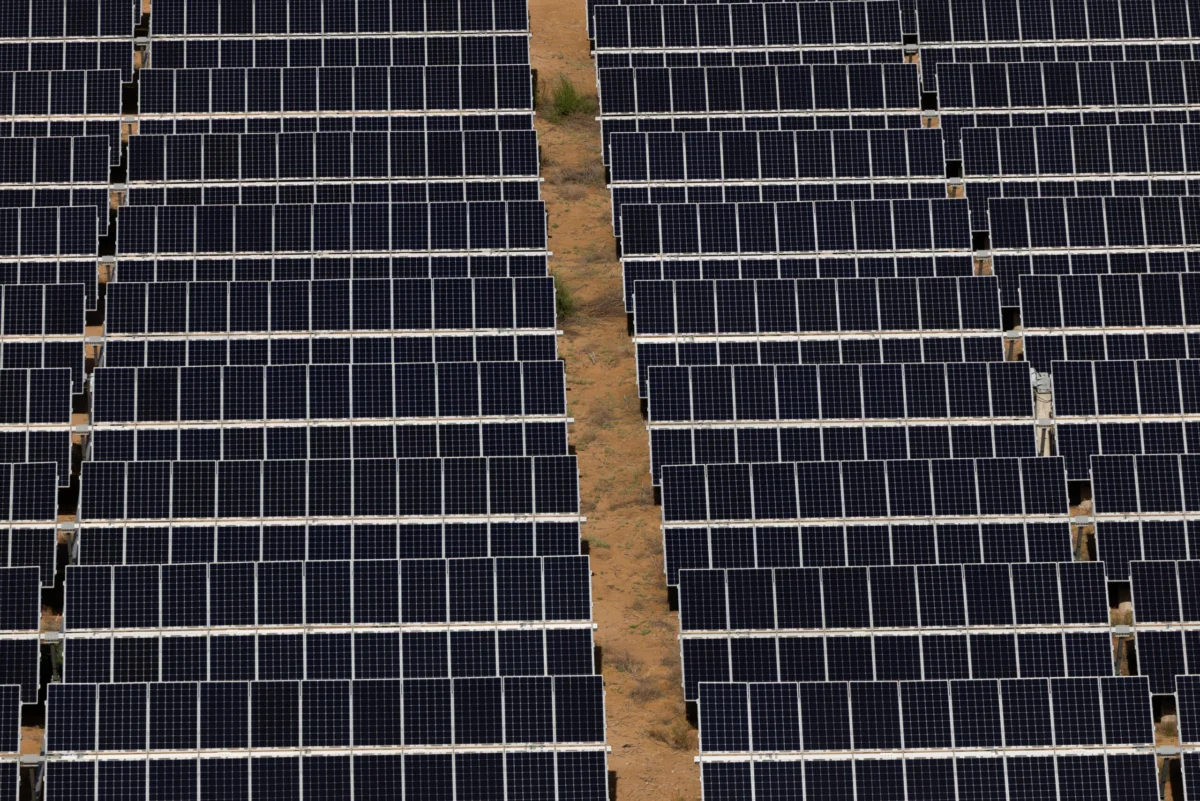
On January 29, 2024, the Tunisian parliament received five new concession contracts for electricity production from solar energy. These projects represent a significant pivot in the country’s energy strategy, shifting the responsibility of generation from the state-owned utility to international corporations.
The proposed solar plants are strategically located across the country:
- Khobna and Mezzouna: Located in the Sidi Bouzid region of central Tunisia.
- El Ksour and Sagdoud: Situated in the Gafsa region, a traditional mining hub in the west.
- Menzel Habib: Located in the coastal governorate of Gabes.
Collectively, these plants are designed to have a combined capacity of approximately 598 megawatts (MW), with a total estimated investment of $560 million. While the infusion of capital and the increase in renewable capacity are presented as progress, the terms of the concessions have drawn intense scrutiny. The contracts grant foreign multinationals the right to operate these facilities and sell the generated electricity to the Tunisian Company of Electricity and Gas (STEG), the national public utility.
Chronology of Opposition and Public Mobilization
The path to the approval of these concessions was marked by significant social and political friction.
- Late 2023: The Electricity and Gas Federation, a powerful trade union representing workers at STEG, organized a series of strikes. Their primary grievance was the proposed transfer of carbon credits to private developers and the perceived "hollowing out" of the national utility.
- January 2024: The contracts were submitted to parliament, sparking a fresh wave of debate among economic analysts and civil society organizations.
- April 21, 2024: The Electricity and Gas Federation held an urgent news conference. They argued that the concessions would effectively reduce STEG to a mere grid operator, responsible for maintenance and infrastructure costs, while the lucrative business of electricity production would be monopolized by foreign firms.
- May 2024: Public awareness campaigns led by independent media and the Tunisian Economic Observatory (TEO) mobilized public opinion. Protests were staged outside the parliament building as lawmakers prepared to vote.
- Final Approval: Despite the protests and union opposition, the five concessions were voted through by the parliament. In an apparent attempt to manage the political fallout, the government dismissed the energy minister and a senior Ministry of Industry official shortly after the vote, a move seen by many as a tactic to distance the executive branch from the controversial deals.
Economic and Fiscal Implications: The Case Against Privatization
Critics of the concessions, most notably the Tunisian Economic Observatory, have highlighted several fiscal and structural risks inherent in these contracts. One of the most contentious points is the inclusion of "stabilization clauses" and extensive tax exemptions. These clauses often protect foreign investors from future changes in national law, potentially undermining Tunisia’s fiscal sovereignty and its ability to regulate its own energy market.
Furthermore, the "extractive" nature of the projects has been questioned. Under the current model, there is no requirement for meaningful technology transfer or local integration. This means that while the solar panels sit on Tunisian soil, the technical expertise, high-value manufacturing, and profits remain with the foreign parent companies. The employment opportunities generated by solar farms are often limited to the construction phase, providing few long-term jobs for the local population in regions like Gafsa and Sidi Bouzid, which already suffer from high unemployment.
Another point of contention is the ownership of carbon credits. Under the approved contracts, the carbon credits generated through emissions reductions on Tunisian territory can be claimed by the multinationals. These credits are valuable assets in international markets, allowing corporations to offset their emissions elsewhere or access green subsidy programs. Critics argue that these credits should remain a public asset, used to meet Tunisia’s own climate commitments or to fund domestic social programs.
The Structural Reality: Petroleum and Transport
A key argument made by the government in favor of the solar concessions is the need to reduce the energy deficit. However, analysts point out that this is a selective reading of the data. While solar power addresses electricity generation, it does little to solve the largest component of Tunisia’s energy deficit: petroleum.
Approximately 73 percent of Tunisia’s energy consumption comes from petroleum products, such as gasoline and diesel. This is driven overwhelmingly by a transport sector that is built around private vehicle ownership and road haulage, rather than efficient public transit or rail. Addressing the energy deficit would, therefore, require:
- Massive investment in electrified public transport systems.
- Policies to limit the importation of high-consumption private vehicles.
- Upgrading domestic refining capacity to reduce the cost of imported refined fuels.
Regarding the latter, the history of the Tunisian Company of Petroleum Industries (STIR) is telling. In 2012, Tunisia and Libya entered talks for a joint refinery project in the coastal town of Skhira. The $2 billion project aimed to process Libyan crude for both domestic markets, creating a regional hub for energy sovereignty. However, the project was suspended due to the Libyan civil war and eventually abandoned. Some analysts suggest that the project was also undermined by European interests, as EU nations benefit significantly from exporting refined petroleum products back to the Maghreb.
Analysis of Implications: A Neocolonial Energy Model?
The current trajectory of Tunisia’s energy policy reflects a broader global trend often described as "green grabbing" or neocolonial energy transitions. This model utilizes the urgent need for climate action as a justification for implementing neoliberal reforms that were originally developed in the 1990s.
By allowing foreign companies to own the means of renewable production while the state assumes the risks and infrastructure costs, Tunisia risks entering a cycle of permanent debt and dependency. Instead of building a domestic industrial base for renewable technology—such as manufacturing solar components or developing local engineering expertise—the country is being positioned as a passive site for resource extraction, where the resource is no longer oil, but sunlight.
The implications for STEG are particularly dire. As a public utility, STEG has historically provided subsidized electricity to ensure access for lower-income citizens. If the utility is forced to buy electricity from private foreign firms at prices set by international contracts, its financial stability may crumble, leading to higher tariffs for citizens or the eventual full privatization of the grid itself.
Conclusion: Seeking a Sovereign Path to Transition
The debate in Tunisia serves as a microcosm for the challenges facing the Global South in the era of climate change. While the urgency of transitioning away from fossil fuels is indisputable, the terms of that transition will determine the economic fate of nations for decades to come.
A truly sovereign energy transition for Tunisia would likely involve a shift toward public control over energy production. This would include:
- Public-Public Partnerships: Strengthening regional cooperation with neighbors like Libya and Algeria to build shared infrastructure that benefits the local population rather than external shareholders.
- Industrial Policy: Mandating technology transfer and the development of local supply chains for renewable energy components.
- Democratic Oversight: Ensuring that energy policy is shaped by public need and social equity rather than the profit margins of multinational corporations.
As Tunisia moves forward with the five solar concessions, the eyes of the region will be on the social and economic outcomes. The challenge remains to prove that a green transition can be both ecologically sustainable and economically liberating, rather than a new frontier for the same extractive logic that has defined the global energy market for over a century.
