

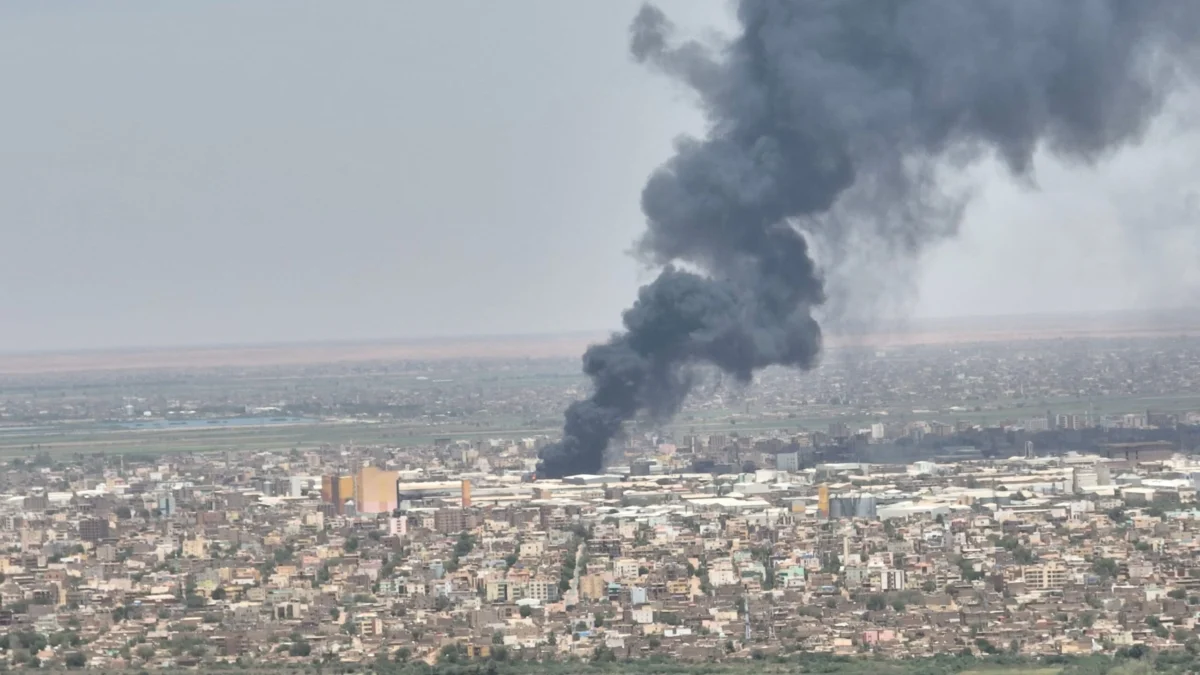
The Sudanese Armed Forces and the paramilitary Rapid Support Forces have dispatched representatives to the Saudi coastal city of Jeddah to engage in preliminary discussions aimed at establishing a durable ceasefire, marking the first significant diplomatic breakthrough since hostilities erupted in mid-April. This initiative, jointly brokered by the United States and Saudi Arabia, seeks to address a conflict that has rapidly transformed the capital, Khartoum, into a theater of urban warfare, resulting in hundreds of fatalities and a massive exodus of civilians. While international mediators have expressed cautious optimism regarding the "pre-negotiation talks," the situation on the ground remains volatile, with both factions signaling a reluctance to concede strategic advantages while the humanitarian toll continues to mount.
The Genesis of the Conflict and the Breakdown of Transition
The current violence is not an isolated outburst but the culmination of long-standing tensions between the two most powerful military figures in Sudan: General Abdel Fattah al-Burhan, the commander of the Sudanese Armed Forces (SAF) and the de facto head of state, and General Mohamed Hamdan Dagalo, widely known as Hemedti, who leads the Rapid Support Forces (RSF). The partnership between these two men was instrumental in the 2019 ouster of long-time autocrat Omar al-Bashir following a popular uprising, as well as the 2021 military coup that derailed the country’s short-lived transition toward civilian-led democracy.
The immediate catalyst for the fighting, which began on April 15, 2023, was a disagreement over the integration of the RSF into the regular army. This integration was a cornerstone of an internationally backed framework agreement intended to return the country to civilian rule. Disagreements over the timeline for this merger—the SAF pushed for a two-year window, while the RSF demanded ten years—and the future chain of command effectively paralyzed the political process. As negotiations stalled, both sides began mobilizing troops in Khartoum and other strategic regions, leading to the first exchange of fire at the Soba military base and the Khartoum International Airport.
A Chronology of the First Three Weeks of Hostilities
The conflict has moved through several distinct phases in its first twenty days, characterized by a shift from targeted strikes on military installations to generalized urban combat.
April 15–17: The Outbreak. The initial 48 hours saw the RSF claiming control over the Presidential Palace, the state television headquarters, and several airports. The SAF responded with heavy airstrikes, leveraging its superior air power to challenge RSF positions in densely populated neighborhoods.
April 18–24: Failed Truces and Urban Entrenchment. Despite multiple calls from the United Nations and the African Union for a humanitarian pause to mark the end of Ramadan, several 24-hour and 72-hour ceasefires were violated within hours of their commencement. During this period, the RSF consolidated its presence in residential areas, using civilian homes as outposts, while the SAF utilized heavy artillery and aerial bombardment, leading to significant collateral damage.
April 25–May 4: International Evacuations and Humanitarian Collapse. As the security situation deteriorated, foreign nations launched massive air and sea lift operations to evacuate diplomats and citizens. This period saw the systematic looting of humanitarian warehouses and the collapse of the healthcare system in Khartoum, with the World Health Organization reporting that nearly 70% of hospitals in conflict zones were non-functional.
May 5–Present: The Shift to Jeddah. Following weeks of shuttle diplomacy by U.S. Secretary of State Antony Blinken and Saudi Foreign Minister Prince Faisal bin Farhan, both warring parties agreed to send technical delegations to Jeddah. However, the scope of these talks remains strictly limited to humanitarian access and temporary cessation of hostilities rather than a comprehensive political settlement.
The Humanitarian Crisis: Data and Field Reports
The scale of the disaster unfolding in Sudan is staggering. According to United Nations agencies, the death toll has surpassed 500, though local doctors’ unions suggest the actual figure is significantly higher due to the inability of families to reach hospitals or morgues. Approximately 100,000 people have fled across Sudan’s borders into neighboring Egypt, Chad, South Sudan, and Ethiopia, often facing arduous journeys through active war zones.
In Khartoum and its sister cities, Bahri and Omdurman, the infrastructure has reached a breaking point. Drone footage and satellite imagery have confirmed massive plumes of black smoke rising from industrial zones and fuel depots. Residents in Bahri report that they are trapped in their homes, unable to seek food or water due to the prevalence of snipers and stray bullets. The World Health Organization (WHO) recently succeeded in delivering a shipment of medical aid to Port Sudan, but the "last mile" delivery to Khartoum remains impossible without verified safe corridors. The lack of electricity and running water in many districts has raised the specter of waterborne diseases, further complicating an already dire health outlook.
Geopolitical Interests and the Role of Mediators
The involvement of the United States and Saudi Arabia as primary mediators reflects the high stakes for regional and global security. Sudan occupies a strategic position at the crossroads of the Horn of Africa, the Sahel, and the Red Sea.
Saudi Arabia, in particular, views stability in Sudan as a national security priority. The Kingdom shares the Red Sea coastline with Sudan and has invested billions in regional infrastructure projects. Furthermore, both Burhan and Hemedti have historical ties to Riyadh, having provided Sudanese troops to support the Saudi-led coalition in Yemen. For Washington, the priority is preventing Sudan from becoming a failed state that could serve as a vacuum for extremist groups or a playground for private military contractors like the Wagner Group, which has been linked to RSF-controlled gold mining operations in the past.
Other regional actors are also deeply invested. Egypt, which shares a long border and vital interests in the Nile waters, has traditionally supported the regular army (SAF). Meanwhile, neighbors like Ethiopia and Chad are concerned about the "spillover effect"—the potential for the conflict to ignite ethnic tensions across borders or create a permanent refugee crisis that could destabilize the already fragile Sahel region.
Official Responses and Diplomatic Obstacles
The "pre-negotiation talks" in Jeddah have been met with a mix of hope and skepticism. White House National Security Adviser Jake Sullivan traveled to Saudi Arabia this weekend to underscore the importance of the talks, while the United Nations has reiterated that any lasting peace must involve civilian political leaders who were sidelined by the generals.
However, the rhetoric from the combatants remains uncompromising. Sudan’s special envoy, Dafallah Alhaj, stated clearly that the army would not engage in direct face-to-face negotiations with the RSF delegation, labeling them "rebellious" forces. The RSF, for its part, has accused the army of using the talks as a ruse to regroup and resupply.
The primary obstacle to a breakthrough is the zero-sum nature of the struggle. For General Burhan, the RSF represents an existential threat to the state’s monopoly on force. For Hemedti, integrating his forces too quickly or under unfavorable terms would mean the loss of his political leverage and personal security. This fundamental distrust explains why previous "ceasefires" were used by both sides to reposition troops rather than to facilitate aid.
Broader Impact and Future Implications
The conflict in Sudan threatens to reverse years of progress toward economic recovery and political reform. Before the fighting, Sudan was already grappling with an inflation rate exceeding 300% and a massive external debt. The destruction of the capital—the country’s economic and administrative heart—will likely result in a generational setback.
If the Jeddah talks fail to produce a monitored, verifiable ceasefire, the conflict risks devolving into a protracted civil war along ethnic and regional lines. There is particular concern regarding the Darfur region, where the RSF has its roots and where reports of ethnically motivated violence have already begun to surface.
The international community faces a difficult balancing act. Pressuring the generals too hard might cause them to dig in, while offering too many concessions could legitimize the use of violence to achieve political ends. The success of the Jeddah initiative depends not just on the signatures on a document, but on the creation of a monitoring mechanism—perhaps involving satellite surveillance or international observers—to ensure that "humanitarian corridors" are actually respected.
As the delegations meet in the quiet halls of Jeddah, the people of Khartoum remain huddled in their homes, listening to the roar of warplanes and the rattle of gunfire. The coming days will determine whether Sudan can find a path back to the negotiating table or if it is destined for a dark chapter of fragmentation and state collapse. The world’s eyes are on the Red Sea port city, hoping for a reprieve that has so far remained tragically elusive.
