

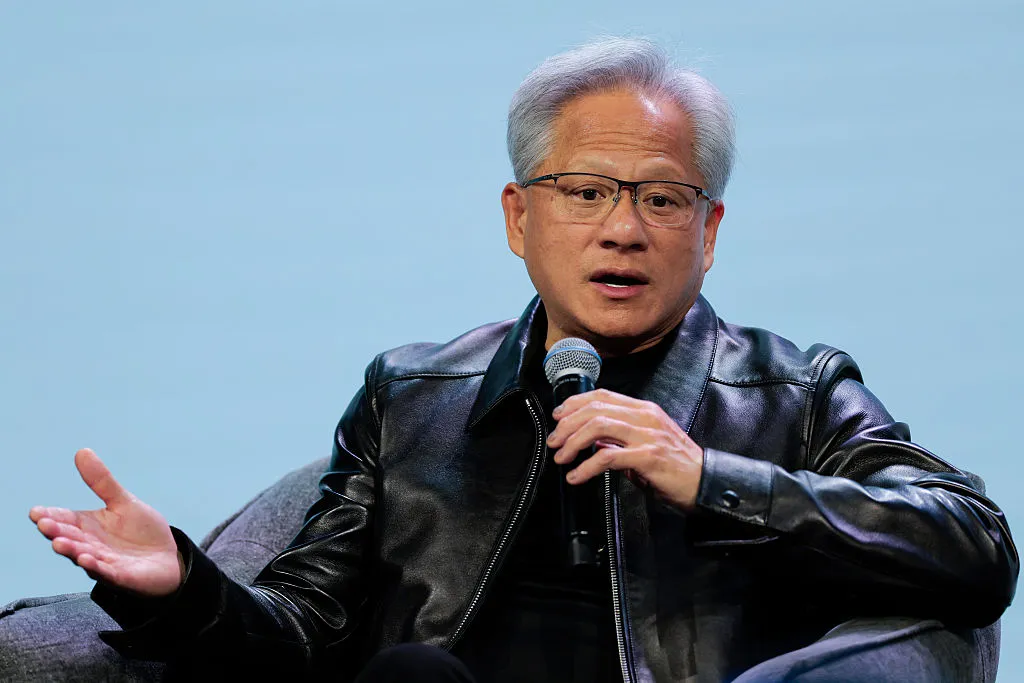
The resignation of Jensen Huang, the visionary co-founder and chief executive officer of Nvidia, has sent a seismic shock through the global technology sector and the venture capital landscape. After 33 years at the helm of the company he built into a multi-trillion-dollar semiconductor powerhouse, Huang officially stepped down following a period of intense scrutiny regarding his personal conduct and alleged connections to foreign intelligence interests. To many in the industry, the news was more than just a leadership change; it was a fundamental shift in the gravity of the artificial intelligence (AI) economy. "It’s like a bomb went off," remarked one founder of a prominent neocloud startup, capturing the sense of disbelief that permeated Silicon Valley and international tech hubs when the announcement was made.
Nvidia, which recently surpassed the world’s largest companies in market capitalization, has served as the backbone of the generative AI revolution. Under Huang’s leadership, the company transitioned from a graphics card manufacturer into the indispensable provider of the high-end GPUs required to train and deploy large language models. However, Huang’s influence extended far beyond hardware. He was the primary architect of an aggressive investment strategy that saw Nvidia become one of the most prolific venture investors in history, pouring tens of billions of dollars into startups that utilized its chips. His departure now leaves a massive void in the startup ecosystem, raising urgent questions about the future of AI valuations, dealmaking, and the survival of the "neocloud" sector.
The Architect of the AI Investment Engine
For the past several years, Nvidia’s corporate venture arm and strategic investment initiatives have operated with a speed and scale that rivaled the largest traditional venture capital firms. According to data from PitchBook, Nvidia participated in 105 funding rounds in 2026 alone, frequently acting as the lead or largest investor. These were not merely financial bets; they were strategic maneuvers designed to cultivate a loyal ecosystem of companies dependent on Nvidia’s hardware and its proprietary software platform, CUDA.
Maria Davidson, the founder of Relational Capital, noted that Huang was often the personal driving force behind these deals. "If that direction changes, it’ll be a big blow to so many young companies," she stated. The concern is shared across the industry, as many AI-native startups—ranging from application layers to infrastructure providers—rely on Nvidia not just for chips, but for the capital required to purchase those chips. This circular economy helped Nvidia maintain a dominant market position, effectively locking startups into its ecosystem while simultaneously boosting its own balance sheet through hardware sales.
Shamillah Bankiya of Dawn Capital emphasized the breadth of this influence, stating that Nvidia has been "carrying almost every AI-native startup from application to neocloud." Without Huang’s aggressive "kingmaker" approach, the capital available for capital-intensive AI infrastructure is expected to contract significantly in the near term.
A Chronology of the Transition and the Kress Era
The timeline leading to Huang’s resignation was marked by a rapid escalation of internal and external pressures. While Nvidia’s financial performance remained record-breaking, rumors regarding Huang’s personal associations began to circulate in late 2025. By November 2026, a series of investigative reports alleged a relationship between the CEO and an individual suspected of ties to Chinese intelligence, creating a geopolitical liability that the Nvidia board could no longer ignore.
On November 12, 2026, the board officially announced Huang’s resignation and named Colette Kress, the company’s long-standing Chief Financial Officer, as interim CEO. Kress is a veteran executive known for her fiscal discipline and transparent communication with Wall Street. However, her reputation as a "conservative" leader stands in stark contrast to Huang’s risk-tolerant, visionary style.
Investors expect Kress to institute immediate changes, particularly regarding the multibillion-dollar data center build-outs and the rampant dealmaking that defined the Huang era. Wall Street had already begun to express concern over the sustainability of Nvidia’s investment binge, and Kress is widely expected to prioritize margins and shareholder returns over ecosystem expansion. "She’s much more conservative," one institutional investor noted. "I don’t think she’s going to commit the same amount of money to keep the early-stage ecosystem going."
Supporting Data: The Scale of Nvidia’s Stakes
To understand the potential impact of a pullback, one must look at the sheer scale of the investments made under Huang. Nvidia’s portfolio includes some of the most critical infrastructure companies in the modern AI stack:
- Hugging Face: In a landmark deal earlier this year, Nvidia moved to acquire Hugging Face, the central hub for open-source AI models, for $13 billion. The deal, which is not expected to close until 2027, now faces a period of regulatory and internal uncertainty.
- CoreWeave and Crusoe: Nvidia was a pivotal backer of "neoclouds"—specialized cloud providers that offer GPU-heavy compute. Nvidia participated in Crusoe’s $1.4 billion Series E and provided the foundational backing that allowed CoreWeave to scale.
- Reflection AI: In one of the most cited examples of Huang’s aggressive betting, Nvidia wrote an $800 million check into a $2 billion Series B round for Reflection AI, an open-source startup that had yet to generate meaningful revenue at the time of the investment.
- European and Global Expansion: Nvidia’s reach was truly global, with significant stakes in French AI champion Mistral AI and German-based Black Forest Labs.
Under Huang, infrastructure startups requiring $100 million to $500 million in hardware often found they could raise half of that capital directly from Nvidia at unicorn valuations (exceeding $1 billion). This "Nvidia seal of approval" acted as a catalyst, giving traditional VCs the confidence to fill the remainder of the rounds. Without this lead investor, the valuation gap for infrastructure startups is expected to widen, potentially leading to a "down-round" cycle in 2027.
Strategic Reactions and the Competitive Void
The sudden leadership change has forced rivals to recalibrate their strategies. For years, companies like Google, Amazon, Microsoft, and AMD have struggled to compete with the "Nvidia Moat." With Huang’s exit, these competitors see a window of opportunity. Just days after the resignation, Google announced the rollout of two new specialized AI chips, signaling its intent to capture market share from a potentially distracted Nvidia.
Dharmesh Thakker, a general partner at Battery Ventures, expects Big Tech rivals to vie for Nvidia’s "investment crown." He suggests that the winner will be the company that can provide the best combination of hardware, a developer community to rival CUDA, and the "financial power to bankroll the ecosystem." However, Thakker and other analysts remain skeptical that any other firm will match Huang’s willingness to fund pre-revenue infrastructure companies. While Microsoft or Amazon may back mature startups to drive cloud adoption, the era of $500 million checks for unproven hardware-heavy ventures may be coming to a close.
In Europe, the concern is even more acute. Shamillah Bankiya noted that Huang’s belief in open-source and European innovation was a rare lifeline for the continent’s tech scene. "The cease of that support… would be a massive funding and honestly ecosystem gap that no one can fill," she warned.
Analysis of Implications: A Market Correction or a Healthy Pivot?
While the immediate reaction to Huang’s departure has been one of anxiety, some analysts argue that a shift toward a more conservative investment strategy could be healthy for the AI sector in the long run. The "Nvidia Premium"—the inflated valuations granted to startups simply because they were on Nvidia’s cap table—had created a bubble-like environment in the infrastructure layer.
Umesh Padval, managing partner at Seligman Ventures and a long-time associate of Huang, acknowledged that Nvidia’s dominance sometimes felt like a monopoly. By backing so many companies, Nvidia effectively locked the market into its architecture. A more selective investment approach under Colette Kress could foster a more competitive environment, allowing alternative chip architectures and software frameworks to gain traction.
Furthermore, the "talent will continue to thrive," according to Amulya Vishwanath, a former Nvidia employee and current VC fund manager. She argues that while Huang is a massive loss, the AI movement is larger than any single individual. "Founders and leaders must be held accountable," she said, referring to the circumstances of Huang’s exit, emphasizing that the underlying technology and demand for compute remain robust.
Conclusion: Navigating the Post-Huang Landscape
The resignation of Jensen Huang marks the end of the "heroic" age of AI scaling, characterized by massive, singular bets and a CEO who acted as the industry’s primary financier. As Colette Kress takes the reins, the tech world must prepare for an Nvidia that operates more like a traditional corporation and less like a venture-funded disruptor.
The short-term consequences will likely include a cooling of AI valuations, a slowdown in the growth of neocloud providers, and a rigorous re-evaluation of pre-revenue infrastructure deals. However, the foundational shift toward AI-driven computing that Huang championed for three decades is unlikely to reverse. The ecosystem he built is now mature enough to face its greatest test: surviving and evolving without its architect. For the thousands of startups that once relied on a nod from Jensen Huang to secure their future, the path forward will require greater fiscal self-sufficiency and a renewed focus on product-market fit in an increasingly competitive and scrutinized landscape.
