

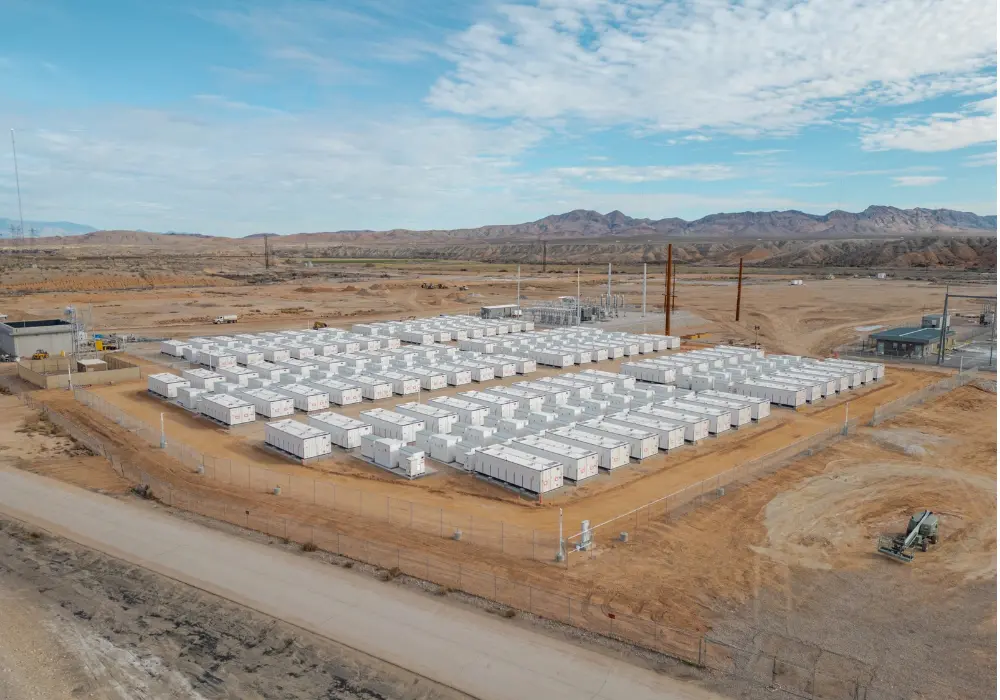
The rapid expansion of artificial intelligence and cloud computing has triggered an unprecedented surge in electricity demand across the United States, prompting a massive wave of new natural gas power plant proposals. However, a landmark report released by researchers at Georgetown University and Duke University suggests that this "gas-first" strategy may be a costly mistake for both the environment and the economy. The report argues that battery energy storage systems (BESS) offer a cleaner, cheaper, and more flexible alternative that can meet the rigorous demands of the data-center era while protecting utility customers from the financial risks of overbuilding fossil fuel infrastructure.
As tech giants like Microsoft, Google, and Amazon race to build out the physical infrastructure for generative AI, utilities are struggling to keep pace with the resulting load growth. For decades, electricity demand in the U.S. remained relatively flat; now, it is projected to grow by nearly 5% over the next five years. To meet this need, developers and utilities are increasingly turning to natural gas. According to the report, titled "The Storage Solution: How Batteries Can Enhance Grid Reliability, Affordability, and Decarbonization in the Data Center Era," U.S. utilities are currently planning more than 60 gigawatts of new gas-fired generation specifically to serve data centers. Furthermore, approximately 90 gigawatts of "behind-the-meter" gas generators—units installed directly at data center sites—have been proposed nationwide.
The Inertia of Fossil Fuel Dependency
The preference for natural gas stems from its historical role as a reliable, "firm" power source capable of providing round-the-clock energy. Data centers require high levels of uptime, often exceeding 99.99%, making reliability a non-negotiable requirement for operators. Fossil fuel power has become the default solution because it offers high energy density and dispatchability in a single package.
"At the moment, there’s a lot of inertia and status quo pressure for much of the behind-the-meter resources being natural gas," said Ian Hitchcock, report co-author and senior program coordinator at the Duke Initiative for Science and Society. This inertia is driven by established supply chains, familiar regulatory frameworks, and a perception that renewable energy paired with storage is not yet ready to handle the immense, steady "baseload" requirements of a massive computing facility.
However, the report highlights that this reliance on gas carries significant "stranded asset" risks. If the current AI boom proves to be a speculative bubble, or if computing efficiency improves so drastically that demand plateaus, utilities may find themselves with billions of dollars in unnecessary gas infrastructure. In many regulated markets, the cost of these plants is passed down to everyday ratepayers, meaning households could end up subsidizing failed tech expansions for decades to come.
The Economic and Technical Case for Batteries
Batteries are emerging as a superior hedge against these risks due to their modularity and declining costs. Unlike a large-scale gas turbine, which requires years of environmental permitting, fuel pipeline construction, and massive capital expenditure, battery systems can be deployed in smaller increments and scaled up as a data center’s actual power needs manifest.
According to data from BloombergNEF, the cost of lithium-ion battery packs has fallen by nearly 90% over the last decade. This price trajectory makes batteries increasingly competitive for "peaking" services—providing power during hours of highest demand—and for smoothing out the intermittency of wind and solar power. The report notes that while batteries cannot yet provide weeks of backup power during rare weather events, they are perfectly suited for the 4-to-8-hour duration needs that characterize most grid stress periods.
Furthermore, batteries can act as "shock absorbers" for the grid. Data centers often have volatile power loads, with electricity consumption spiking or dropping based on the intensity of the computational tasks being performed. Energy storage can respond to these fluctuations in milliseconds, providing frequency regulation and voltage support that gas plants cannot match. This capability reduces the need for expensive upgrades to the broader transmission and distribution network, which are currently facing massive backlogs across the country.
A Chronology of the Energy Transition and AI Growth
To understand the current tension between AI and the grid, it is necessary to look at the timeline of the past three years:
- Late 2022: The public release of ChatGPT and other generative AI models triggers a global "arms race" in computing power. Tech companies begin placing massive orders for NVIDIA chips, which require significantly more electricity than traditional CPUs.
- Early 2023: Major utilities in Virginia (home to "Data Center Alley") and Georgia report that their previous demand forecasts are obsolete. Georgia Power, for instance, updates its projections to show a demand increase 17 times higher than previously estimated.
- Late 2023: Environmental groups and state regulators begin to voice alarm over the resurgence of gas plant proposals, which threaten to derail state-level carbon neutrality goals.
- Mid-2024: The Georgetown/Duke report is released, providing a policy roadmap for decoupling data center growth from fossil fuel expansion. Simultaneously, BloombergNEF raises its 10-year U.S. energy storage forecast by 30%, citing data center demand as a primary driver.
Policy Mechanisms for a Battery-First Approach
The report emphasizes that the transition to energy storage will not happen through market forces alone; it requires proactive state-level policy. Because the U.S. electricity market is a patchwork of regulated and restructured regions, the authors propose different tools for different jurisdictions.
In states where utilities are vertically integrated and directly regulated by Public Service Commissions, regulators can implement "Bring Your Own Clean Energy" (BYOCE) tariffs. These structures allow—or require—data center developers to procure their own carbon-free energy and storage. This shifts the financial risk away from the general public and onto the tech companies themselves. Google has already pioneered this model, signing agreements in Nevada and Minnesota to ensure its facilities are supported by advanced geothermal and long-duration energy storage.
In restructured markets, such as those in Illinois, Maryland, and New Jersey, states can utilize storage mandates. By requiring the grid to incorporate specific amounts of battery capacity, these states create a "market pull" that encourages independent power producers to build storage projects rather than new gas plants.
"There is not a jurisdiction that has no potential action items if they’re serious about trying to deploy this," Hitchcock noted. The report also suggests that states can streamline the permitting process for batteries, which have a much smaller physical and environmental footprint than gas plants, thereby allowing them to come online years faster than fossil fuel alternatives.
Analyzing the Broader Impact and Implications
The implications of this shift extend beyond just the power sector. The decision to use batteries over gas is a decision about the future of American industrial policy. If the U.S. continues to build gas plants to serve data centers, it risks locking in carbon emissions for the next 40 years, making it nearly impossible to meet Paris Agreement targets.
Conversely, a battery-centric approach supports the domestic battery manufacturing industry, which has received billions in incentives through the Inflation Reduction Act. By using data centers as an anchor for energy storage deployment, the U.S. can accelerate the "learning curve" for storage technologies, driving down costs for all energy consumers.
Furthermore, the "modular" nature of batteries addresses the uncertainty of the AI industry. Jackson Ewing, director of energy and climate policy at Duke University’s Nicholas Institute, pointed out that unlike future-forward solutions like small modular nuclear reactors (SMRs) or green hydrogen—which may not be commercially viable for a decade—lithium-ion batteries are ready for deployment today. "Batteries are already showing serious momentum in terms of their deployment trajectory," Ewing stated.
Conclusion: A Strategic Pivot for Grid Reliability
The surge in data center development represents the greatest challenge to the U.S. electrical grid in a generation. While the temptation to rely on the "status quo" of natural gas is strong, the Georgetown and Duke report makes a compelling case that such a path is fraught with economic and environmental peril.
By prioritizing energy storage, states can ensure that the AI revolution does not come at the expense of the climate or the financial security of utility customers. Batteries offer a way to bridge the gap between the immediate need for power and the long-term goal of a decarbonized grid. As tech giants continue to demand more energy, the policy choices made by state regulators today will determine whether the "brains" of the 21st century are powered by the fuels of the 19th or the technologies of the future.
