

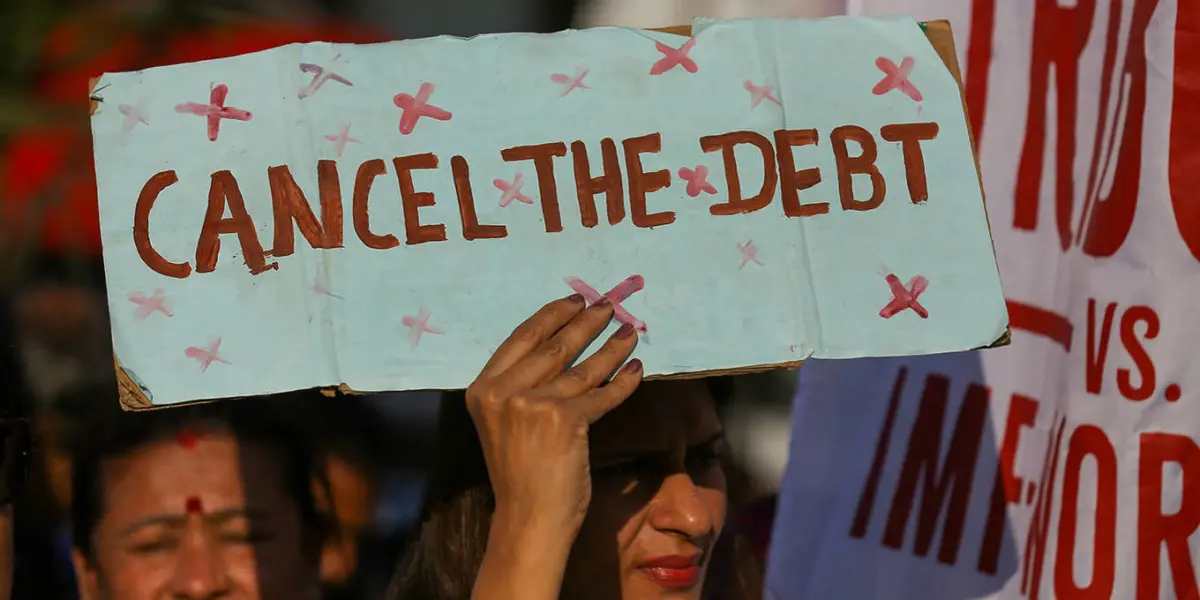
The newly created Borrowers’ Platform aims to facilitate knowledge-sharing and capacity-building among debtor countries, while amplifying their voices in global financial circles. But at a time when the Paris Club of sovereign creditors is increasingly unable to act collectively, the Borrowers’ Platform should ramp up its ambition.
BANGKOK – For seven decades, a select group of the world’s largest official creditors has meticulously coordinated their positions in complex negotiations with sovereign nations grappling with insurmountable debt burdens. This powerful consortium, known as the Paris Club, has not only focused on restructuring the debt of individual countries in distress but has also played a significant role in shaping the global financial architecture governing bailouts and the conditionalities attached to them. Its influence has been substantial, largely derived from the collective leverage wielded by its 22 permanent member states, particularly within the International Monetary Fund (IMF). Now, in a significant development mirroring this established creditor coordination, the world’s debtor nations have taken a decisive step to establish a collective entity of their own: the Borrowers’ Platform. The critical question on the minds of international finance observers is whether the stated objectives of this nascent platform are sufficiently ambitious to address the evolving and often fraught realities of global sovereign debt.
Genesis of the Borrowers’ Platform: A Response to Evolving Debt Challenges
The formation of the Borrowers’ Platform is not an isolated event but rather a response to a confluence of factors that have characterized the international debt landscape over the past decade. The sovereign debt crisis in the Eurozone, the increasing prevalence of non-traditional creditors such as China, and the profound economic shocks delivered by the COVID-19 pandemic and subsequent inflationary pressures have all highlighted the limitations and inherent power imbalances in existing debt resolution mechanisms.
Historically, the Paris Club has served as the primary forum for resolving sovereign debt defaults and restructurings. Its members, predominantly wealthy nations, have historically adhered to a shared set of principles and procedures, enabling them to present a relatively unified front when negotiating with indebted countries. This coordination has often provided creditors with a stronger bargaining position, allowing them to influence the terms of repayment, demand specific economic reforms, and ensure a predictable process for debt resolution. The Paris Club’s influence is further amplified by its close ties with international financial institutions like the IMF and the World Bank, which often play a crucial role in assessing a country’s financial health and designing recovery programs.
However, the landscape of sovereign lending has become increasingly complex. The rise of emerging economies as significant creditors, most notably China, has introduced new dynamics. Unlike the Paris Club, these newer creditors often operate with less transparency and may not adhere to the same established principles of debt restructuring. This has led to fragmentation in creditor negotiations, making it more challenging for both debtors and traditional creditors to reach comprehensive agreements. Furthermore, the sheer scale and frequency of debt distress in recent years, exacerbated by external shocks, have strained the capacity and willingness of Paris Club members to engage in prolonged and complex negotiations on a case-by-case basis. Reports from organizations like the United Nations Conference on Trade and Development (UNCTAD) have consistently highlighted the growing debt burden in developing countries, with many facing the daunting prospect of multiple defaults. For instance, in the period leading up to 2023, a significant number of low-income and middle-income countries were classified as being at high risk of or already in debt distress, a situation that the existing creditor frameworks struggled to adequately address.
The Borrowers’ Platform, therefore, emerges as a strategic initiative by debtor nations to counter these trends. Its creation signifies a recognition that individual countries, negotiating from positions of economic vulnerability, often lack the collective bargaining power to secure equitable debt relief and favorable restructuring terms. By pooling knowledge, resources, and diplomatic influence, debtor nations aim to level the playing field and ensure that their voices are heard more effectively in global financial forums.
Objectives and Ambitions of the Borrowers’ Platform
The stated objectives of the Borrowers’ Platform are multifaceted. At its core, it seeks to foster an environment of mutual learning and institutional strengthening among its member states. This includes sharing best practices in debt management, improving capacity in economic forecasting and fiscal analysis, and developing more sophisticated negotiation strategies. The platform aims to equip member countries with the tools and expertise necessary to navigate complex financial negotiations and to advocate for their national interests more effectively.
A key ambition is to provide a unified voice for debtor nations on the international stage. In an era where global financial decisions are increasingly shaped by powerful creditor groups and international institutions, the Borrowers’ Platform intends to act as a collective advocate, ensuring that the perspectives and challenges faced by indebted countries are adequately represented and considered. This could translate into greater influence in forums such as the G20, the IMF, and the World Bank, where debt relief initiatives and financial reform agendas are often debated and decided.
Furthermore, the platform aims to address the perceived asymmetry of information and power that often characterizes debt negotiations. By facilitating the exchange of information about creditor demands, negotiation tactics, and successful restructuring strategies, member countries can collectively enhance their understanding of the global debt landscape and avoid being exploited by more powerful actors. This knowledge-sharing aspect is crucial for building resilience and fostering a more equitable financial system.
The Paris Club: A Historical Context and Evolving Role
The Paris Club, established in 1956, has been the bedrock of sovereign debt restructuring for decades. Its origins lie in a series of negotiations between Argentina and its official creditors, which led to the creation of a framework for orderly debt management. Over the years, it evolved into a standing body comprising 22 member countries, including major industrialized nations like the United States, Germany, France, Japan, and the United Kingdom, alongside emerging economies such as Russia and South Korea.
The Paris Club operates on the principle of consensus among its members. When a country faces repayment difficulties, it can request a meeting with the Paris Club. The club then analyzes the country’s economic situation and debt profile, and if an agreement is reached, it negotiates a restructuring plan with the debtor nation. This plan typically involves rescheduling debt payments, extending maturities, and sometimes reducing the principal amount of the debt or offering grace periods.
However, the effectiveness and cohesion of the Paris Club have faced increasing scrutiny in recent years. The rise of China as a major global lender, often through bilateral agreements and on terms that differ from Paris Club norms, has complicated the creditor landscape. China’s increasing involvement in sovereign lending, particularly to developing nations in Africa and Asia, has led to situations where Paris Club members are negotiating alongside non-Paris Club creditors, sometimes with divergent interests and approaches. This fragmentation has made reaching comprehensive debt solutions more challenging.
Moreover, the sheer volume of debt distress has put a strain on the Paris Club’s capacity. The COVID-19 pandemic, in particular, led to a surge in requests for debt relief, overwhelming the traditional mechanisms. While the G20’s Debt Service Suspension Initiative (DSSI) and Common Framework for debt treatments beyond the DSSI were introduced as responses, their implementation has been slow and faced challenges, partly due to the complexities of coordinating a diverse group of creditors, including private bondholders and emerging market lenders. Some analysts have noted that the Paris Club, while still influential, is finding it harder to act as a singular, decisive entity in the face of these evolving global financial dynamics.
Challenges and Opportunities for the Borrowers’ Platform
The establishment of the Borrowers’ Platform is a significant step, but its success will hinge on its ability to navigate a complex set of challenges and capitalize on emerging opportunities.
One of the primary challenges will be achieving genuine unity and sustained commitment among its diverse membership. Debtor nations come from different economic backgrounds, have varying political systems, and face unique debt profiles. Ensuring that these diverse interests can be harmonized into a cohesive strategy will require strong leadership, effective communication channels, and a shared understanding of common goals. The risk of individual countries prioritizing their immediate national interests over collective action is a perennial concern in such multilateral initiatives.
Another challenge lies in the platform’s capacity to exert meaningful influence. While knowledge-sharing and voice amplification are important, the ultimate power in debt negotiations often lies with those who hold the debt. The Borrowers’ Platform will need to develop strategies to translate its collective voice into tangible outcomes, whether through influencing the agendas of international financial institutions, fostering greater transparency in lending practices, or developing alternative financing mechanisms.
Furthermore, the platform must contend with the existing power structures in global finance. The Paris Club and other established creditor groups have decades of experience and institutional backing. The Borrowers’ Platform will need to demonstrate its credibility and effectiveness to gain the respect and attention of these established players. This may involve developing robust analytical capabilities, presenting well-researched proposals, and engaging in constructive dialogue rather than confrontational stances.
Despite these challenges, the Borrowers’ Platform has significant opportunities to shape the future of sovereign debt management. The increasing recognition of the systemic risks posed by unsustainable debt levels globally provides a fertile ground for advocacy. The platform can play a crucial role in pushing for reforms to the international financial architecture, advocating for more equitable lending practices, and promoting greater transparency in sovereign debt markets.
By fostering a stronger sense of solidarity and shared purpose among debtor nations, the platform can empower them to negotiate from a position of greater strength. This could lead to more sustainable debt restructurings, reduced instances of default, and a more stable global financial system. The platform’s success could also encourage greater innovation in debt instruments and financing mechanisms, potentially creating new avenues for development and economic growth for its member countries.
The Road Ahead: Enhancing Ambition and Impact
The creation of the Borrowers’ Platform marks a pivotal moment in the ongoing evolution of global debt governance. As Ishac Diwan, an economist and columnist, suggests, the platform’s current objectives, while valuable, may need to be "ramped up" in ambition. This implies a need to move beyond mere knowledge-sharing and capacity-building towards more proactive and impactful strategies.
This enhanced ambition could manifest in several ways. Firstly, the platform could seek to develop its own independent analytical capacity, producing its own assessments of debt sustainability and proposing alternative restructuring frameworks that better reflect the development needs of its member countries. This would reduce reliance on analyses provided by creditors or international institutions, which may sometimes be perceived as biased.
Secondly, the platform could explore mechanisms for collective action or mutual support among its members. This might involve establishing a contingency fund to assist member countries facing immediate liquidity crises or developing coordinated approaches to engaging with private creditors. Such initiatives would signal a greater willingness to stand together in times of financial stress.
Thirdly, the Borrowers’ Platform could play a more active role in advocating for systemic reforms. This could include pushing for greater representation of debtor nations in the governance of international financial institutions, advocating for the establishment of a more effective and equitable international bankruptcy framework for sovereign states, and promoting the adoption of responsible lending and borrowing practices by all actors in the global financial system.
The world is witnessing a profound shift in the global economic order, with debt burdens becoming an increasingly critical issue for a vast number of nations. The emergence of the Borrowers’ Platform is a testament to the growing agency of these nations in seeking to influence their own economic destinies. The true measure of its success will lie not only in its ability to foster collaboration among its members but also in its capacity to effect meaningful change in the global financial architecture, ensuring a more just and sustainable future for all. The coming years will be crucial in determining whether this new platform can evolve from a forum for dialogue into a powerful engine for reform and a true counterbalance in the complex world of sovereign debt.
