

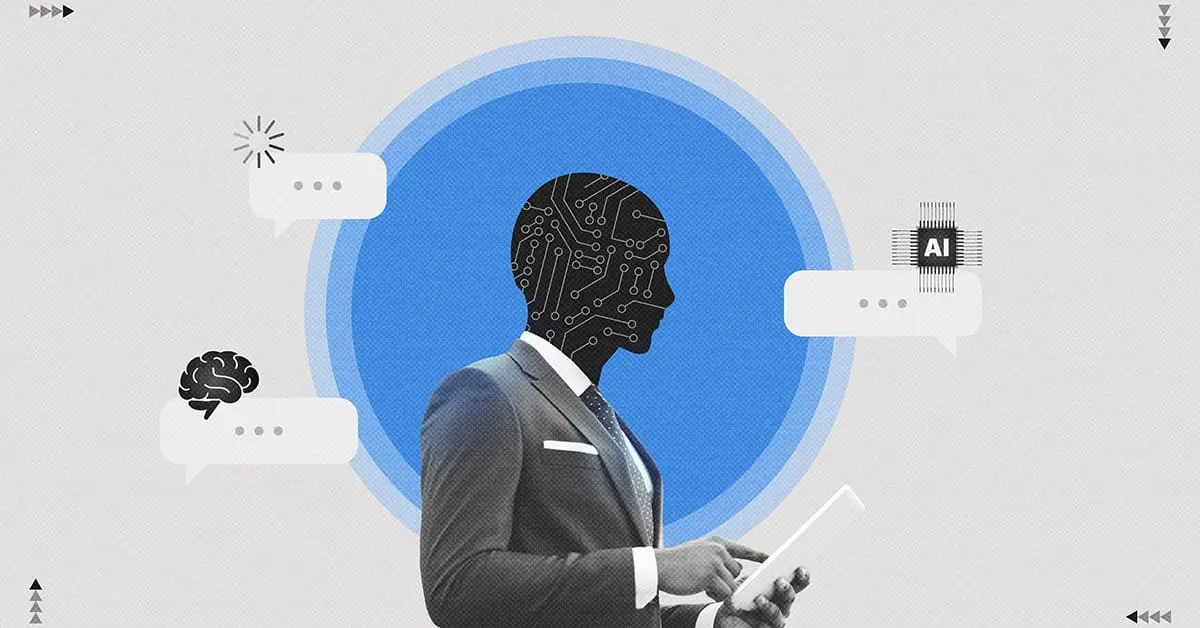
The proliferation of artificial intelligence (AI) in professional environments, particularly among company leaders, is ushering in a new era of compliance and legal challenges for employers. As AI tools become more integrated into daily workflows, a critical need arises for proactive preparation to mitigate significant intellectual property and employment law risks, lest organizations find themselves navigating costly litigation. This evolving landscape demands a comprehensive understanding of potential pitfalls and the implementation of robust governance strategies.
Since the dawn of 2023, a consistent upward trend in workplace AI adoption has been meticulously documented by numerous surveys and polls. These studies reveal that a growing percentage of the workforce, from entry-level employees to senior executives, are leveraging AI technologies to enhance productivity and streamline tasks. Notably, company leaders are at the forefront of this adoption curve, frequently utilizing AI for strategic planning, communication refinement, and decision-making support. This widespread integration, however, is not without its complexities, presenting employers with a multifaceted array of legal risks and potential litigation hurdles.
The dual nature of AI’s impact on intellectual property (IP) rights and employment law mandates careful consideration. Decisions regarding which AI applications are permissible and the establishment of comprehensive AI governance policies are paramount. Furthermore, the way AI-generated evidence impacts investigations and discovery processes requires strategic preparation. Companies that fail to address these burgeoning concerns proactively risk facing legal repercussions and significant financial liabilities down the line.
Navigating the Minefield of Intellectual Property Risks
One of the most significant and widely recognized legal perils associated with employee AI usage pertains to intellectual property rights. The ease with which employees can upload proprietary information into AI tools, whether intentionally or inadvertently, poses a substantial threat. This can lead to the disclosure of trade secrets, potentially undermining patent applications, copyright protections, and trademark efforts. The unauthorized dissemination of such sensitive data can trigger breaches of compliance obligations, violate privacy rights, and contravene existing confidentiality agreements.
Moreover, the integration of AI-generated content into work products can complicate an organization’s ability to secure intellectual property protection. If AI tools are trained on copyrighted material or generate outputs that are derivative of existing works, the ownership and protectability of the final product can become ambiguous. This ambiguity can render a company vulnerable to infringement claims or diminish its capacity to assert its own IP rights.
In response to these escalating risks, many organizations are making substantial investments in secure, closed enterprise AI solutions. These platforms are designed to operate within a company’s controlled environment, thereby minimizing the risk of external data leakage. Surveys indicate that a vast majority of companies are actively developing and implementing policies that dictate approved AI usage and establish clear parameters for employee interaction with these technologies. Despite these efforts, a persistent challenge remains: the phenomenon of "shadow AI." A significant number of employees continue to utilize AI tools and applications that have not been officially sanctioned by their employers, operating outside the purview of established governance frameworks and posing an ongoing threat to data security and IP integrity. A 2023 report by Ernst & Young, for instance, highlighted that nearly half of US companies were expediting AI deployment by skipping formal governance policies, indicating a potential disconnect between rapid adoption and robust risk management.
Employment Law’s New Frontier: AI and Human Capital
The integration of AI into workplace decision-making processes introduces a host of employment law complexities. AI tools, when employed in areas such as hiring, performance evaluations, or disciplinary actions, can inadvertently lead to violations of established legal protections. For example, a hiring manager utilizing an AI tool to screen candidates might inadvertently discriminate against protected classes, violating laws that prohibit the use of AI in employment decisions or failing to meet crucial notice, validation, and recordkeeping obligations designed to combat algorithmic discrimination.
A particularly concerning trend involves leaders using AI to role-play sensitive employee conversations and seek guidance on managing individual staff members. While these interactions might appear benign, they can occur rapidly and without explicit employer sanction, significantly increasing the risk of non-compliance with employment laws. If these AI-assisted conversations lead to adverse employment actions, such as termination or demotion, they can create substantial liability for the employer. Furthermore, even if employment laws are meticulously followed, these AI interactions can generate records that may become critical evidence in internal investigations or employment disputes. The prompts and conversational histories can be scrutinized by opposing counsel to infer a leader’s intentions or motivations, potentially creating a narrative that is detrimental to the employer.
Courts are already grappling with discovery disputes concerning AI interactions. In several high-profile cases, AI conversations have been treated as discoverable business records, on par with any other form of corporate documentation. This means that prompts, queries, and AI-generated responses can be subject to legal scrutiny. Consider a scenario where a supervisor uses AI to draft disciplinary talking points, explicitly instructing the AI to avoid language that could be perceived as retaliatory. While the supervisor’s intent might have been to adhere to HR training on avoiding retaliation claims, opposing counsel could interpret the prompt as evidence of retaliatory intent, seeking to use the AI interaction as proof of malfeasance. Resolving such divergent interpretations can prove exceptionally challenging and complicate the resolution of employment disputes.
Adding another layer of complexity, leaders may solicit AI for legal analysis. Unlike confidential communications with legal counsel, these AI interactions are unlikely to be protected by attorney-client privilege and are thus discoverable. The content of these chats, along with subsequent actions taken by the leader, can reveal underlying motivations and the leader’s understanding of legal principles, potentially exposing the company to unforeseen liabilities.
The use of AI-powered notetakers or transcribers in meetings and investigations also introduces a distinct set of risks. Errors or inaccuracies in the AI-generated transcripts or summaries can lead to legal claims, either based on the flawed content itself or decisions made in reliance upon it. While these tools are often implemented to enhance efficiency or create more objective records, they can paradoxically introduce new vulnerabilities or generate undesirable documentation.
A critical consideration is the potential for spoliation of evidence. If an employer deletes AI-generated material because it is detrimental to their case, this act of destruction could lead to sanctions for spoliation of evidence. Furthermore, the underlying recordings of conversations used by AI tools may be stored by vendors outside the direct control of the employer. Even if the AI-generated summary is deleted, the original recording might persist, potentially containing problematic content. While many vendors assure users that such recordings are destroyed, an employer’s ability to independently verify this destruction can be limited. Consequently, to avoid the risk of problematic recordings surfacing, companies must actively prevent the use of AI notetakers and summarizers in sensitive conversations.
The emergence of agentic or autonomous AI in company operations further amplifies employment law risks. For instance, an AI system trained under the laws of one state to request documentation for sick leave could inadvertently violate another state’s prohibition on requesting such documentation. Similarly, if agentic AI is deployed to assign work to employees without human oversight and without adequate consideration for employee accommodations for disabilities or workflow adjustments necessitated by harassment complaints, employers could face significant employment law liabilities.
Ensuring Access and Navigating Discovery in the AI Era
Preparing for the impact of AI on investigations and discovery requires a multi-pronged approach. Many AI tools offer features that allow administrators or users to retrieve prompts and conversation histories. However, some platforms require these functions to be activated prior to the interactions in question. If these features are not enabled, the relevant information may become inaccessible, potentially requiring vendor assistance or legal compulsion through subpoenas.
Inconsistent adherence to AI governance policies and the prevalence of shadow AI can create formidable obstacles to accessing crucial AI interactions for investigation or discovery purposes. Employees using unsanctioned AI tools may operate with retention periods that do not align with company or legal requirements. Furthermore, shadow AI use often involves personal accounts, necessitating voluntary cooperation from the employee or legal intervention via subpoena to obtain the necessary information. Employers must also recognize that even sanctioned AI tools may permit users to delete their histories, exposing the company to the risk of missing records or accusations of spoliation.
To address these challenges, vendors are developing AI monitoring tools designed to capture prompts and uploads within AI applications. While these tools enhance the likelihood of capturing AI interactions, they may not capture shadow AI usage occurring on personal devices.
Beyond technical solutions, organizations are re-evaluating their litigation hold procedures to specifically include the preservation of AI interactions. Additionally, companies are considering revising employee agreements to explicitly prohibit the use of non-enterprise AI without prior permission. Confidentiality agreements are also being updated to prevent the uploading of confidential and sensitive information into non-enterprise AI platforms. Furthermore, a thorough review of existing AI governance policies is essential to ensure they adequately establish retention settings and data accessibility requirements for authorized tools.
Proactive Strategies for Mitigating AI Risks
The pervasive use of AI among employees, particularly among leadership, presents substantial intellectual property and employment law risks for organizations. To effectively navigate this evolving landscape, companies must implement a robust and proactive strategy. This includes clearly delineating permissible AI uses and diligently monitoring for shadow AI usage. Equally important is preparing for the heightened significance of accessing AI interactions for investigative and discovery purposes. This necessitates ensuring that the AI tools in use possess sufficient retention periods, offer efficient access mechanisms, and strictly retain only the intended materials. By embracing a comprehensive approach to AI governance and risk management, businesses can harness the benefits of AI while safeguarding themselves against its potential legal ramifications. The future of work is undeniably intertwined with AI, and foresight in establishing appropriate controls is not merely advisable, but essential for sustained organizational success and legal compliance.
