

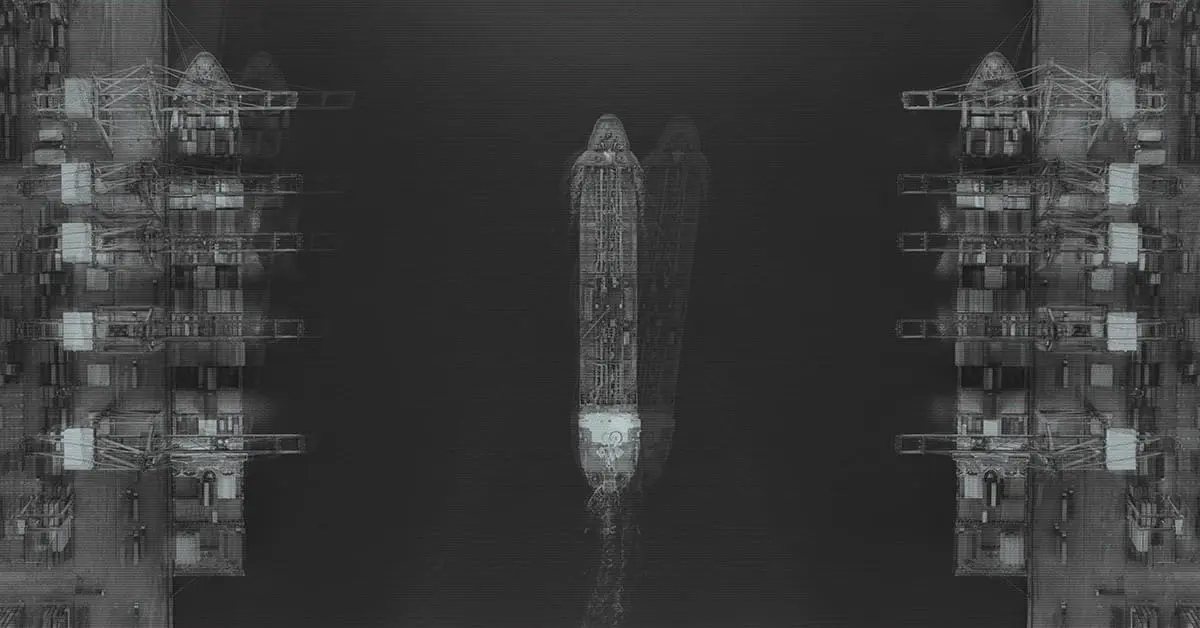
A tanker traversing international waters on April 28, 2026, was officially identified as the OTLA. However, this identity was merely the latest in a series of aliases. Just a year prior, it had sailed under the name KOTLAS, and before that, it was known as the NS Champion. Western regulators, tasked with enforcing sanctions against Russia, had designated the vessel three times, each under a different moniker. The United States first sanctioned it as the NS Champion in 2023. The European Union followed suit in early 2025, listing it as the KOTLAS. Subsequently, the United Kingdom added it to its sanctions list as OTLA that same spring. The critical flaw in these enforcement efforts was that each designation arrived only after the ship had already shed its listed name and embarked on a new identity. Consequently, the sanctions were perpetually chasing a vessel that, by the name appearing on official lists, technically no longer existed.
This intricate dance of renaming and evasion, exemplified by the OTLA’s trajectory, highlights a sophisticated strategy employed by Russia’s "shadow fleet" to navigate a sanctions landscape that is, by design, fragmented and reactive. The United States, the European Union, and the United Kingdom each enacted designations independently, targeting the vessel under whatever appellation it carried at that specific moment. Crucially, there was no unified mechanism that would automatically flag the vessel to officials in Brussels or London when OFAC’s (Office of Foreign Assets Control) 2023 designation of the NS Champion occurred, should its name change. This lack of seamless inter-agency communication and real-time data sharing has created significant loopholes that allow sanctioned entities to operate with relative impunity.
The inconsistencies observed in the OTLA’s case are not isolated incidents but rather symptomatic of a broader systemic issue. A comprehensive analysis conducted by LexisNexis Risk Solutions, examining vessels designated under Russia-related sanctions programs up to April 2026, revealed a stark reality. Collectively, the EU, UK, and OFAC had designated 1,674 vessels. However, a mere 170 of these, representing just over 10%, appeared on all three sanctions lists simultaneously. Further dissecting the data, 357 vessels were listed by the EU and UK but not by OFAC, while 27 appeared on UK and OFAC lists but were absent from the EU’s registry. Thirteen vessels were found on OFAC and EU lists but not the UK’s. This fragmentation means that a vessel sanctioned by one bloc might still be legally accessible and operable within the jurisdiction of another, provided its name has been altered.
In 2025, vessel designations constituted a significant portion of sanctions enforcement activity across all three major Western regimes. However, this expansion, rather than closing the gaps, has inadvertently widened them. The existence of three parallel regimes, each updating its lists at its own pace and maintaining its own distinct database, has been exploited by a shadow fleet that has demonstrably understood and capitalized on these inefficiencies for an extended period. The core problem lies in the reactive nature of the designation process itself. By the time regulators identify and list a vessel, the operators of the shadow fleet have often already initiated the process of changing its name, effectively rendering the designation moot from the outset.
A specific instance illustrates this dynamic: on February 24, 2026, the UK designated an additional 50 vessels. While the EU had already listed 48 of these 50 ships, a critical detail emerged: eight of those 48 had changed their names after the EU had already designated them. This meant that when the UK issued its designations, it was listing these ships under a different name than the one previously used by the EU. In essence, two major regulatory bodies were designating the same physical ship, but under two distinct identities. The EU’s subsequent sanctions package in April 2026 mirrored this pattern, but in the reverse direction. Of its 46 new additions, 30 vessels appeared on no other list, raising the immediate question of whether the UK would follow suit or if these would become another set of unilaterally sanctioned entities. The overarching conclusion from these patterns is that simply increasing the number of designations does not inherently solve the evasion problem; it merely adds more names to lengthy lists that shadow fleet vessels can easily circumvent through the simple act of renaming.
The Strategic Art of Renaming
The evasion tactics employed by the shadow fleet do not necessitate elaborate or technologically advanced methods. In many instances, the approach is remarkably blunt and straightforward. An in-depth analysis by LexisNexis Risk Solutions, focusing on the 170 vessels that appeared on all three major sanctions lists, revealed that approximately 35% (60 vessels) were operating under a name not present in any of the three sanctions databases. Of these 60 vessels, a significant proportion – 34 – had already changed their names at least once following an initial designation. The study further highlighted that even vessels appearing with consistent names across all three lists were not necessarily compliant. A subsequent registry check found that two-thirds of the 92 vessels with matching names across the EU, UK, and OFAC lists had, in fact, changed their operating names since their initial listings. This underscores a crucial lesson: name consistency across different sanctions databases is not, in itself, a reliable indicator of compliance. The operators of the NS Champion, through their early adoption of renaming strategies, demonstrated an early understanding of this vulnerability.
The renaming process generally falls into two discernible patterns. The first is cosmetic and often characterized by a degree of brazenness. Operators frequently choose new names that are strikingly similar to their previous ones, sometimes involving only a minor alteration of a few letters. This tactic leverages the fact that ship names are prominently displayed in paint on their bows. Examples of this include vessels formerly named TRIUMPH becoming TRIUM, DIAMOND morphing into ALMOND, ANTARCTIC becoming ANTARKTIKA, ARSENYEV transforming into ASENYEV, AKADEMIC changing to AKADEMIK, NOVA ENERGY becoming NEW ENERGY, and LEONID LOZA being renamed LEO. While seemingly minor, these alterations are enough to create a disconnect with existing sanctions lists.
The second, more subtle, but equally effective process involves staying consistently one step ahead of the sanctions lists. The trajectory of the NS Champion, KOTLAS, and OTLA exemplifies this approach. The ship’s International Maritime Organization (IMO) number – a unique, permanent identifier for the vessel – remains the sole constant across these three different names and multiple years, while its public-facing identity is fluid. This method relies on the fact that regulators are often slower to update their databases with new vessel names compared to the speed at which operators can implement these changes.
This volatility in vessel names is further compounded by a second significant issue: many shadow fleet vessels are assigned generic names. Terms like "Maria," "Premier," or "Triumph" are common and are also used by a large number of legitimate, non-sanctioned vessels. The combination of frequent renaming and the use of generic identifiers creates a substantial challenge for automated screening systems. These systems often generate a high volume of false positives, forcing financial institutions, insurers, and other entities involved in international trade to develop increasingly complex screening rules simply to avoid being overwhelmed by inaccurate alerts. This complexity adds significant operational overhead and can inadvertently slow down legitimate trade.
Beyond the Rename: A Multifaceted Evasion Toolkit
While renaming is the most prevalent evasion tactic, it is by no means the sole method employed by Russia’s shadow fleet. Operators are adept at exploiting two additional mechanisms that significantly amplify the compliance challenges faced by international regulators and businesses.
Reflagging, or Flag Hopping: This involves moving a vessel’s registration from one maritime registry to another, typically to a state that does not actively enforce Western sanctions. By reflagging, ships can effectively place themselves outside the reach of OFAC, EU, and UK sanctions frameworks. According to reports from the European Parliament, common flags utilized by shadow tankers carrying Russian crude oil include those of the Cook Islands, Eswatini, Gabon, Liberia, Malta, the Marshall Islands, Panama, and, of course, Russia itself. These registries exhibit a range of postures toward Western sanctions, from indifference to actively permissive, providing a safe haven for sanctioned vessels. Each instance of reflagging requires enforcement agencies to re-establish the vessel’s true identity and operational status, a process that significantly slows down the effectiveness and timeliness of the designation process.
Automatic Identification System (AIS) Manipulation: This is a more technical form of evasion. Vessels operating in international waters are required to broadcast their position and identity via the AIS. However, sanctioned vessels can strategically disable or falsify their AIS signals. A common tactic involves transferring cargo to a second, undesignated vessel at sea. This secondary ship then carries the cargo to its final port of destination, allowing the operators to effectively conceal the origin of the oil during transit. This practice makes tracing the flow of sanctioned goods significantly more difficult and requires sophisticated monitoring and intelligence gathering to detect.
Together, renaming, reflagging, and AIS manipulation constitute a layered evasion toolkit that easily outpaces the systems currently in place for regulators to counter them. This creates a high-stakes compliance game for legitimate companies operating in international trade. The consequences of even a single misstep can be severe. In May 2026, an India-listed commodities company was compelled to pay $275 million to OFAC after it was found to have purchased fuel that was ultimately determined to be of Iranian origin. Such violations can trigger severe penalties, including correspondent banking restrictions, asset freezes, and criminal referrals. For institutions that exhibit systematic failures in their compliance programs, the ultimate consequence can be the loss of access to vital dollar clearing systems, effectively crippling their ability to conduct international financial transactions.
The Broader Environmental and Economic Impact
The shadow fleet’s activities extend beyond financial and legal repercussions, posing significant environmental and economic risks. A substantial portion of these vessels are over 20 years old, well beyond a typical safe commercial lifecycle. The combination of advanced age, accumulated corrosion, and often poor maintenance practices, coupled with unsafe ship-to-ship transfer operations and inadequate or non-existent insurance coverage, dramatically increases the probability of spills and accidents. In such scenarios, liability often becomes unclear, leaving coastal states and local communities to bear the substantial financial and environmental costs of cleanup and remediation. Meanwhile, the continued operation of these vessels ensures the funding of sanctioned regimes, fundamentally undermining the integrity and effectiveness of international enforcement efforts at their very foundation.
Implications for Sanctions Compliance in the Maritime Sector
For companies involved in shipping and energy, as well as the banks and insurers that support their operations, exposure to the shadow fleet is far more than a simple matter of checking if a vessel’s name appears on a sanctions list. It necessitates a comprehensive and nuanced assessment of the vessel itself, the specific shipment, and all parties involved in the transaction. A robust compliance program must incorporate a clear and actionable process for investigating any warning signs or anomalies before proceeding with business.
A truly effective compliance program requires the integration of several complementary controls. This includes:
- Enhanced Due Diligence: Moving beyond basic name screening to conduct thorough background checks on vessel owners, operators, charterers, and beneficial owners. This involves scrutinizing corporate structures, identifying any links to sanctioned entities or jurisdictions, and verifying the legitimacy of the parties involved.
- Advanced Data Analytics: Leveraging sophisticated data analytics tools to identify patterns of suspicious activity, such as frequent name changes, unusual routing, or transfers to other vessels in ambiguous locations. This can help proactively flag high-risk vessels and shipments that might otherwise go unnoticed.
- Real-time Monitoring: Implementing systems that continuously monitor vessel movements, ownership changes, and flag status. This real-time visibility is crucial for detecting evasive maneuvers as they happen, rather than relying on retrospective analysis.
- Intelligence Sharing and Collaboration: Fostering stronger collaboration and intelligence sharing between regulatory bodies, financial institutions, and industry stakeholders. This can help create a more unified and responsive approach to identifying and sanctioning evasive actors.
- Scenario Planning and Stress Testing: Regularly testing compliance programs against various evasion scenarios to identify weaknesses and ensure they are resilient to evolving tactics employed by the shadow fleet.
The ultimate objective of such a comprehensive approach is not merely to clear a vessel’s name from a sanctions list but to gain a deep understanding of the underlying risks associated with a particular voyage. This shift from a reactive, name-based approach to a proactive, risk-based methodology is essential for effectively combating the complex and dynamic challenges posed by Russia’s shadow fleet and ensuring the integrity of international trade and financial systems.
