

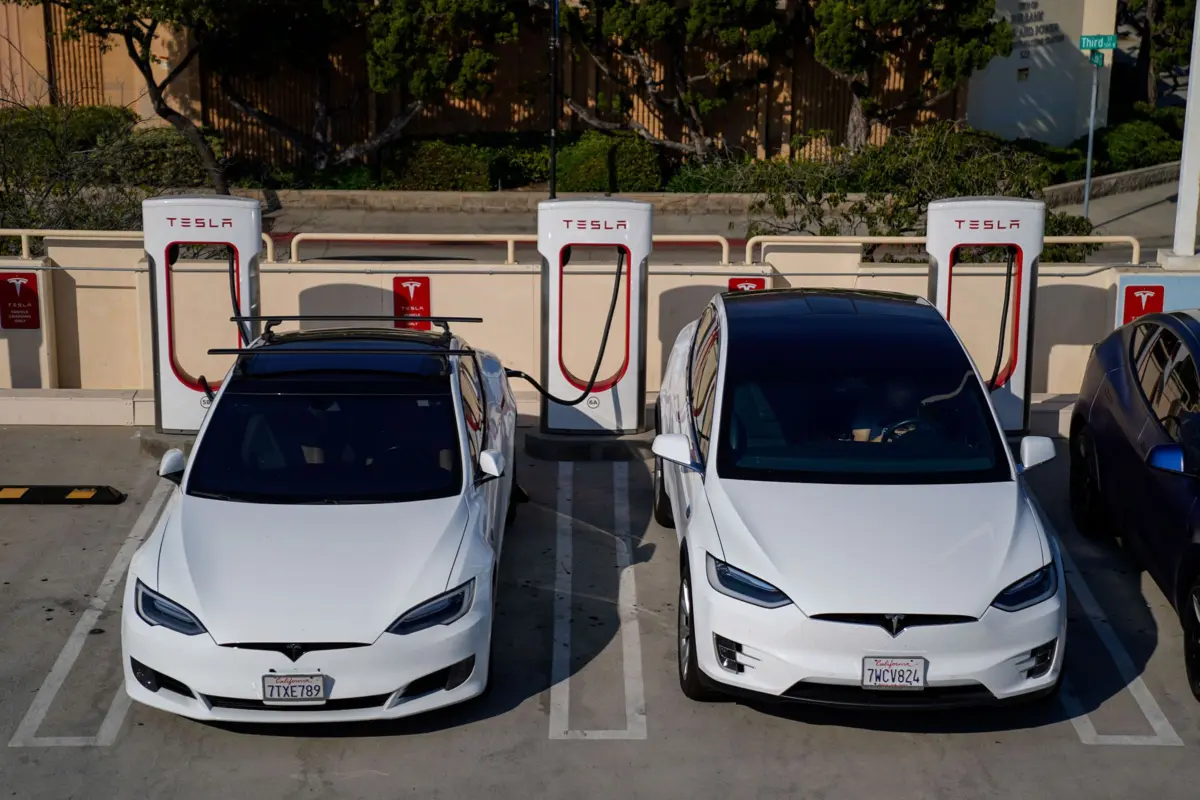
Tesla has officially transitioned its flagship driver-assistance software branding in the European market, moving away from the controversial "Full Self-Driving" (FSD) moniker in favor of "Tesla Assisted Driving" (TAD). This strategic pivot follows intensive discussions with European regulators and marks a significant concession for the Austin-based automaker, which has historically defended its nomenclature despite criticism that the terms suggest a higher level of autonomy than the vehicles actually possess. The change was first reflected on Tesla’s European sales portals and configurators this week, signaling a new chapter in the company’s effort to harmonize its advanced technology with strict international safety standards.
The rebranding is not merely a marketing adjustment but a direct response to regulatory pressure originating in Germany. According to official statements from the German Transport Ministry, the decision was reached following high-level dialogues between Tesla executives and government officials, including German Transport Minister Steffen Bilger. Minister Bilger had characterized the "Full Self-Driving" label as "somewhat misleading," arguing that it could lead consumers to believe the vehicle is capable of autonomous operation without human oversight. Following Tesla’s agreement to adopt the "Tesla Assisted Driving" name, Bilger indicated he would advocate for the swift approval of the technology across the European Union, with a formal vote by European regulators expected to take place before the end of the year.
The Technical Reality of Level 2 Automation
To understand the weight of this rebranding, it is essential to distinguish between the marketing of the software and its technical classification under the Society of Automotive Engineers (SAE) International standards. Tesla’s driver-assistance systems—including the newly renamed TAD—are classified as Level 2 (Partial Driving Automation). At this level, the vehicle can control both steering and acceleration/deceleration, but the human driver must remain fully engaged, monitor the environment at all times, and be prepared to take immediate control.
The "Full Self-Driving" name has long been a point of contention because "Full Self-Driving" linguistically implies Level 4 (High Automation) or Level 5 (Full Automation), where the vehicle can operate without human intervention under specific or all conditions. By adopting "Tesla Assisted Driving," the company is aligning its brand identity with the technical reality that the driver remains the primary operator of the vehicle. Despite the name change, the software’s capabilities remain consistent: it can navigate urban streets, handle intersections, manage lane changes, and respond to traffic signals, provided a "supervised" human is behind the wheel.
A Chronology of Naming and Legal Challenges
Tesla’s journey with driver-assistance branding has been fraught with legal and regulatory hurdles, particularly in its home market of the United States. The company first introduced "Autopilot" in 2014, followed by the "Full Self-Driving Capability" package in 2016. Since then, the naming conventions have faced a series of challenges:
- 2020: Tesla begins the limited release of "FSD Beta" to a small group of testers, allowing the cars to navigate complex city streets for the first time.
- 2022: The California Department of Motor Vehicles (DMV) files a formal complaint, alleging that Tesla’s use of "Autopilot" and "Full Self-Driving" constitutes deceptive advertising. The DMV argued that these names falsely implied the cars were autonomous.
- 2023: Under pressure from the National Highway Traffic Safety Administration (NHTSA), Tesla issues a voluntary recall of FSD software to address concerns regarding the system’s behavior at intersections and its adherence to speed limits.
- Early 2024: Tesla rebrands the software in North America to "Full Self-Driving (Supervised)," adding the parenthetical to emphasize that human oversight is mandatory.
- Mid-2024: Tesla agrees to the "Tesla Assisted Driving" (TAD) name for the European market to satisfy the German Transport Ministry and broader EU regulatory bodies.
In California, the legal pressure became so acute that the DMV threatened to suspend Tesla’s manufacturing and dealer licenses. In response, Tesla scaled back the use of "Autopilot" in certain marketing contexts and began the transition toward the "Supervised" terminology that eventually paved the way for the European TAD designation.
Regulatory Hurdles in the European Union
The European regulatory environment is significantly more restrictive than that of the United States regarding automotive safety and automated systems. The United Nations Economic Commission for Europe (UNECE) sets the standards for "Driver Control Assistance Systems" (DCAS), which govern how features like TAD can be deployed.
Until recently, European regulations prohibited many of the advanced maneuvers that FSD performs in the U.S., such as automatic lane changes on certain road types or complex navigation through roundabouts. However, a new DCAS regulation adopted earlier this year has opened a pathway for more advanced systems to be approved, provided they meet rigorous safety transparency and human-machine interface (HMI) requirements. Tesla’s decision to rename the system is seen as a diplomatic move to ensure that when the EU votes on these systems later this year, Tesla is viewed as a cooperative partner rather than a defiant outlier.
Safety Probes and Data Controversies
The rebranding comes at a time when Tesla’s safety record is under intense scrutiny. In March 2024, the U.S. federal government opened a new probe into the FSD system following nine reported incidents where the software allegedly failed to respond appropriately in conditions of reduced visibility, such as glare or heavy fog. These incidents resulted in crashes where the system did not provide adequate warnings for the driver to take over.
Furthermore, a recent report by Reuters suggested that Tesla may have presented misleading safety data to European regulators during its lobbying efforts. Critics and safety researchers have long argued that Tesla’s safety reports—which often compare "miles per accident" on Autopilot versus human driving—are flawed. Researchers point out that Autopilot is primarily used on highways, which are statistically safer than the urban environments where most human-driven accidents occur. By comparing highway Autopilot data to general human driving data (which includes high-risk city driving), critics argue Tesla creates an "apples-to-oranges" comparison that inflates the perceived safety of its software.
The Economic Imperative of Global Expansion
For Tesla and CEO Elon Musk, the approval of TAD in Europe and other global markets is a financial necessity. Tesla has pivoted its long-term valuation strategy toward software-as-a-service (SaaS) and artificial intelligence. In the United States, Tesla currently charges a $99 monthly subscription for FSD (Supervised), or a $8,000 upfront fee. With millions of Tesla vehicles already on European roads, the ability to unlock a recurring revenue stream through TAD subscriptions would represent a massive boost to the company’s bottom line.
The company has already made inroads in other international markets. Australia and New Zealand granted approval for the software last year. In May 2024, Tesla secured a landmark agreement to launch a version of the software in China, following a visit by Musk to Beijing where he met with high-ranking officials to discuss data security and mapping. The Netherlands also recently granted Tesla provisional permission to test and launch the software, making it the first EU nation to do so ahead of the broader union-wide vote.
Implications for the Automotive Industry
Tesla’s retreat from the "Full Self-Driving" name in Europe may set a precedent for how other automakers market their Level 2 and Level 3 systems. Companies like Mercedes-Benz and BMW have been more conservative, using names like "Drive Pilot" and "Personal Pilot," and explicitly defining the conditions under which their systems operate. Mercedes-Benz, for instance, has already secured Level 3 certification in parts of the U.S. and Germany, allowing drivers to take their eyes off the road under specific highway conditions—a feat Tesla’s Level 2 system has yet to legally achieve.
The "Tesla Assisted Driving" name change suggests a maturation of the company’s regulatory strategy. While Elon Musk has often pushed the boundaries of "move fast and break things" in the tech world, the automotive industry operates under a different set of life-safety mandates. By accepting the TAD designation, Tesla is acknowledging that the path to full autonomy is a marathon of incremental approvals and linguistic precision, rather than a sprint fueled by aspirational branding.
As the year-end EU vote approaches, the automotive world will be watching closely. If TAD is approved, it will validate Tesla’s "vision-only" approach to autonomy in one of the world’s most demanding regulatory landscapes. However, the requirement for constant driver intervention remains the ultimate ceiling for the technology. For now, Tesla owners in Europe will be reminded with every turn of the steering wheel that they are being "assisted," not replaced.
