

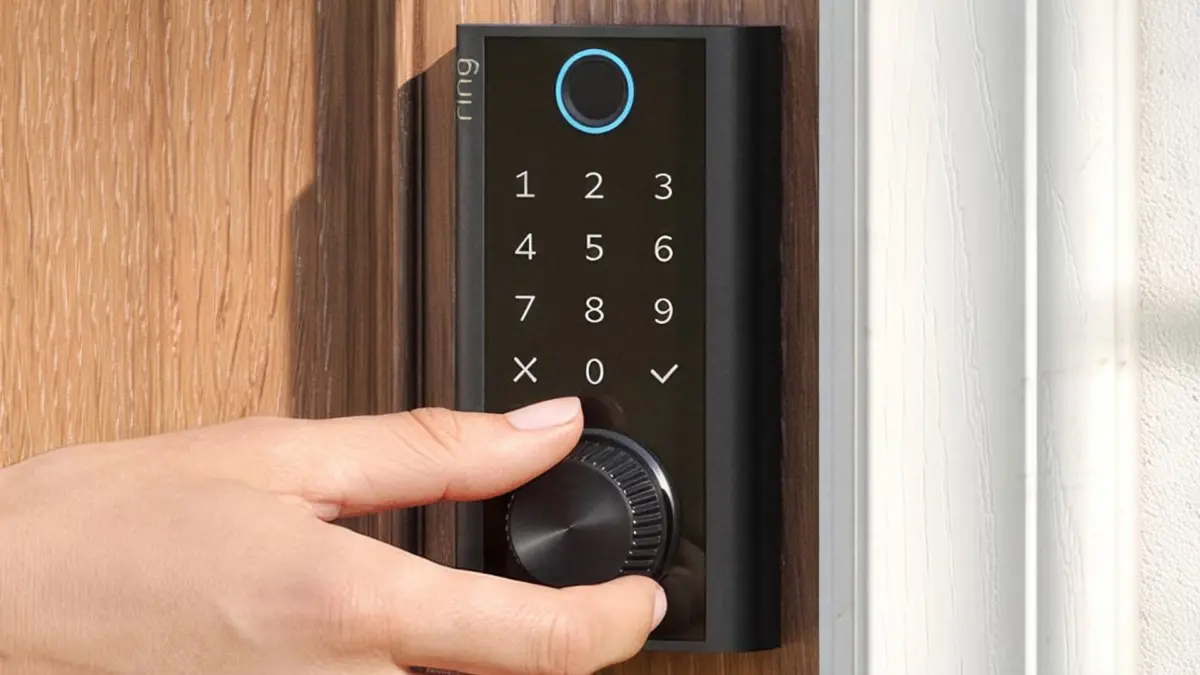
The home security landscape is set for a significant expansion as Ring, the Amazon-owned security titan, officially announced its first-ever smart lock this week. For years, Ring has dominated the front porch with its ubiquitous video doorbells and floodlight cameras, yet a native smart lock remained a notable omission from its product lineup. That gap is slated to close in early 2027 with the release of the Ring Smart Lock, a device designed to integrate seamlessly into the Ring and Alexa ecosystems while introducing a mechanical solution to one of the most common frustrations in smart home technology: the dead battery lockout.
The standout feature of the Ring Smart Lock is a unique manual power dial located on the exterior of the unit. This dial serves as a kinetic energy generator, allowing users to manually produce enough electricity to power the lock’s internal components in the event of a total battery failure. By turning the dial, the user can provide a temporary charge to the keypad or fingerprint sensor, ensuring that they can gain entry without the need for a physical backup key. This innovation addresses a significant psychological and practical barrier for consumers who remain wary of transitioning to keyless entry systems due to the risk of being stranded outside.
A New Approach to Emergency Access
The introduction of a hand-crank style power generator marks a departure from industry standards. Currently, most high-end smart locks on the market deal with battery depletion in one of three ways: a physical key override, an external 9V battery jump-start terminal, or a USB-C emergency power port. While effective, these methods require the user to have additional tools—such as a spare key, a specific battery, or a portable power bank—readily available.
Ring’s solution internalizes the backup mechanism. The company’s design philosophy suggests that the user should be the only tool required to access the home. In practical terms, this means that a homeowner returning from a long trip to find a dead battery can simply rotate the external dial until the interface illuminates. Once powered, the lock’s full suite of entry methods—including the fingerprint scanner and the PIN-based keypad—becomes functional. This self-sufficiency is positioned as a major selling point for families, particularly for children or elderly residents who may not consistently carry a smartphone or a physical key.
Technical Specifications and Entry Methods
The Ring Smart Lock is built to be a versatile centerpiece of the modern smart home. It offers four primary methods of entry to accommodate different user preferences and situational needs.
First, the device features an integrated biometric fingerprint reader, allowing for near-instantaneous access. Second, a traditional backlit keypad supports the use of PIN codes. This feature is particularly useful for providing temporary access to guests, contractors, or delivery services, as unique codes can be generated and revoked via the Ring app. Third, the lock is fully integrated with the Ring mobile application, allowing for remote locking and unlocking. Finally, as an Amazon-owned product, the lock features deep integration with Alexa, enabling voice-controlled locking and status checks through Echo devices.
Internally, the lock is powered by Ring’s new Quick Release Ultra battery pack. This rechargeable unit is designed for easy removal, allowing homeowners to swap or charge the battery without dismantling the lock hardware. The use of a proprietary, rechargeable battery system aligns with Ring’s broader hardware strategy, as seen in their latest generations of video doorbells, aiming to reduce the environmental waste associated with disposable alkaline batteries.
Strategic Market Positioning and Context
Ring’s entry into the smart lock market comes at a time when the industry is moving toward greater interoperability and more robust security standards. While Ring has long offered "Works with Ring" certifications for third-party locks from manufacturers like Schlage and Yale, a first-party device allows Amazon to control the end-to-end user experience.
The $250 price point places the Ring Smart Lock in the premium tier of the market, competing directly with the August Wi-Fi Smart Lock, the Schlage Encode Plus, and the Yale Assure Lock 2. However, Ring’s massive existing user base provides a significant competitive advantage. For the millions of households already utilizing Ring cameras and the Ring Alarm system, the addition of a native lock offers a unified security dashboard that third-party integrations often struggle to match.
The timing of the announcement—targeting a release in early 2027—suggests that Ring is taking a deliberate approach to testing and refining the hardware. Industry analysts suggest that this lead time may be used to ensure the device meets the rigorous durability standards required for external door hardware, which must withstand extreme temperatures, moisture, and physical tampering.

Design and Aesthetics
Recognizing that a smart lock is as much a piece of home decor as it is a security device, Ring has announced that the lock will be available in three distinct finishes: Satin Nickel (Silver), Venetian Bronze (Brass), and Matte Black. The design appears to be a "deadbolt replacement" style, meaning it replaces the entire existing deadbolt assembly rather than just the interior thumb-turn. This approach generally offers greater structural integrity and a more cohesive aesthetic on both the interior and exterior of the door.
The exterior housing is designed to be sleek but functional, with the manual power dial integrated in a way that does not detract from the modern appearance of the keypad and fingerprint sensor. The interior housing, while larger to accommodate the Quick Release Ultra battery, maintains a minimalist profile consistent with Ring’s recent hardware design language.
Addressing Industry Challenges: Matter and Connectivity
While the initial announcement focused on the manual power dial and basic functionality, several technical questions remain. One of the most significant topics in the smart home industry today is Matter, the universal connectivity standard backed by Amazon, Apple, Google, and Samsung.
As of the current announcement, Ring has not explicitly confirmed if the Smart Lock will support Matter over Thread. Such support would be a major development, as it would allow the Ring Smart Lock to be controlled natively within the Apple Home and Google Home apps without requiring a Ring Bridge or complex workarounds. Given Amazon’s role as a founding member of the Connectivity Standards Alliance (CSA), many industry experts expect Matter compatibility to be a feature of the final production model, though the company has yet to provide a definitive statement.
Furthermore, details regarding estimated battery life under normal usage conditions have not yet been released. The power consumption of a smart lock is influenced by several factors, including the frequency of use, the strength of the Wi-Fi or Sidewalk connection, and the motorized force required to throw the bolt. Ring’s use of the "Ultra" battery pack suggests a focus on longevity, but real-world testing will be required to see how it holds up against competitors that often claim six to twelve months of battery life.
Broader Implications for Home Security
The introduction of the Ring Smart Lock represents a shift in how technology companies view "emergency" scenarios. By incorporating a manual generator, Ring is acknowledging that even the most advanced smart home technology is subject to the limitations of battery chemistry and power management.
This move may prompt other manufacturers to reconsider their own backup power strategies. If the manual dial proves popular with consumers, it could become a standard feature for high-end electronic locks, potentially phasing out the need for 9V battery terminals or physical key cylinders entirely.
From a security perspective, the removal of a traditional keyway (if the final design is indeed keyless) eliminates the risk of "lock picking" or "lock bumping," two common methods used by intruders to bypass mechanical locks. When combined with Ring’s existing suite of motion-activated cameras and professional monitoring services, the smart lock completes a "ring of security" that starts at the sidewalk and ends at the doorframe.
Conclusion and Availability
The Ring Smart Lock is scheduled for a broad release in early 2027. While the $250 price tag is on the higher end of the consumer market, the inclusion of a fingerprint reader and the innovative manual power backup system provides a clear value proposition. As the smart home market matures, the focus is shifting from mere connectivity to reliability and "fail-safe" engineering.
For current Ring users, the wait for a native lock is nearly over. For the broader industry, the Ring Smart Lock serves as a case study in how to address one of the most persistent "pain points" of digital hardware through a surprisingly analog solution. Potential customers can currently sign up on the Ring website to receive notifications regarding pre-order dates and final technical specifications as the launch window approaches.
