

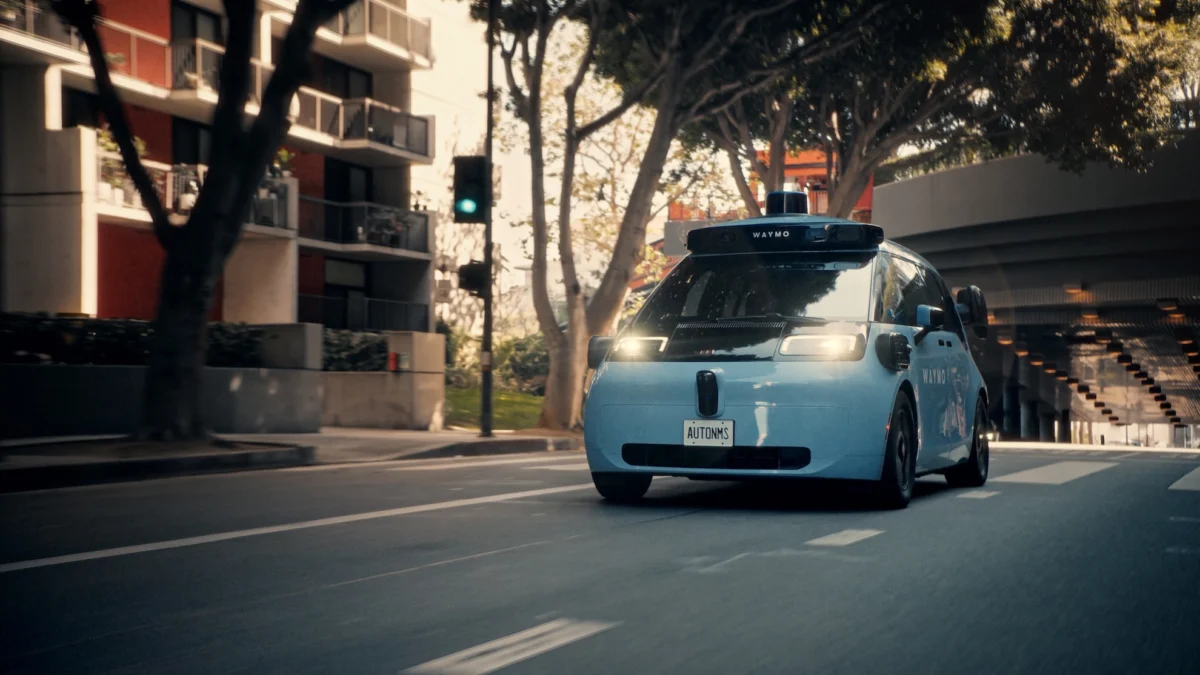
The landscape of autonomous transportation is undergoing a fundamental shift from experimental deployment to industrial-scale optimization, marked by a move toward vertical integration and heightened regulatory scrutiny. Waymo, the Alphabet-owned autonomous driving subsidiary, has long been recognized for its aggressive expansion across major American metropolitan areas. However, the company’s recent disclosure regarding its sixth-generation self-driving system reveals a deeper strategic pivot: the development of proprietary hardware designed to slash operational costs and maximize computational efficiency. This move comes as the broader mobility sector grapples with geopolitical tensions regarding Chinese-made components, a flurry of new venture capital activity, and a tightening of safety oversight from international regulators.
Waymo’s Leap into Custom Silicon: The 5nm ASIC Breakthrough
Central to Waymo’s strategy for achieving long-term profitability is the "Ojai" robotaxi, the first vehicle to feature the company’s sixth-generation self-driving system. While Waymo has previously highlighted the vehicle’s reduced cost of manufacture and maintenance, it recently confirmed the integration of a custom-designed 5-nanometer (nm) Application-Specific Integrated Circuit (ASIC).
This silicon chip is engineered to process the massive influx of raw sensor data before it reaches the central "brain" of the autonomous system. The Ojai vehicle is equipped with 13 high-fidelity cameras, several lidar sensors, and radar arrays, creating a data deluge that standard automotive processors often struggle to handle with low latency. Waymo reports that its new chip delivers over 1,000 Trillions of Operations Per Second (TOPS). For comparison, this performance profile places Waymo’s proprietary hardware in direct competition with Nvidia’s high-end DRIVE AGX Thor processor, which is widely considered the industry benchmark for automated driving compute.
By developing its own silicon, Waymo joins an elite group of technology firms—including Tesla and Apple—that have opted for vertical integration to gain a competitive edge. This approach allows for a system that is tailor-made for Waymo’s specific software architecture, resulting in unmatched efficiency and the ability to react more safely in high-density urban environments. Despite this move toward independence, Waymo continues to maintain a robust ecosystem of hardware partners, including AMD, Micron, Nvidia, Samsung, Sandisk, Socionext, and TSMC.

Geopolitical Security and the Lidar Supply Chain
As American autonomous vehicle (AV) companies push for technological independence, the U.S. government is intensifying its investigation into the security of the hardware supply chain. Reports have emerged that the Idaho National Laboratory is currently conducting an evaluation of Chinese-manufactured lidar (Light Detection and Ranging) sensors. The probe is focused on whether these sensors, which are critical for the "vision" of most self-driving cars, could pose a national security risk if they become ubiquitous on U.S. roads.
The investigation is notably funded by a consortium within the electric and autonomous vehicle industries, suggesting a growing concern among domestic manufacturers about their reliance on foreign technology. While major players like Rivian, General Motors, Ford, and Lucid Motors have denied direct involvement in the review, the silence from other industry leaders like Aurora and Nvidia highlights the sensitive nature of the inquiry.
This scrutiny follows a broader trend of U.S. policy aimed at curbing Chinese influence in critical infrastructure. If the Idaho National Laboratory finds significant vulnerabilities, it could lead to federal restrictions or tariffs on Chinese lidar companies such as Hesai Technology and RoboSense, forcing a massive reshuffling of the global AV supply chain.
Strategic Realignments and New Funding Milestones
The mobility sector continues to attract significant capital, even as business models evolve. "Also," a startup that was incubated within Rivian and spun out in March 2025, recently secured $150 million in a Series D funding round. Led by Prysm Capital, the round brings the company’s total funding to $455 million in just over a year of independent operation.
Also’s evolution reflects the rapid changes in the industry. Initially launched as a micromobility firm focused on electric bikes, it has rebranded as a Palo Alto-based technology company building "driven and autonomous small electric vehicles." This shift was solidified by a multiyear commercial agreement with DoorDash to develop autonomous delivery solutions.

Simultaneously, the sidewalk delivery market is seeing a major reshuffle. Serve Robotics, which recently saw Uber sell off its entire stake and announce the end of their partnership by 2025, has successfully diversified its client base. Serve has finalized deals with Grubhub to deploy robots in Chicago, Los Angeles, and Alexandria, Virginia, while expanding its existing footprint with DoorDash into Washington, D.C., and San Jose. This diversification is seen by analysts as a vital survival tactic for robotics firms that were previously over-reliant on a single massive partner.
Chronology of Recent Global Mobility Developments
The past several weeks have seen a flurry of activity across the electric and autonomous sectors, summarized in the following timeline:
- August 17, 2026: Uber announces a strategic investment in Zipline, a drone delivery leader, with a goal of facilitating 1 million drone deliveries per day by 2029.
- August 18, 2026: Einride strikes a landmark deal with Tesla to acquire 500 electric Semis, integrating them into a fleet that serves clients like Amazon.
- August 19, 2026: Amazon announces plans to expand its Prime Air drone delivery service to nearly 500 U.S. cities by the end of the year.
- August 20, 2026: Nevada regulators grant commercial robotaxi permits to Tesla, Uber, and Waymo for operations in Clark County, potentially adding 8,000 autonomous vehicles to Las Vegas streets.
- August 21, 2026: Tesla and ten other automakers in China initiate a massive recall of over 3 million vehicles to address concerns regarding hidden emergency door releases.
- August 21, 2026: Dutch regulators fine Uber €825 million ($966 million) for GDPR violations related to automated driver suspensions.
Regulatory Pressure and Safety Oversight
As deployment scales, regulatory bodies are becoming more proactive. The National Highway Traffic Safety Administration (NHTSA) is currently investigating a low-speed collision involving a Waymo robotaxi and a child. While Waymo has submitted the requested documentation to federal investigators, much of the data remains redacted, highlighting the ongoing tension between corporate proprietary information and public safety transparency.
In Europe, the legal environment is proving equally challenging. The Dutch Data Protection Authority’s nearly $1 billion fine against Uber serves as a stark warning to gig-economy platforms. The regulator found that Uber’s use of automated systems to suspend driver accounts without sufficient human oversight or explanation violated the "right to explanation" enshrined in European data protection laws.
Broader Impact and Industry Implications
The convergence of custom silicon, geopolitical maneuvering, and heightened regulation points toward a "maturation phase" for the mobility industry. For Waymo and its competitors, the path to profitability no longer lies solely in the sophistication of their AI, but in the efficiency of their hardware and the stability of their regulatory relationships.

The move toward custom ASICs suggests that the next generation of competition will be fought in the semiconductor lab as much as on the road. Companies that can control their hardware stack will be better positioned to manage the high energy demands and thermal constraints of autonomous computing, which directly impacts the range and operational cost of electric robotaxis.
Furthermore, the expansion of drone delivery by Amazon and Zipline, coupled with the deployment of autonomous excavators by startups like Bedrock Robotics, indicates that "autonomy" is moving far beyond the passenger car. From the high seas—where New Zealand’s Vessev is developing electric hydrofoil boats—to the construction sites of Texas, the transition to autonomous, electric-powered transport is becoming an all-encompassing industrial shift.
As the year progresses, the industry will be watching the results of the Idaho National Laboratory’s lidar probe and the outcome of NHTSA’s investigations. These findings will likely dictate the regulatory framework for the next decade of transportation, determining how quickly—and how safely—the vision of a driverless future becomes a daily reality for the general public.
