

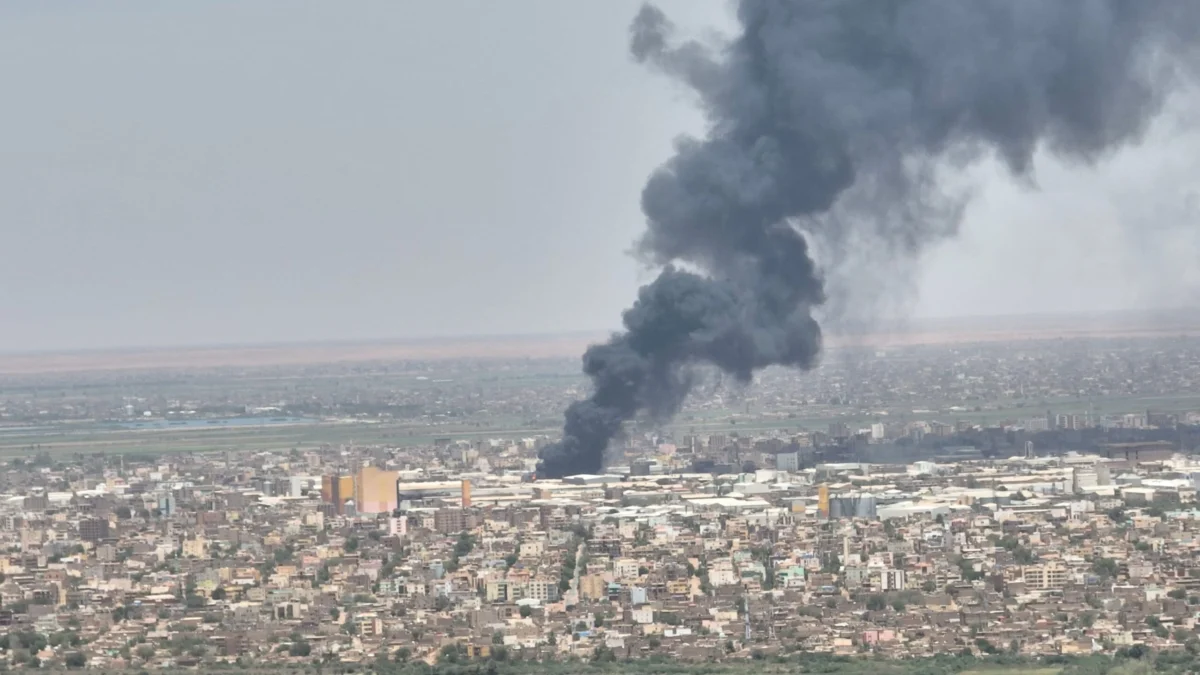
Representatives from the Sudanese Armed Forces and the paramilitary Rapid Support Forces have convened in the Saudi Arabian coastal city of Jeddah to begin "pre-negotiation" talks, marking the first significant diplomatic effort to halt three weeks of intensive urban warfare. The discussions, brokered jointly by the United States and Saudi Arabia, come at a critical juncture as the death toll continues to rise and the humanitarian situation in Khartoum and the surrounding regions reaches a breaking point. While the international community has welcomed the initiative, expectations remain tempered by reports of continued airstrikes and heavy artillery fire in the Sudanese capital, suggesting a significant disconnect between the diplomatic proceedings in Saudi Arabia and the reality on the ground in Africa’s third-largest nation.
The Jeddah Initiative: Objectives and Obstacles
The primary focus of the talks in Jeddah is not a comprehensive political settlement, but rather a sustainable humanitarian ceasefire. Both the Sudanese Armed Forces (SAF), led by General Abdel Fattah al-Burhan, and the Rapid Support Forces (RSF), commanded by General Mohamed Hamdan Dagalo, known as Hemedti, have sent delegations to the Red Sea port city. However, the nature of these talks has been characterized as "pre-negotiation," a term reflecting the deep-seated animosity and lack of trust between the two warring generals.
Riyadh and Washington have exerted significant pressure on both parties to engage in good faith, following a series of short-lived and frequently violated truces. The U.S. State Department and the Saudi Ministry of Foreign Affairs issued a joint statement urging both sides to "actively engage" and reach a deal that would allow for the safe delivery of aid and the restoration of essential services. Despite this, the SAF has been quick to clarify its position; special envoy Dafallah Alhaj stated that the military delegation would not engage in face-to-face negotiations with the "rebel" RSF, emphasizing that the focus remains strictly on humanitarian arrangements rather than a permanent political power-sharing agreement.
A Chronology of the Conflict: From Transition to Chaos
The current conflict is the violent culmination of a long-standing power struggle that began shortly after the 2019 ouster of long-time autocrat Omar al-Bashir. To understand the current crisis, one must look at the sequence of events that derailed Sudan’s fragile path toward democracy:
- April 2019: Following months of mass protests, the Sudanese military overthrows Omar al-Bashir. A Transitional Military Council is formed, eventually leading to a power-sharing agreement with civilian leaders (the Sovereign Council).
- October 2021: General Burhan and General Dagalo, who had previously cooperated, lead a military coup that dissolves the civilian-led government, drawing international condemnation and the suspension of foreign aid.
- December 2022: Under international pressure, a "framework agreement" is signed to return the country to civilian rule. However, tensions begin to simmer over the timeline for integrating the RSF into the regular national army.
- Early April 2023: The RSF begins mobilizing forces in Khartoum and other strategic areas. Negotiations over the military’s command structure reach a deadlock.
- April 15, 2023: Full-scale fighting erupts in Khartoum. The RSF claims control of the presidential palace and the airport, while the SAF launches airstrikes on paramilitary positions in densely populated urban centers.
- May 2023: After multiple failed ceasefires and the evacuation of foreign diplomats, the U.S. and Saudi Arabia successfully bring representatives from both sides to the table in Jeddah.
The Humanitarian Toll: Data and Displacement
The human cost of the three-week conflict has been staggering. According to the World Health Organization (WHO) and local medical groups, the death toll has surpassed several hundred, with thousands more wounded. However, these figures are widely considered to be undercounts, as many bodies remain uncollected in the streets of Khartoum, Bahri, and Omdurman due to the intensity of the fighting.
The displacement crisis is equally severe. The United Nations High Commissioner for Refugees (UNHCR) reports that approximately 100,000 people have already fled Sudan to neighboring countries, including Egypt, Chad, South Sudan, and Ethiopia. Inside the country, hundreds of thousands are internally displaced, often trapped in their homes without access to electricity, running water, or food.
The collapse of the healthcare system is perhaps the most immediate threat to life. Approximately 70% of hospitals in conflict zones are currently non-functional. Facilities that remain open are operating with a skeleton crew, facing a critical shortage of oxygen, blood bags, and trauma kits. The WHO recently managed to deliver a shipment of medical supplies to Port Sudan, but the logistical challenge of transporting these supplies to the capital—where the need is greatest—remains insurmountable without a verified "humanitarian corridor."
Geopolitical Stakes and Regional Security
The conflict in Sudan is not merely a domestic power struggle; it has profound implications for the stability of the Horn of Africa and the Red Sea region. Sudan sits at a strategic crossroads, bordering seven countries, many of which are already grappling with their own internal instabilities.
Saudi Arabia’s involvement as a mediator is driven by several factors. Riyadh has invested heavily in Sudan’s agricultural and infrastructure sectors and views the country as a vital partner in its "Vision 2030" economic diversification plan. Furthermore, security in the Red Sea is a top priority for the Kingdom. A prolonged civil war in Sudan could lead to a vacuum of power, potentially increasing piracy, human trafficking, and the influence of hostile actors along the maritime corridor.
The United States, represented by National Security Adviser Jake Sullivan during his recent travels to the region, views Sudan as a lynchpin for stability in the Sahel. Washington’s primary goal has been the restoration of a civilian-led government, a goal that now seems more distant than ever. The U.S. is also concerned about the potential for external actors to exploit the chaos, particularly given the historical presence of the Russian Wagner Group in the region’s mining sectors.
Analysis of the Internal Rivalry: Burhan vs. Hemedti
At the heart of the war is the personal and institutional rivalry between two men who were once allies. General Abdel Fattah al-Burhan represents the traditional Sudanese military establishment. He views the RSF as an unruly militia that must be absorbed into the army to maintain national sovereignty. Burhan has framed the conflict as a defense of the state against a "rebellious" faction.
Conversely, General Mohamed Hamdan Dagalo (Hemedti) commands the RSF, a force that grew out of the Janjaweed militias used during the Darfur conflict in the early 2000s. Hemedti has spent years building an independent economic empire based on gold mining and has sought to reinvent himself as a champion of democracy and a defender of the marginalized. Before the fighting broke out, Hemedti had been positioning himself politically, aligning with certain civilian blocs to challenge Burhan’s dominance. The SAF views Hemedti’s ambitions as an existential threat to the military’s traditional role in Sudanese society.
The Reality on the Ground: Urban Warfare in Khartoum
Despite the diplomatic activity in Jeddah, the situation in Khartoum remains dire. Residents in the city of Bahri (Khartoum North) report that the sound of warplanes and heavy explosions has become a constant backdrop to their lives. The nature of the fighting—urban warfare in a city of five million people—has turned residential neighborhoods into frontlines.
Eyewitness accounts describe a landscape of "stray bullets" and "indiscriminate shelling." The RSF has largely embedded itself within residential areas, using houses and public buildings as cover, which has prompted the SAF to utilize its superior air power to conduct strikes within the city limits. This tactical stalemate has resulted in significant damage to vital infrastructure, including the destruction of markets, water treatment plants, and power grids.
Potential Outcomes and the Path Forward
The Jeddah talks represent a "thin thread of hope," according to international observers. However, several scenarios could unfold in the coming weeks:
- Scenario 1: Humanitarian Breakthrough. The parties agree on a localized, monitored ceasefire that allows for aid corridors. This would provide immediate relief to civilians but might not stop the overall trajectory of the war.
- Scenario 2: Continued Attrition. The talks fail to produce a meaningful agreement, and both sides continue to believe they can achieve a decisive military victory. This would likely lead to a protracted civil war, similar to the conflicts seen in Libya or Yemen.
- Scenario 3: Regional Escalation. Neighboring countries, driven by their own security concerns or interests, begin to openly back different factions, turning Sudan into a theater for a regional proxy war.
The international community, led by the UN, the African Union, and the Arab League, continues to call for an immediate cessation of hostilities and a return to the negotiating table for a political transition. However, as the delegations meet in the comfort of Jeddah, the people of Sudan remain caught in the crossfire of a war they did not choose, facing a humanitarian catastrophe that grows more severe with each passing hour. The success of the Jeddah initiative will be measured not by the statements released to the press, but by the silencing of guns on the streets of Khartoum and the safe arrival of food and medicine to those in desperate need.
