

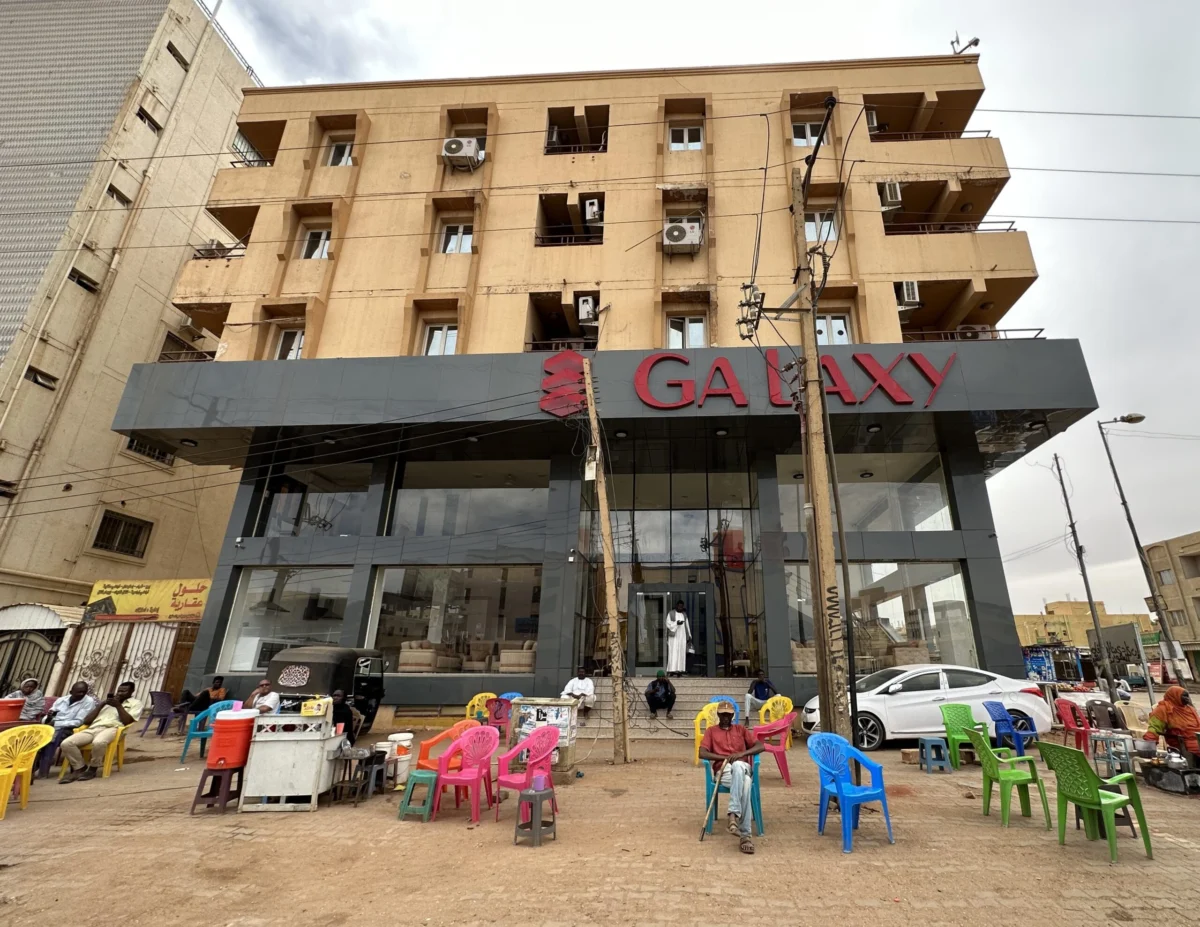
The Republic of Sudan stands at a precarious humanitarian "breaking point" as the window for international evacuations narrows and a fragile ceasefire fails to stem the tide of violence between the Sudanese Armed Forces and the paramilitary Rapid Support Forces. Despite a nominal 72-hour extension of the truce agreed upon on April 30, 2023, the capital city of Khartoum and surrounding regions remain engulfed in a brutal power struggle that has effectively paralyzed the nation’s infrastructure. As foreign governments conclude their complex extraction operations, the millions of Sudanese citizens left behind face a deteriorating landscape of urban warfare, systemic looting, and a total collapse of essential services.
The conflict, which erupted on April 15, 2023, has transformed the once-bustling metropolitan area of Khartoum into a ghost town defined by the sounds of heavy artillery and the sight of rising smoke. According to reports from the Sudanese Health Ministry, the death toll has climbed to at least 528 people, with more than 4,500 wounded. However, the United Nations and various international aid agencies caution that these figures are likely a significant undercount, as many casualties remain unrecorded due to the inability of medical personnel to reach active combat zones.
The Genesis of the Conflict: A Failed Transition
The current violence is the culmination of months of simmering tensions between General Abdel Fattah al-Burhan, the head of the Sudanese Armed Forces (SAF), and General Mohamed Hamdan Dagalo, better known as Hemedti, who leads the paramilitary Rapid Support Forces (RSF). The two generals were once uneasy allies, having collaborated in the 2021 military coup that derailed Sudan’s fragile transition toward civilian-led democracy following the 2019 ousting of longtime autocrat Omar al-Bashir.
The alliance fractured over the specifics of a proposed transition back to civilian rule, specifically regarding the integration of the RSF into the regular military. Disagreements over the timeline for this integration and the future chain of command escalated into a full-scale armed confrontation. This rivalry has not only jeopardized the democratic aspirations of the Sudanese people but has also ignited older, dormant conflicts in the Darfur region, where the RSF has its roots in the Janjaweed militias.
A City Transformed by War
In Khartoum, the nature of the fighting is characterized by the SAF’s use of superior airpower and heavy weaponry against the RSF’s highly mobile, ground-based insurgency. The RSF has fanned out across residential neighborhoods, using civilian homes and public buildings as defensive positions. In response, the army has conducted frequent airstrikes and drone attacks, leading to significant collateral damage and civilian casualties.
Residents who have managed to move through the city describe scenes of utter devastation. Mohamed Ezzeldin, a resident who initially fled but was forced to return due to the prohibitive costs of living elsewhere, reported seeing streets littered with bodies and industrial zones stripped bare by looters. "We saw an industrial area that was all looted. We saw people carrying TVs on their backs and big sacks looted from factories," Ezzeldin stated, highlighting the breakdown of law and order that has accompanied the fighting.
The scarcity of food and water has reached critical levels. Jamila, a resident trapped in the capital, shared that her family has been reduced to eating only one meal a day. With RSF troops stationed directly outside her home and the constant thud of artillery nearby, she described a life of perpetual fear. Similarly, Victoria, a local tea seller, noted that while the danger is immense, the necessity of survival forces many to take lethal risks. "Just sitting useless doesn’t help and being scared doesn’t help," she said, underscoring the impossible choices facing Khartoum’s working class.
The End of International Evacuations
For the past two weeks, the international community has focused heavily on the evacuation of foreign nationals and diplomatic staff. These operations were multifaceted, involving airlifts from the Wadi Seidna airfield, naval extractions via Port Sudan, and treacherous overland convoys to the Egyptian and Ethiopian borders.
However, this window of relative international attention is closing. Germany and other European nations have concluded their missions, and the United Kingdom’s final flights departed on May 1. While these operations successfully removed thousands of foreign citizens, they have also left the Sudanese population feeling abandoned. The departure of foreign diplomats and international aid workers has left a vacuum in mediation and relief efforts, just as the domestic situation reaches its most volatile state.
Humanitarian Statistics and the Displacement Crisis
The scale of the displacement triggered by the 16 days of fighting is staggering. The United Nations Refugee Agency (UNHCR) reports that at least 50,000 people have already fled the country. These refugees are crossing into Chad, Egypt, South Sudan, and Ethiopia—nations that are themselves grappling with internal instability and economic hardship.
Inside Sudan, the situation is even more dire. Before the war, nearly a third of the population—approximately 16 million people—relied on some form of humanitarian assistance. The current conflict has disrupted these supply lines entirely.
- Healthcare: Approximately 70% of hospitals in conflict-affected areas are currently non-functional. Those that remain open are suffering from acute shortages of oxygen, blood bags, and trauma kits.
- Food Security: The World Food Programme (WFP) was forced to suspend operations early in the conflict after three of its staff members were killed. While the WFP announced a resumption of services on May 1, operations are restricted to areas away from the heaviest fighting, leaving the epicenter of the crisis largely unserved.
- Infrastructure: Massive power outages and the destruction of water treatment plants have left millions without access to clean water, raising the specter of waterborne disease outbreaks.
Chronology of the Crisis (April 2023)
- April 15: Heavy gunfire and explosions erupt in Khartoum and Merowe as SAF and RSF clash. The RSF claims control of the presidential palace and Khartoum International Airport.
- April 16-18: Fighting spreads to Darfur. International calls for a ceasefire go unheeded. The death toll surpasses 100.
- April 21: A temporary truce is announced for the Eid al-Fitr holiday but is largely ignored by both sides.
- April 22-24: The United States, United Kingdom, and France begin evacuating embassy staff. Saudi Arabia conducts the first major naval evacuation.
- April 25: A 72-hour ceasefire brokered by the U.S. and Saudi Arabia begins. While it allows some civilians to flee, sporadic fighting continues.
- April 30: Both factions agree to extend the ceasefire for another 72 hours.
- May 1: Intensive airstrikes are reported in Khartoum North and Omdurman. The UN warns of a "breaking point" as the final foreign evacuation flights depart.
Official Responses and Diplomatic Deadlock
Despite international pressure from the African Union, the Arab League, and the United Nations, there is little evidence that either General al-Burhan or General Dagalo is willing to negotiate in good faith. Both leaders have signaled a preference for a decisive military victory over a political compromise.
General al-Burhan has publicly stated that he will not sit down with Hemedti, whom he labels a rebel leader. Conversely, Hemedti has maintained that the RSF will only discuss a political solution once the SAF ceases its aerial bombardments. The SAF recently claimed to have reduced the RSF’s combat effectiveness by 50%, while the RSF maintains that it still holds key strategic locations in the capital, including the airport and several government ministries. These conflicting claims underscore the "fog of war" and the entrenched nature of the combatants.
Martin Griffiths, the UN Under-Secretary-General for Humanitarian Affairs, emphasized the unprecedented nature of the crisis. "The scale and speed of what is unfolding in Sudan is unprecedented," Griffiths remarked, noting that the international community must find ways to deliver aid despite the absence of a stable ceasefire. The UN is currently attempting to establish a humanitarian hub in Port Sudan to funnel medical supplies and food, but the logistics of transporting these goods to the interior remain perilous.
Regional Implications and Future Outlook
The conflict in Sudan threatens to destabilize the broader Horn of Africa and the Sahel region. Sudan shares borders with seven countries, many of which are already fragile. A prolonged civil war could lead to:
- A Massive Refugee Crisis: Millions could be displaced into neighboring states, straining their limited resources and potentially sparking cross-border ethnic tensions.
- Proliferation of Arms: The collapse of central authority in Sudan could turn the country into a marketplace for illicit weapons, fueling insurgencies in neighboring Chad and Libya.
- Economic Disruption: Sudan is a vital transit point for trade and oil. The closure of its airspace and the insecurity of its ports have already begun to impact regional markets.
The immediate outlook for Sudan remains grim. As the military factions dig in for a protracted battle, the civilian population continues to bear the brunt of the violence. The transition to democracy, which seemed so close after the 2019 revolution, now appears more distant than ever. Without a genuine and enforceable ceasefire, the "breaking point" warned of by the United Nations may soon transition from a looming threat to a permanent reality for the 45 million people of Sudan.
