

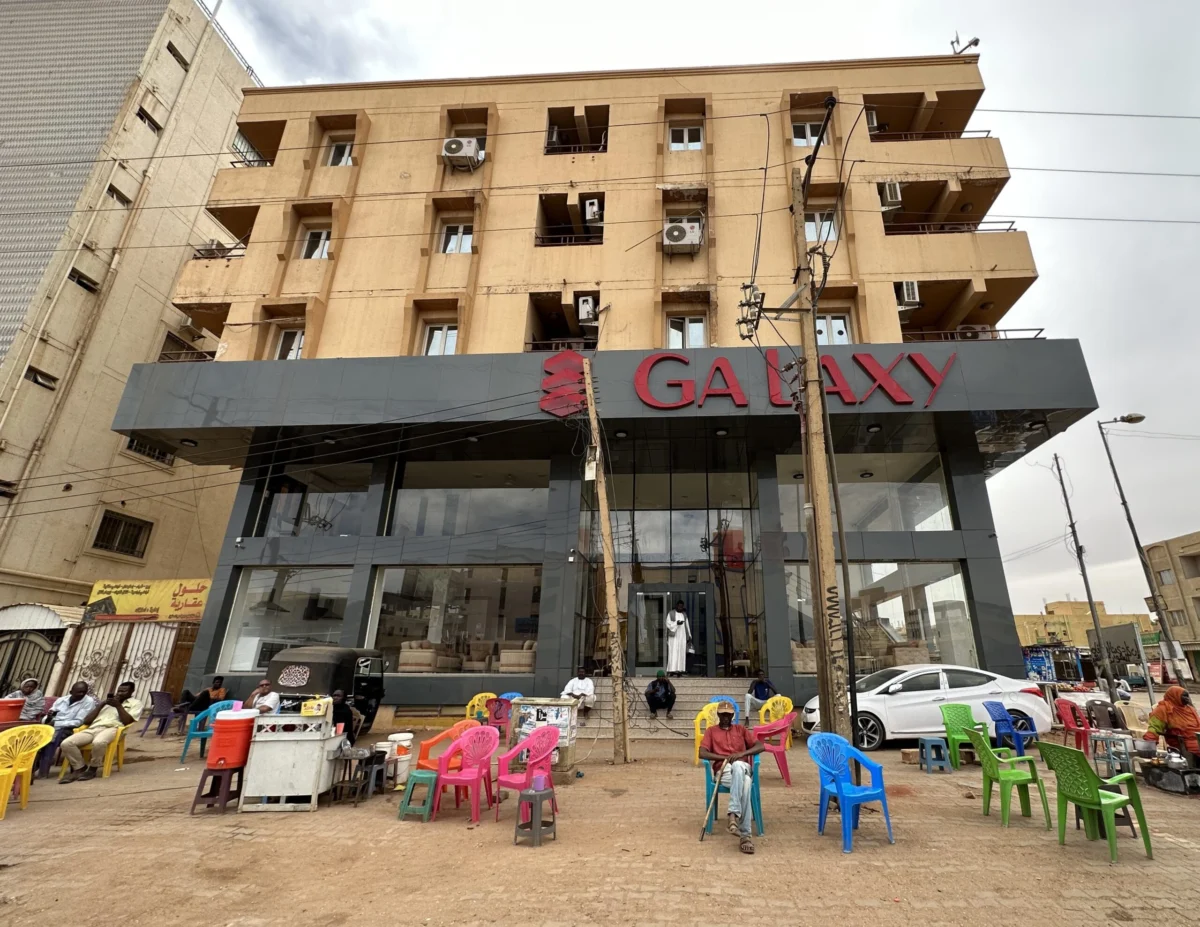
The Republic of the Sudan has reached what international observers describe as a catastrophic humanitarian breaking point as the conflict between the Sudanese Armed Forces and the paramilitary Rapid Support Forces enters its third week. Despite the formal announcement of a 72-hour ceasefire extension on April 30, 2023, the capital city of Khartoum and its twin cities of Omdurman and Bahri remain engulfed in heavy artillery fire, airstrikes, and localized skirmishes. The United Nations and various international aid agencies have warned that the window for meaningful intervention is rapidly closing as the nation’s infrastructure collapses and the civilian population faces unprecedented levels of displacement, starvation, and violence.
Since the initial eruption of hostilities on April 15, the power struggle between General Abdel Fattah al-Burhan, the leader of the Sudanese Armed Forces (SAF), and General Mohamed Hamdan Dagalo, better known as Hemedti, the commander of the Rapid Support Forces (RSF), has transformed the urban landscape of Khartoum into a war zone. What began as a dispute over the timeline for integrating the RSF into the regular army under a planned transition to civilian rule has devolved into a full-scale war of attrition that threatens to destabilize the entire Horn of Africa region.
The Reality on the Ground: A Capital Under Siege
The humanitarian situation in Khartoum has deteriorated to a level of severity that has shocked even veteran aid workers. Residents who remain in the city describe a landscape defined by the stench of uncollected bodies, the constant drone of fighter jets, and the pervasive fear of looting. Mohamed Ezzeldin, a resident who briefly fled the capital only to return due to the exorbitant costs of living in safer provinces, reported seeing industrial zones completely hollowed out by looters. "We saw people carrying televisions on their backs and large sacks of goods stolen from factories," Ezzeldin said, highlighting the total breakdown of law and order.
For those trapped in the crossfire, the struggle for daily survival is paramount. Essential services, including electricity and water, have become intermittent or have failed entirely in large swathes of the city. The Sudanese Health Ministry has reported that the majority of hospitals in the conflict zones are non-functional due to direct shelling, a lack of medical supplies, or the inability of staff to reach their posts safely.
Local entrepreneurs and street vendors, who form the backbone of the informal economy, are facing impossible choices. Victoria, a tea seller who once operated on the busy streets of Khartoum, expressed the desperation of thousands of parents. "I risk my life to try to work, and if God helps me, I’ll get my children some food. Being scared doesn’t help," she stated. This sentiment is echoed by Jamila, another resident who reported that her family has been forced to ration themselves to a single meal per day as RSF troops occupy the perimeter of her home, refusing to move despite the proximity of civilian life.
A Chronology of the Conflict: From Transition to Total War
To understand the current crisis, one must look at the fragile political landscape that followed the 2019 ousting of long-time autocrat Omar al-Bashir. Following a period of joint military-civilian governance, General Burhan and General Dagalo orchestrated a coup in October 2021, effectively ending the transition toward democracy. However, the alliance between the two military leaders was one of convenience rather than shared vision.
Tensions began to simmer in late 2022 during negotiations for a "Framework Agreement" intended to return the country to civilian leadership. The primary sticking point was the status of the RSF. While the SAF demanded a swift two-year integration process to ensure a single national military command, Hemedti pushed for a ten-year timeline, seeking to preserve his personal power base and the RSF’s independent economic interests.
By mid-April 2023, the deployment of RSF forces to the Merowe airbase and other strategic locations signaled that a military confrontation was imminent. On the morning of April 15, the first shots were fired in Khartoum, quickly spreading to strategic sites including the Presidential Palace, the state television headquarters, and the international airport. What was initially characterized as a "security disturbance" by state media quickly revealed itself as a coordinated attempt by both factions to decapitate the leadership of the other.
Humanitarian Data and the Growing Refugee Crisis
The statistical toll of the conflict is staggering and continues to rise. According to the Sudanese Health Ministry, at least 528 people have been confirmed dead, with another 4,599 wounded. However, the United Nations has cautioned that these figures are likely significant undercounts, as many casualties are buried immediately or remain in areas inaccessible to medical personnel.
The displacement crisis is equally alarming. The U.N. Refugee Agency (UNHCR) has confirmed that over 50,000 people have already fled Sudan, seeking sanctuary in neighboring Chad, Egypt, South Sudan, and Ethiopia. Many more are gathered at Port Sudan on the Red Sea, hoping for passage on ships to Saudi Arabia or beyond. Martin Griffiths, the Under-Secretary-General for Humanitarian Affairs at the United Nations, described the speed of the crisis as "unprecedented," noting that approximately one-third of Sudan’s 46 million people were already dependent on aid before the fighting began.
The World Food Programme (WFP), which had suspended operations after three of its employees were killed in the early days of the war, announced a partial resumption of services on May 1. However, Cindy McCain, the head of the WFP, warned that operations are currently restricted to states largely unaffected by the heaviest fighting. Bringing aid into Khartoum remains a logistical nightmare that requires security guarantees neither side has been willing to honor.
The End of International Evacuations and the "Left Behind"
As the security situation continues to deteriorate, the international community has largely completed its withdrawal. Over the last week of April, a flurry of high-stakes military operations saw thousands of diplomats and foreign nationals airlifted or bussed out of the country. Germany and several other European nations have officially concluded their evacuation flights. The United Kingdom’s final flight departed on May 1, marking the end of a window of safety for dual nationals and foreign workers.
The departure of foreign missions has left a vacuum of international presence, leading to a sense of abandonment among the Sudanese populace. With the withdrawal of international NGOs and diplomatic observers, there are fears that the combatants will feel emboldened to use even more indiscriminate force. The "highly precarious" nature of the security environment has made it nearly impossible for those remaining to secure safe passage out of the capital, as the cost of bus tickets to the Egyptian border or Port Sudan has skyrocketed by over 500% in some instances.
Military Analysis: A Protracted War of Attrition
On the military front, neither the SAF nor the RSF has been able to secure a decisive victory. The Sudanese Armed Forces, led by Burhan, possess a significant advantage in heavy weaponry, including T-72 tanks and a fleet of MiG-29 and Sukhoi fighter jets. They have utilized this air superiority to strike RSF positions across Khartoum. However, the RSF is a highly mobile paramilitary force experienced in desert and urban guerrilla warfare. They have fanned out into residential neighborhoods, using civilian homes as shields and hospitals as logistical hubs, which complicates the SAF’s ability to use its heavy ordnance without causing massive collateral damage.
The SAF recently claimed to have reduced the RSF’s combat effectiveness by half, asserting that they have successfully blocked reinforcements from reaching the capital from the Darfur region. Conversely, the RSF claims to maintain control over key installations, including the Republican Palace and the Khartoum refinery. These conflicting reports are difficult to verify independently, but the persistence of heavy gunfire in "controlled" areas suggests that neither side has established total dominance.
Regional Implications and the Darfur Conflict
The international community is particularly concerned that the current fighting will reignite the decades-long conflict in Darfur. The RSF has its roots in the Janjaweed militias that were accused of genocide in Darfur in the early 2000s. Reports have already emerged of ethnically motivated violence in West Darfur, where the breakdown of central authority has allowed local militias to settle old scores.
Furthermore, there is a significant risk of regional spillover. Sudan shares borders with seven countries, many of which are themselves grappling with instability. A prolonged civil war in Sudan could lead to a massive influx of refugees into Chad and South Sudan, potentially drawing regional powers like Egypt, which supports the SAF, and various Libyan factions or the Wagner Group, which have historical ties to the RSF, into a wider proxy war.
Outlook and the Path to Mediation
Despite the bleak outlook, diplomatic efforts are continuing behind the scenes. The United States, Saudi Arabia, and the African Union have been pushing for the establishment of a more permanent ceasefire and the creation of a "humanitarian corridor" to allow for the delivery of food and medicine. While both Burhan and Hemedti have nominated representatives for potential talks, their public rhetoric remains bellicose. General Burhan has stated he will not negotiate with "rebels," while Hemedti has insisted that the SAF must cease its airstrikes before any dialogue can occur.
As the conflict enters its third week, the primary victims remain the civilians of Sudan. With the economy in freefall, the healthcare system collapsed, and the international community largely at a distance, the nation faces a defining moment. Without an immediate and enforced cessation of hostilities, the humanitarian "breaking point" warned of by the United Nations may soon transition into a full-scale national collapse with consequences that will be felt for generations.
