

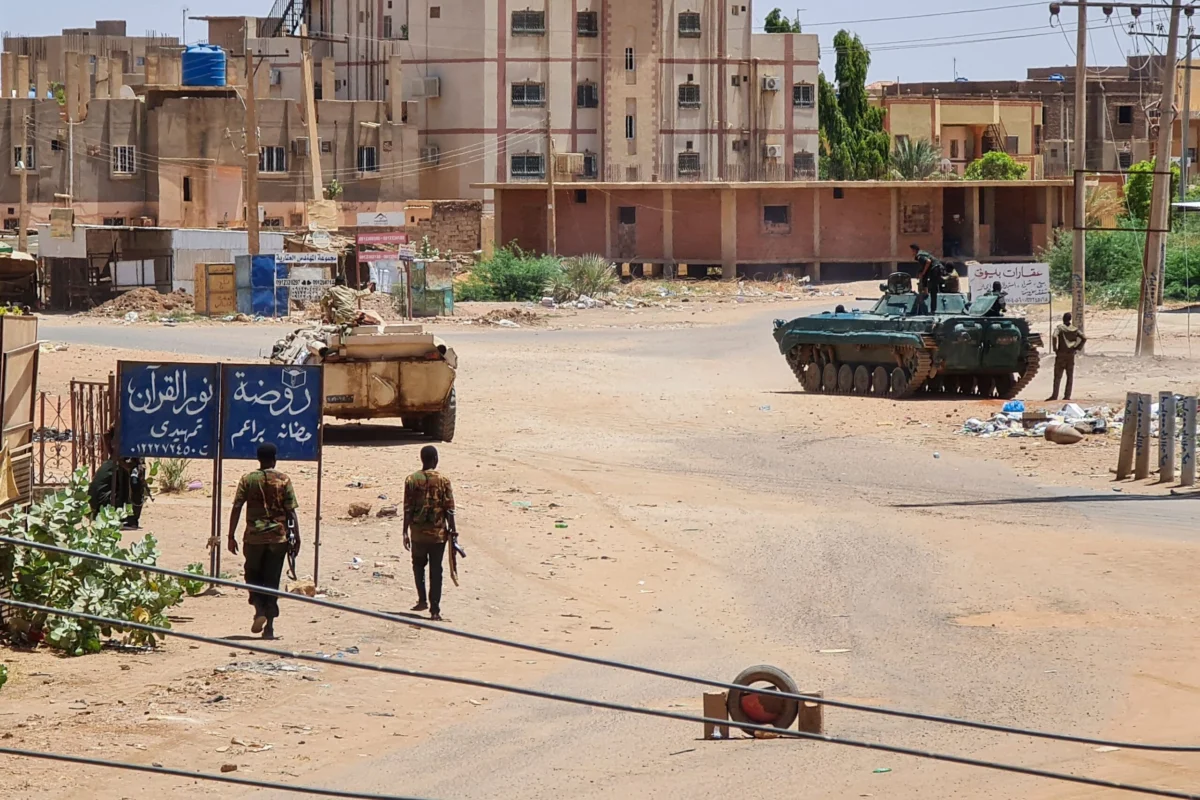
One month after the initial outbreak of hostilities between Sudan’s two primary military factions, the nation remains locked in a devastating cycle of urban warfare and regional instability that shows no signs of abating. Despite intensive international pressure and high-level diplomatic efforts in Jeddah, Saudi Arabia, the power struggle between the Sudanese Armed Forces (SAF) and the paramilitary Rapid Support Forces (RSF) has entered a second month, leaving the capital, Khartoum, in ruins and igniting fresh ethnic violence in the long-suffering Darfur region. The conflict, which began on April 15, 2023, has fundamentally altered the geopolitical landscape of East Africa, displacing nearly a million people and pushing the Sudanese state toward the brink of total collapse.
The Human Cost of a Month of Warfare
The humanitarian toll of the conflict is staggering and continues to rise as the fighting moves into densely populated residential areas. According to the International Rescue Committee (IRC), the confirmed death toll has exceeded 600 individuals, with over 5,000 reported injuries. However, medical professionals on the ground and international observers warn that these figures are likely a significant underestimate. Many of the deceased are buried in makeshift graves or remain trapped under rubble, as the intensity of the street battles prevents emergency services from reaching the affected areas.
The displacement crisis has reached a critical tipping point. Data from the United Nations suggests that nearly 1,000,000 people have been forced to flee their homes. This includes roughly 700,000 internally displaced persons (IDPs) and over 200,000 who have sought refuge in neighboring countries such as Chad, Egypt, Ethiopia, and South Sudan. These neighboring states, many of which are already grappling with their own economic and security challenges, now face a secondary humanitarian crisis as they struggle to accommodate the sudden influx of refugees.
In Khartoum, the situation for those unable to flee is increasingly dire. Residents report a total breakdown of essential services. Despite a "Declaration of Commitment to Protect the Civilians of Sudan" signed in Jeddah, airstrikes and heavy artillery fire continue to strike hospitals, water treatment plants, and power stations. The price of basic commodities, including bread and fuel, has tripled or quadrupled in some districts, while the banking system has largely frozen, leaving millions without access to their savings or salaries.
A Chronology of the Conflict: From Transition to Civil War
The current crisis did not emerge in a vacuum but is the result of a fractured transition process that began after the 2019 ousting of longtime dictator Omar al-Bashir.
- April 2019: Massive pro-democracy protests lead to the military’s removal of Omar al-Bashir. A fragile power-sharing agreement between the military and civilian leaders is established.
- October 2021: General Abdel Fattah al-Burhan, head of the SAF, and General Mohamed Hamdan Dagalo (known as Hemedti), head of the RSF, collaborate in a military coup to oust the civilian-led government of Prime Minister Abdalla Hamdok. International aid is frozen as the military consolidates power.
- December 2022: Under international pressure, a "Framework Agreement" is signed, promising a transition back to civilian rule. However, tensions begin to simmer between Burhan and Hemedti over the timeline for integrating the RSF into the regular army.
- Early April 2023: The RSF begins mobilizing forces in Khartoum and Merowe. The SAF warns of a "dangerous turning point."
- April 15, 2023: Full-scale fighting erupts in the capital and across various military bases. Both sides trade blame for the first shots fired.
- May 2023: Peace talks begin in Jeddah, brokered by the U.S. and Saudi Arabia. While a document is signed regarding humanitarian corridors, no formal ceasefire is reached, and fighting intensifies in Darfur and Khartoum.
The Rivalry of the Generals
At the heart of the conflict is a personal and professional rivalry between two men who were once allies in the suppression of Sudanese democratic aspirations. General Abdel Fattah al-Burhan views himself as the guardian of the state’s traditional military institution. He seeks to maintain the army’s historical dominance over Sudan’s political and economic life.
Conversely, Mohamed Hamdan "Hemedti" Dagalo leads the RSF, a paramilitary force that grew out of the Janjaweed militias used by the Bashir regime during the Darfur genocide in the early 2000s. Hemedti has leveraged his control over Sudan’s gold mines and his role in providing mercenaries for foreign conflicts to build a massive financial and military empire. For Hemedti, the integration of the RSF into the SAF represents a loss of personal power and a threat to his autonomy.
The impasse over the integration timeline—Burhan demanding it happen within two years and Hemedti insisting on a ten-year window—was the spark that ignited the current conflagration. As both generals vie for total control over Sudan’s 46 million inhabitants and its vast natural resources, they have shown a blatant disregard for the "political track" demanded by the international community.
Regional Instability and Foreign Interests
The conflict in Sudan is not merely a domestic affair; it is a complex proxy struggle involving several regional and global actors. Sudan’s strategic location on the Red Sea and its abundance of gold and arable land make it a prize for foreign powers.
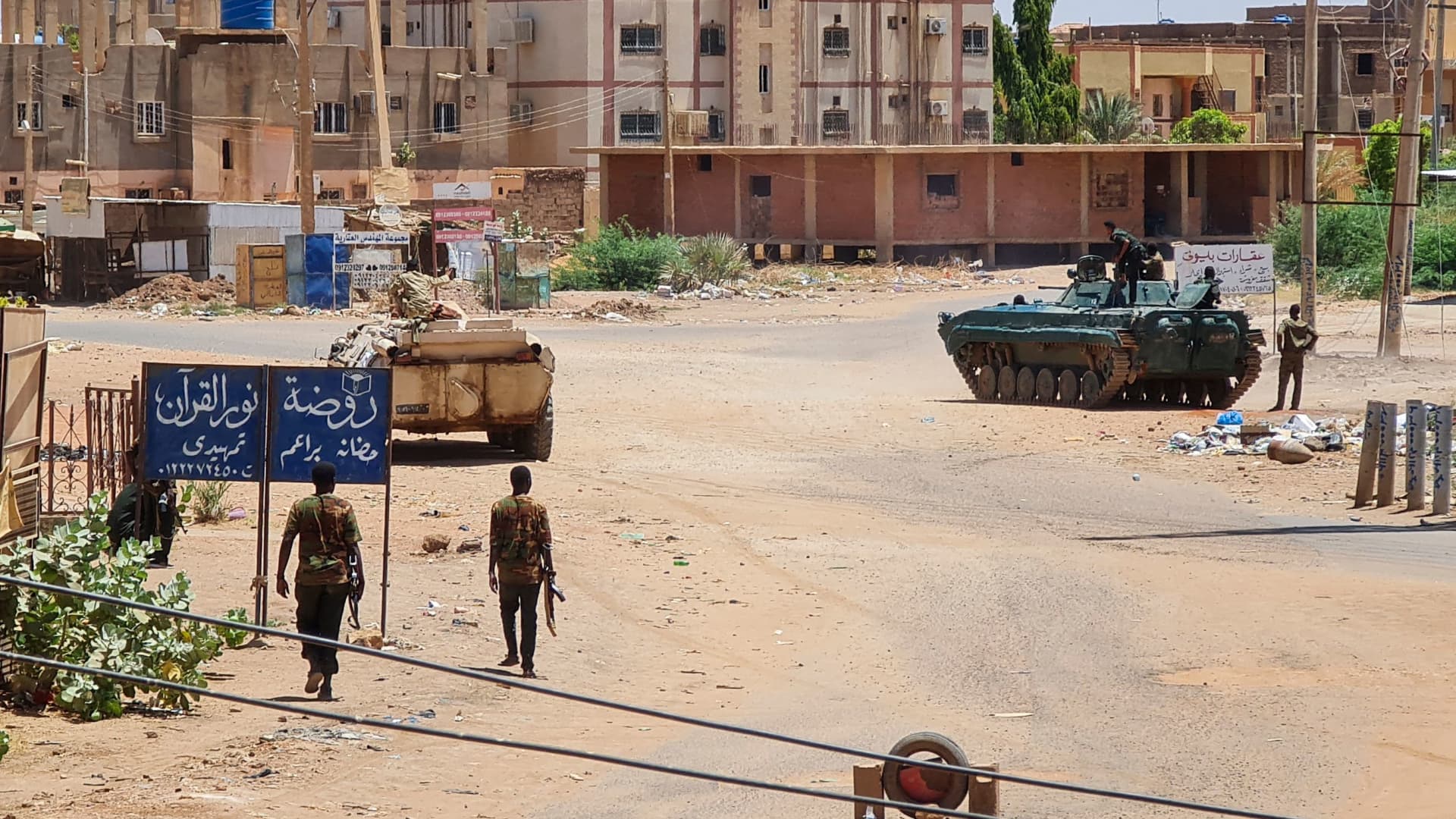
Egypt has historically backed General Burhan and the SAF, viewing the regular army as a stabilizing force that can secure Egypt’s interests, particularly regarding the Nile waters and the Grand Ethiopian Renaissance Dam (GERD). In contrast, Hemedti has maintained close ties with the United Arab Emirates (UAE) and has reportedly received support from the Russian Wagner Group, which has interests in Sudan’s gold mining sector. Saudi Arabia, while acting as a mediator in the Jeddah talks, also has a vested interest in preventing a total state collapse that could destabilize the Red Sea shipping lanes.
The involvement of these external actors complicates the path to peace. Analysts suggest that as long as both sides believe they can secure a military victory through foreign financial or logistical support, they have little incentive to negotiate in good faith. The UK Minister for International Development and Africa, Andrew Mitchell, recently emphasized the need for a "united message" from the international community to break the "cycle of impunity" that has long characterized Sudanese politics.
The Marginalized Civilian Voice
A growing criticism of the current diplomatic efforts, particularly the Jeddah talks, is the absence of a substantial civilian voice. Sudanese activists and pro-democracy groups argue that by negotiating exclusively with the two warring generals, the international community is inadvertently legitimizing their "belligerence" and rewarding their use of violence.
Yassmin Abdel-Magied, a prominent Sudanese-Australian activist, has noted that the current framework ignores the very people who have been fighting for a democratic Sudan since 2019. She argues that for a lasting peace to be achieved, the international community must engage with "resistance committees"—informal, neighborhood-based networks that have been the backbone of the pro-democracy movement.
These committees are currently performing the roles of a defunct state: organizing food distributions, facilitating medical evacuations, and documenting human rights abuses. "The framework is already there," Abdel-Magied said, suggesting that these grassroots leaders should have a seat at the negotiating table to represent the interests of the 46 million Sudanese people who do not wish to be ruled by a military junta.
Economic Implications and the Threat of State Failure
The economic impact of the month-long war is catastrophic. Sudan was already suffering from 100%+ inflation and a severe debt crisis before the fighting began. Now, the destruction of industrial zones in North Khartoum and the halting of agricultural activity in the fertile Gezira scheme threaten a long-term famine.
If the conflict continues, Sudan risks becoming a "failed state," a scenario that would have ripple effects across the Sahel, the Horn of Africa, and the Middle East. A power vacuum in Sudan could lead to the proliferation of extremist groups, an increase in human trafficking, and the total collapse of regional trade.
The World Bank and other international financial institutions have signaled that aid will not resume until a credible civilian-led government is established. However, with the infrastructure of the capital being dismantled daily by shelling and looting, the cost of reconstruction grows exponentially with every week the fighting continues.
Conclusion: A Narrow Window for Action
As the conflict enters its second month, the "intentional, diligent, and thought-through action" called for by civil society leaders is more urgent than ever. The Jeddah talks have provided a platform for communication, but without a mechanism to enforce ceasefires or hold the generals accountable for war crimes, they remain largely symbolic.
The international community faces a choice: continue to treat the conflict as a dispute between two legitimate military actors, or pivot toward a strategy that prioritizes civilian protection, targeted sanctions against the generals’ financial networks, and the inclusion of grassroots democratic leaders in the peace process. Without a fundamental shift in the political and military structure of the country, the "obvious endpoint" many Sudanese fear—decades of dysfunction and fragmentation—may become an inevitable reality. For now, the people of Sudan remain caught in the crossfire, waiting for a peace that remains as elusive as it was thirty days ago.
