

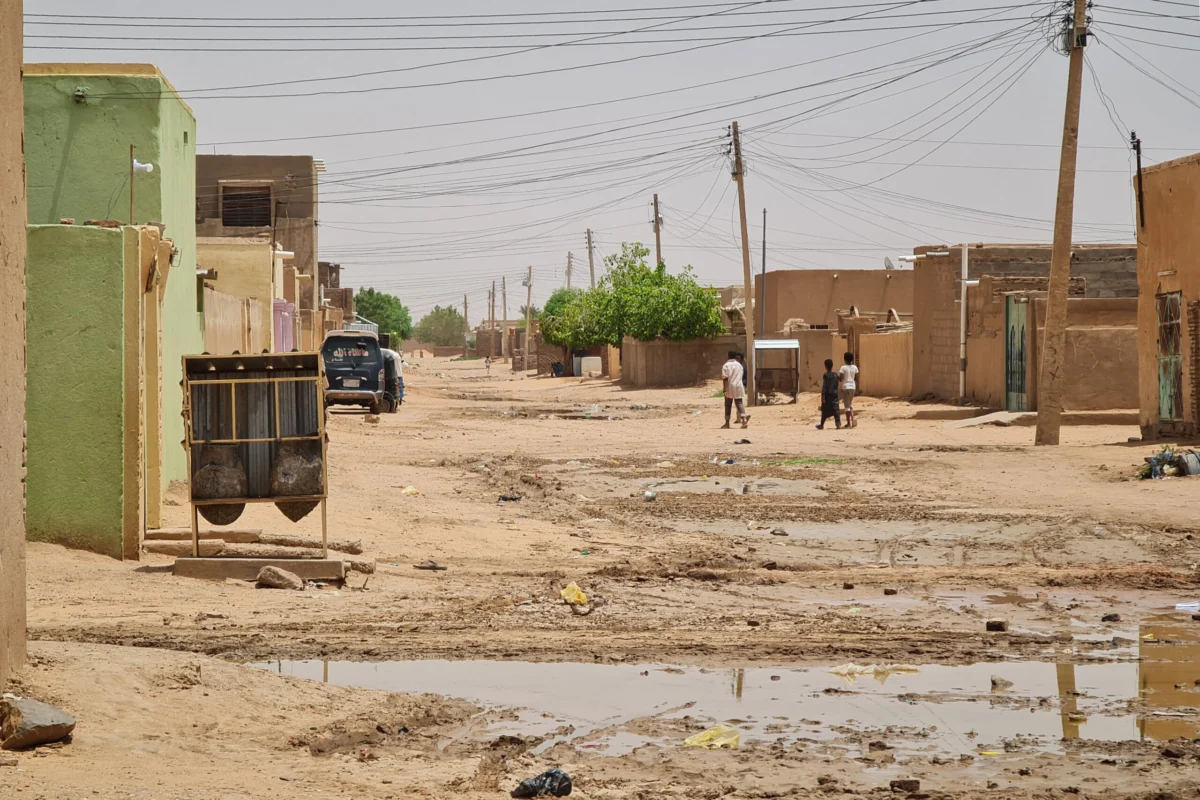
The protracted struggle for territorial control in Sudan reached a devastating milestone on Saturday as an airstrike in a densely populated residential district of Khartoum claimed the lives of at least 17 individuals, including five children. This latest escalation in the capital city underscores the intensifying brutality of a conflict that has pitted the Sudanese Armed Forces (SAF) against the paramilitary Rapid Support Forces (RSF) for over two months. According to local health officials and humanitarian volunteers, the strike leveled approximately 25 homes in the Yarmouk neighborhood of southern Khartoum, an area that has become a flashpoint for violence due to its proximity to strategic military installations.
The Saturday morning bombardment represents one of the deadliest single incidents in the urban warfare that has gripped the Khartoum tri-city area—comprising Khartoum, Omdurman, and Bahri—since mid-April. While the Sudanese Ministry of Health confirmed the death toll, the specific nature of the strike remains a subject of contention. Military aircraft under the command of General Abdel Fattah al-Burhan have frequently conducted sorties over the capital to dislodge RSF fighters embedded within residential quarters. Conversely, the RSF, led by General Mohamed Hamdan "Hemedti" Dagalo, has increasingly deployed anti-aircraft weaponry and unmanned aerial vehicles (drones) to counter the SAF’s air superiority.
The Yarmouk Strike and Immediate Aftermath
The Yarmouk district, where the strike occurred, is situated near a major military manufacturing complex, making it a high-stakes zone for both warring factions. Local medical teams, operating under the umbrella of "The Emergency Room"—a grassroots network of volunteers providing aid where international NGOs struggle to reach—reported that the carnage left scores of others wounded. Images circulated by activists and local residents depicted scenes of profound devastation: civilians clawing through mounds of concrete and twisted metal to reach those trapped beneath the rubble, and makeshift clinics struggling to stabilize victims with limited medical supplies.
The RSF issued a swift statement blaming the Sudanese military for the tragedy, alleging that SAF fighter jets deliberately targeted civilian infrastructure. The paramilitary group further claimed to have successfully downed a military MiG fighter jet during the engagement, though these claims have not been independently verified by international observers or satellite reconnaissance. For its part, the Sudanese military leadership has remained largely silent regarding the specific casualties in Yarmouk, typically maintaining that its operations are precision-targeted against "rebel" hideouts and supply lines.
A Chronology of Conflict: From Transition to Total War
To understand the gravity of the current violence, one must look back at the fragile political landscape that preceded the April 15 outbreak of hostilities. The transition toward a civilian-led democracy, which began following the 2019 ousting of longtime autocrat Omar al-Bashir, was fundamentally derailed by a joint military-paramilitary coup in October 2021.
- October 2021: General Burhan and General Hemedti collaborated to dissolve the transitional government led by Prime Minister Abdalla Hamdok, effectively seizing power and stalling democratic reforms.
- Late 2022 – Early 2023: Under international pressure from the United Nations, the African Union, and the "Quad" (the U.S., UK, Saudi Arabia, and the UAE), the two generals signed a "Framework Agreement" to return to civilian rule.
- March 2023: Tensions reached a boiling point over the technicalities of security sector reform. The primary sticking point was the timeline for integrating the RSF into the regular army and the question of who would hold ultimate command during the integration period.
- April 15, 2023: Skirmishes broke out at the Soba military base and Khartoum International Airport, quickly spiraling into a nationwide conflict.
- May 2023: The "Jeddah Talks," mediated by Saudi Arabia and the United States, resulted in a series of short-term ceasefires. However, these were systematically violated by both sides, leading to a breakdown in formal negotiations.
The Humanitarian Crisis in Numbers
The scale of the displacement and suffering in Sudan has reached unprecedented levels, according to the International Organization for Migration (IOM) and the United Nations High Commissioner for Refugees (UNHCR). As of mid-June 2023, the data paints a grim picture of a nation in freefall:
- Displacement: More than 2.2 million people have been uprooted from their homes. This includes approximately 1.7 million internally displaced persons (IDPs) and over 500,000 who have sought refuge in neighboring countries such as Chad, Egypt, South Sudan, and Ethiopia.
- Casualties: While official counts estimate the death toll at several thousand, activists on the ground suggest the real figure is significantly higher, particularly in areas where communication blackouts prevent reporting.
- Healthcare Collapse: In Khartoum, an estimated 60% to 80% of hospitals are non-functional. Facilities that remain open face acute shortages of oxygen, blood bags, and life-saving medications for chronic illnesses.
- Food Insecurity: The World Food Programme (WFP) warns that nearly 19 million people—40% of the population—are facing acute hunger, exacerbated by the destruction of markets and the looting of aid warehouses.
The Widening Gyre: Darfur and the Assassination of Governor Abkar
While the world’s attention has often focused on the capital, the conflict has reignited long-standing ethnic tensions in the western region of Darfur. The city of El Geneina, the capital of West Darfur, has become the site of what many observers describe as a targeted campaign of ethnic cleansing.
The violence in Darfur took an even darker turn on Wednesday, June 14, with the abduction and subsequent killing of the Governor of West Darfur, Khamis Abdalla Abkar. The governor was murdered just hours after he gave a televised interview to Al-Hadath news, in which he accused the RSF and allied Arab militias—collectively known as the Janjaweed—of carrying out a "genocide" against the non-Arab Masalit community.
The RSF has denied involvement in the governor’s death, attributing it to "outlaws" within the chaotic environment of Darfur. However, the United Nations and human rights organizations have pointed to a pattern of systematic attacks on civilian populations in the region. The resurgence of the Janjaweed, the same militias responsible for the atrocities in Darfur during the early 2000s, has raised fears of a return to full-scale ethnic warfare that could destabilize the entire Sahel region.
The Strategic Impasse and Urban Warfare Tactics
The nature of the fighting in Khartoum has evolved into a grueling war of attrition. The RSF has adopted a strategy of "urban embedding," occupying private homes, hospitals, and schools to shield themselves from SAF airstrikes. This tactic has effectively turned every residential block into a potential target, leaving civilians with the impossible choice of staying in a war zone or risking their lives to flee through sniper-monitored streets.
The SAF, despite its superior heavy weaponry and air power, has struggled to regain control of the ground. The RSF’s mobility and knowledge of the urban terrain have allowed them to maintain a presence in key neighborhoods, including the vicinity of the Presidential Palace and the Army Headquarters. The use of drones by both sides has further complicated the security landscape, as low-cost surveillance and attack drones provide tactical advantages that traditional radar systems often miss in dense urban environments.
International Reaction and the Failure of Diplomacy
The international community has struggled to find leverage over the two warring generals. The African Union (AU) has suspended Sudan’s membership, and the United States has imposed sanctions on several key companies linked to the SAF and RSF. However, these measures have yet to yield a meaningful cessation of hostilities.
The United Nations Secretary-General, António Guterres, has repeatedly called for a permanent ceasefire, warning that Sudan is "on the edge of a full-scale civil war." Despite these pleas, the geopolitical interests of regional powers continue to complicate the peace process. Various actors in the Middle East and North Africa have historical ties to either Burhan or Hemedti, leading to a fragmented diplomatic approach that the warring factions have exploited to continue their pursuit of a military victory.
Analysis: The Long Road to Recovery
The strike in Yarmouk is not merely a tactical incident; it is a symptom of a deeper structural collapse in the Sudanese state. The destruction of at least 25 homes and the deaths of children like those on Saturday represent a permanent scarring of the social fabric. Even if a ceasefire were to be signed tomorrow, the challenges facing Sudan are monumental.
The economic infrastructure of Khartoum—once a burgeoning regional hub—is in ruins. Factories, banks, and universities have been looted or destroyed. Furthermore, the psychological trauma inflicted on a generation of children who have witnessed the transformation of their neighborhoods into killing fields will have long-term implications for the country’s stability.
The conflict in Sudan is a stark reminder of the perils of a failed security sector reform. The dual-power structure of a national army and a powerful, autonomous paramilitary group was a ticking time bomb that the 2021 coup only accelerated. As the fighting continues into its third month, the prospects for a return to a civilian-led democratic path appear increasingly remote, replaced by the grim reality of a nation being torn apart by the ambitions of its two highest-ranking generals.
In the coming weeks, the focus of the international community must shift from mere condemnation to a more robust humanitarian intervention. With the rainy season approaching, the risk of waterborne diseases like cholera adds another layer of threat to the millions of displaced Sudanese. Without a unified international front and a genuine commitment from the SAF and RSF to prioritize civilian lives over territorial gains, the tragedy in Yarmouk will likely be repeated in neighborhoods across the country.
