

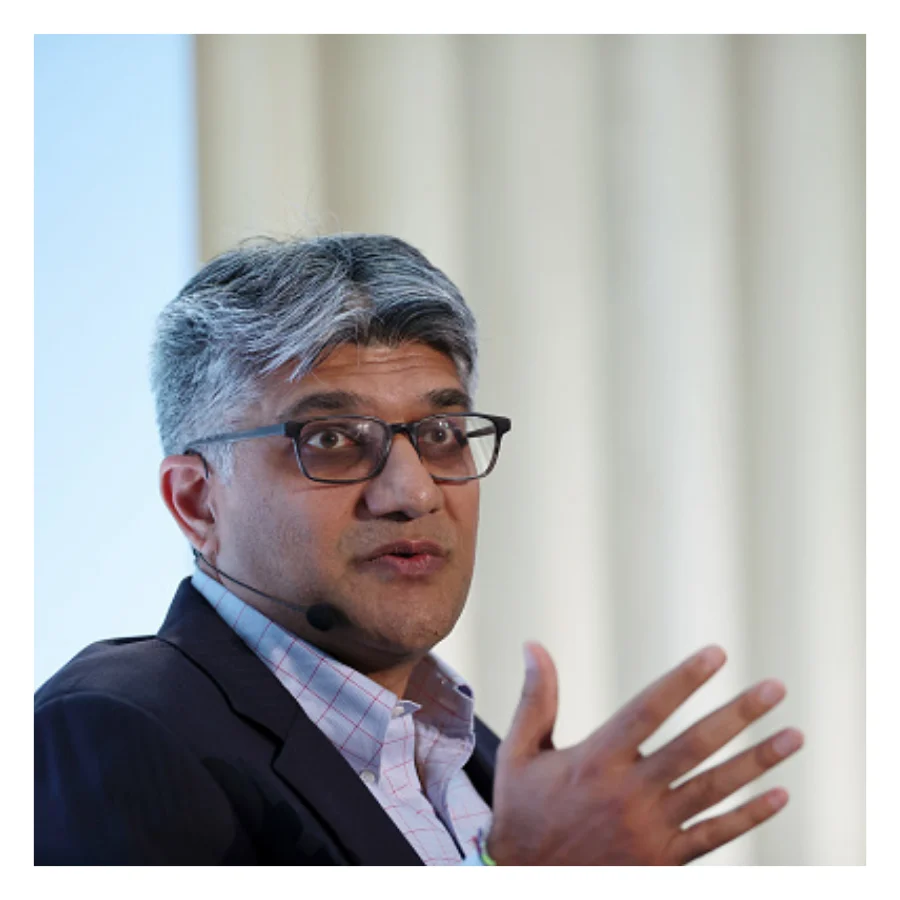
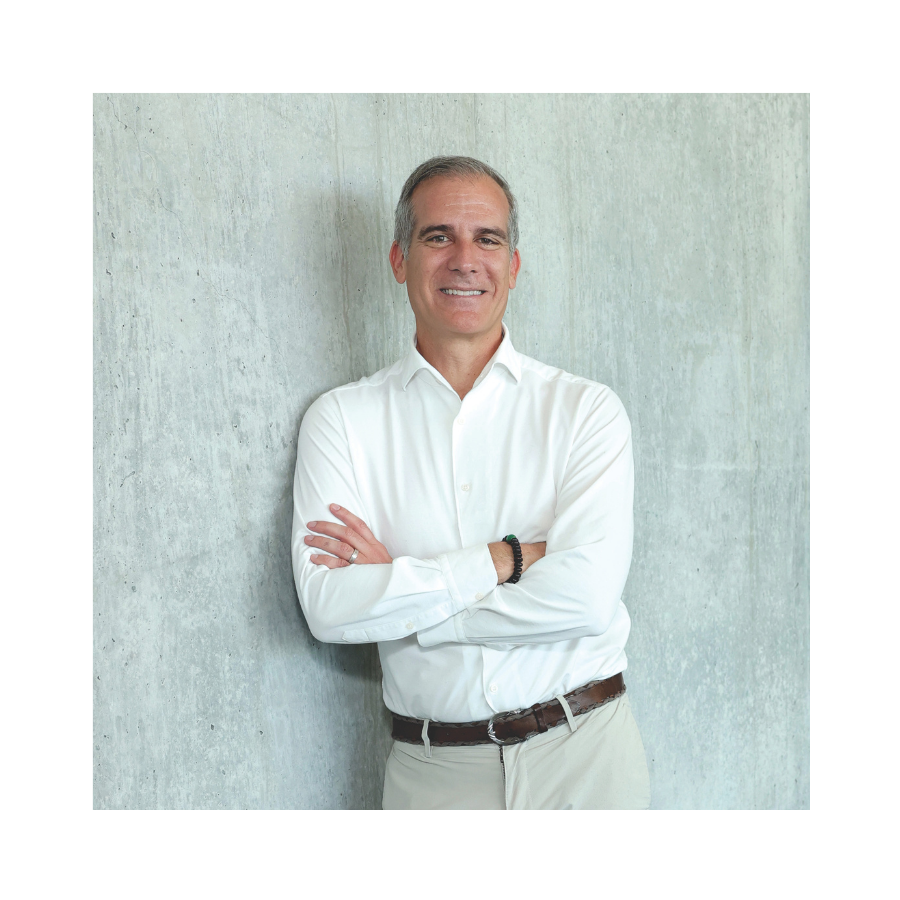
Eric Garcetti, the former mayor of Los Angeles and a pivotal figure in international urban policy, is currently navigating a global landscape where the rhetoric of national leaders often clashes with the grounded realities of local governance. Speaking at the Montreal Climate Summit in April, Garcetti—who now serves as the chief ambassador for global climate diplomacy at C40 Cities—presented a perspective of measured optimism. Wearing a bracelet of prayer beads acquired in Bodh Gaya, India, the site of the Buddha’s enlightenment, Garcetti’s demeanor reflected a sense of equanimity regarding the often-polarized American political climate. His primary message to the international community is clear: while federal leadership in Washington D.C. may fluctuate, the momentum of the low-carbon economy in the United States is largely insulated from the whims of the White House.
Garcetti’s tenure as the mayor of Los Angeles from 2013 to 2022, combined with his role as chair of the C40 Cities network from 2019 to 2021, has provided him with a unique vantage point on the "parallel order" of climate diplomacy. This order operates across borders, driven by nearly 100 of the world’s largest cities committed to aggressive climate action. According to Garcetti, the "bigger story" of climate adaptation and mitigation is not found in the legislative gridlock of the U.S. Capitol, but in the building codes, utility portfolios, and transportation investments managed by sub-national leaders.
The Montreal Context and the Resilience of Sub-national Action
The Montreal Climate Summit serves as a critical forum for leaders like Garcetti and Gina McCarthy, the former White House National Climate Advisor under President Joe Biden, to coordinate strategies that bypass federal volatility. McCarthy, who chairs the "America Is All In" coalition, has frequently argued that the ability of any single administration to permanently stymie climate progress is often overstated by the media. Garcetti echoes this sentiment, noting that the media’s business model thrives on conflict, which often leads to the over-reporting of political attacks and the under-reporting of systemic economic shifts.
The background of this shift is rooted in the increasing empowerment of cities. In the United States, roughly 80% of the population resides in urban areas. These hubs are the primary engines of economic activity, and as Garcetti points out, they are the entities that manage the essential infrastructure—sewer systems, housing developments, and transit networks—that dictate a nation’s carbon footprint. Even when federal support is absent or hostile, cities possess the legal and financial autonomy to set their own environmental standards.
Chronology of the Shift: From Federal Mandates to Local Implementation
The trajectory of U.S. climate action has undergone a significant transformation over the last decade. During the Obama administration, much of the focus was on federal regulations like the Clean Power Plan. However, when the Trump administration withdrew from the Paris Agreement in 2017, a vacuum was created that was rapidly filled by the "We Are Still In" movement, a precursor to "America Is All In."
In 2019, Garcetti assumed the chairmanship of C40 Cities, steering the organization through the global pandemic while simultaneously advocating for a "Global Green New Deal." By the time the Biden administration passed the Inflation Reduction Act (IRA) in 2022—the largest piece of climate legislation in U.S. history—the groundwork had already been laid by years of local investment. Garcetti emphasizes that while the $369 billion provided by the IRA is historic, the cumulative spending by states and cities on infrastructure and climate resilience over the same period remains the dominant force in the market.
Supporting Data: The Surprising Leaders of the Green Transition
One of the most compelling arguments Garcetti presents is the decoupling of climate action from partisan identity. He points to states like Texas, Ohio, and Florida—all currently led by Republican governors—as leaders in renewable energy installation. In 2023, approximately 70% of new low-carbon power capacity in the United States was installed in these conservative-leaning states.
Texas, in particular, serves as a case study for the economic pragmatism of the green transition. The state is decarbonizing the Permian Basin, the largest oil field in the United States, primarily through the integration of wind and solar power. This shift is not necessarily driven by environmental ideology but by the simple fact that renewables have become the cheapest way to generate electricity. According to the Energy Information Administration (EIA), Texas leads the nation in wind power generation and is rapidly expanding its solar capacity to meet the demands of a growing population and a burgeoning tech sector.
In Los Angeles, the progress is even more aggressive. The Los Angeles Department of Water and Power (LADWP), the largest municipal utility in the country, is on a confirmed path to achieve 97% carbon-free power by 2028 and 100% by 2035. Furthermore, California remains the largest market for electric vehicles (EVs) in the country, with EVs accounting for approximately 25% of new car sales in the state as of late 2023.
Evolving the Language of Climate Action
A significant portion of Garcetti’s strategy involves a shift in communication. He suggests that the word "climate" has become too abstract and politically charged for the general public. Instead, he advocates for a focus on tangible benefits: jobs, health, and safety.
"Climate literally means weather," Garcetti noted during the summit. "It doesn’t have a value to it." By framing the transition as a response to extreme weather events—such as floods and fires that threaten community safety—and as an economic opportunity to retrain workers for the future, proponents of the green transition can build broader coalitions.
This pragmatic approach also addresses the emerging "urban-rural divide." Garcetti observes that this divide is blurring as rural areas become sites for massive data centers. These facilities, essential for the development of Artificial Intelligence (AI), consume vast amounts of energy, leading to rising utility bills for local residents. This shared economic pressure is forcing both urban and rural communities to ask the same questions about energy generation and grid stability, creating new, unlikely alliances between different political demographics.
The Limits of Federal Authority and the "Libertarian-Progressive" Paradox
Garcetti offers a candid assessment of what the federal government can and cannot do to stop the low-carbon economy. While Washington can withhold subsidies or roll back certain regulations, it lacks the authority to dictate municipal building codes or prevent a city like Los Angeles from choosing its own energy mix.
"They can’t tell us where to invest our transportation dollars," Garcetti stated, highlighting the constitutional limits on federal interference in local affairs. However, he admits that federal hostility can slow the "acceleration" of progress, particularly in areas like port electrification and environmental justice initiatives that require large-scale federal grants.
In a surprising ideological turn, Garcetti describes his own political evolution as becoming "simultaneously more progressive and libertarian." He argues for a "libertarian" approach to bureaucracy—removing the "boulders in the backpack" that slow down infrastructure projects. He cites the hypothetical example of building the New York City subway today, noting that modern regulatory hurdles would make such a feat nearly impossible in terms of cost and time. His "progressive" side insists that this speed must be balanced with a "conscience" to ensure that capital flows do not result in bad design or social inequity.
Broader Impact: The Global Manufacturing Race
The interview concludes with a warning about international competitiveness. Garcetti points to China’s dominance in the green manufacturing sector, specifically in EV production. He argues that if the United States and Canada spend the next decade litigating old political battles over internal combustion engines, they will cede the future of the global automotive industry to China.
"They shouldn’t be creating every future car," Garcetti said, calling for North America to become a "green manufacturing hub." He echoes the sentiments of figures like Mark Carney, the UN Special Envoy on Climate Action and Finance, who emphasize that national sovereignty in the 21st century will be defined by the ability to lead in the clean energy sector. By "winding away" subsidies and ignoring market trends, Garcetti warns that the U.S. risks falling behind the "eight ball" for a generation.
Analysis of Implications
The insights provided by Garcetti suggest that the global perception of U.S. climate policy needs a recalibration. While the executive branch in Washington acts as a high-profile spokesperson for the nation’s climate ambitions, the actual implementation is decentralized. The resilience of the green transition is built into the balance sheets of municipal utilities, the building codes of major cities, and the investment strategies of private capital.
As the world watches the shifting political winds in Washington, the real metrics of success will be found in the rate of renewable energy installation in the Midwest, the adoption of EVs in the West, and the infrastructure resilience projects in the South. For Eric Garcetti and the C40 Cities network, the goal is to ensure that this local momentum continues to move forward, regardless of who occupies the White House. The "parallel order" of diplomacy is no longer just a backup plan; it has become the primary engine of global climate progress.
