

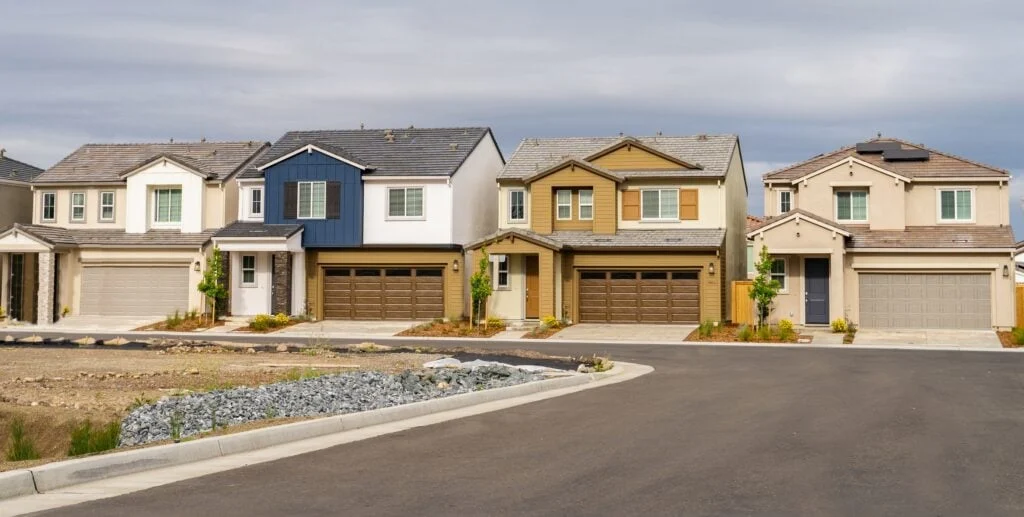
The residential real estate investment landscape in 2024 and heading into 2025 has been defined by a significant divergence between two classes of market participants: those waiting for a pivot in Federal Reserve policy and those utilizing builder-led financing incentives to secure sub-market interest rates. While a substantial portion of private investors remains sidelined, citing interest rates that have hovered between 7% and 7.6% for investment properties, a specialized segment of the market has found a pathway to financing in the 3% to 4% range. This phenomenon is largely concentrated in the new construction sector, where developers are increasingly using financial concessions to move inventory without compromising the long-term valuation of their developments.
The Mechanics of the "Wait-and-See" Trap
Market data from the mid-2020s indicates a profound "lock-in effect" affecting the resale market. Homeowners who secured mortgages during the record-low rate environment of 2020 and 2021 are reluctant to sell, leading to a historic shortage of existing home inventory. For investors, this has created a dual challenge: high acquisition prices due to low supply and high borrowing costs due to restrictive monetary policy.
The prevailing logic among sidelined investors is that waiting for the Federal Reserve to lower the federal funds rate will lead to a proportional drop in mortgage rates, thereby improving cash flow. However, economic analysts warn that this strategy contains a fundamental flaw. Historically, when interest rates decline, buyer demand surges. This influx of competition often leads to bidding wars and rapid price appreciation, which can effectively neutralize the savings gained from a lower interest rate. In this scenario, the investor who waits for a 5% rate may end up paying a 15% premium on the asset price, resulting in a similar or higher monthly debt service than if they had purchased at a higher rate with a lower principal.
The Strategic Shift to New Construction Incentives
In contrast to the stagnant resale market, the new construction sector has become a primary target for institutional and sophisticated individual investors. The motivation stems from a fundamental difference in how builders and individual sellers manage their assets. While an individual seller can afford to wait for a specific price, large-scale builders face significant carrying costs for completed, unsold inventory.
To maintain sales velocity without lowering the "sticker price"—which would negatively affect the appraisal "comps" for future phases of a development—builders are offering substantial closing credits. These credits, often ranging from 3% to 6% of the purchase price, are being repurposed by savvy investors to fund "rate buydowns."
There are two primary structures for these buydowns currently dominating the market:
- Permanent Buydowns: The investor applies the builder’s credit to pay "points" upfront, lowering the interest rate for the entire 30-year life of the loan. In the current environment, this has allowed some investors to lock in rates in the low 5% or high 4% range, even when the market average for investment properties is significantly higher.
- Temporary Buydowns (e.g., 2-1 Buydowns): This structure lowers the interest rate by 2% in the first year and 1% in the second year, with the rate reverting to the note rate in the third year. This provides an immediate cash-flow cushion during the initial stabilization phase of the rental property.
Comparative Financial Analysis: Resale vs. New Construction
To understand why capital is flowing toward new builds, one must examine the total cost of ownership rather than just the purchase price. A standard "distressed" or "aged" resale property often requires a 20% to 25% down payment for investment financing. On a $280,000 property, this necessitates a capital outlay of $56,000 to $70,000.
Conversely, many "build-to-rent" programs and new construction developments offer specialized financing paths, sometimes requiring as little as 5% down for qualified investors using specific loan products. On the same $280,000 valuation, a 5% down payment requires only $14,000. This disparity in leverage allows an investor to acquire multiple properties for the same amount of liquid capital required for a single resale asset.
Furthermore, the "Capital Expenditure" (CapEx) profile of new construction is significantly more favorable. Older homes frequently face "deferred maintenance" issues, such as aging HVAC systems, roofing, or plumbing, which can eliminate years of cash flow in a single quarter. New construction homes are typically covered by builder warranties and feature modern, energy-efficient systems that minimize maintenance costs for the first decade of ownership.
Timeline of the Current Market Cycle
The current market conditions are the result of a specific sequence of economic events:
- Q1 2022 – Q3 2023: The Federal Reserve enacted a series of aggressive rate hikes to combat post-pandemic inflation, taking the federal funds rate from near zero to over 5%.
- Q4 2023 – Q2 2024: Mortgage rates peaked, leading to a "frozen" resale market. Builders began to pivot, increasing their share of the total housing inventory as they were the only ones capable of providing "supply."
- Q3 2024 – Present: Builders have institutionalized the use of financing incentives. The National Association of Home Builders (NAHB) reported that nearly one-third of builders were cutting prices, but a much higher percentage—roughly 60%—were offering some form of sales incentive, including interest rate buydowns.
The Role of DSCR Loans in New Construction
Another factor driving the shift toward new construction is the rise of Debt Service Coverage Ratio (DSCR) loans. Unlike traditional conventional loans that rely on an investor’s personal debt-to-income (DTI) ratio and W2 income, DSCR loans are underwritten based on the income-generating potential of the property itself.
New construction properties in high-growth markets often pencil out more effectively for DSCR lenders because they command higher rents and have lower projected vacancy rates. This allows investors who may be "maxed out" on traditional financing to continue scaling their portfolios by leveraging the property’s anticipated cash flow.
Industry Reactions and Analyst Perspectives
Market analysts suggest that the window for these builder incentives may be narrowing. "The builders are currently acting as the de facto central bank for the housing market," noted one senior real estate economist. "They are providing the liquidity and the affordable financing that the traditional mortgage market currently lacks. However, the moment the Federal Reserve signals a sustained easing of policy, builders will likely pull back on these concessions as organic demand returns."
Institutional turnkey providers have also noted an uptick in out-of-state investment. By partnering with firms that handle construction, financing, and property management under one roof, investors are able to deploy capital into high-growth markets (such as the Sun Belt or the Southeast) without the geographical constraints of managing a renovation.
Broader Implications for the Housing Market
The trend of investors favoring new construction has several long-term implications for the broader economy:
- Professionalization of the Rental Stock: As more new builds enter the rental pool, the average quality of rental housing increases. These properties often feature smart-home technology and modern amenities that appeal to a higher-income "renter-by-choice" demographic.
- Concentration of Inventory: Large-scale developers and institutional investors are gaining a larger foothold in the single-family residential market. This could lead to more standardized rental experiences but may also raise concerns regarding long-term homeownership opportunities for first-time buyers.
- Market Resilience: By utilizing permanent buydowns, investors are insulating themselves against future rate volatility. A portfolio locked in at 4% or 5% remains profitable even if the broader market experiences further inflationary pressure.
Conclusion: The Cost of Inaction
The data suggests that the "smart money" in real estate is not waiting for a change in the macroeconomic environment but is instead adapting to it. By utilizing builder credits to manufacture lower interest rates, investors are securing assets in a less competitive environment than what is expected once rates eventually drop.
The "discount" in the current market is not found in the purchase price, but in the financing terms and the avoidance of future competition. As inventory remains tight and the cost of labor and materials for new construction continues to rise, the investors who move today are betting that the "manufactured" 4% rate of 2024 will look like a historic bargain by 2026. The transition from a buyer’s market to a high-competition environment often happens overnight; for those positioned in new construction, that transition is already being leveraged to their advantage.
