

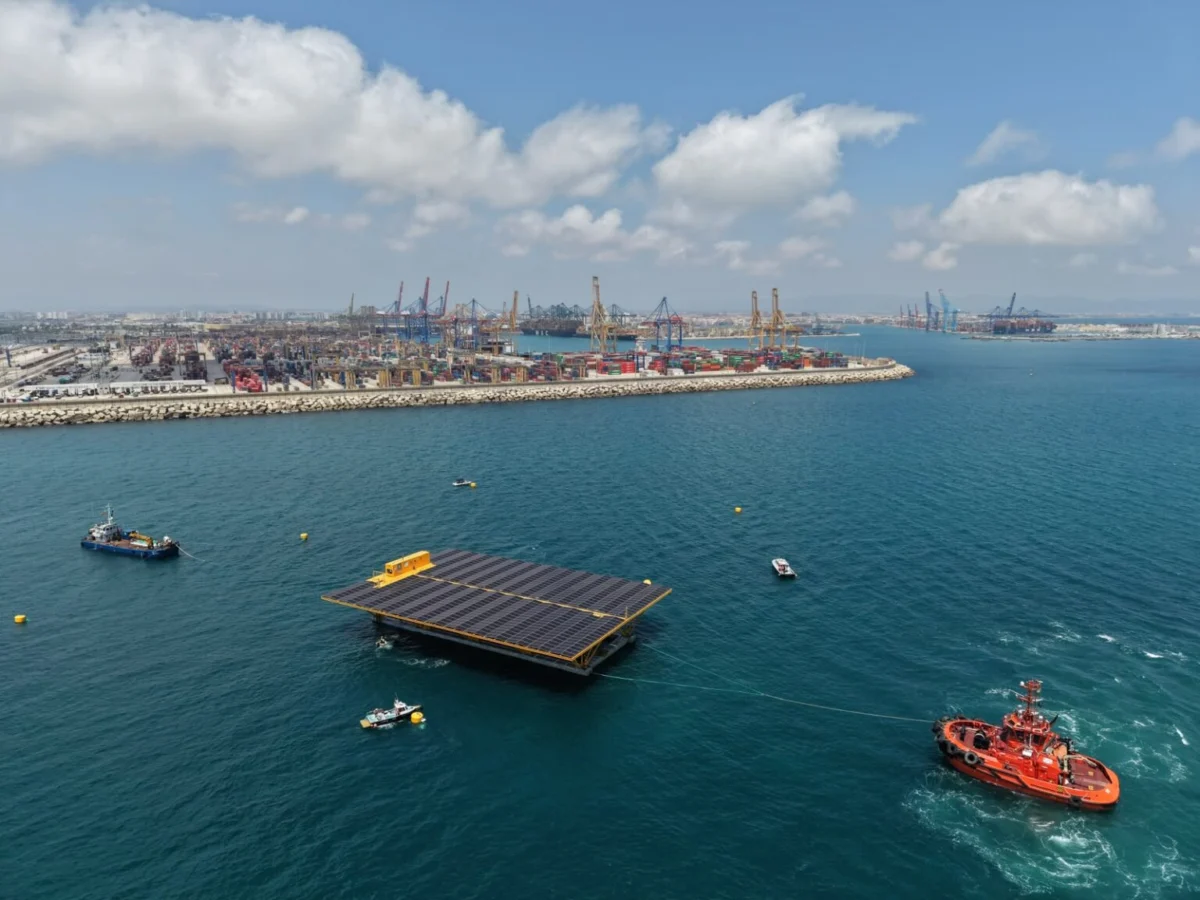
The arrival of the first 500 kW floating solar photovoltaic (PV) platform at the Port of Valencia marks a significant milestone in Spain’s transition toward marine-based renewable energy. Developed by the Spanish engineering firm BlueNewables in collaboration with the energy giant Naturgy, the platform, christened "Paiporta," represents the vanguard of a new generation of offshore energy solutions designed to withstand the rigors of the open sea while providing a clean, scalable power source for maritime infrastructure. This pilot project is not merely a local installation but a proof-of-concept for an industrialized, modular system that aims to redefine how coastal nations utilize their territorial waters for electricity generation.
The deployment of the Paiporta platform is the culmination of a strategic initiative launched in early 2025, aimed at overcoming the traditional limitations of land-based solar farms, such as land scarcity and environmental competition with agriculture. By moving solar arrays onto the water, particularly in port environments, Spain is positioning itself as a leader in the emerging Floating Photovoltaic (FPV) market, which is expected to see exponential growth globally over the next decade.
Technical Specifications and Modular Design
The Paiporta platform is a catamaran-style unit, a design choice specifically selected for its stability and buoyancy in varying sea states. Measuring 64 meters in length and 41 meters in width, the deck of the platform accommodates approximately 600 high-efficiency solar modules. This single 500 kW unit is the first of two planned platforms under the PhotoVoltaic-Bluenewables Offshore Solutions (PV bos) project. Once the second unit is deployed, the combined capacity will reach 1 MW, with an estimated annual energy production of 1,500 megawatt-hours (MWh).

One of the most innovative aspects of the BlueNewables system is its emphasis on "industrialized modularity." Unlike bespoke offshore structures that require lengthy on-site assembly, the PV bos platforms are designed to be manufactured in shipyards using standardized processes. This approach significantly reduces capital expenditure (CAPEX) and allows for rapid scaling. The Paiporta unit was constructed at the San Enrique shipyard in Vigo, Galicia—a facility owned by the Marina Meridional Group. By leveraging the existing expertise and infrastructure of the Galician shipbuilding industry, the project demonstrates how traditional maritime sectors can pivot toward the green economy.
The platform is engineered to require minimal and simplified maintenance, a critical factor for offshore installations where sea spray, salt corrosion, and wave action typically drive up operational costs. The catamaran design provides a stable working area for technicians, while the materials used in the frame and mooring systems are specifically treated to resist the corrosive Mediterranean environment.
A Symbolic Tribute: The Legacy of the Paiporta Platform
The decision to name the platform "Paiporta" carries deep regional significance. It serves as a tribute to the Valencian municipality of Paiporta, which was severely impacted by the catastrophic DANA (Depresión Aislada en Niveles Altos) storm in late 2024. The storm, which caused unprecedented flooding and loss of life across the Valencian Community, has become a symbol of the increasing volatility of the climate and the urgent need for resilient infrastructure.
By naming the first offshore solar platform after a site of climate-related tragedy, the project partners—BlueNewables, Naturgy, and the Port Authority of Valencia—are highlighting the direct link between renewable energy deployment and climate change mitigation. The testing phase of the platform will take place outside the port’s southern breakwater, a location that will expose the unit to real-world maritime conditions while remaining protected enough to allow for detailed data collection during the initial pilot period.

Strategic Context: The Port of Valencia’s Decarbonization Roadmap
The Port of Valencia is one of the busiest maritime hubs in the Mediterranean and has set an ambitious goal to become a carbon-neutral port by 2030. Achieving this requires a multi-pronged strategy involving the electrification of docks, the use of hydrogen-powered machinery, and the large-scale generation of on-site renewable energy.
The integration of floating solar is a logical step for the port. Land area within the port perimeter is extremely valuable and primarily reserved for logistics, container storage, and transit. Utilizing the "blue space" within and around the port breakwaters allows the facility to generate significant amounts of electricity without compromising its core commercial operations.
The 1,500 MWh expected from the full 1 MW project will contribute to the port’s self-consumption needs, powering administrative buildings, lighting, and potentially providing "cold ironing" services—allowing docked ships to turn off their diesel engines and plug into a clean electric grid. This reduction in local emissions is vital for the air quality of the city of Valencia, which sits in close proximity to the industrial port zones.
Chronology of the Project Development
The journey of the Paiporta platform began in March 2025, when the partnership between BlueNewables and Naturgy was officially formalized under the framework of Spain’s renewable energy innovation grants. The timeline of the project highlights the speed at which modular offshore solar can be moved from concept to reality:

- March 2025: Project launch and commencement of engineering designs for the PV bos system.
- Late 2025: Selection of the San Enrique shipyard in Vigo for the construction phase, signaling a collaboration between energy innovators and traditional shipbuilders.
- Q1 2026: Completion of the structural assembly of the first 500 kW catamaran unit.
- June 2026: Final fitting of the 600 solar modules and integration of the power electronics.
- July 2026: Towing of the platform from Galicia to the Port of Valencia and official activation of the pilot phase.
The next phase of the timeline involves a 12-to-18-month monitoring period, during which sensors will track the platform’s structural integrity, the efficiency of the panels under salt-crust conditions, and the impact of wave motion on energy output. Following a successful pilot, the second 500 kW unit is expected to be deployed to complete the 1 MW array.
The Global Rise of Floating Photovoltaics (FPV)
While floating solar on inland bodies of water—such as reservoirs and hydroelectric dams—has become relatively common in countries like China, Japan, and parts of Southeast Asia, the move to offshore (marine) environments is the next great frontier for the industry. According to data from the International Renewable Energy Agency (IRENA), the global potential for floating solar is vast, with the capacity to generate terawatts of power if even a small fraction of coastal waters are utilized.
The advantages of floating solar are multifaceted:
- Efficiency Gains: The cooling effect of the water beneath the panels helps maintain lower operating temperatures compared to land-based systems, which can increase the efficiency of the PV cells by 5% to 10%.
- Land Preservation: It eliminates the "food vs. fuel" debate by leaving arable land for agriculture.
- Synergy with Offshore Wind: There is growing interest in co-locating floating solar with offshore wind farms. Solar arrays can occupy the space between wind turbines, utilizing the same subsea cable infrastructure to send power to the grid, thereby optimizing the use of the seabed and reducing overall costs.
The Paiporta project is a critical step in proving that Spanish technology can compete in this high-stakes global market. BlueNewables has indicated that their goal is to export this modular system to international markets, targeting regions with high solar irradiation and extensive coastlines.

Economic and Industrial Implications for Spain
The successful deployment of the Paiporta platform has broader implications for Spain’s industrial strategy. By involving the Galician shipbuilding industry, the project showcases a viable path for "just transition"—retooling traditional industrial workforces to build the hardware of the energy transition. The Marina Meridional Group’s involvement suggests that Spanish shipyards can move beyond vessel construction and repair to become hubs for offshore renewable energy hardware.
Furthermore, the involvement of Naturgy, one of Spain’s "Big Three" utility companies, indicates that the commercial sector sees floating solar as a bankable technology. For utilities, offshore solar offers a way to diversify their renewable portfolios and meet government-mandated decarbonization targets in a country where permitting for large-scale land-based solar can often face local opposition or environmental hurdles.
Fact-Based Analysis of Future Challenges
Despite the optimism surrounding the Valencia launch, several technical and regulatory hurdles remain. The long-term durability of PV modules in a high-salinity environment is a primary concern; salt accumulation can lead to "hot spots" on panels and reduced transparency if not cleaned regularly. BlueNewables claims their design simplifies maintenance, but the frequency and cost of cleaning in an offshore environment will be a key metric to watch during the pilot.
Mooring and anchoring also present challenges. Unlike inland reservoirs where water levels are relatively stable, offshore platforms must account for tides, currents, and storm surges. The Paiporta’s catamaran design and its placement near a breakwater are intended to mitigate these risks, but scaling up to "deep water" offshore solar will require even more robust engineering solutions.

Regulatory frameworks also need to catch up. In many jurisdictions, the legal status of "floating power plants" is ambiguous, falling between maritime law and energy regulations. The Port of Valencia project will serve as a test case for Spanish regulators to streamline the permitting process for future offshore solar installations.
Conclusion
The arrival of the Paiporta platform at the Port of Valencia is a landmark event for the Spanish energy sector. It represents a fusion of maritime heritage and cutting-edge clean technology, providing a glimpse into a future where the sea becomes a primary source of solar power. As the 500 kW unit begins its testing phase, the data it generates will be instrumental in determining the commercial viability of offshore solar, not just for Spain, but for the global transition to a sustainable blue economy. With its modular design, industrial pedigree, and symbolic connection to climate resilience, the Paiporta project stands as a testament to Spain’s commitment to innovation in the face of a changing climate.
