

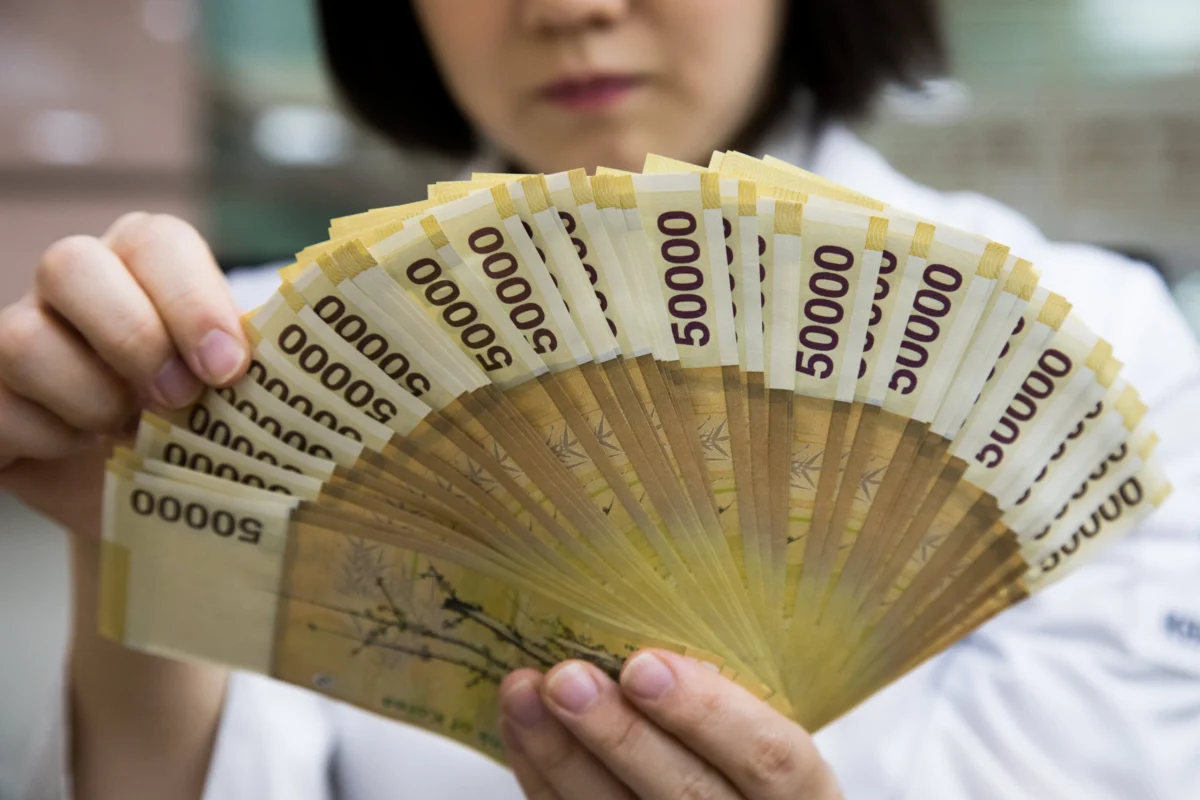
The Bank of Korea has issued a rare and pointed warning regarding the potential for massive performance bonuses in the technology sector to disrupt national efforts to stabilize inflation. In a detailed report released on June 17, the central bank highlighted a growing trend where extraordinary payouts to employees at major semiconductor firms, specifically Samsung Electronics and SK Hynix, are fueling a surge in private consumption and putting upward pressure on consumer prices. While the central bank traditionally views one-off bonuses as having a limited impact on long-term demand, the sheer scale of the recent payouts in the information technology (IT) sector has prompted a reevaluation of their macroeconomic influence.
The phenomenon has created a stark dichotomy within the South Korean economy: while the central bank frets over the sustainability of price targets, the luxury retail sector is experiencing an unprecedented windfall. This surge in spending is particularly visible in the Gyeonggi Province, the nation’s industrial heartland, where "semiconductor money" is flowing into high-end department stores, driving double-digit growth in the sales of luxury watches, jewelry, and designer handbags.
The Bank of Korea’s Inflationary Outlook
According to the Bank of Korea’s (BOK) June 17 report, South Korea is currently grappling with inflation levels that remain stubbornly above the 2% target. The BOK has projected that full-year inflation for 2024 will settle at approximately 2.7%. While much of the initial inflationary pressure this year was attributed to external shocks—specifically rising energy costs linked to geopolitical tensions in the Middle East—the central bank is now turning its attention to domestic drivers.
The BOK’s primary concern is that the "exceptional scale" of bonuses in the IT sector could lead to a broader wage-price spiral. In the report, the bank noted that while income conditions improving is generally a positive sign for the economy, the concentration of wealth in a specific, highly productive sector can lead to "spillover effects." The central bank warned that if these large performance-based payments lead to broader wage demands across other industries, the resulting increase in labor costs would translate into both supply-side and demand-side inflationary pressures.
"In particular, because recent IT-sector performance bonuses have been paid on a highly exceptional scale, the possibility that their actual impact could be larger than expected cannot be ruled out," the BOK stated. This suggests a shift in the bank’s traditional modeling, which usually discounts bonuses as transitory income. When a bonus exceeds a worker’s annual base salary several times over, it ceases to be a mere "extra" and begins to function as a significant driver of high-end consumption and market sentiment.
A Timeline of Labor Negotiations and Profit Sharing
The current wave of bonuses is the result of a tumultuous period of labor negotiations and record-breaking profits within the global semiconductor industry, driven largely by the explosive demand for Artificial Intelligence (AI) hardware.
In September 2024, SK Hynix, the world’s second-largest memory chipmaker, reached a landmark agreement with its labor union. The deal established a transparent profit-sharing mechanism, setting aside 10% of the company’s operating profit for worker bonuses. Given SK Hynix’s dominant position in the High Bandwidth Memory (HBM) market, these profits have reached historic levels. Analysts estimate that if the firm achieves its projected annual profit of 250 trillion won, individual employees could see bonuses exceeding 700 million won ($454,851).
Samsung Electronics followed a similar, albeit more contentious, path. In May 2025, the company faced the threat of an unprecedented 18-day strike from its unionized workers. The standoff was resolved when Samsung agreed to a deal that would allocate 10.5% of its semiconductor division’s operating profit toward special bonuses. Reports from union sources suggest that a mid-level memory chip worker with a base salary of 80 million won ($52,400) is on track to receive a total bonus package of approximately 626 million won ($410,000) this year.
This shift toward profit-linked bonuses marks a transformation in South Korean corporate culture. Historically, South Korean "chaebols" (conglomerates) maintained strict control over wage structures. However, the global "war for talent" in the semiconductor space has forced these giants to offer increasingly lucrative incentives to retain skilled engineers and researchers.
Regional Economic Shifts: The Gyeonggi Province Surge
The impact of these payouts is most visible in the geographic clusters where these companies operate. Gyeonggi Province, which surrounds the capital city of Seoul, is home to the primary manufacturing and R&D hubs for both Samsung and SK Hynix. Cities like Suwon, Pyeongtaek, and Icheon have become the epicenters of a new consumer boom.
BOK Deputy Governor Lee Jiho, speaking at a press briefing, confirmed that credit card spending growth in areas adjacent to chip production sites has significantly outpaced the rest of the country. "Sales have increased significantly in places such as Suwon and luxury goods sections of department stores, and this could gradually spread further," Lee remarked.
The "wealth effect" created by these bonuses is not just a theoretical concept in Gyeonggi; it is a daily reality for local retailers. Data suggests that the concentration of high-earning tech workers in these specific zones is creating localized inflation, where the prices of services, real estate, and luxury goods are rising faster than the national average. This regional disparity poses a unique challenge for the BOK, as it must balance a national monetary policy that addresses both the overheating tech hubs and the more stagnant sectors of the economy.
Luxury Retailers and the "Bonus Effect"
While the BOK expresses caution, the South Korean retail sector is in a state of celebration. The influx of disposable income from the tech sector has revitalized the luxury market, which had previously seen a slight cooling following the post-pandemic spending spree.
According to reports from the Chosun Ilbo, luxury consumption in southern Gyeonggi regions has seen a "rapid increase." A Shinsegae department store branch located in Gyeonggi Province reported a 53.6% year-on-year increase in luxury goods sales in May. Even more striking were the figures for specific high-ticket items:
- Luxury Jewelry: Sales surged by 146.3%.
- Luxury Watches: Sales grew by 85.3%.
- Overall Store Sales: Increased by 19%.
This spending is not limited to physical goods; it extends to high-end services, travel, and premium automotive sales. The narrative of the "tech millionaire next door" has become a staple of South Korean media, with accounts of young engineers purchasing luxury vehicles and high-end watches immediately after their bonus checks clear.
Market Reactions: Retail Stocks Rally
The stock market has been quick to price in this consumer windfall. Shares of South Korea’s major department store operators have seen astronomical gains throughout the year, outperforming the broader KOSPI index.
- Shinsegae: The industry leader has seen its share price skyrocket by 190% since the start of the year, with a 107% jump in the last three months alone.
- Lotte Shopping: The retail arm of the Lotte Group has surged more than 148% year-to-date, reflecting a 67% increase in the last quarter.
- Hyundai Department Store: Shares have risen by 120% year-to-date, with a 113% gain over the past three months.
Investors are betting that the trend of high-performance bonuses is not a one-time event but a structural change in how South Korean tech giants compensate their employees. As long as the AI-driven demand for semiconductors remains high, the cycle of massive profits followed by massive bonuses is expected to continue, providing a consistent tailwind for the luxury retail sector.
Broader Implications and Economic Analysis
The situation in South Korea presents a complex case study in modern macroeconomics. On one hand, the success of the semiconductor industry is the bedrock of the nation’s export-driven economy. The ability of Samsung and SK Hynix to generate such massive profits is a testament to their global competitiveness.
However, the BOK’s warnings highlight the "Dutch Disease" risk—a phenomenon where a boom in one specific sector (in this case, semiconductors) leads to wage increases and currency appreciation that can make other sectors of the economy less competitive. If the "IT-sector performance bonuses" set a new benchmark for what constitutes a "fair" wage, other industries that do not enjoy the same profit margins may struggle to keep up, leading to labor unrest or business failures.
Furthermore, there is the risk of social stratification. The gap between the "chip-rich" workers in Gyeonggi and the rest of the workforce is widening. While a memory chip worker might receive a $400,000 bonus, workers in the service sector or small-to-medium enterprises (SMEs) are facing the brunt of the 2.7% inflation without the cushion of a performance payout.
In the long term, the BOK will likely have to maintain a hawkish monetary stance to prevent this concentrated wealth from overheating the broader economy. The central bank faces the delicate task of "damping down" the inflationary fire without stifling the growth of the country’s most important industry. For now, the eyes of the nation remain on the shopping malls of Suwon and the boardrooms of Seoul, as South Korea navigates this unprecedented era of tech-driven prosperity and its accompanying economic challenges.
