

Against a persistent backdrop of inflationary pressures, yields on longer-term U.S. Treasury bonds have been steadily climbing, a trend that experts unanimously agree is set to keep borrowing costs elevated for consumers and businesses alike. This surge is particularly impactful on long-term fixed-rate loans, most notably mortgages, but its tendrils extend across the entire spectrum of consumer credit, from car loans to credit card rates. The financial landscape is clearly reflecting deep-seated concerns over the trajectory of inflation and the Federal Reserve’s ongoing battle to bring it under control.
The Ascent of Treasury Yields: A Historical Snapshot
The week saw significant movements in the bond market, with the yield on the U.S. 30-year Treasury bond hitting an unsettling 5.323% on Tuesday, marking a 19-year high before slightly retreating to just under 5.3%. This benchmark, often seen as a bellwether for long-term borrowing costs, has not traded at such levels since the height of the dot-com bubble burst or the lead-up to the 2008 financial crisis, periods characterized by distinct economic anxieties. Similarly, the closely watched 10-year Treasury yield, a crucial benchmark for fixed mortgage rates and various other longer-term loans, has risen above 4.7%. This figure stands in stark contrast to levels below 4% observed before the onset of heightened geopolitical tensions impacting global energy markets at the end of February, underscoring the swift and dramatic shift in investor sentiment.
This upward trajectory in yields is not an isolated event but rather the culmination of several macroeconomic forces. Lawrence Yun, chief economist for the National Association of Realtors, succinctly captured the prevailing sentiment, stating, "The higher bond yields on long-dated securities, like the 30-year Treasury, clearly indicate discomfort over persistently high inflation in the future." This discomfort is rooted in the annual rate of inflation, which, as measured by the consumer price index (CPI), registered 3.4% in July. While a moderation from its peak in mid-2022, this rate remains stubbornly far above the Federal Reserve’s long-term target of 2%. For context, before the aforementioned geopolitical developments in January, the annual inflation rate stood at a more manageable 2.4%, highlighting the impact of recent events and the continued challenges in taming price increases.
Inflationary Headwinds and Federal Reserve Policy
The current inflationary environment is multifaceted, driven by a combination of factors. Post-pandemic demand resurgence, coupled with lingering supply chain disruptions, initially fueled price increases. More recently, elevated energy prices, stemming from disruptions in key oil-producing regions and global supply dynamics, have played a significant role in keeping headline inflation stubbornly high. Food prices have also seen sustained increases, impacting household budgets. The Federal Reserve, armed with its dual mandate of maximizing employment and maintaining price stability, has been aggressively hiking its benchmark federal funds rate since early 2022 in an effort to cool the economy and bring inflation back to its 2% target.
Each rate hike by the Fed directly influences short-term interest rates and indirectly impacts long-term bond yields by signaling the central bank’s commitment to tighter monetary policy. However, long-term bond yields are also heavily influenced by inflation expectations. If bond investors believe inflation will remain elevated for an extended period, they demand higher yields to compensate for the erosion of their future purchasing power. The recent surge in 30-year and 10-year Treasury yields suggests that the market is pricing in a scenario where inflation proves more sticky than initially hoped, potentially necessitating a longer period of restrictive monetary policy from the Fed or simply reflecting a new equilibrium for long-term real rates.
The Direct Impact on Mortgage Rates and Housing Affordability

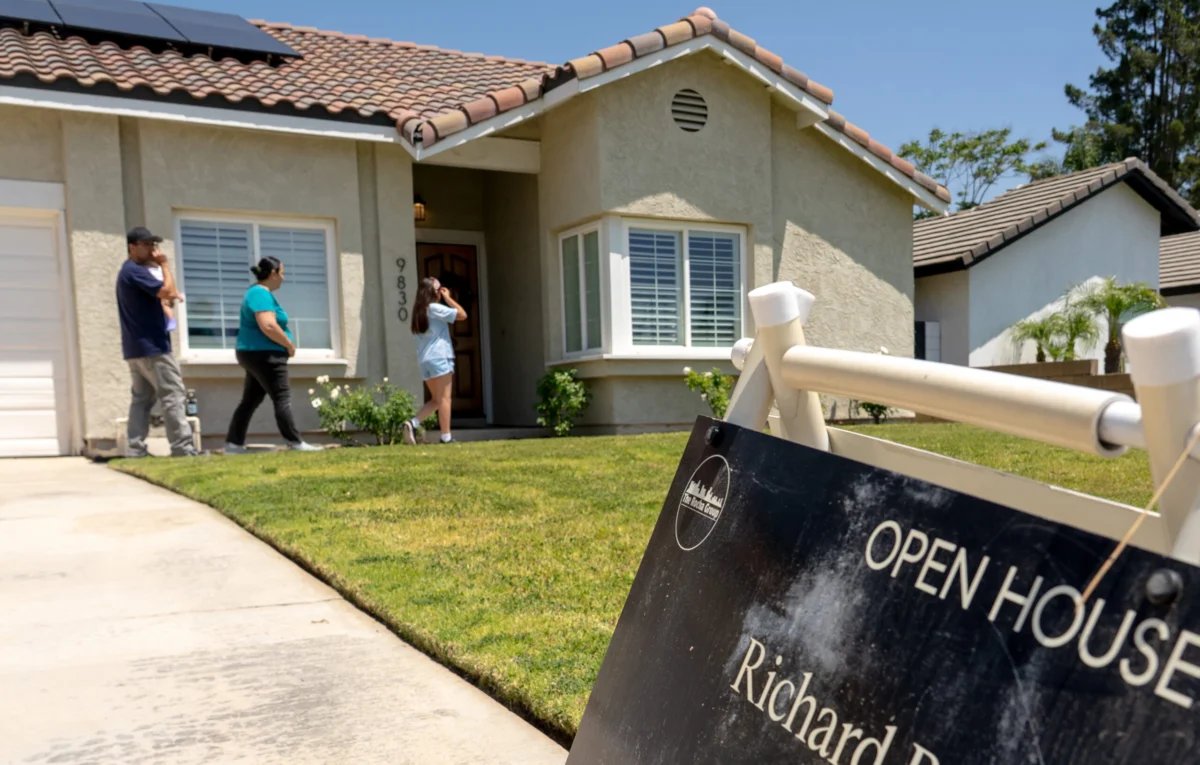
One of the most immediate and tangible consequences of rising Treasury yields is their direct influence on mortgage rates. Both 15-year and 30-year fixed-rate mortgages typically track the movement of Treasury rates, particularly the 10-year yield. As bond yields have climbed, so too have mortgage rates, significantly impacting housing affordability and the broader real estate market.
As of Tuesday, the average rate for a 30-year, fixed-rate mortgage reached 6.75%, an increase from 6.69% just last week, according to data from Mortgage News Daily. This represents a substantial increase from just a couple of years ago when rates hovered around 3-4%. To illustrate the impact, consider a $400,000 mortgage: at 3.5%, the monthly principal and interest payment would be approximately $1,796. At 6.75%, that same payment jumps to roughly $2,607, an increase of over $800 per month. This translates to a significant reduction in purchasing power for prospective homebuyers, effectively pricing many out of the market or forcing them to seek smaller, less expensive homes.
Lawrence Yun reiterated the direct link, stating, "The impact on mortgage rates is directly related to higher bond yields. Independent of the Federal Reserve policy, higher inflation and higher overall long-term borrowing costs will mean higher mortgage rates." He delivered a sobering assessment for consumers, advising them not to expect any meaningful decline in mortgage rates in the near future. This sentiment was echoed by Jeff DerGurahian, LoanDepot’s chief investment officer and head economist, who noted that last week’s "favorable economic data provided only temporary relief." He emphasized that elevated energy prices, particularly those stemming from ongoing geopolitical conflicts, remain "an important part of the inflation picture." DerGurahian further suggested that "Longer-term bond investors may need more evidence that the post-pandemic inflation cycle is truly behind us and that the economy is returning to a slower-growth, slower-inflation environment before 10- and 30-year Treasury yields move meaningfully lower."
The elevated mortgage rates are having a chilling effect on both demand and supply in the housing market. Potential buyers are facing affordability challenges, while many existing homeowners, locked into historically low rates, are reluctant to sell, thereby constricting inventory. This dynamic is contributing to a slowdown in housing transactions, even as home prices remain relatively resilient in some areas due to persistent demand and limited supply.
Broader Implications for Other Consumer Loans
The ripple effect of rising bond yields extends far beyond mortgages, touching almost every facet of consumer borrowing. Rates on car loans, credit cards, and student debt are also directly or indirectly tied to bond yields and the broader interest rate environment, meaning that monthly payments across these categories could see further increases.
"It typically is an immediate pass-through to some consumer rates," explained Brett House, an economics professor at Columbia Business School. He elaborated that "Variable and some fixed-rate borrowing will reset rates on a daily basis." This direct linkage means that consumers carrying variable-rate debt are particularly vulnerable to rising rates.
Auto Loans: Auto loan rates are highly susceptible to broader economic factors, including Treasury yields. Jessica Caldwell, head of insights at Edmunds, highlighted the current predicament: "Auto loan rates don’t move in a vacuum, but sustained pressure on Treasury yields inevitably pushes up borrowing costs across the financing spectrum." She noted that average new-vehicle APRs are already hovering around 7%, with used vehicles seeing even higher rates at 10.6%. Caldwell warned, "If higher bond yields keep interest rates elevated, auto lenders will have little choice but to maintain or even bump up APRs, further stretching consumer budgets." This scenario adds another layer of financial strain for consumers already contending with high vehicle prices and inflation elsewhere.
Credit Cards: Renewed worries about the Federal Reserve’s interest rate policy trajectory could also weigh heavily on variable credit card rates. These rates are typically closely pegged to the prime rate, which directly responds to changes in the federal funds rate set by the Fed. As the Fed continues its hawkish stance or maintains high rates for longer, credit card APRs will likely remain elevated or increase further. For consumers carrying balances, this means higher interest payments, making it more challenging to pay down debt and increasing the risk of accumulating more interest charges.

Student Loans: While federal student loan rates are fixed for the life of the loan once disbursed, new borrowers are not immune to the rising rate environment. Rates for new federal student loans are typically set annually based on the results of the 10-year Treasury note auction in May. Consequently, new borrowers face higher rates compared to previous years, increasing the overall cost of their education financing. Private student loans, which are often tied to variable benchmarks like the prime rate or LIBOR (or its successor, SOFR), also see their rates adjust upwards with the broader market.
Ted Rossman, a principal consumer finance analyst at Money Management International, a nonprofit credit counseling agency, encapsulated the consumer’s plight: "Of course, higher borrowing costs are meant to fight inflation, but there’s a potential double whammy for consumers. When prices are high, and borrowing costs are high – as they are now – you feel like you’re getting squeezed from all sides."
Navigating the High-Rate Environment: Strategies for Consumers
In this environment of elevated borrowing costs, experts advise consumers to adopt proactive strategies to manage their finances. For those looking to purchase a home, flexibility may be key. Lawrence Yun suggested considering "shorter-term mortgage rates, like seven-year [adjustable-rate mortgages], which lock in fixed mortgage payments for the first seven years of the loan before readjusting." He noted that "These shorter-duration loans are ideal for those who are more certain they will move to another home within that seven-year timeframe." However, it’s crucial for borrowers to understand the potential for rate increases after the fixed period and assess their financial capacity for such adjustments.
Beyond mortgages, consumers should focus on reducing high-interest debt, particularly credit card balances. Consolidating debt into a lower-interest personal loan or a balance transfer credit card (if a promotional 0% APR period is available and manageable) can help mitigate the impact of rising rates. Budgeting meticulously and prioritizing debt repayment can free up funds that would otherwise be consumed by interest charges. For those with auto loans, refinancing might be an option if their credit score has improved or if rates for shorter terms are more favorable, though the current environment makes significant savings less likely for most.
Economic Outlook and Future Trajectory
The prevailing sentiment among economists and market analysts suggests that the current high-rate environment is unlikely to dissipate quickly. The Federal Reserve has repeatedly emphasized its commitment to bringing inflation down to its 2% target, even if it means maintaining restrictive monetary policy for an extended period. This "higher for longer" narrative for interest rates is firmly embedded in market expectations and is a primary driver of the elevated bond yields.
While the Fed’s actions aim to cool demand and reduce inflationary pressures, there’s an ongoing debate about the potential for a "soft landing" versus a recession. A soft landing would involve inflation returning to target without a significant economic downturn or widespread job losses. However, the risk of overtightening and triggering a recession remains a concern, especially as the cumulative effect of past rate hikes continues to work its way through the economy. Key economic indicators, such as unemployment rates, consumer spending data, and manufacturing output, will be closely watched for signs of either successful disinflation or economic distress.
The bond market, through its yield movements, acts as a sophisticated barometer of these complex economic forces and future expectations. The recent surge in long-term Treasury yields is a clear signal from investors that they foresee a prolonged battle against inflation, leading to sustained higher borrowing costs across the economy. For individuals and businesses alike, adapting to this new reality of elevated interest rates will be crucial for financial planning and stability in the months and potentially years to come.
