

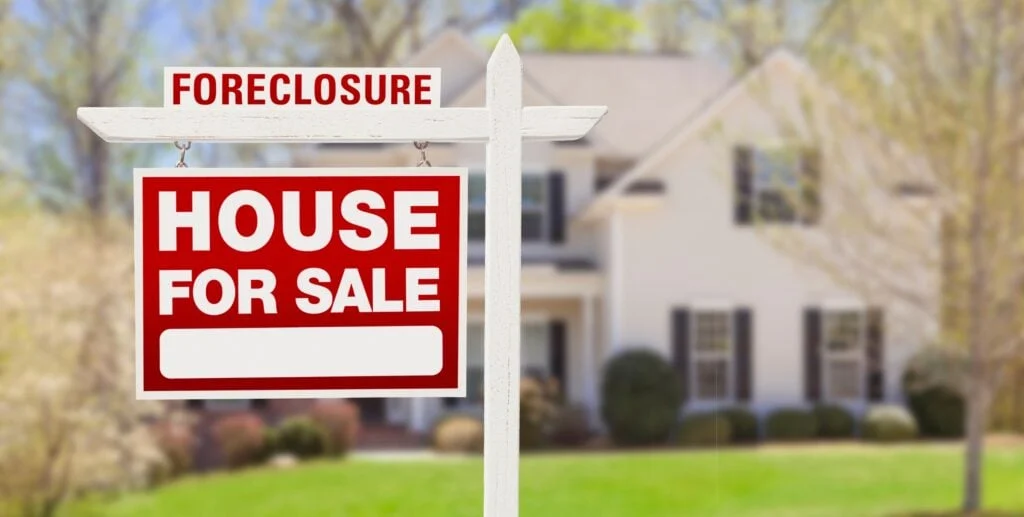
The American real estate market is witnessing a quiet but significant shift as short sales begin to reclaim a visible share of the housing landscape. After a decade of relative obscurity following the post-2008 recovery, distressed property transactions are trending upward, driven by a volatile combination of skyrocketing insurance premiums, record-high property taxes, and the gradual expiration of pandemic-era homeowner protections. While foreclosures still outpace short sales by a two-to-one margin, the momentum behind short sales suggests that a growing number of homeowners are finding themselves "underwater"—owing more on their mortgages than their properties are currently worth.
This emerging trend is particularly concentrated in regions where the cost of homeownership has decoupled from wage growth. For real estate investors, this shift signals the return of a strategy that defined the Great Recession era: negotiating directly with lenders to acquire properties at a discount before they reach the auction block. However, unlike the systemic collapse of 2008, the current rise in short sales is categorized by "payment shocks" rather than a total lack of equity, creating a complex environment for buyers, sellers, and financial institutions alike.
The Statistical Resurgence of Distressed Sales
According to recent data from Realtor.com, nearly 30,000 short sales were recorded in the United States over the last calendar year. While this figure represents only 0.6% of the total housing market—a stark contrast to the 9% peak seen in 2012—the rate of growth is catching the attention of economists. Short sales accounted for 28% of all distressed home sales in 2025, and the first half of 2026 has already seen a 16% increase in short sale filings compared to the previous year.
The trajectory of this growth is telling. Between 2023 and 2024, short sale volume increased by a modest 4%. That growth accelerated to 10% in 2025, before hitting the current 16% spike. Economists suggest this is not a sudden burst but a slow-motion correction. During the pandemic, federal and state moratoriums on foreclosures, combined with generous forbearance programs, kept distressed properties off the books. As these programs have wound down and the "cushion" of pandemic savings has eroded, the underlying financial fragility of certain buyer segments has been exposed.
The Layering Effect: Why Homeowners Are Struggling
The primary catalyst for the current rise in short sales is what experts call the "layering effect" of housing costs. While many homeowners secured historically low mortgage interest rates—often below 3%—between 2020 and 2022, the fixed nature of their principal and interest payments has been offset by the volatility of "variable" housing costs.
Marina Walsh, an economist at the Mortgage Bankers Association, notes that recent buyers are particularly susceptible to payment shocks. These shocks originate from three primary sources:
- Property Tax Reassessments: As home values surged during the pandemic, local municipalities reassessed property values, leading to significant increases in annual tax bills.
- The Insurance Crisis: In states like Florida and California, insurance premiums have escalated at double the national rate. Florida, in particular, saw a 75% increase in home insurance costs between 2021 and 2025, driven by climate risks and the rising cost of construction materials.
- HOA and Maintenance Fees: Inflation has driven up the cost of labor and materials, forcing Homeowners Associations (HOAs) to hike monthly dues to cover building repairs and community insurance.
When these costs are layered on top of a mortgage, even a homeowner with a low interest rate can find their monthly DTI (Debt-to-Income) ratio pushed into unsustainable territory. If the local market experiences even a slight dip in property values, these homeowners lose their ability to sell the home traditionally to pay off the debt, leaving a short sale as their only viable exit strategy to avoid the long-term credit damage of a foreclosure.
Regional Hotspots and the Florida Factor
The resurgence of short sales is not uniform across the United States. Instead, it is clustering in "Sunbelt" markets that experienced the most aggressive price appreciation during the COVID-19 migration boom. Lakeland, Florida, currently leads the nation in short sale concentration. In this market, there are 3.5 short sales for every one foreclosure, with approximately 6.7% of all local listings categorized as short sales as of mid-2026.
Other high-concentration areas include various metropolitan districts in California and the Northeast, where the cost of living has outpaced local wage growth. In Florida, the situation is exacerbated by the "storm effect." Following several high-profile hurricanes, many national insurers pulled out of the state, leaving homeowners to rely on "last resort" insurers with significantly higher premiums.
Carolyn Kousky, executive director of the Coalition for an Insurable Future, explains that the post-COVID period of high inflation made reconstruction exponentially more expensive. "When construction is more expensive, insurers have to pay more claims," Kousky stated. "That means they need higher premiums to compensate. For a homeowner in a place like Lakeland, their mortgage might be fixed, but their total monthly housing outflow is anything but stable."
The Mechanics of a Modern Short Sale
For the uninitiated, a short sale occurs when a lender agrees to accept a payoff amount that is less than the total balance remaining on the mortgage. This process is distinct from a foreclosure, where the bank seizes the property by force. In a short sale, the homeowner remains the seller, but the bank has the final say on whether to accept an offer.
From a lender’s perspective, a short sale is often a "loss mitigation" tool. Banks are in the business of lending money, not managing real estate. When a bank takes a property back through foreclosure (becoming an REO or Real Estate Owned property), they inherit the costs of property taxes, insurance, lawn maintenance, and security. Furthermore, vacant properties are at high risk for vandalism or squatters, which further devalues the asset. By approving a short sale, the bank can offload the "toxic asset" quickly, often realizing a higher net return than they would through the lengthy and expensive legal process of foreclosure.
Strategic Implications for Real Estate Investors
The current environment offers a unique window for "mom-and-pop" investors and institutional buyers alike. Unlike the competitive bidding wars of 2021, short sales require a high degree of patience and specialized knowledge, which naturally thins the field of potential buyers.
Investors are increasingly using sophisticated data tools—such as skip tracing, PropStream, and BatchLeads—to identify homeowners who have high loan-to-value ratios and are showing signs of distress, such as missed tax payments or mechanics’ liens. The goal for the investor is to approach the homeowner before the property reaches the pre-foreclosure stage.
The "Short Sale Playbook" typically involves the following steps:
- Identifying the Hardship: The investor helps the seller document a "hardship letter" to the bank, explaining why they can no longer afford the home (e.g., job loss, medical bills, or the aforementioned insurance spikes).
- The Lien Search: Before making an offer, a thorough title search is required to ensure there are no secondary liens (junior mortgages or unpaid HOA dues) that could complicate the bank’s decision.
- The BPO (Broker Price Opinion): The bank will hire a third-party agent to value the home. Investors must provide documentation regarding the property’s poor condition or necessary repairs to justify a lower purchase price.
- Negotiation: This phase can take months. The investor’s value proposition to the bank is a "certain close" with all-cash, which removes the uncertainty of the property sitting on the bank’s books.
Market Outlook and Fraud Prevention
As short sales continue to grow as a "corner of the market," industry experts warn of the potential for fraud. During the last housing crisis, "short sale flipping" and "foreclosure rescue scams" became prevalent. Regulators are already signaling increased scrutiny of third-party negotiators who charge upfront fees to homeowners in distress.
For the broader economy, the rise in short sales is a double-edged sword. On one hand, it indicates growing financial stress among the middle class. On the other hand, it serves as a necessary "pressure release valve" for the housing market. By allowing distressed assets to be recycled into the hands of new, well-capitalized owners or investors, short sales help prevent the kind of mass-foreclosure contagion that could lead to a systemic collapse.
Looking ahead to the remainder of 2026 and into 2027, analysts expect short sale volume to remain on an upward trajectory. With interest rates remaining "higher for longer" and no immediate relief in sight for insurance premiums or property taxes, the financial chokehold on recent buyers is unlikely to loosen. For the savvy investor, the coming months represent a period of diligent preparation, as the "low-hanging fruit" of the distressed market becomes increasingly available for those willing to navigate the paperwork.
