

As an 8-year-old boy steers his bicycle in figure eights across the asphalt, his mother prepares a dinner of pizza and pineapple slices in a communal outdoor kitchen. This parking lot, situated in San Diego, is currently home to more than a dozen families. For this family, their sedan—once their only shelter—now sits parked beside a recreational vehicle (RV) assigned to them for a six-month stay. This transition from a cramped car to a managed trailer has provided a semblance of normalcy: a place to do homework, a private bathroom, and a secure location for their belongings. The mother, identified as M. to protect her family’s privacy, works as a part-time site monitor at her son’s school, located just ten miles away.
Since late last year, M. and her family have been participants in a burgeoning initiative led by the city of San Diego, the local school district, and nonprofit partners. These "safe parking lots" are designed to provide temporary stability for families priced out of the region’s aggressive housing market. While they meet with caseworkers to navigate the path toward permanent housing, the lots offer a critical middle ground between the instability of the streets and the often-overcrowded traditional shelter system.
The Escalating Crisis of Family Homelessness
The rise of safe parking lots as a social intervention comes at a moment of historic crisis. According to the U.S. Department of Housing and Urban Development (HUD), family homelessness reached a record high in 2024. The most recent annual homeless census, conducted in January 2024, identified nearly 260,000 individuals in families with children experiencing homelessness—a staggering 50 percent increase since before the COVID-19 pandemic.

Several factors have converged to create this "perfect storm." The expiration of federal pandemic-era assistance, such as the Emergency Rental Assistance Program (ERAP), removed a vital safety net for thousands of low-income renters. Concurrently, rising inflation and a sluggish labor market have eroded the purchasing power of families. In high-cost coastal cities like San Diego, the disparity between wages and rent has become insurmountable for many.
Experts like Jennifer Erb-Downward, director of housing stability programs at the University of Michigan’s Poverty Solutions, note that HUD’s figures likely undercount the true scope of the problem. "Hidden homelessness"—families couch-surfing or paying out-of-pocket for dilapidated motels—remains a pervasive but often invisible issue. For these children, school often represents the only point of true stability in their lives.
A Chronology of the Safe Parking Model
The concept of converting parking lots into managed shelters is not entirely new, but its application to school districts and families has gained significant momentum recently.
- 2017: The city of San Diego began experimenting with safe parking by partnering with the nonprofit Jewish Family Service (JFS). The initial goal was to provide a legal, secure place for individuals living in their vehicles to sleep without the fear of being ticketed or harassed.
- 2023: As the visibility of unhoused families increased, San Diego added its first lot specifically prioritizing families. Around the same time, the city enacted a sweeping ban on public camping, which effectively criminalized sleeping on sidewalks.
- Late 2023: Officials with the San Diego Unified School District (SDUSD) approached the city with a proposal to utilize vacant district properties, including a former elementary school, as temporary shelters for their own students and families.
- 2024-2025: The model began to expand nationally. Cincinnati Public Schools announced plans to open a safe parking lot at a downtown elementary school, and the teachers’ union in Fayette County, Kentucky, began advocating for a similar program.
In San Diego, the SDUSD liaison for homeless and foster youth, Kristy Drake, emphasizes that students cannot focus on learning if they are preoccupied with where they will sleep. "The goal is for this to be a way station," Drake said. "When families drive onto this lot, they come into this wider network of support and resources."

Economic Disparities: The San Diego Case Study
The necessity of these lots is underscored by the stark economic realities facing San Diego residents. As of early 2025, the median rent for a one-bedroom apartment in the city hovered around $2,200, while a two-bedroom unit could cost upwards of $3,000.
In contrast, many school district employees—the very people supporting these students—earn wages that make market-rate housing impossible. Hourly staff, such as classroom aides and bus monitors, can earn as little as $1,832 per month. For families like M.’s, who lost a federal rental subsidy just as their landlord implemented a 30 percent rent hike, the math simply does not work.
Furthermore, the path to subsidized housing is frequently blocked. San Diego and several neighboring municipalities have recently closed their waiting lists for Section 8 housing vouchers due to overwhelming demand. This leaves families in a state of limbo: they earn too much to qualify for some emergency programs but not enough to secure a lease that requires a high credit score and a monthly income three times the rent.
Divergent Models: RVs vs. Standard Parking
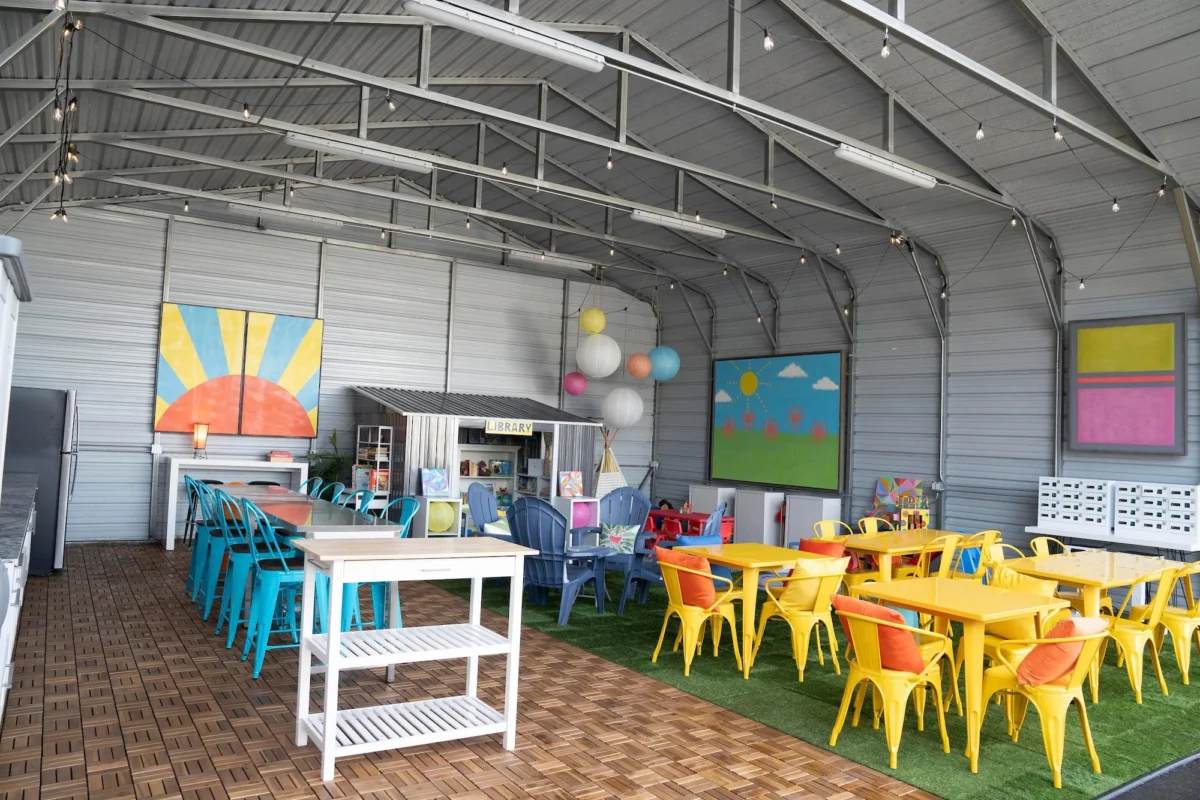
Not all safe parking sites are created equal. The Rose Canyon lot in San Diego, where M. resides, is considered a high-resource site. It features 18 recreational vehicle trailers provided by the city, allowing families a private space with beds and bathrooms. Through philanthropic support, the site also includes a covered communal area with a library, a dining and study space, and a kitchen.

The site at the former Central Elementary School operates on a more basic model. Families park their own vehicles in one of 40 designated spots. While the district has repurposed portable classrooms to provide microwaves and Wi-Fi, families must use portable restrooms and wait for a nearby YMCA to open in the morning to access showers.
Jesse Mendez, director of the safe parking program for JFS, argues that even the basic lots are preferable to traditional shelters. Shelters often impose strict curfews and require constant supervision of minors, which can feel restrictive to parents. "Here, you’re choosing who gets to sleep next to you and in a place where you’re safe," Mendez explained.
Political and Community Pushback
Despite the program’s successes, it has faced significant opposition. Nearby residents and private developers have expressed concerns regarding potential increases in crime and the subsequent impact on property values. In some instances, developers have sought judicial intervention to halt the establishment of new sites.
The political landscape is equally contentious. The Trump administration has characterized safe parking lots as "dystopian" and "reprehensible," arguing that they represent a failure of urban policy. However, housing advocates point out that the administration has simultaneously proposed major cuts to long-term housing programs, leaving cities with few alternatives.

Progressive critics also worry that safe parking lots might serve as a "band-aid" solution that distracts from the root causes of the housing crisis. They argue that resources should be directed toward permanent housing solutions rather than maintaining temporary encampments.
Analyzing the Impact: Is the "Bridge" Working?
Data suggest that despite being a "terrible option" compared to permanent housing, safe parking lots are more effective than traditional shelters at transitioning families to stability. A 2024 study on the JFS model found that 40 percent of households staying at a site between 2020 and 2021 moved on to stable housing.
More recent internal data from JFS is even more encouraging: 53 percent of all households in their program, and 76 percent of those at the higher-resource Rose Canyon lot, successfully found more permanent living arrangements. This far exceeds the national average for people moving from homeless services into permanent housing, which HUD places at approximately 34 percent.
The story of Dezarae S. illustrates this potential. Having spent much of her own childhood in shelters or cars, Dezarae was determined to provide a different experience for her four children. While living at the Rose Canyon lot, her two-year-old twins—both of whom are autistic—were able to meet with specialists to prepare for preschool. After three years on a waiting list, the family finally secured a housing voucher and moved into a three-bedroom apartment in March 2025.
Broader Implications for American Education
The involvement of school districts in providing shelter marks a significant shift in the role of educational institutions. Historically, schools have been responsible for academic instruction and, increasingly, nutritional support. Now, they are becoming active participants in the housing sector.
In Cincinnati, the school district’s safe sleep lot includes plans for a structure housing private bathrooms, laundry, and shower facilities. Rebeka Beach, head of homeless services for Cincinnati schools, acknowledges that the district spends over $50,000 annually just on short-term hotel stays for students. By utilizing their own land, districts can potentially provide a more consistent environment for less money than the cost of emergency vouchers.
However, the question remains whether this is a sustainable model. While San Diego Unified plans to eventually develop its vacant land into affordable housing for its workforce, those projects are years away from completion. In the interim, the parking lots serve as a visible reminder of the "missing middle"—families who are working but cannot afford the basic necessity of a roof over their heads.
For M., the future remains uncertain. High gas prices and the cost of keeping her belongings in storage make it difficult to save for a security deposit. She has considered moving back to her hometown of Calexico, but doing so would mean losing her current employment. For now, the figure eights her son rides on his bicycle represent a small, paved circle of safety in an otherwise turbulent world. "We just got to make it work," she said.
