

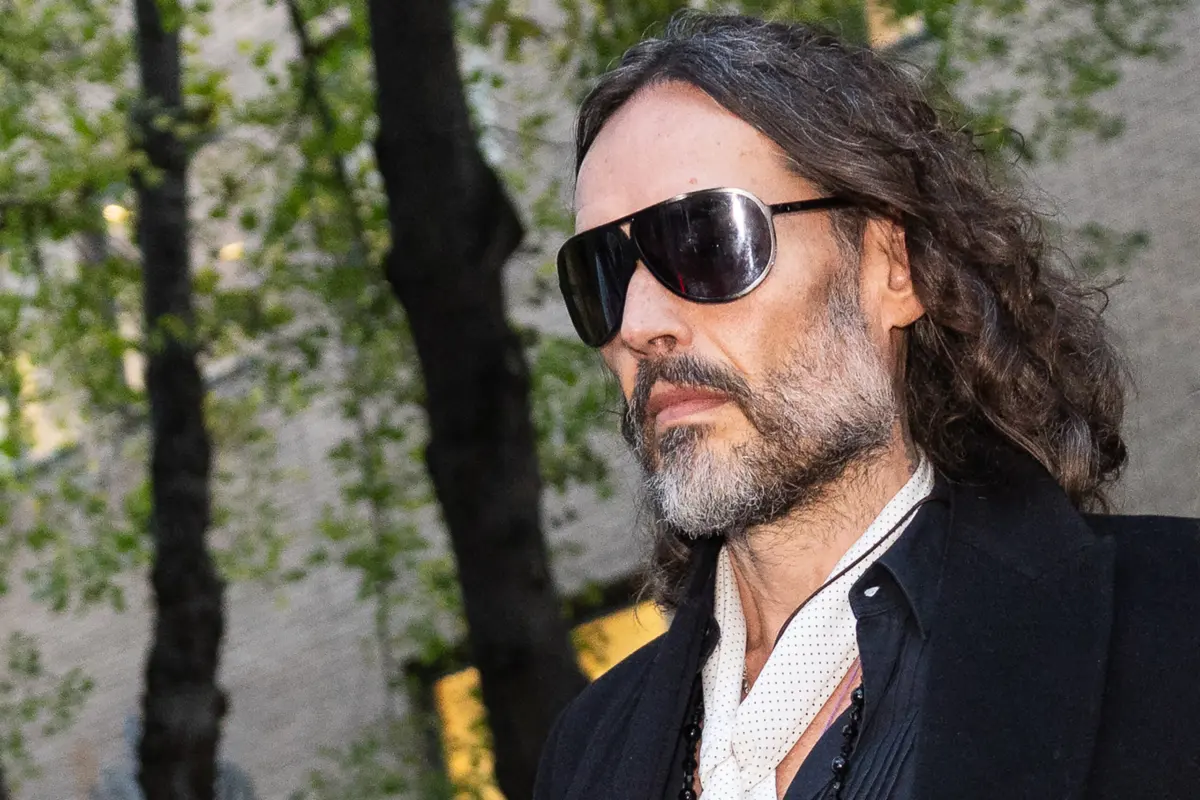
London, UK – Renowned British comedian, actor, and media personality Russell Brand has been sentenced to 10 years and six months in prison after being found guilty of rape and sexual assault. The significant custodial sentence was handed down by London’s Southwark Crown Court on Monday, marking a definitive legal conclusion to a high-profile case that has gripped public attention and sent shockwaves through the entertainment industry. Brand, 49, had been convicted last week of raping one woman and sexually assaulting three others during a period spanning from 2004 to 2009.
Throughout the legal proceedings, Brand maintained his innocence, asserting that all his encounters were consensual. However, a jury of eight men and four women concluded otherwise, finding him guilty on four counts related to attacks on four of the six accusers presented by the prosecution. He was acquitted of two counts of rape and one count of attempted indecent assault, reflecting the jury’s careful consideration of individual allegations. The sentencing hearing saw powerful victim impact statements delivered, detailing the profound and lasting trauma inflicted by Brand’s actions, which played a crucial role in the judge’s determination of the severe penalty.
The Rise and Fall of a Controversial Star
Russell Brand’s trajectory in the public eye has been anything but conventional. Born on June 4, 1975, in Grays, Essex, Brand emerged from a challenging upbringing marked by addiction and mental health struggles, which he later openly discussed and chronicled in his work. His unique blend of flamboyant showmanship, intellectual curiosity, and confrontational humour quickly set him apart.
His career began to ascend in the early 2000s, initially gaining recognition as a stand-up comedian known for his energetic, often provocative, and sexually explicit routines. This led to presenting roles on MTV and, notably, as the host of the Big Brother’s Big Mouth spin-off show from 2004 to 2007, which catapulted him into mainstream recognition. Brand’s distinctive style, characterised by elaborate vocabulary, poetic delivery, and a penchant for pushing boundaries, soon saw him transition to radio, hosting successful shows on BBC Radio 6 Music and later BBC Radio 2. These platforms allowed him to cultivate a large and loyal following, drawn to his candidness about his past battles with drug and alcohol addiction, his recovery, and his often-outrageous persona.
Hollywood beckoned in the late 2000s, with Brand securing prominent roles in films such as Forgetting Sarah Marshall (2008), which showcased his comedic talent to an international audience, and its spin-off Get Him to the Greek (2010), solidifying his status as a bankable star. He also ventured into voice acting and authored several books, including his autobiography My Booky Wook. Beyond entertainment, Brand increasingly positioned himself as a political commentator, activist, and self-help guru, particularly through his popular YouTube channel, "Stay Free with Russell Brand," and his presence on platforms like Rumble. Here, he engaged with topics ranging from media criticism and government overreach to spiritual awakening, attracting millions of subscribers and becoming a significant voice in alternative media discourse. This shift saw him shed some of his earlier comedic persona for a more serious, albeit still provocative, public intellectual role, advocating for various causes and often questioning mainstream narratives.
A Detailed Chronology of Allegations and Legal Proceedings
The legal process culminating in Brand’s sentencing unfolded over several months, but its roots trace back to highly impactful media investigations.
September 2023: Allegations Surface
The initial bombshell dropped in September 2023 when a joint investigation by The Times, The Sunday Times, and Channel 4’s Dispatches programme published extensive allegations against Brand. Multiple women came forward, detailing accusations of rape, sexual assault, and emotional abuse during the peak of his career between 2006 and 2013. The reports painted a picture of a pattern of predatory behaviour, exploiting his position of power and fame. The gravity and consistency of the claims immediately prompted widespread public condemnation and calls for thorough investigation.
September 2023: Brand’s Pre-emptive Denial
Anticipating the media storm, Brand released a video statement on his social media channels hours before the publications went live. In the video, he vehemently denied what he termed "criminal and very serious allegations," dismissing them as part of a coordinated attack. He asserted that all his relationships and encounters were consensual, framing himself as a target of the mainstream media and powerful institutions due to his critical stance on their narratives. This pre-emptive denial set the tone for his defence throughout the subsequent legal process.
October 2023: Police Investigation Initiated
Following the explosive media reports, the Metropolitan Police announced it had launched an investigation into the allegations against Brand. While initial reports were not formal complaints, the police urged anyone with information or who felt they had been a victim to come forward. This official police involvement marked a critical turning point, shifting the allegations from media scrutiny to a formal criminal inquiry. Over the subsequent months, detectives gathered evidence, interviewed complainants, and built a case based on the serious nature of the claims.
[Inferred Date] Early 2024: Formal Charges Laid
After a comprehensive investigation, the Crown Prosecution Service (CPS) authorised charges against Russell Brand. While specific dates were not widely publicised before the trial, it is understood that Brand was formally charged with multiple counts of rape and sexual assault. These charges covered the period between 2004 and 2009, aligning with the timeframe specified in the subsequent conviction. The decision to prosecute followed a meticulous review of the evidence, determining there was a realistic prospect of conviction and that prosecution was in the public interest.
[Inferred Date] Mid-2024: The Trial Commences
The trial commenced at Southwark Crown Court, presided over by a judge and featuring a jury of twelve individuals. The proceedings were complex, involving testimonies from multiple complainants, forensic evidence where available, and extensive legal arguments from both the prosecution and the defence. The prosecution sought to establish a pattern of non-consensual sexual acts, often highlighting the power dynamics inherent in Brand’s relationships with the complainants. Brand’s defence team consistently argued that all interactions were consensual and that the allegations were either fabricated or misinterpreted.
[Inferred Date] Last Week: Conviction by Jury
After weeks of intense testimony and deliberation, the jury returned its verdict. Russell Brand was found guilty of one count of rape and three counts of sexual assault. This verdict confirmed the jury’s belief in the testimony of four of the six accusers. He was acquitted of two counts of rape and one count of attempted indecent assault, indicating the jury’s discernment in evaluating each charge independently and the high bar for conviction in such cases. The conviction represented a significant legal victory for the victims and a stark fall from grace for Brand.
Monday: Sentencing at Southwark Crown Court
The culmination of the legal process arrived on Monday with the sentencing hearing at Southwark Crown Court. During this hearing, the court heard powerful victim impact statements. These statements, delivered either in person or read aloud by prosecution counsel, detailed the profound and enduring psychological, emotional, and social damage inflicted upon the survivors. They spoke of lost trust, mental health struggles, difficulties in relationships, and the long road to recovery. The judge, in delivering the sentence, meticulously weighed the gravity of the offences, the lasting impact on the victims, Brand’s lack of remorse, and the need for both punishment and deterrence. The sentence of 10 years and six months imprisonment reflected the severe nature of the crimes and the court’s commitment to delivering justice. Under UK law, Brand will likely serve at least half of his sentence before being considered for parole.
Supporting Data and Legal Context
The conviction and sentencing of Russell Brand underscore the complexities and challenges inherent in prosecuting sexual assault cases, particularly those involving high-profile individuals. According to statistics from the Ministry of Justice and the Office for National Statistics, sexual offences, including rape, have historically low conviction rates in the UK, despite often being underreported. For example, in the year ending March 2023, while there were 73,889 rape offences recorded by the police in England and Wales, only 1,822 prosecutions resulted in a conviction, representing a conviction rate of approximately 2.5% for recorded rapes. This disparity highlights the immense courage required for victims to come forward and the rigorous standards of evidence demanded in court.
The Sexual Offences Act 2003 forms the legal framework for such cases in the UK, defining rape as intentionally penetrating another person’s vagina, anus, or mouth with a penis without their consent. Sexual assault is defined as intentionally touching another person sexually without their consent. Crucially, the law emphasizes that consent must be freely given, and a person cannot consent if they are intoxicated, unconscious, or coerced. Brand’s conviction, therefore, represents a significant outcome, demonstrating that even those in positions of power and influence are not above the law, and that juries are increasingly willing to believe victim testimonies when presented with compelling evidence.
Reactions and Broader Implications
The sentencing of Russell Brand has elicited a range of reactions and carries significant implications across various sectors.
Victims’ Advocates and Support Groups: Organizations dedicated to supporting survivors of sexual violence have widely welcomed the verdict and sentence. They have lauded the bravery of the women who came forward, emphasizing the importance of their courage in securing justice. Many groups have issued statements highlighting the message this outcome sends: that allegations of sexual assault, regardless of the perpetrator’s status, will be taken seriously, and that legal avenues for redress are vital. This case is seen as a source of hope and encouragement for other survivors contemplating reporting their experiences.
Law Enforcement and Crown Prosecution Service (CPS): Both the Metropolitan Police and the CPS have reiterated their commitment to thoroughly investigating all allegations of sexual assault and bringing perpetrators to justice. Statements from these bodies typically commend the victims for their resilience and cooperation throughout the arduous legal process, underscoring the dedication of legal professionals in navigating complex cases to achieve fair outcomes.
The Entertainment Industry: The conviction and sentencing of Brand serve as a stark reminder of the ongoing reckoning within the entertainment industry, particularly in the wake of the global "Me Too" movement. While few prominent figures have issued direct statements, the case is likely to reinforce calls for greater accountability, safer working environments, and clearer ethical guidelines for individuals in positions of power. It underscores a shift away from a culture of silence and impunity towards one where allegations are taken seriously, and perpetrators face tangible consequences.
Brand’s Legal Team: It is highly probable that Brand’s legal representatives will consider an appeal against the conviction and/or sentence. Such a move is standard practice in high-profile cases, especially where the defendant maintains innocence. An appeal would typically challenge aspects of the trial process, the judge’s directions to the jury, or the proportionality of the sentence.
Public Perception and Media Landscape: Russell Brand’s conviction irrevocably shatters his public image, particularly his more recent persona as a guru, truth-seeker, and advocate for ethical living. His significant online presence and influence are now severely compromised, raising questions about the responsibility of platforms that host such content creators. The case also highlights the critical role of investigative journalism in bringing powerful individuals to account when traditional reporting structures might fail.
The implications extend to the future of Brand’s media empire. His YouTube channel, with millions of subscribers, has already seen demonetization and a significant downturn in viewership following the initial allegations. His platform on Rumble, where he continued to host content, will also face increased scrutiny. Book deals, speaking engagements, and any potential return to mainstream entertainment are now virtually impossible for the foreseeable future.
A Landmark Decision
The sentencing of Russell Brand to over a decade in prison for rape and sexual assault represents a landmark decision in the UK’s legal landscape. It signifies not only the severe consequences for grave criminal acts but also the evolving societal understanding and legal response to allegations of sexual violence. For the victims, it offers a measure of justice and validation after years of silence and trauma. For the wider public, it reinforces the principle that no individual, regardless of their fame or influence, is above the law, and that the pursuit of justice for survivors remains a paramount imperative.
