

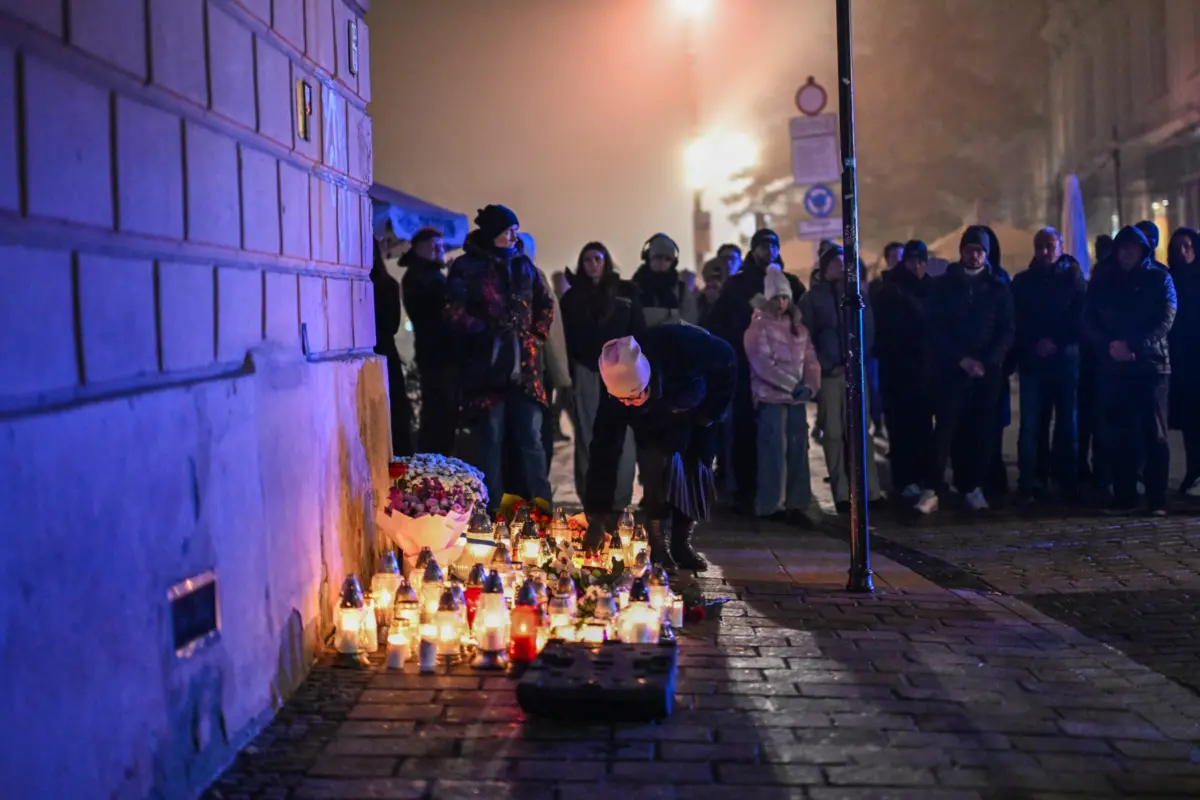
The 24-year-old assailant responsible for the tragic shooting that claimed six lives in central Krakow last week has died in hospital, police announced early Monday morning, bringing a grim conclusion to the immediate aftermath of an incident that profoundly shocked Poland. The gunman, whose identity has not yet been fully released pending the ongoing investigation, had been under intensive medical care since Saturday, when he was shot by police officers and subsequently arrested minutes after opening fire on unsuspecting pedestrians at Krakow’s historic Main Market Square. This development marks a critical juncture in the inquiry into the motives and circumstances surrounding one of the most severe acts of public violence the nation has witnessed in recent memory.
Chronology of a Tragic Weekend
The horrifying events unfolded on Saturday afternoon, shattering the peace of what is typically a bustling and vibrant cultural hub. At approximately 3:45 PM local time, reports began flooding emergency services detailing a man firing indiscriminately from a vehicle into crowds gathered in and around Rynek Główny, Krakow’s iconic main square. Witnesses described scenes of immediate panic and chaos as people scattered, seeking cover in shops, cafes, and alleyways, while others rushed to aid the wounded. The attacker, operating from his car, targeted individuals across several key points within the square, transforming a picturesque European landmark into a scene of terror.
Police units, including anti-terrorist squads and rapid response teams, were swiftly deployed to the scene. Their response was commendably quick, reflecting established protocols for active shooter scenarios. Within minutes of the first shots being reported, officers confronted the assailant. A brief but intense exchange of gunfire ensued, resulting in the attacker being shot and incapacitated. He was then apprehended and immediately transported to a local hospital in critical condition, where he remained until his death was confirmed by authorities early Monday. The rapid police intervention is widely credited with preventing further loss of life, as the assailant was stopped shortly after initiating his attack.
Emergency medical services were also on the scene almost instantly, providing critical care to the numerous victims. Six individuals succumbed to their injuries either at the scene or shortly after being admitted to various hospitals across the city. Their identities have been withheld pending full family notification and the completion of forensic procedures, though local reports indicate a mix of Polish citizens and potentially foreign tourists among the deceased, reflecting Krakow’s international appeal. Several others sustained injuries of varying severity, and medical professionals continue to work tirelessly to ensure their recovery. The city’s hospitals activated their mass casualty protocols, demonstrating the readiness and coordination of emergency services in the face of such an unforeseen catastrophe.
Krakow’s Main Market Square: A Symbol of Culture and Resilience
The choice of Krakow’s Main Market Square as the target underscores the attacker’s apparent intent to maximize both casualties and psychological impact. Rynek Główny is not merely a central plaza; it is the beating heart of Krakow, one of Europe’s largest medieval market squares, and a UNESCO World Heritage site. Surrounded by historic townhouses, the Cloth Hall (Sukiennice), St. Mary’s Basilica, and numerous cafes and restaurants, it is perpetually filled with locals and tourists alike, drawn by its historical significance, architectural beauty, and vibrant atmosphere. On a Saturday afternoon, particularly in pleasant weather, the square would have been at its peak capacity, bustling with families, street performers, and sightseers. The sheer volume of people made it a tragically vulnerable target for an individual intent on causing mass harm.
This square has historically been a place of celebration, commerce, and community, a symbol of Polish resilience and cultural heritage. The attack has, for many, momentarily cast a shadow over this beloved landmark, prompting deep reflection on the vulnerability of open public spaces even in countries with low rates of gun violence.
The Shadow of Ideology: Far-Right Suspicions
In the wake of the attack, the Polish government was quick to suggest a potential ideological motivation behind the violence. In an initial statement released late Saturday, officials indicated that the attacker "may have been inspired by far-right ideology," though they refrained from providing specific details or evidence to support this claim at the time. This assertion immediately broadened the scope of the investigation, shifting focus beyond a purely criminal act to the potentially complex and disturbing landscape of extremist radicalization.
Poland, like many European nations, has contended with the rise of various extremist groups, including those aligned with far-right nationalist and white supremacist ideologies. While large-scale acts of violence attributed to such groups are rare, their presence in online forums and fringe political movements is a known concern for national security agencies. If confirmed, the link to far-right ideology would place the Krakow shooting within a broader, troubling pattern of ideologically motivated attacks seen across the globe, from Christchurch to El Paso and Oslo. These incidents often share characteristics such as the perpetrator’s self-radicalization, the targeting of diverse public spaces, and the dissemination of hateful manifestos or online content. Investigators will undoubtedly be scrutinizing the attacker’s digital footprint, personal associations, and any written or spoken declarations to substantiate the government’s initial assessment. The investigation will also seek to determine if the assailant acted alone or was part of a larger network, even if loosely connected through online communities.
Poland’s Strict Gun Control Landscape
The tragic incident has also brought into sharp focus Poland’s notoriously strict gun control laws, which stand in stark contrast to the ease of firearm acquisition in some other nations. Obtaining a firearm in Poland requires a rigorous and lengthy process, including psychological evaluations, criminal background checks, specific justification for ownership (e.g., sport, hunting, self-defense with demonstrable threat), and extensive training. The number of privately owned firearms per capita in Poland is among the lowest in Europe, contributing to a generally low rate of gun violence.
This context makes the Krakow shooting particularly jarring. The fact that such an attack could occur despite these stringent regulations raises critical questions about how the assailant acquired his weapon. Was it obtained legally through a loophole, illegally on the black market, or was it a converted weapon? The investigation into the origin of the firearm will be a crucial component of understanding the full scope of the incident. It underscores that even in environments with robust gun control, determined individuals can still find ways to inflict harm, often prompting calls for even tighter controls or enhanced intelligence gathering on potential threats.
Official Responses and Calls for Unity
The response from Polish authorities and political leaders has been one of condemnation, sorrow, and a unified call for calm and resilience. President Andrzej Duda expressed his deepest condolences to the victims’ families, emphasizing the nation’s resolve to stand together against hatred and violence. Prime Minister Mateusz Morawiecki echoed these sentiments, stressing that the government would spare no effort in fully investigating the attack and bringing anyone involved to justice. He also reiterated the government’s stance against extremism in all its forms, signaling a potential policy focus on countering radicalization.
The Mayor of Krakow, Jacek Majchrowski, addressed the city in a somber statement, lamenting the loss of life and the violation of the city’s peace. He announced a period of mourning and assured residents and visitors that security measures would be reviewed and potentially enhanced, particularly in crowded public spaces. The city has also initiated support services for the victims’ families and those who witnessed the traumatic events, including psychological counseling and community assistance. Flags across the city have been lowered to half-mast as a mark of respect for the victims.
International reactions have also poured in, with leaders from various countries expressing their solidarity with Poland and condemning the attack. European Union officials highlighted the importance of cooperation in combating terrorism and extremism across borders, acknowledging the shared challenges faced by member states.
Broader Implications and the Path Forward
The death of the assailant, while bringing a degree of closure to the immediate crisis, does not end the profound questions raised by the Krakow shooting. The ongoing investigation will delve deeply into the attacker’s background, seeking to uncover the specific ideological influences, any personal grievances, or mental health issues that may have contributed to his actions. The challenge for authorities will be to piece together a comprehensive narrative that not only explains what happened but also why it happened, providing insights that could inform future preventative measures.
Beyond the immediate criminal investigation, the incident will likely spark a renewed national conversation about public safety, the efficacy of existing security protocols in crowded urban environments, and the insidious threat of ideological extremism. There may be discussions about increased surveillance in public spaces, enhanced intelligence sharing, and more robust programs aimed at countering radicalization, particularly among young individuals susceptible to extremist narratives online.
For Krakow, a city that thrives on tourism and its open, welcoming atmosphere, the attack represents a test of its resilience. While the immediate shock and grief are palpable, the city’s history suggests a capacity to heal and reaffirm its values. The coming weeks and months will see efforts to restore a sense of normalcy and security, reassuring both residents and the millions of visitors who flock to its historic streets each year that Krakow remains a safe and vibrant cultural destination. The memory of the six lives tragically cut short will undoubtedly serve as a stark reminder of the constant vigilance required to protect open societies from those who seek to sow division and fear. The focus now shifts to justice for the victims and a thorough understanding of the darkness that led to such an unthinkable act.
