

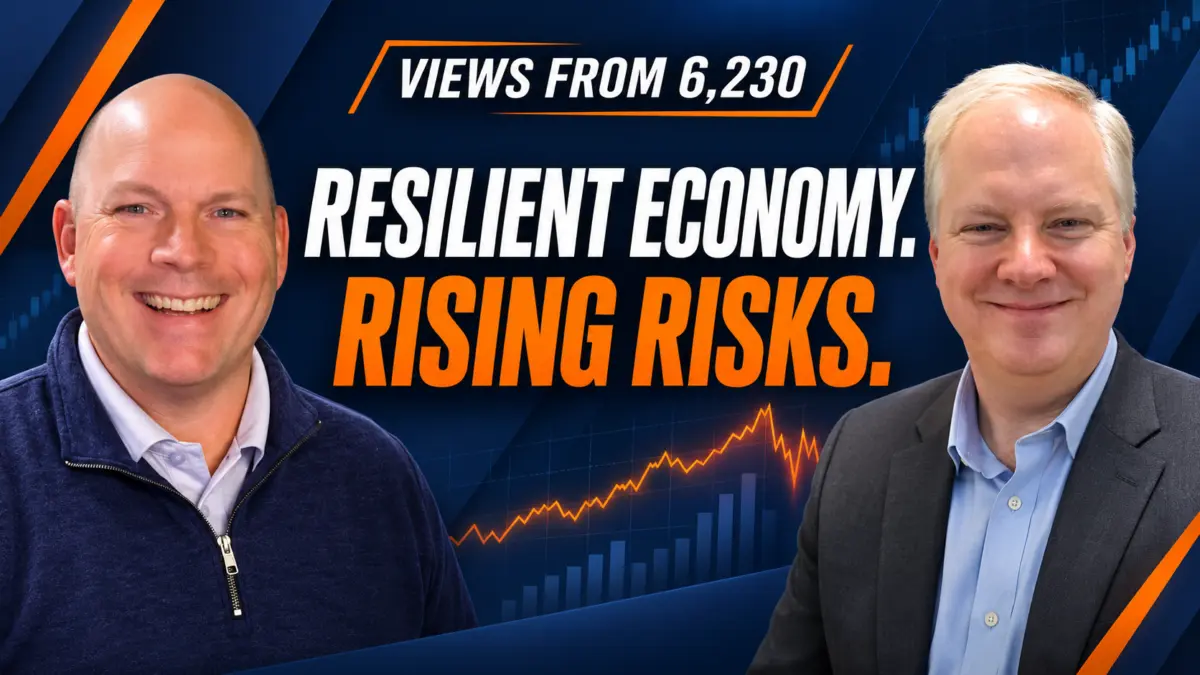
Host Ryan Nauman engaged in a detailed discussion with Rob Haworth, Senior Investment Strategy Director at U.S. Bank Wealth Management, to unpack the firm’s strategic outlook for the investment markets leading into 2026. The conversation, featured on the "Adjusted for Risk" podcast, painted a picture of cautious optimism, emphasizing a need for continued discipline amidst evolving economic conditions and emerging technological trends. Haworth articulated a forward-looking perspective that acknowledges potential headwinds while highlighting underlying strengths that could support market performance.
The core of Haworth’s optimistic yet measured outlook for 2026 is rooted in several key observations about the current economic environment and market valuations. He pointed to the strong performance and earnings expectations for the S&P 500, suggesting that corporate America is demonstrating resilience. Valuations, he noted, appear reasonable when benchmarked against historical 10-year averages, implying that equities are not prohibitively expensive given their earnings potential. Furthermore, Haworth underscored the robustness of consumer spending, which he attributes to a strong labor market. This combination of factors provides a foundational level of support for the broader economy and, by extension, investment markets.
Key Drivers of Market Performance
Haworth elaborated on the specific elements contributing to this constructive view. The sustained strength of the S&P 500 is a significant indicator. As of the discussion, the index has shown a notable upward trend, driven by a combination of technological innovation and the solid earnings reports from a majority of its constituent companies. This performance is not merely speculative but is underpinned by tangible business results. For instance, many large-cap technology firms have reported significant revenue growth, fueled by increasing demand for their products and services.
The assessment of "reasonable valuations" against 10-year averages is crucial for strategic investment decisions. This comparison suggests that the market is not in a speculative bubble territory, allowing room for further appreciation based on economic growth and corporate profitability. Historical data indicates that periods of economic expansion are often accompanied by rising equity markets, and the current valuations suggest this trend could continue.
The resilience of consumer spending is another critical pillar. In the face of various economic uncertainties, consumers have largely continued to spend, albeit with shifts in their purchasing habits. This spending is directly supported by a labor market that, despite some localized challenges, has maintained a relatively low unemployment rate and steady wage growth. This provides consumers with the disposable income necessary to maintain demand for goods and services, which is vital for corporate revenue streams.
Identifying and Mitigating Key Risks
Despite the positive indicators, Haworth was explicit about the significant risks that could derail this constructive outlook. Foremost among these is the potential for inflation to reaccelerate, primarily driven by elevated energy costs. Geopolitical events, supply chain disruptions, and the ongoing global transition to cleaner energy sources can all contribute to volatile and rising energy prices, which have a ripple effect across the entire economy, increasing input costs for businesses and reducing purchasing power for consumers.
Another considerable risk highlighted is the possibility of further interest rate hikes by the Federal Reserve. While the Fed has signaled a pause in its aggressive hiking cycle, persistent inflation or other economic pressures could necessitate additional increases. Higher interest rates can dampen economic activity by making borrowing more expensive for businesses and consumers, potentially leading to reduced investment and spending. This also impacts the cost of capital for companies, potentially affecting their profitability and expansion plans.
The spillover effects of these risks into consumer behavior, the housing market, and rate-sensitive sectors are also a major concern. Elevated inflation and higher interest rates can erode consumer confidence, leading to reduced discretionary spending. The housing market, highly sensitive to interest rates, could experience a slowdown or even a downturn if borrowing costs remain high. Sectors that rely heavily on debt financing or consumer discretionary spending are particularly vulnerable to these macroeconomic shifts.
The Nuance of Consumer Sentiment vs. Spending Behavior
A particularly insightful point raised during the discussion was the disconnect between consumer sentiment and actual consumer spending. Haworth observed that while broad measures of consumer confidence might appear weak, reflecting anxieties about the economy, key discretionary indicators such as travel and dining remain robust. This suggests that consumers, despite their reservations about the future, are still prioritizing certain spending categories. This divergence is important for businesses to understand, as it indicates that demand may be more resilient in specific sectors than overall sentiment might suggest. It implies that consumer behavior is not monolithic and can be influenced by a complex interplay of economic realities and psychological factors.
The AI Revolution: Infrastructure Demands and ROI Challenges
The conversation also delved into the transformative impact of Artificial Intelligence (AI) on the economy. Haworth emphasized the immense scale of infrastructure and power needs that the AI revolution is generating. The development and deployment of AI technologies, particularly large language models and sophisticated machine learning applications, require significant investments in data centers, specialized hardware, and substantial energy consumption. This presents a substantial opportunity for companies involved in these sectors, but also introduces complexities.
A key challenge identified is the need for clearer evidence of Return on Investment (ROI) over the coming quarters for these AI-driven initiatives. While the long-term potential of AI is widely acknowledged, investors and businesses will be looking for tangible proof that these substantial investments are translating into increased productivity, revenue growth, or cost savings. The "AI Capex Supercycle," as it’s sometimes called, needs to demonstrate its financial viability beyond the initial build-out phase. The related article, "Risks to AI Capex from Overestimating Demand," further underscores this point, highlighting the potential for miscalculations in forecasting AI-driven demand, which could lead to inefficient capital allocation.
Portfolio Implications and Strategic Adjustments
Given this nuanced outlook, Haworth provided actionable portfolio implications for investors. The overarching strategy is to maintain equity exposure, but with a strong emphasis on global diversification. This approach aims to capture growth opportunities while mitigating country-specific or regional risks. Diversification across different geographies can help balance out performance, as different economies may be at different stages of their economic cycles or be influenced by varying geopolitical factors.
The discussion also stressed the importance of re-evaluating fixed income allocations in light of higher yields. With interest rates having risen significantly, fixed-income instruments now offer more attractive returns than in recent years. However, investors need to be discerning, considering the duration risk and credit quality of their bond holdings.
Haworth further recommended exploring diversified fixed-income strategies and alternative investments. This includes considering structured credit, which can offer tailored risk-return profiles, and reinsurance, an area that can provide diversification and potentially attractive yields, particularly in periods of heightened risk. Global infrastructure investments were also highlighted as a potentially valuable component of a diversified portfolio, given the ongoing need for upgrades and new developments, including those driven by AI.
Broader Economic Context and Chronology
The period leading up to the 2026 outlook has been characterized by a complex interplay of post-pandemic recovery, supply chain recalibrations, geopolitical tensions, and aggressive monetary policy tightening. In 2021 and early 2022, a surge in demand, coupled with supply chain bottlenecks, fueled significant inflation. This prompted central banks globally, including the Federal Reserve, to embark on a rapid series of interest rate hikes starting in 2022.
The initial stages of these rate hikes were met with concerns about a potential recession. However, the labor market proved more resilient than many anticipated, and consumer spending, while showing some signs of moderation, did not collapse. The technology sector, a significant driver of the S&P 500, experienced a period of adjustment but has since shown signs of recovery, partly fueled by the burgeoning AI narrative.
The current juncture, as discussed by Haworth, represents a transition phase. Inflation has shown signs of moderating from its peak, but remains a concern, particularly with energy price volatility. The Fed’s stance has shifted towards a more data-dependent approach, balancing the need to control inflation with the desire to avoid overtightening and triggering a severe economic downturn. The 2026 outlook, therefore, is built on the assumption that these competing forces will lead to a relatively stable, albeit potentially slower, growth environment, punctuated by specific sector opportunities and risks.
Supporting Data and Analysis
To substantiate the outlook, one could refer to various economic indicators. For instance, the Consumer Price Index (CPI) data, which has shown a general downtrend from its highs in 2022, would be a key metric. However, the Producer Price Index (PPI) and commodity prices, especially for energy and raw materials, would provide insight into future inflationary pressures. Labor market data, including unemployment rates, wage growth, and job openings, would continue to be closely watched to assess the health of consumer spending.
Corporate earnings reports from major S&P 500 companies, particularly those in technology, consumer discretionary, and energy sectors, would offer direct evidence of the trends discussed. For example, analyses of capital expenditure announcements related to AI infrastructure development, such as investments in chip manufacturing or data center expansion, would provide concrete data points for the AI Capex discussion.
Official Responses and Market Reactions (Inferred)
While no direct official statements from U.S. Bank Wealth Management beyond this interview were provided, the discussion itself represents their official stance on market strategy. The reactions of market participants to such outlooks are typically reflected in investment flows, asset allocation shifts, and analyst commentary. If U.S. Bank Wealth Management were to formally publish this outlook, it would likely be met with interest from institutional and retail investors seeking guidance. Analysts from other financial institutions might offer their own interpretations or counterpoints, contributing to the broader market discourse.
The implications of a "constructive but disciplined" approach suggest that investors should be prepared for moderate growth rather than a boom cycle. This implies a preference for quality assets, companies with strong balance sheets, and diversified portfolios that can weather potential downturns. The emphasis on discipline means avoiding excessive risk-taking and maintaining a long-term perspective.
Broader Impact and Implications
The outlook presented has several broader implications for the financial industry and the economy. For wealth managers and asset managers, understanding these nuances is critical for developing effective client strategies. The need for compelling market narratives, as highlighted by the promotional material for Nauman Strategic Partners, underscores the importance of clear communication in navigating complex market environments.
The focus on AI’s infrastructure demands and ROI challenges points to a significant shift in investment priorities. Companies that can effectively leverage AI and demonstrate its economic benefits are likely to attract significant capital. Conversely, those that lag in AI adoption or fail to prove its value may face competitive disadvantages.
The potential for energy price volatility and further Fed rate hikes also suggests that sectors sensitive to these factors, such as utilities, real estate, and heavily indebted companies, will require careful consideration. The recommendation for diversification into alternatives like structured credit and reinsurance signals a growing recognition of the need for non-traditional asset classes to enhance portfolio resilience and returns.
In conclusion, the 2026 outlook presented by Rob Haworth offers a sophisticated view of the investment landscape. It acknowledges the inherent uncertainties and risks while highlighting the underlying strengths that support a cautiously optimistic trajectory. The emphasis on discipline, diversification, and a nuanced understanding of economic indicators like consumer behavior and technological advancements, will be paramount for investors seeking to navigate the markets effectively in the coming years. The conversation underscores that while opportunities exist, particularly in areas like AI, a strategic and well-informed approach is essential for achieving sustainable investment success.
