

The Canadian federal government, in a strategic partnership with the Federation of Canadian Municipalities (FCM), has finalized an investment of $67.8 million dedicated to 165 urban forestry projects across the country. This funding represents a critical component of the broader Growing Canada’s Community Canopies initiative, a $291 million program managed through the Green Municipal Fund. The initiative’s primary objective is the planting of at least 1.2 million trees by 2031, signaling a fundamental shift in how municipal leaders view nature—not as an aesthetic luxury, but as vital "green infrastructure" capable of mitigating the escalating risks of the climate crisis.
The announcement comes at a pivotal moment for Canadian urban planning. According to Environment and Climate Change Canada’s 2026 Canada’s Changing Climate Report, average temperatures across the nation have already risen by 2°C, a rate roughly double the global average. As these temperatures continue to climb, cities face the dual challenge of protecting public health during extreme heat events while reducing the energy demands of cooling systems. The new federal investment targets these issues directly, with $4.9 million earmarked for Vancouver to expand street tree coverage in heat-vulnerable neighborhoods and $2.2 million allocated to the City of Mississauga for the reforestation of the Cooksville Creek watershed.
The Economic and Environmental Case for Urban Forests
The transition from viewing trees as "ornamental" to "functional" is backed by rigorous data. Berry Vrbanovic, the Mayor of Kitchener, Ontario, and chair of the Green Municipal Fund’s council, emphasizes that trees offer a multi-functional return on investment that traditional "gray infrastructure"—such as concrete drainage systems or cooling centers—cannot match. While a storm drain only manages water, a tree provides carbon sequestration, air filtration, biodiversity support, and localized cooling simultaneously.
Supporting this perspective, a recent study from the University of Ottawa provided empirical evidence of the economic benefits of the urban canopy. By synthesizing high-resolution aerial imagery with electricity consumption data from nearly 2,000 homes, researchers determined that trees located within 12.5 meters of a residence were associated with a 2.9% reduction in electricity use during the summer months. This reduction is primarily attributed to the shading of buildings and the process of evapotranspiration, which cools the surrounding air. When scaled across an entire municipality, these marginal gains represent millions of dollars in energy savings and a significant reduction in the strain on provincial power grids.
Global Precedents: Medellín’s Green Corridors
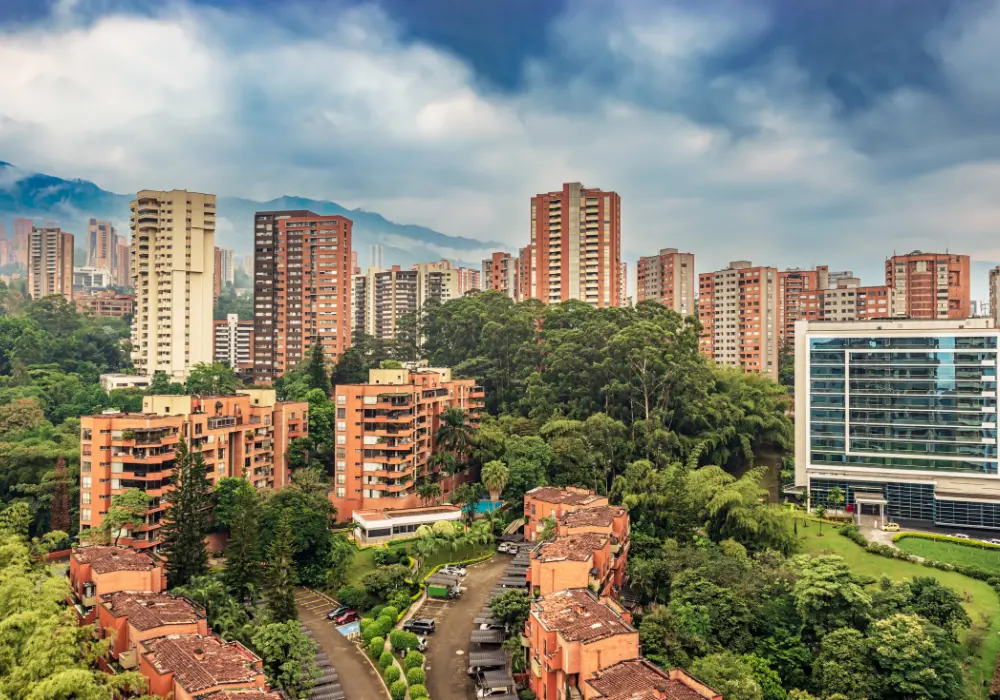
Canada’s initiative mirrors a global trend where major metropolitan areas are leveraging nature to combat the "urban heat island" effect—a phenomenon where pavement and buildings absorb and re-emit the sun’s heat more than natural landscapes. Medellín, Colombia, stands as a primary example of this transformation. After decades of rapid, unchecked urbanization that led to soaring city temperatures, Medellín launched a network of 30 "Green Corridors" in 2016.
This $16.3 million project involved planting thousands of trees and shrubs along major thoroughfares and former industrial sites, creating a connected web of greenery covering 1.3 million square metres. The results have been measurable and immediate: the corridors have already reduced ambient temperatures in their vicinity by 2°C. Climate models suggest that as these ecosystems mature over the next two decades, temperatures could drop by an additional 4°C to 5°C. In recognition of these efforts, Medellín was inducted into the Tree Cities of the World program in 2025, an international distinction supported by the United Nations Food and Agriculture Organization and the Arbor Day Foundation.
Technological Innovation: The Stockholm Model
While planting trees is the first step, ensuring their survival in harsh urban environments requires technological innovation. Stockholm, Sweden, has emerged as a leader in "technical" urban forestry. In its 2025 budget, the city allocated 10 million krona (approximately $1 million USD) specifically for tree planting, but the focus is as much on the soil as it is on the saplings.
Stockholm has pioneered a specialized planting-bed system designed to overcome the challenges of compacted urban soil and paved surfaces, which often suffocate tree roots. Known as the "Stockholm Model," this method utilizes a combination of structural stone and biochar—a carbon-rich form of charcoal made from organic waste. The stones provide a stable structure that prevents soil compaction from traffic, while the biochar retains water and nutrients and facilitates carbon sequestration. This system allows rainwater to infiltrate the ground rather than overwhelming city sewers, turning trees into active participants in stormwater management and climate adaptation.
Financial Commitment and Scale: Sydney and Singapore
The scale of investment in urban forestry is also reaching unprecedented levels in the Asia-Pacific region. The City of Sydney, Australia, has integrated its canopy goals into the 2021 Greening Sydney Strategy, committing $377 million AUD (approximately $262 million USD) to parks, green roofs, and urban forests. Mayor Clover Moore has articulated a clear vision: trees are essential infrastructure. The city’s data suggests that extensive canopy cover can reduce ground-level temperatures by up to 10°C during peak summer periods, a vital statistic for a city increasingly prone to extreme heatwaves.
Similarly, Singapore has evolved its national identity from a "Garden City" to a "City in Nature." The city-state’s National Parks Board manages approximately six million of the island’s seven million trees. Under the "OneMillionTrees" movement, Singapore aims to plant an additional million trees by 2030, with a specific focus on industrial zones where heat retention is highest. Singapore’s approach is unique in its level of civic engagement; through the Plant-A-Tree Programme, residents and corporations can donate $300 SGD ($234 USD) to support the long-term maintenance of a specific tree, fostering a sense of public ownership over the urban forest.
Equity and the "Green Divide" in New York City
In the United States, New York City’s experience highlights the intersection of urban forestry and social equity. The MillionTreesNYC initiative, launched in 2007, successfully reached its goal of planting one million trees by 2017. Analysis by the U.S. Forest Service estimates that these trees save New Yorkers $17.1 million annually in residential energy costs.
However, the distribution of this canopy remains uneven. While some neighborhoods enjoy over 30% coverage, historically disadvantaged areas, particularly in Eastern Queens, often have less than 10% canopy cover. This "green divide" has prompted local leaders to frame urban forestry as a matter of environmental justice. Mayor Zohran Mamdani has advocated for treating the growth of the urban forest as a "shared civic project" that prioritizes resilience and health for all residents, regardless of zip code.
Chronology of Urban Forestry Evolution
The shift toward the current global state of urban forestry can be traced through several key milestones:
- 2007: New York City launches MillionTreesNYC, setting a precedent for large-scale municipal tree-planting goals.
- 2016: Medellín initiates its Green Corridors project, proving that nature-based solutions can drastically reduce temperatures in tropical urban environments.
- 2021: Sydney releases the Greening Sydney Strategy, earmarking hundreds of millions of dollars for green infrastructure.
- 2024: The Canadian government and FCM launch the $291 million Growing Canada’s Community Canopies initiative.
- 2025: Stockholm integrates biochar technology into its municipal budget to ensure the longevity of its urban canopy.
Implications for the Future of Urban Planning
The $67.8 million investment in Canada is more than a simple environmental grant; it is an acknowledgement that the "built environment" of the future must include biological components. As cities continue to densify, the competition for space between housing, transportation, and nature will intensify. The projects in Vancouver, Mississauga, and beyond suggest that the most resilient cities of the 21st century will be those that successfully integrate the two.
By treating trees as assets with measurable financial and health benefits, municipalities are creating a new fiscal framework for climate adaptation. The challenge moving forward will be the long-term maintenance of these assets. Unlike concrete infrastructure, trees require years of care to reach their full "service capacity." The success of Canada’s initiative—and those in Sydney, Stockholm, and Singapore—will ultimately be measured not by the number of saplings put in the ground today, but by the health of the canopy decades from now, when the impacts of climate change are expected to be most severe.
