

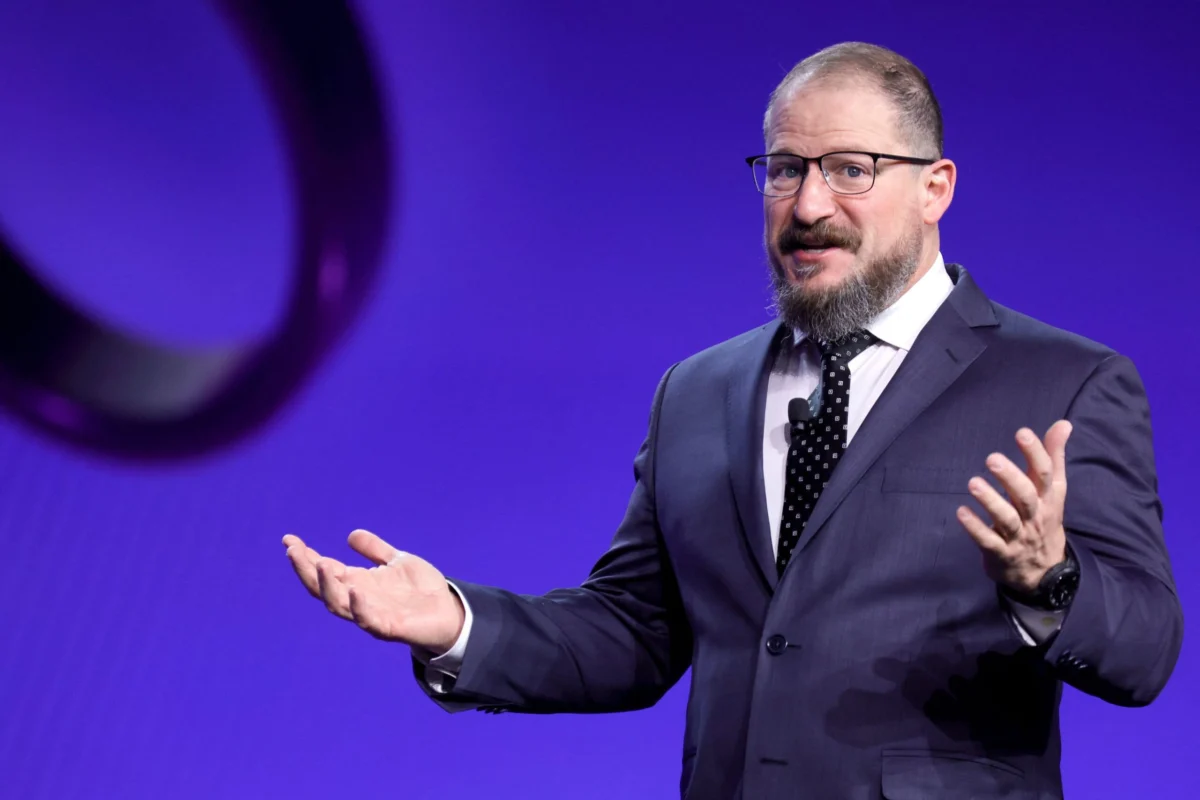
The traditional landscape of mobile computing, dominated for nearly two decades by the touchscreen smartphone and the siloed application model, is on the precipice of a fundamental transformation. According to Cristiano Amon, the President and CEO of Qualcomm, the next era of consumer technology will be defined not by the devices we carry in our pockets, but by "AI agents" that live within wearable hardware. Speaking on "The Tech Download" podcast, Amon detailed a vision where the smartphone’s central role is challenged by a new class of devices—most notably smart glasses—that leverage artificial intelligence to interact with the world in real-time, effectively replacing the manual navigation of apps with seamless, cross-platform automation.
In Amon’s vision, the friction of modern digital life—unlocking a phone, searching for an app, entering data, and switching between services—will be smoothed over by sophisticated digital assistants. He illustrated this through a scenario involving a simple restaurant reservation. Currently, a user must navigate a review app to find a location, a booking app to secure a table, a payment app for a deposit, and an email client for confirmation. In the agentic future, a user would simply speak to their glasses. The AI agent would coordinate across these various services autonomously, processing the request and delivering a confirmation without the user ever interacting with a traditional interface. While Amon clarified that "apps are not dead," he emphasized that their delivery mechanism is shifting. "Those agents are going to be the new app," he noted, suggesting a future where the underlying software becomes a background utility for the AI to command.
The Shift from Handheld to Wearable Hardware
Qualcomm, a company whose processors power the vast majority of the world’s premium Android smartphones, is positioning itself at the center of this hardware evolution. The company is currently collaborating on more than 40 different designs for AI-centric gadgets, ranging from smart jewelry and earbuds equipped with cameras to pins and watches. However, Amon remains most bullish on smart glasses. He predicts that this form factor could eventually achieve a market scale comparable to the smartphone, which saw over 1.2 billion units shipped globally last year.
The logic behind the push for wearables is rooted in "contextual awareness." Unlike a smartphone that remains in a pocket or bag, a pair of smart glasses with built-in cameras and sensors sees what the user sees. This allows the AI agent to provide proactive assistance based on the user’s environment. Amon argues that for an AI to be truly effective, it must be "something that you wear, something that is with you all the time, something that can see the world around you." This constant presence allows the agent to understand context, making the interaction feel less like a search query and more like a conversation with a knowledgeable companion.
Geopolitical and Regulatory Frameworks for AI
The rapid advancement of these AI models has not only sparked a hardware race but also a significant geopolitical dialogue regarding safety and standards. At a recent G7 meeting, which included heads of state and prominent tech figures like President Donald Trump, the CEOs of Anthropic and Google DeepMind—Dario Amodei and Demis Hassabis, respectively—called for a U.S.-led coalition to shape the rules of the AI industry.
Sources familiar with the discussions indicate that the industry’s leaders are seeking a unified framework to govern the development of "frontier models." The goal of such a coalition would be to establish global standards for AI safety and security, ensuring that as agents become more pervasive and autonomous, they do not pose systemic risks. This move signals a growing realization within the tech sector that the "move fast and break things" era of software development may not be suitable for AI agents that have the power to execute financial transactions and manage personal data across the open web.
Strategic Shifts in the Semiconductor Industry
As the demand for AI-capable hardware surges, the semiconductor industry is undergoing a period of intense consolidation and strategic realignment. Intel, a long-time giant in the PC and server markets, recently saw its stock surge following an announcement by President Trump that the company would partner with Apple on U.S.-based chip design. This partnership represents a significant pivot for Apple, which has historically relied on TSMC for its manufacturing needs, and a lifeline for Intel as it seeks to regain its footing in the high-end foundry business.
Simultaneously, Nvidia, the current leader in AI processing power, is moving to solidify its financial position. Sources report that Nvidia is aiming to raise at least $20 billion in debt through its first bond sale since the AI boom began. The capital is expected to be used for massive research and development efforts and the expansion of its data center infrastructure. This move underscores the capital-intensive nature of the AI race; as companies like Qualcomm focus on the "edge" (the devices in our hands and on our faces), Nvidia is doubling down on the "cloud" infrastructure required to train the massive models that power those devices.
Challenges in the Path to Autonomy
Despite the optimism surrounding AI agents and hardware, the path to a fully automated world remains fraught with technical and safety hurdles. Waymo, the autonomous driving subsidiary of Alphabet, recently announced a voluntary recall of nearly 3,900 robotaxis in the United States. The recall was prompted by software issues that caused vehicles to enter freeway construction zones inappropriately. While no major injuries were reported, the incident highlights the difficulty of teaching AI to navigate complex, unpredictable human environments—a challenge that also applies to the AI agents envisioned by Amon.
Furthermore, the industry is seeing internal divisions regarding the viability of current AI trajectories. Yann LeCun, the founder of AMI Labs and a pioneer in deep learning, recently criticized Elon Musk’s xAI, labeling it a "failure" that would be unable to compete with the industry’s leading edge. LeCun warned of a "big bubble explosion" in the AI sector, suggesting that the current hype surrounding generative AI may be outstripping its actual utility and economic sustainability. This debate highlights the tension between the visionaries, like Amon and Musk, and the researchers who are concerned with the underlying limitations of current neural network architectures.
The Role of Corporate Leadership and the SpaceX IPO
The discussion of vision versus execution is perhaps best exemplified by the recent developments at SpaceX. Following the company’s initial public offering on June 12, 2026, market analysts have focused on the leadership of President and COO Gwynne Shotwell. While Elon Musk provides the overarching vision for Mars colonization and global satellite internet, former employees and industry insiders credit Shotwell with the operational discipline required to lead a 22,000-person organization and deliver on those promises.
"While Elon’s setting the vision, she’s the one making sure it gets delivered," said Nathan Silvernail, a former SpaceX engineer. This balance of visionary leadership and operational excellence is a blueprint that many AI companies are attempting to follow. For Qualcomm, the challenge will be translating Amon’s vision of smart glasses and AI agents into a reliable, privacy-conscious product that consumers are willing to wear every day.
Implications for the Future Device Landscape
The transition toward an "agent-first" world raises critical questions about market dominance and consumer privacy. For the past decade, Apple and Samsung have maintained a duopoly over the premium device market. However, if the "agent" becomes more important than the "phone," it creates an opening for new entrants. Companies that can build the most intuitive and capable AI agents may find themselves in a position to challenge the established hardware giants.
Privacy remains the most significant hurdle. For an AI agent to function as Amon describes, it requires access to a user’s emails, payment methods, location history, and real-time visual data. Striking the balance between this high-level functionality and the protection of personal data will be the defining challenge of the next five years. As Qualcomm moves forward with its 40+ AI gadget designs, the success of these devices will likely depend less on the power of the chip and more on the trust the consumer has in the agent living within it.
The shift envisioned by Cristiano Amon suggests that we are moving toward a "post-smartphone" world where technology becomes more invisible and more integrated into our physical presence. Whether through glasses, pins, or jewelry, the goal is a more natural interaction with the digital world—one where the agent does the heavy lifting, and the human simply lives their life. As the industry moves from the drawing board to the production line, the next few years will determine if the AI agent is indeed the "new app" or if the smartphone’s reign is more resilient than the visionaries predict.
