

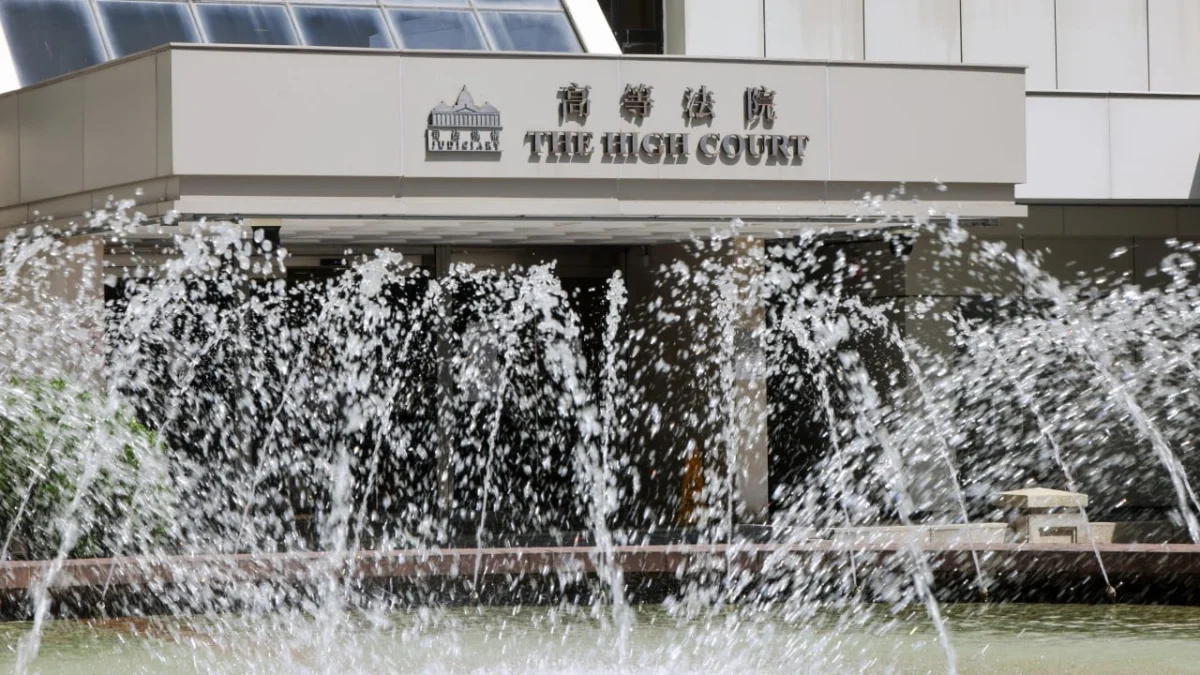
The legal proceedings within Hong Kong’s High Court have brought to light a complex and distressing case involving allegations of intra-familial sexual abuse, centering on the fundamental question of a minor’s capacity to distinguish between right and wrong. Senior Public Prosecutor Karen Ng Ka-yuet, representing the government, asserted on Thursday that the defendant, who is now 24 years old, was fully cognizant of the gravity of his actions when he allegedly engaged in a series of sexual acts with his younger sister roughly a decade ago. At the time of the purported offenses, the defendant is believed to have been between the ages of 11 and 14, while his sister was three years his junior. The prosecution’s case rests heavily on the argument that despite his youth at the time, the defendant understood that his behavior was "seriously wrong" and constituted a violation of both social norms and legal boundaries.
The defendant has formally pleaded not guilty to four counts of incest and three counts of indecent conduct toward a child under the age of 16. These charges stem from a series of five alleged incidents that occurred between 2013 and 2016 at the family’s residence in Sha Tau Kok, a rural town located in the northernmost part of the New Territories. The case, which remained hidden within the family for years, only came to the attention of the authorities in 2021 when the sister, then 20 years old, filed a formal report with the Hong Kong Police Force. As the trial progresses, the High Court is tasked with navigating the nuances of juvenile awareness and the legal definitions of sexual misconduct within a domestic setting.
A Detailed Chronology of the Alleged Offenses and Legal Action
The timeline of this case spans over a decade, beginning in the mid-2010s and culminating in the current High Court trial. The alleged incidents took place during a formative period for both siblings, within the privacy of their home in Sha Tau Kok.
2013–2016: The Period of Alleged Abuse
During this three-year window, the prosecution alleges that five distinct incidents occurred. The defendant was an adolescent, aged between 11 and 14, while the victim was a child aged between 8 and 11. Due to the significant passage of time, the specific dates of these events remain unspecified in the indictment, though they are believed to have occurred only weeks apart in some instances.
2016–2021: The Period of Silence
Following the conclusion of the alleged acts in 2016, the matter was not reported to the authorities for five years. This period of silence is not uncommon in cases of intra-familial abuse, where victims often grapple with feelings of confusion, guilt, or fear of dismantling the family unit.
2021: The Formal Police Report
The victim, having reached adulthood at age 20, sought legal recourse by filing a report with the police. This prompted an investigation by the Child Abuse Investigation Unit, leading to the eventual arrest and charging of her older brother.
2024: High Court Trial
The case reached the High Court this week. The prosecution opened its case by emphasizing the defendant’s state of mind during the time of the offenses. A critical element of the trial is the defendant’s previous admissions made during police interviews, which form the cornerstone of the prosecution’s evidence.
Legal Framework: Proving Awareness in Juvenile Defendants
A central pillar of the prosecution’s argument is the defendant’s level of maturity and moral understanding at the time of the acts. In Hong Kong law, the age of criminal responsibility is 10 years old. However, for defendants who were between the ages of 10 and 14 at the time of an offense, the prosecution often has to address the common law doctrine of doli incapax—the rebuttable presumption that a child is "incapable of evil."
To secure a conviction, the prosecution must demonstrate that the child did not merely act out of "mischievousness" but possessed the "mischievous discretion" to know that the act was seriously wrong. Senior Public Prosecutor Karen Ng Ka-yuet emphasized that the defendant’s own statements suggest he was aware that his conduct with his sister was "inappropriate" and "seriously wrong." By focusing on this awareness, the prosecution aims to bridge the gap between the defendant’s young age at the time and the legal requirements for criminal intent.
The charges are meticulously partitioned. The four counts of incest pertain specifically to sexual intercourse or acts defined under the Crimes Ordinance as incestuous due to the biological relationship between the parties. The three counts of indecent conduct involve other forms of sexual behavior that do not meet the legal definition of incest but are nonetheless classified as indecent assault or conduct toward a minor. Ng clarified that these charges were separated to reflect the distinct nature of the various sexual acts described in the defendant’s admissions.
Supporting Data: Sexual Violence and Intra-Familial Abuse in Hong Kong
This case highlights a broader societal issue within the Hong Kong Special Administrative Region (HKSAR). Statistics from the Social Welfare Department (SWD) and the Hong Kong Police Force indicate that while public awareness of sexual violence has grown, intra-familial abuse remains a significantly underreported phenomenon.
According to the SWD’s "Statistics on Child Abuse Cases," there has been a fluctuating but concerning trend in reported sexual abuse involving minors. In recent years, the number of newly reported child abuse cases has often exceeded 1,000 annually, with sexual abuse constituting a substantial percentage of these reports. Specifically, data suggests that a significant portion of sexual abuse cases involving children are perpetrated by someone known to the victim, including family members or household acquaintances.
Furthermore, research into Sibling Sexual Abuse (SSA) suggests it is perhaps the most common yet least reported form of incest. Experts note that SSA is often dismissed by parents as "sexual curiosity" or "exploration," which can lead to prolonged trauma for the victim and a lack of accountability for the perpetrator. The 2021 report by the victim in this case aligns with global trends where survivors of sibling abuse often wait until they are financially independent or psychologically removed from the family home before seeking justice.
The Role of Evidence and the Absence of Victim Testimony
One of the more striking aspects of this trial is the prosecution’s decision not to call the sister to testify in court. In many sexual assault cases, the victim’s testimony is the primary evidence. However, in this instance, the prosecution is relying on the defendant’s own admissions made during the investigative phase.
This strategy is often employed to protect the victim from the secondary trauma of cross-examination, especially in cases involving sensitive family dynamics. Under Hong Kong’s Evidence Ordinance, recorded interviews and prior statements can be admitted under specific conditions. By utilizing the defendant’s admissions, the prosecution seeks to prove the facts of the case through the defendant’s own words, which reportedly detail the nature of the acts and his understanding of their wrongfulness at the time.
The defense, having entered a plea of not guilty, is expected to challenge the voluntariness or the interpretation of these admissions. They may also argue that a child of 11 to 14 lacks the psychological development to truly comprehend the long-term legal and moral implications of such acts, regardless of what they might have said in a police interview years later.
Broader Implications and Social Context
The location of the alleged crimes, Sha Tau Kok, adds a layer of social context to the case. As a closed-border town with a unique history and a relatively tight-knit, isolated community, the social pressures to maintain family "honor" or "face" can be immense. Such environments can sometimes contribute to the delayed reporting of domestic crimes, as individuals may fear social ostracization or the collapse of their family structure.
The trial also underscores the ongoing debate regarding the "Age of Consent" and the "Age of Criminal Responsibility" in Hong Kong. While the legal age of responsibility is 10, advocates for juvenile justice reform often argue that children in their early teens should be handled through rehabilitative systems rather than high-court criminal proceedings. Conversely, advocates for victims’ rights argue that the severity of the harm caused by sexual abuse necessitates formal legal accountability, regardless of the perpetrator’s age at the time of the offense.
The outcome of this case will likely be watched closely by legal experts and social workers. It serves as a litmus test for how the Hong Kong judiciary balances the protection of victims with the complexities of prosecuting individuals for actions committed during their childhood.
Conclusion and Future Proceedings
As the trial continues in the High Court, the focus will remain on the admissibility and weight of the defendant’s prior statements. The court must decide if the evidence presented by Prosecutor Karen Ng Ka-yuet sufficiently proves beyond a reasonable doubt that the defendant committed the acts and, crucially, that he possessed the requisite mental state to be held criminally liable for incest and indecent conduct.
The case serves as a somber reminder of the long-lasting impact of intra-familial abuse and the courage required for survivors to come forward years after the fact. Regardless of the verdict, the proceedings have already highlighted the critical need for robust child protection frameworks and the importance of addressing sexual education and boundaries within the family unit to prevent such tragedies from occurring.
The High Court is expected to hear further arguments regarding the defendant’s state of mind and the specific circumstances of the household in Sha Tau Kok during the period in question. A verdict will be delivered following the conclusion of the evidence and closing submissions from both the prosecution and the defense.
