

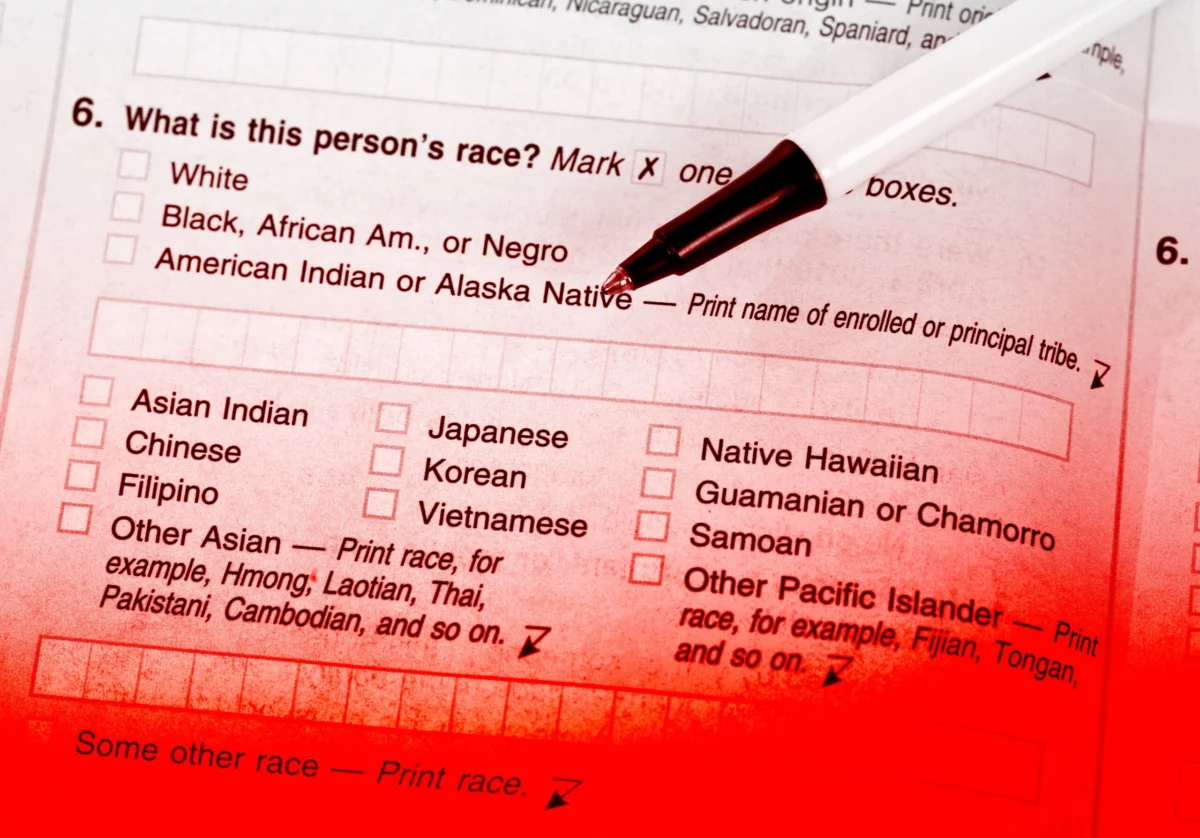
The United States Department of Commerce is currently circulating a proposed rule that would fundamentally overhaul the 2030 decennial census by ceasing the collection of demographic data regarding racial minorities and LGBTQ+ individuals, while simultaneously excluding undocumented immigrants from the official apportionment count. According to internal documents and memos viewed by WIRED, the proposed changes represent a significant departure from decades of established census methodology and constitutional interpretation. If implemented, the rule would not only alter the way the federal government understands the American population but would also trigger a massive redistribution of political power and federal resources across the country.
The proposed rule, which is currently undergoing review across various federal agencies, suggests that the elimination of questions regarding race, ethnicity, and sexual orientation is necessary to "protect from any distortions created from the inclusion of personal questions." Furthermore, the internal memo takes a hardline stance on the definition of the American populace, stating that "illegal aliens (among others) should not be included in the apportionment count" because they are "not true inhabitants, members of the body politics [sic], or persons with ‘usual residence’ in the United States." This language signals a direct challenge to the 14th Amendment’s requirement that representatives be apportioned among the states according to their "respective numbers, counting the whole number of persons in each State."
Historical Context and the Fight Over the Citizenship Question
The effort to alter the census is not a new phenomenon but rather the latest development in a long-running political and legal battle over the survey’s scope. During the first Trump administration, a high-profile attempt was made to add a citizenship question to the 2020 census. Proponents argued the data was necessary to enforce the Voting Rights Act, but critics contended the question was designed to depress response rates in immigrant communities, thereby shifting political power toward whiter, more conservative districts.
In 2019, the United States Supreme Court blocked the addition of the citizenship question in a 5-4 ruling. Chief Justice John Roberts, joining the Court’s liberal wing at the time, wrote that the administration’s justification for the question appeared "contrived." However, the ruling did not declare citizenship questions inherently unconstitutional; rather, it found that the Department of Commerce had failed to provide a reasoned explanation for its implementation under the Administrative Procedure Act. The current proposed rule appears to be an attempt to re-litigate this issue with a new set of justifications, potentially aiming to bypass previous legal roadblocks by framing the exclusion of undocumented immigrants as a matter of defining "usual residence."
Chronology of Recent Census Developments
The trajectory toward the 2030 census has been marked by increasing legislative and executive friction. The following timeline outlines the key events leading to the current proposed rule:
- June 2019: The Supreme Court blocks the 2020 citizenship question, citing a "contrived" justification by the Department of Commerce.
- January 2021: Upon taking office, the Biden administration issues an executive order affirming that the census must count all residents, regardless of immigration status, for the purposes of apportionment.
- August 2024: Republican Representative August Pfluger introduces the "Clarifying Objectives to Provide Reliable Data Act" (COUNT Act), aimed at reintroducing a citizenship question and ensuring only citizens are counted for apportionment.
- October 2024: Senator Jim Banks of Indiana sends a formal letter to Commerce Secretary Howard Lutnick, arguing that the Constitution’s framers intended the census to cover only "lawful inhabitants."
- Early 2025: The Supreme Court issues a series of rulings that further dismantle protections within the Voting Rights Act, reducing the legal requirements for states to prove that redistricting maps do not discriminate against minorities.
- Mid-2025: Internal memos from the Department of Commerce begin circulating the proposed rule to eliminate race and LGBTQ+ data and exclude undocumented immigrants from the 2030 count.
The Impact on Federal Funding and Tribal Entities
The census is far more than a simple population count; it is the primary data source used to distribute more than $1.5 trillion in federal funding annually. Programs ranging from Medicaid and the Supplemental Nutrition Assistance Program (SNAP) to highway planning and school lunch programs rely on precise census data to allocate resources.
An employee at the Department of Health and Human Services (HHS), speaking on the condition of anonymity, emphasized the dire consequences of these proposed changes. "Many HHS programs use Census data to appropriate funding," the employee noted. "Removing undocumented individuals from the census will cause localities with high numbers of those populations to lose critical federal funding." Because undocumented immigrants still utilize local infrastructure, emergency rooms, and schools, an undercount would leave local governments to foot the bill for services that are currently subsidized by federal dollars.
The impact would be particularly acute for Native American and Alaska Native populations. Currently, specialized grants and tribal entity determinations are often tied to the "American Indian or Alaska Native" category on the census. By removing racial categories, the federal government would effectively blind itself to the specific needs of tribal nations, potentially leading to the dissolution of set-aside funding that supports healthcare, education, and infrastructure on reservations.
Political Representation and the Voting Rights Act
Beyond the financial implications, the removal of race and ethnicity data would have a transformative effect on American democracy. Under the "one person, one vote" principle, congressional districts must be drawn with roughly equal populations. However, the Voting Rights Act (VRA) also requires that these districts do not dilute the voting power of minority groups.
Danah Boyd, a professor at Cornell University and a prominent census scholar, warns that eliminating this data would make it nearly impossible to enforce the VRA. "If we don’t know certain things, we can’t challenge them politically," Boyd stated. She explained that without data on where specific minority populations live, civil rights groups and the Department of Justice would lack the evidence needed to challenge gerrymandered maps that marginalize racial or ethnic groups. "If we don’t know that certain peoples live in a particular geography, we can’t say, ‘Oh my gosh, here’s some massive inequality.’"
The exclusion of undocumented immigrants from the apportionment count would also shift the balance of power in the House of Representatives. States with large immigrant populations—such as California, Texas, Florida, and New York—could lose multiple congressional seats, which would then be reapportioned to states with smaller immigrant populations. This would fundamentally alter the Electoral College map, favoring the political party with more strength in rural, less diverse states.
Methodological Concerns and "Differential Privacy"
The proposed rule also touches on a technical debate regarding "differential privacy." This is a statistical method adopted by the Census Bureau to protect the anonymity of respondents by adding "noise" to the data. This prevents third parties from using high-powered computing to re-identify individuals based on their census answers.
Conservative critics and some members of the Trump administration have attacked differential privacy, claiming it introduces inaccuracies that skew the results. By proposing to eliminate "personal questions" entirely, the Commerce Department memo suggests a move away from complex privacy-preserving mathematics toward a more stripped-down, less descriptive survey. However, experts argue that a census that lacks demographic detail is inherently less accurate and less useful for the thousands of businesses, researchers, and local planners who rely on the data for market analysis and urban development.
Legal and Constitutional Challenges Ahead
The proposal to exclude undocumented immigrants from the apportionment count faces significant constitutional hurdles. Article I, Section 2 of the Constitution, as amended by the 14th Amendment, specifies that apportionment is based on the "whole number of persons." Historically, the term "persons" has been interpreted by the courts and the Census Bureau to include all residents, regardless of their legal status or citizenship.
The language in the leaked memo—referring to undocumented immigrants as "not true inhabitants"—attempts to redefine the constitutional term "inhabitant." Legal scholars anticipate that if this rule is formalized, it will face immediate litigation from a coalition of states, civil rights organizations, and municipal governments. The outcome of such a case would likely depend on the current Supreme Court’s interpretation of "originalism" and whether the justices believe the framers intended to exclude non-citizens from the political community.
Broader Implications for the 2030 Census
The timeline for the 2030 census is already tight. Historically, the Census Bureau must finalize its questions at least two to three years in advance of the count to allow for rigorous testing and "dress rehearsals." Any radical shift in the questionnaire at this stage could jeopardize the operational success of the entire survey.
If the 2030 census proceeds without race, ethnicity, or sexual orientation data, the United States will become an outlier among developed nations, many of which are increasing their data collection to better address social inequities and demographic shifts. The absence of this data would create a "statistical dark age," where the nuances of American society—from the growth of the Latino community to the aging of the white population—remain unrecorded at the federal level.
The Department of Commerce has not yet responded to requests for comment regarding the leaked documents or the timeline for the proposed rule’s public release. As the memo continues to circulate through government agencies, the debate over who counts in America, and how they are counted, is set to become one of the most consequential political battles of the decade.
