

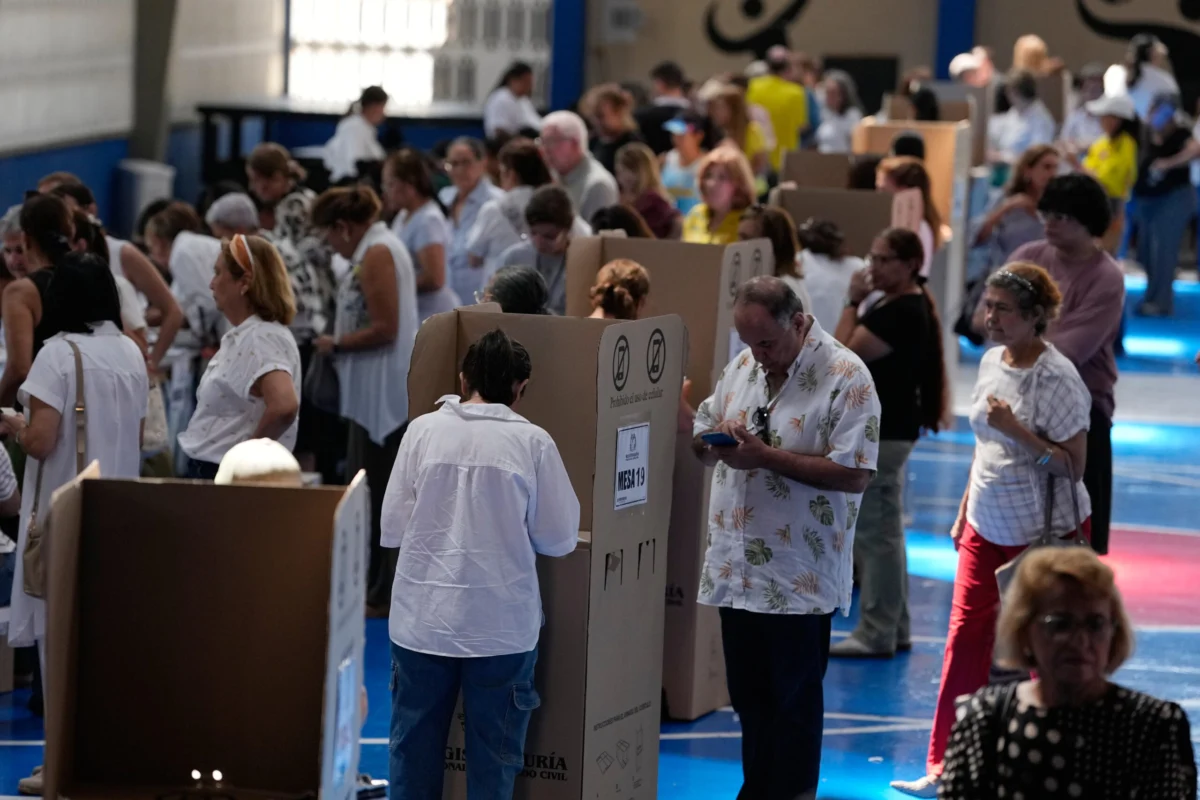
Colombians across the nation headed to polling stations on May 31, 2026, to cast their votes in a high-stakes presidential election that stands as a critical juncture for the country’s political future. This election will definitively determine whether the nation continues on the left-wing trajectory initiated by incumbent President Gustavo Petro or shifts back towards a more conservative political right, a pendulum swing that reflects deep-seated ideological divides and policy preferences within the South American nation. The electoral process, unfolding under a watchful international eye, is poised to reshape Colombia’s domestic agenda, economic policies, security strategies, and international standing for the coming years.
The Electoral Landscape: A Nation Divided
The 2026 election represents a powerful referendum on the reforms and direction set by President Gustavo Petro, who made history in 2022 as Colombia’s first-ever left-wing president. His victory marked a significant departure from decades of conservative and centrist rule, fueled by a widespread desire for change, greater social equity, and a re-evaluation of the country’s economic and security paradigms. Conversely, the political right, traditionally strong in Colombia, is campaigning on a platform emphasizing economic stability, law and order, and a cautious approach to social reforms, often critiquing Petro’s policies as radical or economically detrimental.
Gustavo Petro’s Legacy and the Left’s Agenda
Gustavo Petro’s presidency, commencing in August 2022, was predicated on a broad mandate for profound structural transformation. His administration launched ambitious initiatives aimed at addressing historical inequalities, fostering peace, and recalibrating the national economy. Key policy pillars of his government included:
- "Total Peace" Strategy: A comprehensive approach to ending armed conflict, extending dialogue not only to the National Liberation Army (ELN) but also to FARC dissidents and other criminal organizations. This strategy sought to move beyond traditional military solutions, incorporating social investment and state presence in historically marginalized regions.
- Agrarian Reform: A central tenet of his campaign, focusing on the redistribution of unproductive land to landless peasants, aiming to rectify historical land concentration and boost agricultural productivity. The proposed reforms met with significant resistance from large landowners and agricultural powerful interests.
- Healthcare Reform: A contentious proposal to dismantle the largely privatized healthcare system, replacing it with a more centralized, state-run model emphasizing universal access and primary care, drawing both praise for its ambition and criticism for its potential disruption and cost.
- Pension Reform: Efforts to overhaul Colombia’s pension system, aiming to expand coverage and ensure greater equity, particularly for vulnerable populations, by shifting towards a more public-pillar-based model.
- Energy Transition: A commitment to moving away from fossil fuels, including halting new oil and gas exploration, and investing heavily in renewable energy sources, a policy that generated significant debate given Colombia’s reliance on oil and coal exports for national revenue.
Throughout his term, Petro faced considerable challenges. Congressional opposition frequently stalled or diluted his reform efforts, leading to political gridlock. The economy contended with persistent inflation, slowing growth, and fluctuations in global commodity prices, all of which impacted public sentiment. Security concerns, particularly in rural areas, remained salient despite peace efforts, with continued activity from armed groups. Public approval for Petro’s administration saw significant fluctuations, reflecting the polarization generated by his transformative agenda.
The Resurgent Right: A Call for Course Correction
The political right in Colombia, encompassing a spectrum from moderate conservatives to hardline proponents of traditional values and security, has galvanized around a narrative of "course correction." Their campaign largely focuses on addressing perceived shortcomings of the Petro administration and restoring what they view as core Colombian principles. Common themes articulated by right-wing candidates and their supporters include:
- Economic Liberalization and Fiscal Prudence: Advocating for policies that foster private sector growth, attract foreign investment, and ensure fiscal responsibility, often critiquing Petro’s proposed state interventions and spending.
- Strengthening Security and Rule of Law: A call for a more assertive stance against armed groups and organized crime, emphasizing military and police strength, and expressing skepticism about the effectiveness of the "total peace" strategy. This often involves a return to a "mano dura" (iron fist) approach.
- Protecting Traditional Institutions and Values: Concerns over the potential erosion of democratic institutions and traditional social values, often linked to criticisms of Petro’s social policies and rhetoric.
- Reversing or Modifying Petro’s Reforms: A commitment to either repeal, significantly modify, or slow down the implementation of the left’s ambitious reforms in healthcare, pensions, and land, arguing they are impractical, economically damaging, or infringe on individual liberties.
The right’s appeal often resonates with business communities, segments of the military and police, and those who feel that Petro’s policies have led to instability or have not delivered tangible improvements in their daily lives. The candidates representing this ideological pole promise a return to policies that historically underpinned Colombia’s economic growth and security framework, albeit often at the cost of addressing deeper structural inequalities.
Key Issues Dominating the Campaign
Beyond the overarching ideological struggle, several specific issues have dominated the electoral discourse and weighed heavily on voters’ minds:
- Economy: Inflation, which had been a global challenge, remained a significant concern in Colombia, impacting the purchasing power of ordinary citizens. Unemployment figures, particularly among youth, and the sustainability of public finances under different policy regimes were hotly debated.
- Security: Despite peace dialogues, the pervasive presence of armed groups, drug trafficking, and associated violence continued to plague various regions. The effectiveness of the "total peace" strategy and the future of military and police operations were central to security discussions.
- Social Reforms: The proposed changes to healthcare and pension systems generated intense public debate, with supporters highlighting the need for greater equity and critics warning of potential collapse and inefficiency. Land reform also remained a contentious issue, touching on historical grievances and economic power structures.
- Corruption: A perennial issue in Colombian politics, corruption continued to be a significant public concern. Candidates across the spectrum pledged to combat it, though their proposed methodologies varied.
- International Relations: Colombia’s role in regional affairs, its relationship with neighboring Venezuela, its stance on drug policy cooperation with the United States, and its commitment to environmental protection and climate action were also discussed, reflecting the country’s growing international profile.
Chronology of the Electoral Process
The path to the May 31, 2026, election was a protracted one, reflecting the complexities of Colombian democracy:
- Late 2025 – Early 2026: Pre-campaign period marked by internal party primaries and candidate selections. The political field began to narrow, with major coalitions forming around candidates representing the left and right.
- February – May 2026: Intense campaigning across the country. Candidates engaged in public debates, rallies, and extensive media appearances, presenting their platforms and critiquing their opponents. Pre-election polls, though often contradictory, indicated a highly competitive race, with no single candidate consistently holding a decisive lead.
- May 31, 2026: Polls opened nationwide at 8:00 AM local time, with millions of eligible voters heading to their designated stations. The day was generally marked by peaceful voting, though security forces maintained a heightened presence in certain areas prone to historical conflict or electoral irregularities.
- Evening of May 31, 2026: Initial vote counts began shortly after polls closed, with preliminary results expected to indicate whether a candidate secured the outright majority (50% + 1 vote) needed to win in the first round.
- June 2026 (Potential): If no candidate achieves an outright majority, a second-round run-off election between the top two contenders would be held, typically three weeks after the first round, further intensifying the political contest.
This election follows the precedent set by the 2022 elections, where Gustavo Petro secured victory in a second-round run-off, underscoring the often-divided nature of the Colombian electorate.
Supporting Data and Voter Dynamics
Understanding the context of this election requires an examination of demographic and socio-economic factors. Colombia boasts an electorate of approximately 39 million eligible voters, a significant portion of whom are under the age of 35. Youth participation and their alignment with either progressive or more traditional platforms are often critical determinants of electoral outcomes.
- Voter Turnout: Historically, presidential elections in Colombia have seen turnout rates ranging from 50% to 60%. Analysts anticipated a robust turnout for this election, given its perceived importance and the stark ideological choices presented.
- Regional Divides: Voting patterns often reflect regional economic and historical dynamics. Urban centers, particularly Bogotá and Medellín, tend to be more diverse in their political leanings, while rural areas, often disproportionately affected by conflict and poverty, can be swayed by promises of peace and land reform, or by calls for stronger state presence and security.
- Socio-Economic Factors: Pre-election surveys consistently indicated that economic concerns (inflation, jobs) and security issues were paramount for voters across all socio-economic strata. The Gini coefficient, a measure of income inequality, while showing some improvement in recent years, still points to significant disparities, making social justice a powerful electoral theme.
Official Responses and Stakeholder Reactions
As polls opened, various stakeholders offered statements emphasizing the importance of a transparent and peaceful democratic process.
- National Electoral Council (CNE) and Registrar’s Office: Officials from Colombia’s electoral authorities reiterated their commitment to ensuring a fair, transparent, and secure election. They called on all citizens to exercise their right to vote responsibly and on political actors to respect the official results. Extensive security protocols were implemented to safeguard polling stations and electoral materials, especially in historically volatile regions.
- International Observers: Missions from organizations such as the Organization of American States (OAS) and the European Union were deployed across Colombia to monitor the electoral process. Their preliminary statements highlighted the importance of a free and fair election for the consolidation of democracy in the region and urged for calm and civility throughout the day.
- Political Candidates: In their final appeals, candidates generally urged their supporters to turn out en masse and emphasized unity, respect for democratic institutions, and hope for Colombia’s future. While their rhetoric during the campaign was often sharply critical, on election day, the prevailing message was one of national cohesion and adherence to the democratic framework.
- Citizen Sentiment: Interviews with voters revealed a mix of hope, anxiety, and a profound sense of responsibility. Many expressed a longing for stability and concrete solutions to the country’s persistent challenges, while others voiced strong ideological convictions about the direction Colombia should take. The palpable sense of polarization underscored the high stakes involved.
Broader Impact and Implications
The outcome of this election will have far-reaching implications, both domestically and internationally.
Domestic Implications
- Policy Continuity vs. Reversal: A victory for the left would likely signal a continuation, and potentially an acceleration, of Petro’s reform agenda in healthcare, pensions, and land. A right-wing triumph would almost certainly lead to a significant re-evaluation, if not outright reversal, of these policies, particularly the more contentious ones. This could result in legislative battles and potential social unrest depending on the degree of change.
- Economic Direction: The economic model chosen will impact foreign investment, fiscal policy, and trade agreements. A left-leaning government might prioritize state-led development and social spending, while a right-wing administration would likely favor market-oriented policies, deregulation, and private sector growth.
- Peace Process and Security: The "total peace" strategy would either gain renewed momentum or face significant recalibration. A right-wing government might adopt a tougher stance on armed groups, potentially altering the nature of ongoing dialogues and military operations.
- Social Cohesion and Political Stability: The election’s outcome will test the resilience of Colombian democratic institutions and the ability of the political system to manage deep ideological divisions. The capacity of the incoming administration to build consensus and address the concerns of all segments of society will be crucial for long-term stability.
Regional and International Implications
- Regional Alignment: Colombia’s political direction holds significant sway in Latin America. A continued left-wing government would reinforce the region’s "pink tide" and potentially strengthen alliances with like-minded progressive governments. A shift to the right could bolster the conservative bloc in the region, influencing dynamics in organizations like the Andean Community and potentially affecting regional integration efforts.
- Relations with the United States: Colombia’s relationship with the U.S., particularly concerning anti-drug efforts and trade, could evolve. While cooperation is likely to continue regardless of the outcome, the emphasis and methodologies might change. A left-wing government might push for a greater focus on social investment and alternative development in drug-producing regions, while a right-wing government might prioritize traditional law enforcement and interdiction.
- Environmental Policy: The future of Colombia’s environmental commitments, particularly regarding the Amazon rainforest and the transition away from fossil fuels, will be under scrutiny. Petro’s administration was a vocal advocate for climate action; a right-wing government might take a more cautious approach, balancing environmental protection with economic interests tied to resource extraction.
As the ballots are tallied, Colombia stands at a pivotal crossroads. The choice made by its citizens on May 31, 2026, will not only define its domestic trajectory but also reverberate across the continent, shaping its identity and influence in an increasingly complex global landscape. The democratic exercise underscores the vibrant, albeit often polarized, nature of Colombian politics, where the future direction of a nation hangs in the balance.
