

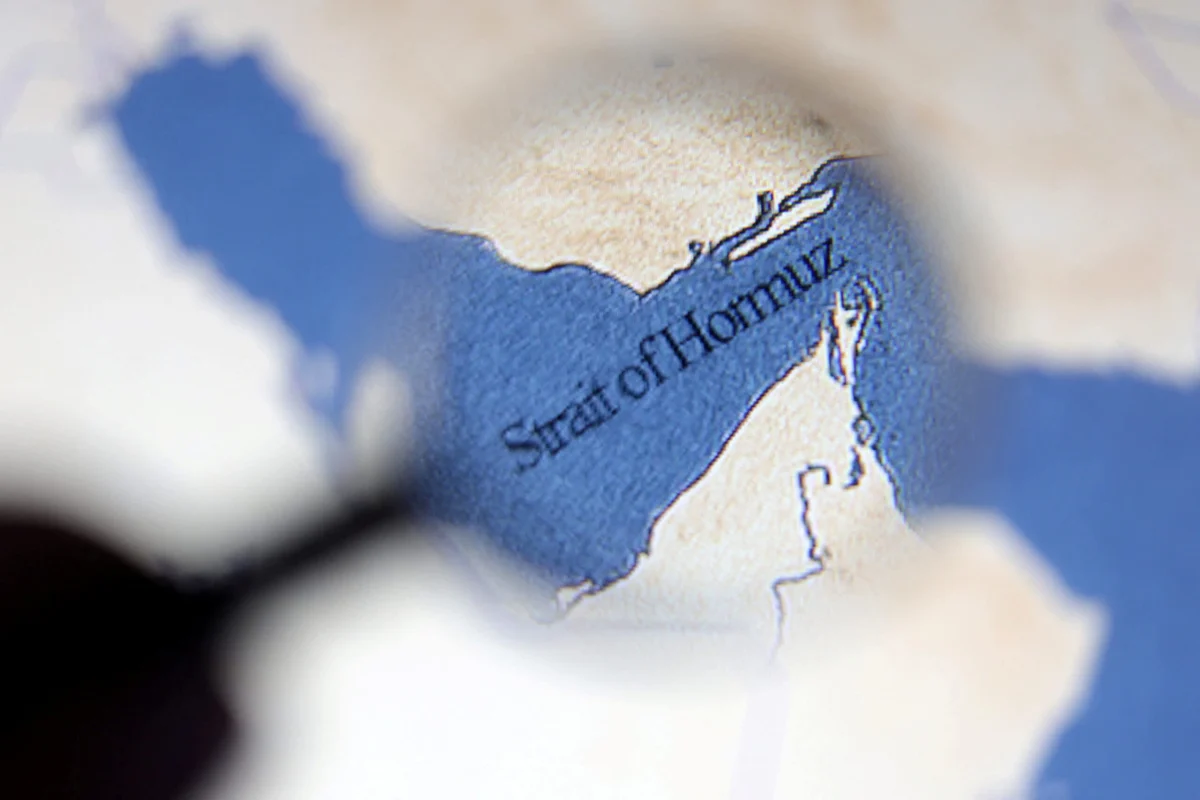
Investment bank Piper Sandler is firmly challenging prevailing optimism regarding an imminent nuclear deal with Iran, issuing a stark warning to clients that the Strait of Hormuz is likely to remain largely inaccessible for commercial shipping for an extended period, inevitably driving global oil prices to unprecedented highs this summer. This contrarian view stands in sharp contrast to recent pronouncements of diplomatic progress and raises significant concerns for a global economy already grappling with inflationary pressures and supply chain fragilities.
Strategic Chokepoint: The Strait of Hormuz
At the heart of this geopolitical and economic forecast lies the Strait of Hormuz, a narrow maritime passage connecting the Persian Gulf with the Arabian Sea and the broader Indian Ocean. Its strategic importance cannot be overstated. Roughly one-fifth of the world’s total petroleum liquids consumption, and a significant portion of global liquefied natural gas (LNG) exports, transit through this chokepoint. Countries in the Middle East, particularly major oil producers like Saudi Arabia, Iraq, UAE, Kuwait, and Qatar, are heavily reliant on the Strait for their energy exports to key markets in Asia, Europe, and North America. Any prolonged disruption to navigation through this vital waterway has immediate and severe implications for global energy security and prices.
Historically, the Strait has been a flashpoint for regional tensions, particularly between Iran and the United States and its allies. Its geographic configuration, with Iran controlling the northern coastline and Oman the southern, places it at the nexus of geopolitical rivalry. The narrowest point is approximately 21 miles wide, with the shipping lanes just two miles wide in either direction, separated by a two-mile buffer zone. This confined geography makes it highly vulnerable to interdiction, blockades, or sabotage.
A Timeline of Escalation and Mixed Signals
The current elevated tensions around the Strait of Hormuz are part of a complex and evolving narrative of US-Iran relations, marked by periods of confrontation and sporadic attempts at de-escalation.
- 2015-2018: The JCPOA Era: The Joint Comprehensive Plan of Action (JCPOA), or Iran nuclear deal, signed in 2015, saw a temporary thaw in relations and a lifting of international sanctions on Iran in exchange for curbs on its nuclear program. This period brought a relative calm to the Strait.
- 2018: US Withdrawal from JCPOA: In a pivotal move, the Trump administration withdrew the United States from the JCPOA in May 2018, citing Iran’s ballistic missile program and regional activities. This decision led to the re-imposition of crippling sanctions on Iran’s oil exports and financial sector, initiating a new phase of heightened tensions.
- 2019-Present: Strait Incidents and Escalation: Following the re-imposition of sanctions, the region witnessed a series of incidents, including attacks on oil tankers in the Gulf of Oman, drone shoot-downs, and seizures of commercial vessels, all attributed by the US to Iran. Iran, in turn, vowed to retaliate against what it perceived as economic warfare and violations of its sovereignty.
- Recent Developments (Implied Timeline from Source):
- This Past Saturday: President Donald Trump made a surprising announcement, stating that an agreement with Iran had been "largely negotiated" and that details would be disclosed "shortly." This statement fueled speculation of an imminent diplomatic breakthrough that could potentially alleviate tensions and open up Iranian oil supplies.
- This Past Friday (leading into the weekend): West Texas Intermediate (WTI) futures saw a downturn, likely influenced by the nascent hopes of an Iran deal and potential de-escalation.
- This Past Tuesday: Oil prices bounced back somewhat, reflecting a market grappling with "mixed messaging" regarding the prospective Iran deal. Simultaneously, the U.S. military confirmed it had conducted "self-defense strikes" in southern Iran. These strikes reportedly targeted Iranian missile launch sites and vessels involved in placing mines around the Strait of Hormuz. This military action directly contradicted the optimistic tone of a "negotiated deal" and underscored the ongoing, volatile reality on the ground.
- Ongoing Iranian Stance: Amidst these developments, Iran’s foreign ministry reiterated its long-standing position that navigation through the vital shipping channel "will have costs" for those who challenge its security interests, a thinly veiled warning against further military action or sanctions.
Piper Sandler’s Pessimistic Outlook
Against this backdrop of conflicting signals and military maneuvers, Piper Sandler’s energy and macro teams have delivered a decidedly bearish assessment of the diplomatic path forward. Their recent client note states unequivocally, "We think the Strait of Hormuz remains largely closed for months yet, meaning shortages become more urgent and oil hits new highs this Summer."

The investment bank elaborates on several key reasons for its low confidence in a swift resolution:
- Limited Commercial Traffic Return: Piper Sandler expresses "very little confidence that the commercial traffic through the Strait would return to even 50% of its pre-crisis levels, either next week or next month." This indicates a belief that the current operational risks and security concerns are too profound to be easily mitigated by a mere declaration of a "negotiated deal."
- US Reluctance to Escalate: The bank notes that the U.S. has been "unwilling to press the fight." This assessment suggests that Washington is acutely aware of the potentially severe and broader implications of a full-scale military confrontation with Iran. Such a conflict could destabilize the entire region, draw in neighboring states, and catastrophically disrupt global supply chains, extending far beyond just oil. This perceived reluctance by the U.S. might be interpreted by Iran as a strategic weakness or a lack of resolve.
- Iran’s Perceived Leverage: Crucially, Piper Sandler argues that Iran’s leaders are "unwilling to settle for any compromise because they believe they have leverage." This is a critical point. From Tehran’s perspective, the ability to threaten or disrupt traffic in the Strait of Hormuz, combined with the ongoing global demand for oil and the US’s aversion to full-scale conflict, provides them with significant bargaining power. This perception of leverage reinforces the belief that Iran will not easily concede to demands or agree to terms that do not significantly benefit its economic and security interests. The economic pressure from sanctions, while severe, has arguably strengthened the hardliners’ resolve rather than weakened it, leading them to believe that continued pressure tactics will eventually force greater concessions from the international community.
Broader Economic Implications and Market Jolt
The implications of Piper Sandler’s forecast are profound, extending far beyond the immediate oil market. A prolonged closure or severe restriction of the Strait of Hormuz would trigger a cascade of economic consequences.
- Oil Price Surge: If the Strait remains largely closed, global oil supplies would tighten dramatically. Even partial disruption could remove millions of barrels per day from the market. During the initial onset of the current conflict, WTI crude futures neared $120 a barrel. While they were recently trading around $94 a barrel, Piper Sandler’s prediction of "new highs" suggests prices could easily surpass the $120 mark, potentially reaching or exceeding previous record highs seen during the 2008 financial crisis or the early 2010s, with some analysts speculating about $150 or even $200 per barrel in a worst-case scenario. Brent crude, the international benchmark, would follow a similar trajectory.
- Global Inflationary Pressure: A sharp increase in crude oil prices directly translates into higher costs for transportation, manufacturing, and virtually every sector of the economy. This would exacerbate existing inflationary pressures, forcing central banks worldwide to potentially adopt more aggressive monetary tightening policies, risking economic slowdowns or even recessions.
- Supply Chain Disruptions: Beyond oil, the Strait’s closure would impede the flow of other critical goods. While alternative shipping routes exist for some cargo, they are longer, more expensive, and have limited capacity, leading to increased shipping costs and further disruptions to already fragile global supply chains.
- Undermining Stock Market Recovery: The global stock market has recently shown signs of recovery, partly buoyed by hopes of easing inflation and stable energy prices. A significant jolt from skyrocketing oil prices would severely undermine this nascent comeback, potentially triggering broad market sell-offs as corporate profits are squeezed and consumer confidence wanes.
- Geopolitical Instability: The economic fallout would inevitably feed back into increased geopolitical instability. Nations heavily reliant on energy imports would face severe domestic economic challenges, potentially leading to social unrest and political upheaval. The prospect of states being forced to tap strategic petroleum reserves could offer temporary relief but is not a sustainable long-term solution.
Official Responses and International Reactions
The "mixed messaging" on an Iran deal highlights a fractured international landscape.
- United States: While President Trump’s optimistic statement about a "largely negotiated" deal aimed to project an image of diplomatic success, the simultaneous "self-defense strikes" underscore the Biden administration’s stated policy of deterring Iranian aggression while leaving the door open for diplomacy. The administration has consistently affirmed the principle of freedom of navigation through international waters, including the Strait of Hormuz, and has vowed to protect commercial shipping. However, the perceived "unwillingness to press the fight" as noted by Piper Sandler, suggests a careful calibration of responses to avoid an all-out war.
- Iran: Iran’s foreign ministry’s assertion that navigation through the Strait "will have costs" serves as a direct challenge to the international community. Tehran views the Strait as a critical component of its national security and economic leverage. Its actions, from alleged mine-laying to missile site deployments, are seen by many as a demonstration of its capacity and willingness to disrupt global energy flows if its core interests are threatened, particularly regarding sanctions relief and its nuclear program.
- International Shipping Industry: Organizations such as the International Chamber of Shipping (ICS) and various maritime security agencies have consistently issued warnings about the heightened risk in the Strait of Hormuz. Shipping companies have implemented increased security protocols, higher insurance premiums, and in some cases, re-routed vessels, leading to increased operational costs and delays. A prolonged closure would necessitate much more extensive and costly re-routing, severely impacting global trade.
- OPEC+: The Organization of the Petroleum Exporting Countries (OPEC) and its allies (OPEC+) might face immense pressure to increase oil production to offset any significant supply disruptions from the Strait. However, many OPEC+ members, particularly Saudi Arabia and the UAE, already operate near their maximum sustainable capacity, and their ability to significantly boost output in a short timeframe is limited. Political considerations within the cartel also play a role, making rapid, large-scale production increases challenging.
Expert Analysis and Alternative Perspectives
While Piper Sandler’s analysis leans heavily towards a pessimistic outlook, it is important to acknowledge that diplomatic efforts, however tenuous, are often ongoing behind the scenes. International mediators, including European powers, Qatar, and Oman, have frequently attempted to bridge the divide between Washington and Tehran. The prospect of a "deal" might refer to smaller, confidence-building measures or a limited agreement rather than a full revival of the JCPOA, which could still offer some de-escalation.
However, the core issue remains a deep mistrust and fundamental disagreement over Iran’s regional role and nuclear ambitions. Until these foundational issues are addressed, and given Iran’s current perceived leverage, the Strait of Hormuz will likely remain a critical barometer of global geopolitical stability and a significant factor in the trajectory of international energy markets. The current environment suggests that the immediate future of global oil supplies and prices hinges precariously on the volatile interplay of diplomacy and military posturing in this crucial waterway. The coming months, particularly the summer, will be a critical test of global resilience against potential energy shocks.
