

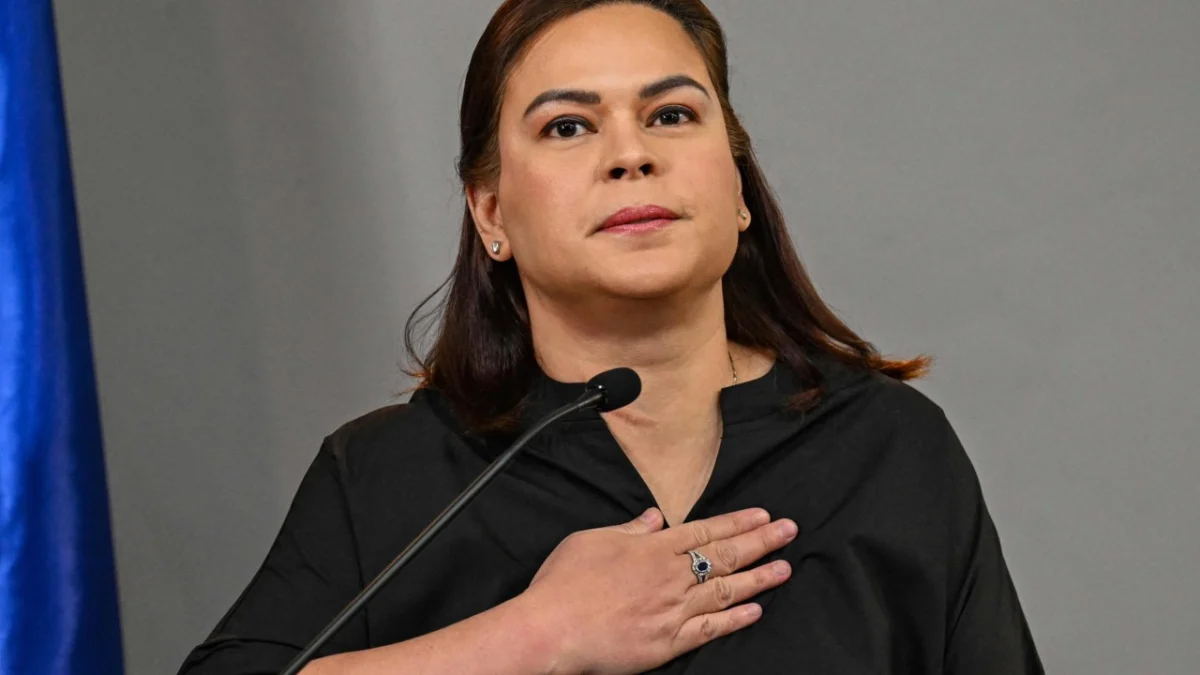
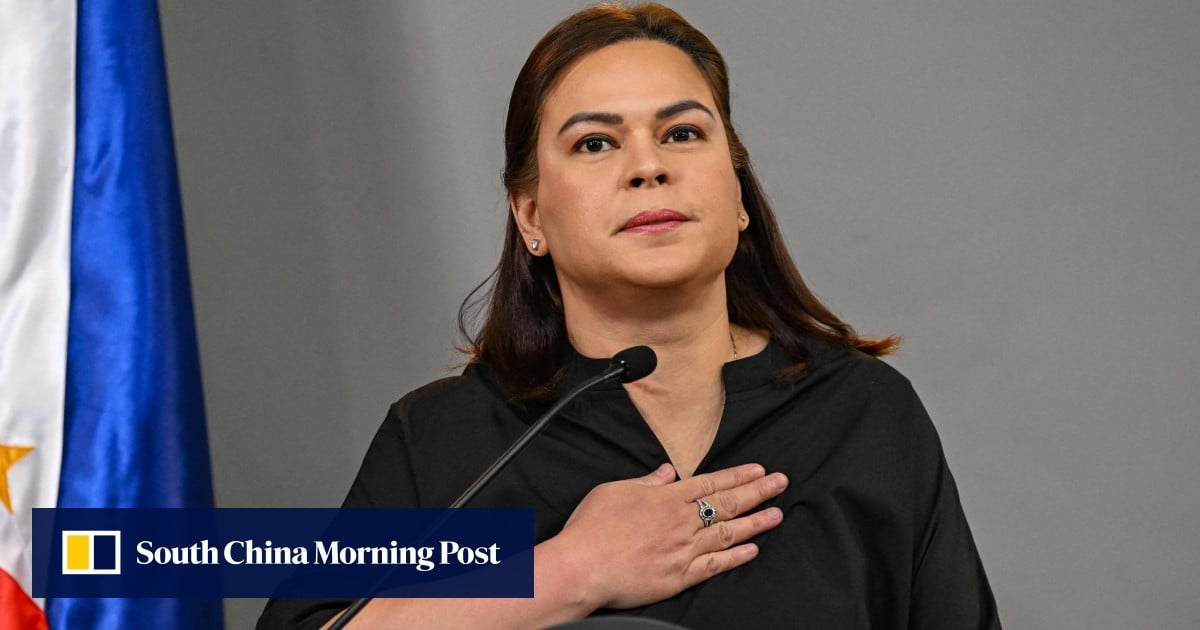
The Philippine Senate formally convened on Monday, transforming the upper chamber into a high-stakes impeachment court to try Vice-President Sara Duterte-Carpio. This historic proceeding marks a definitive rupture in the "UniTeam" alliance that secured a landslide victory in the 2022 general elections, signaling a period of profound political instability for the Southeast Asian nation. As senators took their solemn oaths to act as impartial jurors, the proceedings were overshadowed by a volatile struggle for control within the Senate itself, a conflict that threatens to dictate the pace of the trial and influence the broader legal fallout involving the Vice-President’s father, former president Rodrigo Duterte.
The impeachment trial follows a decisive vote in the House of Representatives last week, where a significant majority moved to impeach Duterte-Carpio on multiple grounds, including allegations of systemic corruption, betrayal of public trust, and culpable violations of the Philippine Constitution. The Vice-President, who remains a popular figure among a substantial segment of the electorate, has dismissed the charges as a "politically motivated persecution" orchestrated by the allies of President Ferdinand Marcos Jnr. The trial’s outcome holds the power to not only remove her from the second-highest office in the land but also to impose a permanent disqualification from holding any public office, effectively neutralizing her anticipated bid for the presidency in 2028.
The Legal and Constitutional Framework of the Impeachment
The proceedings in the Senate are governed by Article XI of the 1987 Philippine Constitution, which outlines the accountability of public officers. Under Philippine law, the House of Representatives holds the exclusive power to initiate all cases of impeachment, while the Senate possesses the sole power to try and decide such cases. To secure a conviction and subsequent removal from office, the prosecution must obtain a two-thirds majority vote from all members of the Senate.
In the current configuration of the 24-member Senate, at least 16 votes are required to convict. Conversely, only nine votes are needed to acquit the Vice-President. The complexity of the current trial is compounded by the political leanings of the senators, many of whom have long-standing ties to either the Duterte or Marcos families. The presiding officer of the trial is typically the Senate President, a role currently held by Alan Peter Cayetano, whose own leadership has come under intense scrutiny and challenge in recent days.
The articles of impeachment transmitted by the House focus heavily on the alleged misuse of "confidential and intelligence funds" (CIF). Specifically, the prosecution alleges that the Office of the Vice-President (OVP) and the Department of Education (DepEd)—which Duterte-Carpio headed until her resignation from the cabinet in mid-2024—mismanaged hundreds of millions of pesos. A central point of contention is the expenditure of 125 million pesos (approximately US$2.2 million) in confidential funds within a mere 11-day period in December 2022, a disbursement that critics argue lacked constitutional authorization.
A Chronology of the Marcos-Duterte Fallout
The road to the impeachment court has been paved with increasing acrimony between the two most powerful political dynasties in the Philippines. The following timeline illustrates the rapid deterioration of the 2022 "UniTeam" alliance:
- May 2022: Ferdinand Marcos Jnr and Sara Duterte-Carpio win the presidency and vice-presidency, respectively, with record-breaking mandates, promising national unity.
- May 2023: Initial signs of friction emerge when Duterte-Carpio resigns from the Lakas-CMD party after her close ally, former president Gloria Macapagal-Arroyo, is demoted from a senior leadership role in the House.
- November 2023: The House of Representatives, led by Speaker Martin Romualdez (Marcos’s cousin), strips the OVP and DepEd of their requested confidential funds for 2024, redirecting the money to national security agencies amid tensions in the South China Sea.
- January 2024: Former president Rodrigo Duterte publicly accuses President Marcos Jnr of being a "drug addict," while Marcos hits back by suggesting the elder Duterte’s judgment is impaired by the use of fentanyl.
- June 2024: Sara Duterte-Carpio resigns as Secretary of Education and Vice-Chair of the National Task Force to End Local Communist Armed Conflict (NTF-ELCAC), effectively leaving the Marcos cabinet.
- Late 2024: Investigative committees in the House intensify probes into OVP spending and the "war on drugs" conducted during the Duterte administration.
- Last Week: The House of Representatives votes to impeach Vice-President Sara Duterte-Carpio.
- Current: The Senate convenes as an impeachment court.
Senate Leadership Turmoil and Internal Power Struggles
The trial commences against a backdrop of legislative chaos. The position of Senate President Alan Peter Cayetano is reportedly under threat, with rumors of a "coup" circulating within the chamber. Cayetano, who served as Rodrigo Duterte’s running mate in 2016 and later as his Foreign Affairs Secretary, finds himself in a precarious position, attempting to balance his historical ties to the Dutertes with the current political reality dominated by the Marcos administration.
Adding to the tension is the recent "dramatic stand-off" involving Senator Ronald "Bato" dela Rosa. Dela Rosa, the chief architect of the elder Duterte’s controversial war on drugs, has faced increasing pressure as the International Criminal Court (ICC) in The Hague moves forward with its investigation into alleged crimes against humanity. Reports suggest that some members of the Senate have sought to distance the chamber from Dela Rosa to avoid appearing to shield individuals from international justice, while others view any move against him as an attack on the Duterte legacy.
The leadership struggle is not merely administrative; it is strategic. The Senate President has significant influence over the rules of the trial, the scheduling of witnesses, and the admissibility of evidence. If Cayetano is replaced by a more staunchly pro-Marcos figure, the trial could proceed with greater speed and a more aggressive prosecutorial stance. Conversely, a pro-Duterte shift in leadership could lead to procedural delays and a more sympathetic environment for the Vice-President’s defense.
Supporting Data: The Financial Controversy at the Heart of the Trial
The impeachment hinges largely on financial transparency and the use of public funds. Data scrutinized by the House Committee on Appropriations and the Commission on Audit (COA) revealed several anomalies that form the backbone of the corruption charges:
- The 11-Day Expenditure: The OVP reportedly spent 125 million pesos in confidential funds in the final days of 2022. COA reports initially flagged a portion of these funds for lacking sufficient documentation, leading to a "notice of disallowance" for approximately 73 million pesos.
- DepEd Confidential Funds: During her tenure as Education Secretary, Duterte-Carpio requested and received 112.5 million pesos in confidential funds. Critics argue that such funds are inappropriate for a department focused on basic education and that the liquidation reports provided were vague.
- The "Youth Summit" Allegations: Testimonies in the House suggested that funds intended for military-led youth summits were falsely liquidated as part of DepEd’s confidential intelligence activities, an allegation the Vice-President has vehemently denied.
These figures have become potent political weapons. For the prosecution, they represent a "betrayal of public trust" during a time of economic hardship. For the defense, they are administrative matters that do not rise to the level of "impeachable offenses."
The Shadow of The Hague: Rodrigo Duterte and the ICC
While Sara Duterte-Carpio is the one on trial in Manila, the ghost of her father’s administration looms large. The International Criminal Court’s investigation into the "war on drugs"—which claimed thousands of lives—is a critical subtext. The Marcos administration has recently signaled a subtle shift, suggesting it would not block Interpol if a warrant were issued for the elder Duterte, a sharp departure from its earlier stance of total non-cooperation.
The Vice-President’s impeachment is seen by some analysts as a maneuver to weaken the Duterte family’s domestic protection before the ICC takes more definitive action. If Sara Duterte-Carpio is removed from office, the family loses its most significant institutional shield against both domestic prosecution and international intervention.
Official Responses and Political Reactions
The Vice-President has remained defiant. In a recent press conference, she characterized the Senate trial as a "sham" and a "waste of taxpayer money," asserting that her focus remains on serving the people who elected her. "They can take the office, but they cannot take my resolve to stand up for the Filipinos who are tired of the old politics of vengeance," she stated.
Conversely, House Speaker Martin Romualdez emphasized the constitutional necessity of the process. "No one is above the law, not even the Vice-President," Romualdez said in a statement following the transmittal of the articles. "The House has done its duty; it is now up to the Senate to weigh the evidence and render a fair judgment."
Public reaction remains deeply polarized. Civil society groups and anti-corruption advocates have welcomed the trial as a victory for accountability. Meanwhile, "Duterte Diehard Supporters" (DDS) have organized rallies in Davao City and parts of Manila, warning of mass protests if the Vice-President is "unjustly" removed.
Broader Impact and Implications for the 2028 Elections
The implications of this trial extend far beyond the current term of office. If the Senate convicts Duterte-Carpio, the 2028 presidential landscape will be fundamentally altered. She is currently the frontrunner in most early opinion polls; her removal and disqualification would leave a massive vacuum in the opposition or "third-way" political space, likely benefiting candidates aligned with the current administration.
Furthermore, the trial tests the resilience of Philippine democratic institutions. The Senate’s ability to conduct a trial that is perceived as fair and transparent will be crucial in maintaining public trust. A verdict seen as purely partisan could deepen the national divide and lead to increased civil unrest.
Economically, the political instability has caused jitters in the local markets. Analysts warn that prolonged political infighting could distract the government from addressing inflation, infrastructure development, and regional security challenges, particularly in the West Philippine Sea.
As the Senate begins the arduous task of examining evidence and hearing testimony, the eyes of the international community remain fixed on Manila. The trial of Sara Duterte-Carpio is more than a legal proceeding; it is a battle for the soul of Philippine politics and a stress test for the country’s young democracy. The coming months will determine whether the Philippines can move toward a system of genuine accountability or if it will remain trapped in a cycle of dynastic warfare.
