

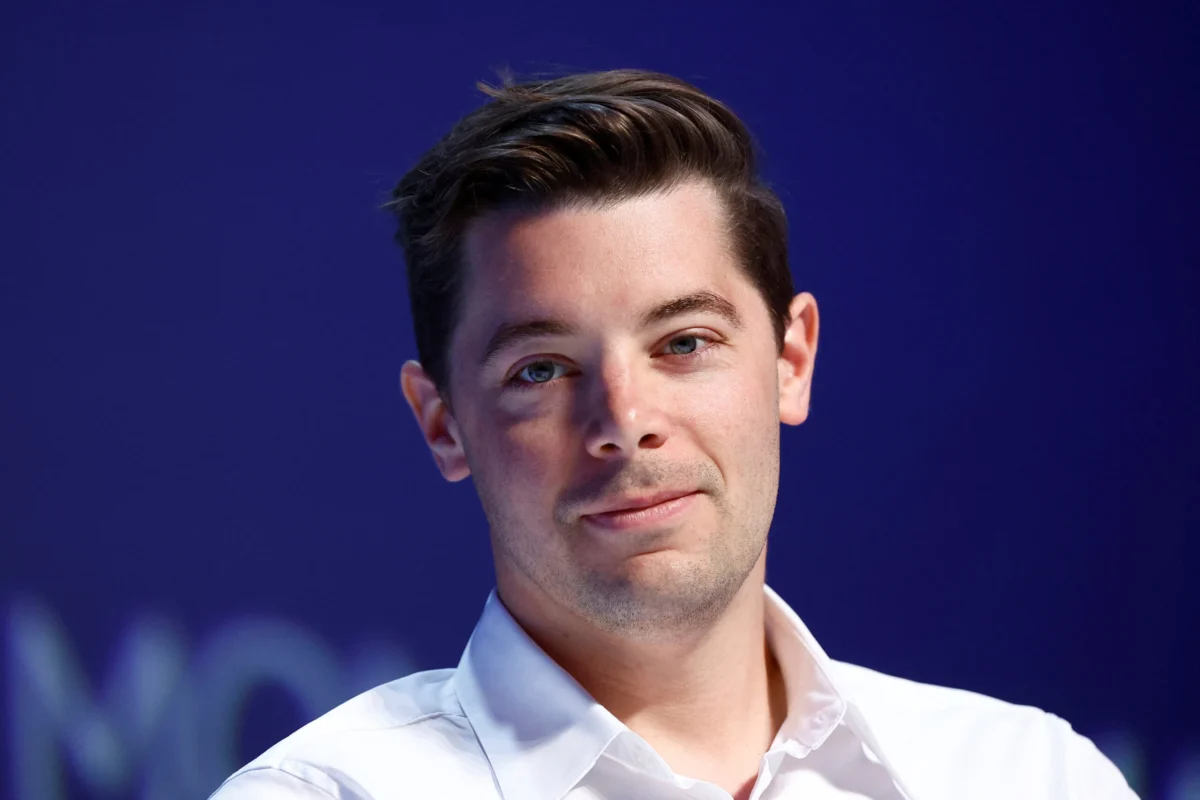
The landscape of leadership at OpenAI, the world’s most prominent artificial intelligence research and deployment company, has undergone another significant transformation with the announced departure of Chief Operating Officer Brad Lightcap. On Tuesday, Lightcap confirmed his exit from the San Francisco-based firm, marking the end of a high-profile tenure that spanned more than six years. His departure is the latest in a series of high-level exits that have raised questions regarding the internal stability and long-term strategic direction of the company as it navigates a period of unprecedented growth and scrutiny.
Lightcap, who joined OpenAI in 2018, has been a foundational pillar of the organization’s transition from a niche research laboratory into a global commercial powerhouse. Having served as the company’s operating chief for four years, he was instrumental in bridging the gap between cutting-edge generative AI research and viable enterprise business models. In April, Lightcap transitioned into a role focused on "special projects," a move that at the time signaled a narrowing of his responsibilities. Following his formal resignation, OpenAI confirmed that Denise Dresser, the company’s Chief Revenue Officer, has assumed the majority of the responsibilities previously managed by Lightcap.
A Legacy of Scaling and Strategic Expansion
Brad Lightcap’s influence on OpenAI cannot be overstated. When he joined the organization in 2018, OpenAI was primarily known for its non-profit roots and its mission to develop safe and beneficial artificial general intelligence (AGI). As the company evolved into a "capped-profit" entity to attract the massive capital required for compute power, Lightcap emerged as the primary architect of its business operations.
During a critical 18-month window leading into mid-2025, Lightcap spearheaded an aggressive expansion of OpenAI’s go-to-market strategy. Under his leadership, the commercial and operational teams grew from a modest group of 50 individuals to a robust workforce of over 700 employees. This expansion included the establishment of dedicated sales divisions, customer success teams, developer relations, and strategic partnership units.
The pivot toward enterprise-grade AI was catalyzed in late 2023 with the release of GPT-4 and the subsequent launch of ChatGPT Enterprise. This move was a direct response to the growing demand from Fortune 500 companies for secure, scalable, and customizable AI solutions. Lightcap was the public face of this transition, frequently highlighting that clients were "coming in from every direction" as businesses raced to integrate large language models into their daily workflows. His ability to translate complex technical capabilities into value propositions for corporate executives was a key driver in OpenAI’s ability to compete with rivals such as Anthropic and Google.
A Growing Pattern of Executive Departures
Lightcap’s exit does not occur in a vacuum; rather, it follows a trend of significant turnover within OpenAI’s upper echelons. The company has seen several high-ranking officials depart in recent months, creating a sense of flux within its leadership hierarchy.
In April alone, three prominent executives announced their resignations. Bill Peebles, who was a leading figure in the development of Sora—OpenAI’s ambitious but recently shuttered short-form video application—left the company following reports of rising operational costs and a strategic pivot away from consumer-facing video tools. Kevin Weil, the Vice President of Science, and Srinivas Narayanan, the Technical Chief of B2B Applications, also vacated their positions.
Furthermore, Fidji Simo, who served as OpenAI’s Product and Business Chief, announced her departure last month. Simo cited the need to focus on her health following a "severe exacerbation of a chronic illness." These departures collectively represent a loss of institutional knowledge and leadership continuity at a time when OpenAI is attempting to justify a staggering $852 billion valuation.
The Altman-Lightcap Connection and Y Combinator Roots
The professional relationship between Brad Lightcap and OpenAI CEO Sam Altman predates their time at the AI firm. Both men previously worked together at Y Combinator, the prestigious Silicon Valley startup incubator where Altman served as president. Lightcap’s move to OpenAI in 2018 was seen by many as Altman’s effort to bring in a trusted confidante to handle the operational complexities of a rapidly scaling startup.
Throughout the various internal crises that have faced OpenAI—including the brief and chaotic ousting and subsequent reinstatement of Sam Altman in late 2023—Lightcap remained a steadying force. He was often credited with maintaining employee morale and ensuring that the company’s commercial partnerships, particularly its multi-billion-dollar alliance with Microsoft, remained intact during periods of boardroom turmoil.

In his farewell statement posted on X (formerly Twitter), Lightcap reflected on his tenure with a sense of accomplishment. "I feel incredibly fortunate to have spent most of the last decade pursuing our mission and building this company," he wrote. "Sitting here today, mission success feels within sight. It has been the honor of my life to help bring us to this point."
Financial Implications and the Path to an IPO
The timing of these leadership changes is particularly sensitive given OpenAI’s financial trajectory. With a reported valuation of $852 billion, the company is under immense pressure to demonstrate a sustainable path to profitability. The cost of training next-generation models and maintaining the massive GPU clusters required for inference is estimated to be in the billions of dollars annually.
Industry analysts suggest that the recent "special projects" designation for Lightcap may have been a transitional phase designed to ensure a smooth handover to Denise Dresser. Dresser, a former Salesforce executive, brings a background in high-velocity enterprise sales, which aligns with OpenAI’s current focus on revenue generation. The company is widely expected to pursue an initial public offering (IPO) in the near future, a move that would likely be the largest in the history of the technology sector. To succeed in the public markets, OpenAI must convince investors that it can move beyond the "hype" of generative AI and deliver consistent, enterprise-driven growth.
However, the loss of a COO who oversaw the scaling of the go-to-market team could introduce volatility. Investors typically look for leadership stability in the lead-up to an IPO. The departure of key technical and business leaders like Peebles, Weil, and now Lightcap may lead to questions regarding the internal culture and the long-term retention of talent in a highly competitive AI labor market.
Chronology of Leadership Shifts (2024–2025)
To understand the current state of OpenAI, it is necessary to look at the timeline of executive movement over the past year:
- April 2024: OpenAI announces that Brad Lightcap will move from COO to a "special projects" role, with Denise Dresser taking over revenue and operations.
- April 2024: Bill Peebles (Sora), Kevin Weil (Science), and Srinivas Narayanan (B2B) announce their departures.
- Late 2024: OpenAI reportedly shutters the short-form video app Sora as part of a broader cost-cutting and strategic realignment initiative.
- Early 2025: Fidji Simo steps down as Product and Business Chief due to health reasons.
- Tuesday: Brad Lightcap officially announces his departure from OpenAI to "start something new."
Broader Impact on the AI Industry
The departure of Brad Lightcap is indicative of a broader "talent war" currently raging in Silicon Valley. As OpenAI’s early leaders move on, they often found their own startups or take senior roles at competitors like Anthropic, xAI, or Google DeepMind. Lightcap’s mention of starting "something new" suggests that he may soon reappear as a founder or a venture capitalist, potentially siphoning more talent from the OpenAI ecosystem.
Furthermore, the strategic pivot within OpenAI—moving away from experimental consumer apps like Sora and toward "boring" but profitable enterprise integrations—reflects the maturation of the AI industry. The initial era of wonder and exploration is being replaced by an era of optimization and fiscal responsibility. While this is a natural evolution for any high-growth company, the speed at which OpenAI is cycling through its leadership team remains a point of concern for industry observers.
Future Outlook
As Denise Dresser takes the helm of OpenAI’s business operations, the company’s primary challenge will be maintaining its lead in a market where the gap between top-tier models is narrowing. Anthropic’s Claude and Meta’s Llama series have emerged as formidable competitors, often offering better price-to-performance ratios for enterprise users.
OpenAI’s ability to navigate this transition without Lightcap will be a test of the systems he helped build. If the go-to-market machine he constructed continues to function efficiently under new leadership, his departure may be viewed as a natural graduation. However, if the company struggles to maintain its enterprise momentum or faces further high-profile exits, the narrative may shift toward a critique of the company’s internal governance and its ability to sustain its astronomical valuation.
For now, the AI giant remains focused on its next technical milestones, including the anticipated release of GPT-5 and the continued integration of AI agents into the workplace. While the faces in the C-suite are changing, the mission to achieve AGI remains the central nervous system of the organization—a mission that Brad Lightcap believes is now "within sight."
