

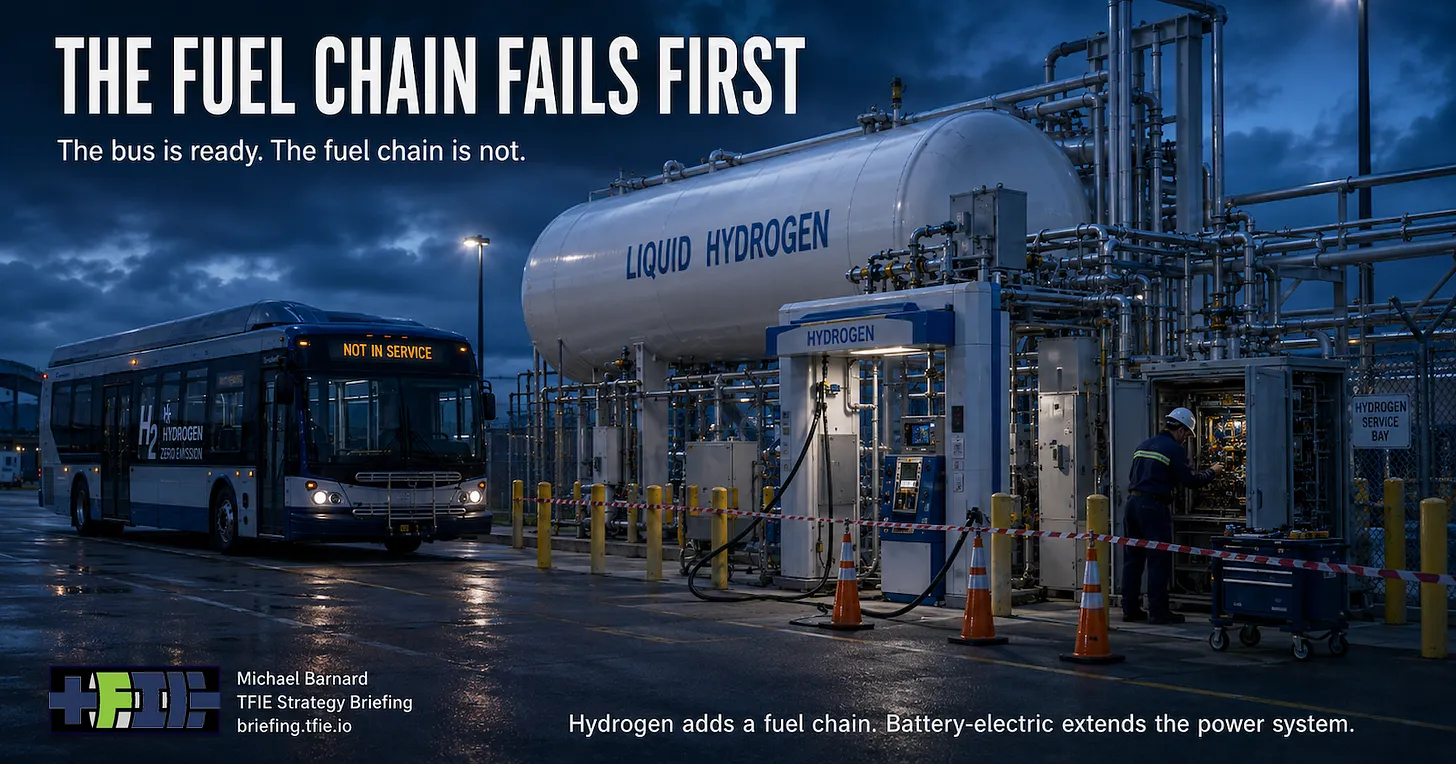
The Orange County Transportation Authority (OCTA) has officially committed to an additional $27.6 million investment in hydrogen fueling infrastructure, a move intended to support the expansion of its fuel-cell electric bus (FCEB) fleet from 10 to 50 vehicles. While the announcement is framed as a necessary step toward meeting California’s ambitious zero-emission mandates, a closer examination of the agency’s recent operational history reveals a complex and troubled transition. The significant capital outlay follows a period of near-total service collapse for OCTA’s existing hydrogen fleet, underscoring the volatility of hydrogen supply chains and the immense costs associated with specialized transit infrastructure.
The decision to double down on hydrogen comes at a pivotal moment for the agency. As OCTA shifts away from compressed natural gas (CNG), it is navigating a bifurcated path, operating both battery-electric buses (BEBs) and hydrogen fuel-cell buses. However, the data emerging from OCTA’s own depots suggests that while the buses themselves may be roadworthy, the logistical "fuel pathway" required to keep them moving is far more fragile and expensive than traditional electric charging systems.
A History of Infrastructure Instability
The current challenges facing OCTA are rooted in a significant infrastructure failure at its Santa Ana base. In 2020, the agency celebrated the opening of what was then the largest hydrogen fueling station of its kind for public transit in the United States. Designed to support a fleet of up to 50 buses, the station was the centerpiece of OCTA’s clean energy strategy. However, the technical success of the facility was short-lived due to contractual and commercial volatility.
The Santa Ana station relied on specialized liquid-hydrogen equipment, including storage tanks and vaporizers, leased from the industrial gas giant Air Products. When OCTA and Air Products failed to reach a new commercial agreement regarding the lease and supply terms, the partnership dissolved. In January 2026, Air Products removed its equipment from the site, effectively decommissioning a multi-million-dollar fueling hub.
The impact of this infrastructure removal was immediate and catastrophic for the agency’s hydrogen operations. OCTA was left with 10 high-tech fuel-cell buses that were still in the early stages of their 12-to-15-year service lives but had no functional way to refuel at their primary depot. This forced the agency into a series of expensive and inefficient workarounds, including the use of temporary mobile fueling units and off-site commercial stations.
The Operational Toll: A 95% Drop in Service
The consequences of the Santa Ana station’s closure are reflected in OCTA’s performance metrics. In 2024, the agency’s 10 fuel-cell buses were a core component of its green fleet, logging a total of 270,462 miles. By 2025, as fueling complications mounted and the depot system moved toward decommissioning, that figure plummeted to a mere 14,232 miles—a staggering 94.7% decrease in operational utility.
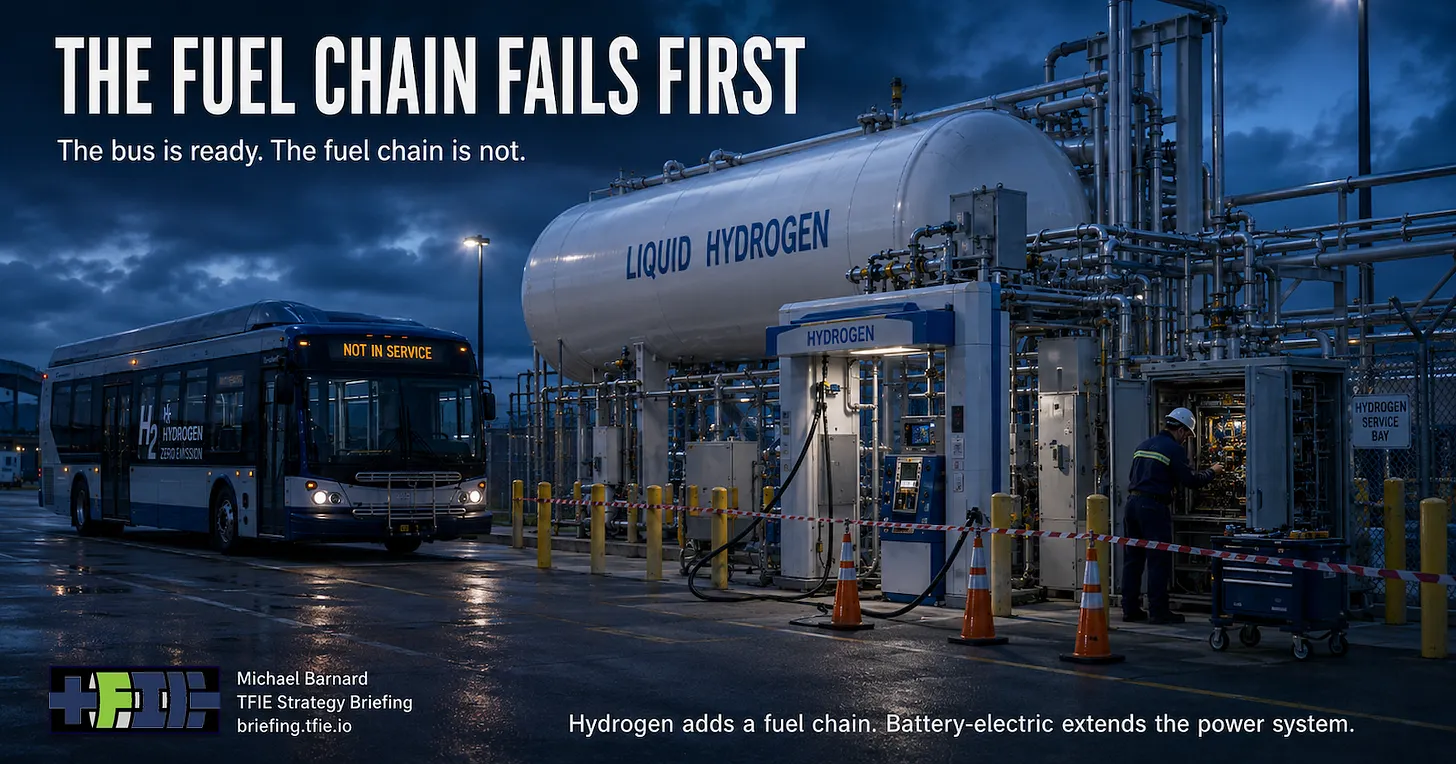
This decline was not caused by mechanical failures within the buses themselves, which are manufactured by New Flyer and utilize Ballard fuel cell stacks. Instead, the buses sat idle because the infrastructure required to support them had vanished. This "stranded asset" scenario highlights a primary risk in hydrogen transit: the interdependence between the vehicle and a highly specialized, third-party-controlled supply chain.
During the same period, OCTA’s battery-electric bus fleet maintained consistent operations. The agency reported zero lost deployments due to unavailable charging infrastructure. The contrast in reliability has raised questions among transit analysts regarding the strategic wisdom of expanding the hydrogen program when a more stable alternative—battery electrification—is already integrated into the agency’s workflow.
The High Cost of Hydrogen Redundancy
The new $27.6 million contract awarded for the Garden Grove facility is an attempt to rectify these past failures by building a more robust and permanent fueling solution. However, the price tag for this single station expansion is notable when compared to the costs of electric charging. OCTA’s entire battery-electric charging infrastructure cost approximately $6 million to implement. In contrast, the total cumulative expenditure for OCTA’s hydrogen refueling capabilities has now climbed to over $100 million when accounting for previous grants, failed installations, and the new Garden Grove contract.
The $27.6 million award is not merely for "pumps." It covers a comprehensive suite of services including:
- Design and Engineering: Customizing the facility to handle liquid hydrogen storage and high-pressure dispensing.
- Facility Modifications: Upgrading safety systems, including specialized ventilation and hydrogen leak detection sensors, which are significantly more complex than those required for diesel or CNG.
- Operations and Maintenance (O&M): A multi-year commitment to ensure the station remains functional, acknowledging that transit agencies often lack the in-house expertise to maintain cryogenic hydrogen systems.
- Training: Specialized instruction for staff to handle a fuel that is stored at temperatures below -400 degrees Fahrenheit or compressed to 350-700 bar.
The Complexity of the Hydrogen Pathway
The OCTA experience serves as a case study for the "fuel pathway" challenge. Unlike electricity, which is a ubiquitous utility that can be drawn from the grid with relatively standard transformer and switchgear upgrades, hydrogen requires a bespoke industrial supply chain.
For a hydrogen bus to be viable, the fuel must be produced (often via steam methane reforming or electrolysis), liquefied or compressed, transported via specialized tankers, stored in cryogenic tanks, vaporized, and finally dispensed at high pressure into the vehicle. Each step in this chain introduces a point of failure. If the fuel does not meet strict ISO 14687 purity standards, it can poison the bus’s fuel cell stack, leading to hundreds of thousands of dollars in damage.
Furthermore, the "green" credentials of hydrogen are often under scrutiny. While the buses emit only water vapor at the tailpipe, the carbon intensity of the hydrogen itself depends on the production method. OCTA and other California agencies are under pressure to source "Green Hydrogen" (produced via renewable-powered electrolysis), which is currently more expensive and less available than "Grey Hydrogen" (derived from natural gas).

Strategic Analysis: Sunk Costs vs. Future Utility
Critics of OCTA’s continued investment point to other global transit agencies that have pivoted away from hydrogen after similar struggles. For example, the city of Aberdeen, Scotland—once a global leader in hydrogen transit—recently retired its original hydrogen fleet in favor of battery-electric buses, citing the high cost of fuel and infrastructure maintenance.
The decision by OCTA to move toward a 50-bus hydrogen fleet suggests a commitment to the technology’s theoretical advantages: longer range and faster refueling times compared to first-generation battery-electric buses. For long-haul routes or routes with significant elevation changes, hydrogen can theoretically outperform batteries. However, the "fast-refueling" advantage is often negated if the fueling station itself is frequently offline or if the cost of the fuel is double or triple the equivalent cost of electricity.
From a procurement perspective, OCTA appears to be caught in a cycle of needing to justify previous investments by expanding the fleet to achieve economies of scale. However, this strategy relies on the assumption that the new Garden Grove station will not suffer the same contractual or technical fate as the Santa Ana base.
Implications for the Transit Industry
The OCTA situation is being closely watched by the California Air Resources Board (CARB) and other transit agencies across the United States. Under the Innovative Clean Transit (ICT) regulation, all California transit agencies must transition to 100% zero-emission fleets by 2040, with all new bus purchases being zero-emission by 2029.
The challenges faced in Orange County suggest that the path to zero emissions will not be uniform. While battery-electric buses are becoming the standard for urban, short-haul transit due to their lower infrastructure costs and higher "well-to-wheel" efficiency, hydrogen remains a high-risk, high-reward alternative.
OCTA’s experience proves that the bus is only one part of the propulsion system. Without a reliable, affordable, and durable fuel delivery system that can last the 15-year lifespan of the vehicle, the buses remain little more than expensive experiments. As OCTA spends another $27.6 million to rebuild its hydrogen foundation, the agency is betting that it can finally stabilize a system that has, to date, been defined by its volatility. Whether this investment results in a functional fleet or another round of stranded assets will determine the future of hydrogen’s role in Southern California’s public landscape.
